Can Cats and Raccoons Mate? Vet-Reviewed Facts & FAQ


In this article
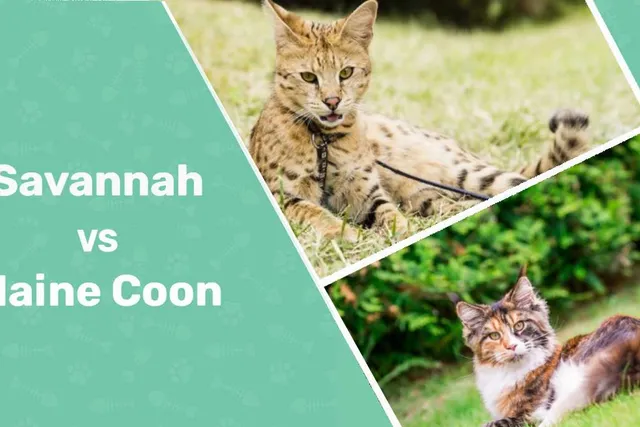
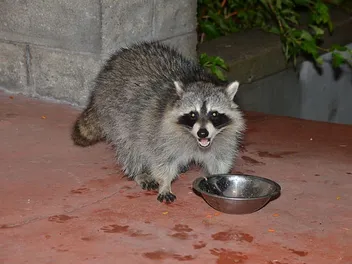
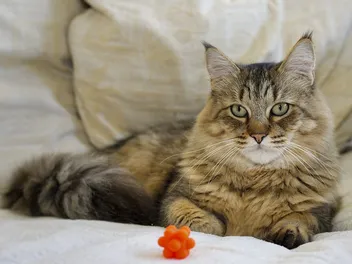
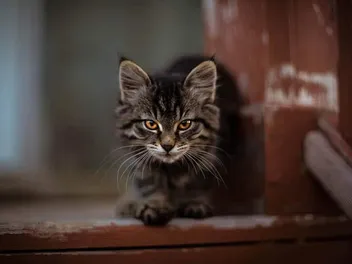
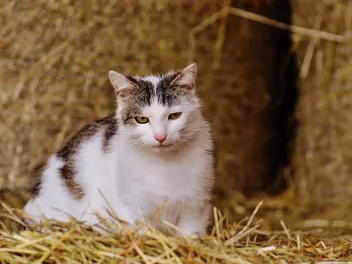
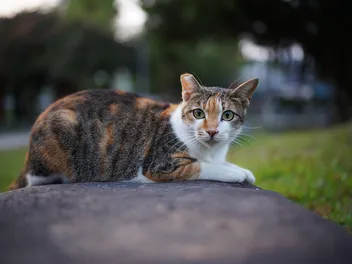
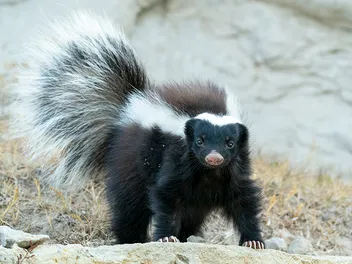
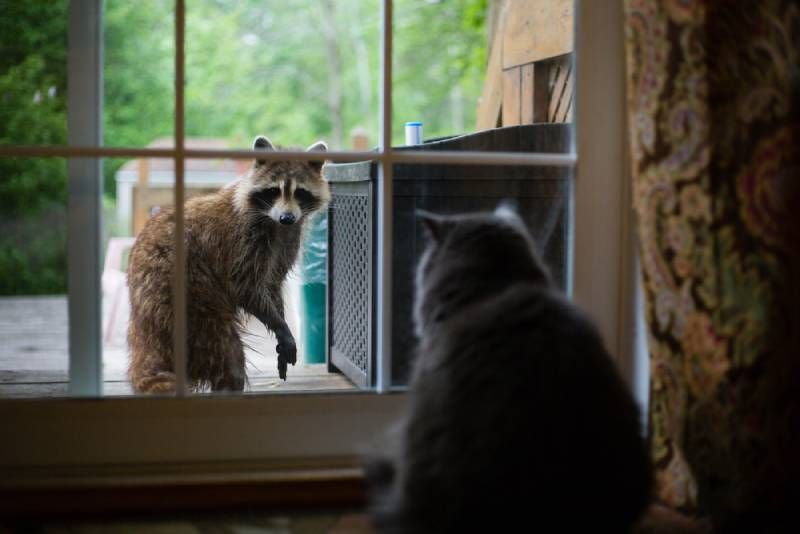
There’s an urban legend that says the majestic Maine Coon came from the cross of a Norwegian cat and a raccoon. This myth is likely due to the fact that the Maine Coon is a huge feline with distinctive markings that are somewhat reminiscent of a raccoon’s stripes. But while it's true that cats and raccoons can sometimes cross paths, especially in urban and suburban areas, these encounters don't end in tiny "cat-coon" or "rac-cat" babies. Cats and raccoons cannot mate and reproduce—no matter how adorable such offspring would be!
Let's take a closer look at why some species can successfully interbreed and why this is not the case with cats and raccoons. There are also great tips on keeping your feline friend safe if they venture outside.

Can Two Different Species Mate?
It’s not that frequent in the wild, but two different but related species can indeed reproduce. This process is called hybridization, and it can happen in both animals and plants. When two different species mate successfully, their offspring is called a hybrid. Most of the time, hybrids are sterile, meaning they can't have babies (though this isn't always the case).
That said, scientists don't all agree on how to define species. The “Biological Species Concept” is typically used to separate different animals and plants into various species. According to this principle, animals that cannot breed together or that can breed but produce sterile offspring are classified as different species.
Some scientists classify species based on notable physical and environmental differences—for example, differences in color, behavior, habitat, or geographic location. Other scientists use genetic differences, which are sections of DNA containing small differences called mutations. Typically, members of different species are unable to reproduce due to these genetic barriers. Indeed, this is the very definition of the term “species,” which comes back to the Biological Species Concept; two animals incapable of reproducing are classified as two different species.

Are All Hybrids Sterile?
While it’s true that most hybrids are unable to reproduce, there are instances where hybrids can have babies. This occurs when a hybrid mates with another hybrid or with a member of the same species as one of its parents. For example, when a male lion and a female tiger hybridize, they produce a liger. 90% of male ligers are sterile but most of the female ligers are fertile and can be successfully bred back to a tiger or a lion.
Interestingly, according to the authors of an article published in the journal Frontiers, the existence of fertile hybrids poses a certain scientific challenge, as it contradicts a fundamental principle of the Biological Species Concept, which suggests that two distinct species should not be capable of mating and producing fertile babies. However, this does not imply that the parents of hybrids are not distinct species; rather, it highlights that the concept of ‘biological species’ may not apply to all species.
So, Why Can’t Cats and Raccoons Mate?
You may have heard that cats and raccoons can sometimes mate, but these claims are not supported by any credible evidence. Scientifically, there are no documented cases of successful interspecies breeding between these two animals.
Cats and raccoons belong to distinct families within the order Carnivora. Indeed, cats are part of the Felidae family, while raccoons are classified in the Procyonidae family. If we look at the liger, which has a tiger mother and a lion father, we can see that even though they are different species, they belong to the same genus, Panthera, which explains their interbreeding success. This is not the case for raccoons and cats.
How to Keep Your Cat Safe Outdoors

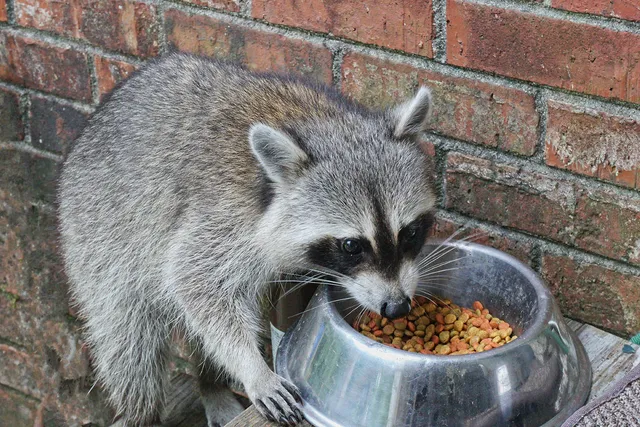
Although cats and raccoons cannot mate, they do often cross paths in the wild, particularly in areas where human development encroaches upon natural habitats. These interactions can lead to a variety of outcomes, some of which can pose risks to your cat. Rabies, for example, is a significant concern, and raccoons are known carriers of this deadly virus. If your cat gets into a fight with a raccoon, there is a chance of disease transmission through bites or scratches.
Considering the potential risks posed by interactions with raccoons and other wildlife, it's essential to take measures to ensure your cat's safety when they venture outside.
Here are a few helpful tips:
Bottom Line
Although interspecies breeding is technically possible and can even result in fertile hybrids like ligers, there is no scientific data proving that such a relationship can take place between a raccoon and a cat. That said, the risks linked to random encounters between these two species are very real, such as the transmission of contagious diseases or the risk of injury in the event of a fight.
Therefore, if you let your cat roam freely outside, make sure to monitor their comings and goings as much as possible, and above all, ensure that their vaccinations are up to date. Don’t try to attract raccoons to your home just because they seem adorable and harmless!
Sources
https://daily.jstor.org/the-surprising-frequency-of-interspecies-mating/
https://academic.oup.com/book/41948/chapter-abstract/355151499?redirectedFrom=fulltext
https://www.nationalgeographic.com/animals/article/ligers-zorses-pizzlies-how-animal-hybrids-happen
https://kids.frontiersin.org/articles/10.3389/frym.2019.00113
Featured Image Credit: Corina Muresan, Shutterstock
Expert cat care, straight to your inbox
News, insights, and useful advice, delivered to you.

No spam — unsubscribe anytime.
By signing up, you agree to our Terms & Conditions and Privacy & Cookies Policy.
How useful was this post?
Click a star to rate. You can leave written feedback afterwards. (We read all feedback.)
Genevieve is both a biologist and a science writer, driven by her deep love for capuchin monkeys, pumas, and kangaroos. Her dedication to wildlife has taken her across the globe, from Bolivia and Guatemala to Canada and Australia, working and volunteering at various rehabilitation centers. As a Canadian living in Argentina, Genevieve starts her days with horses and cows greeting her from the plains outside her home office. She is the proud parent of three rescued dogs—Lemmy, Nala, and Pochi—and an energetic kitten named Furiosa. The opportunity to share her passion and expertise in animal care brings her great satisfaction.