Get

In Your Inbox

Catster is reader-supported. When you buy via links on our site, we may earn an affiliate commission at no cost to you. Learn more.

How to Brush Your Cat’s Teeth: 7 Vet-Approved Steps With Video

Share

Vet Cat Toothbrush

Dental disease is incredibly common in domestic cats, with experts estimating that between 50%–90% of cats over the age of 4 years old have some kind of dental disease. The good news is that most of these diseases are preventable by keeping up a regular routine of brushing your cat’s teeth.

If you’re not sure how to start keeping your cat’s teeth clean, check out our step-by-step guide with videos!

divider 3 paws

What You’ll Need

Before you start brushing your cat’s teeth, make sure you have everything that you need, including:

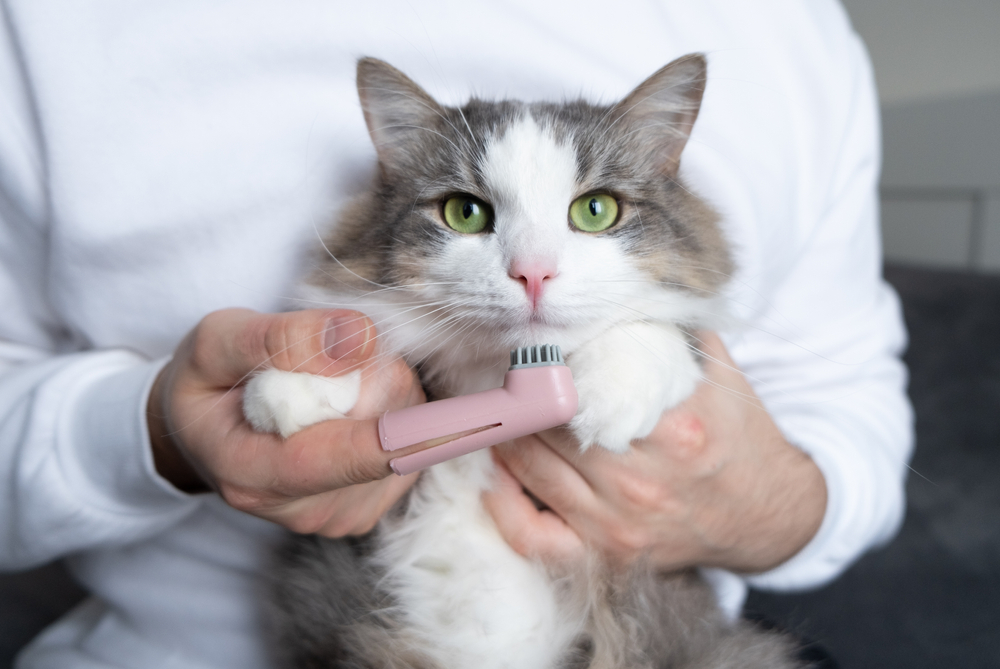
  • These come in a variety of different options, including finger brushes, regular toothbrushes, and dual-ended toothbrushes. You may need to experiment with a few different options to see which one suits your cat best. Always remember to use a separate toothbrush for each cat to avoid cross-infection.
  • Toothpastes for cats are available in a range of different flavors, including poultry, beef, and seafood. Again, you may need to experiment to see which one your cat prefers.
  • Dental treats. Some cats will love getting a few treats after they’ve had their teeth brushed, and this is a great way to reward them for good behavior. Using a dental treat means you’re helping their teeth stay healthy and clean at the same time!

divider 3 paws

The 7 Important Steps for Brushing Your Cat’s Teeth

1. Start as young as possible

The earlier that you train your kitten to accept having their teeth brushed, the easier it will be to build this into their regular routine. The following steps can be used with cats of any age, though!


2. Get your cat used to the toothpaste

The first thing to do is to acclimatize your cat to the taste of the toothpaste. Place a small amount of toothpaste, about ¼ of a centimeter, on your finger and allow your cat to sniff it. Most will be attracted by the scent of the toothpaste and will happily lick it off your finger. If they’re not sure, put a tiny amount on your cat’s nose, and they should give it a lick. This stage is simply getting your cat used to the flavor of the toothpaste.


3. Start Desensitizing Your Cat to Allow Handling

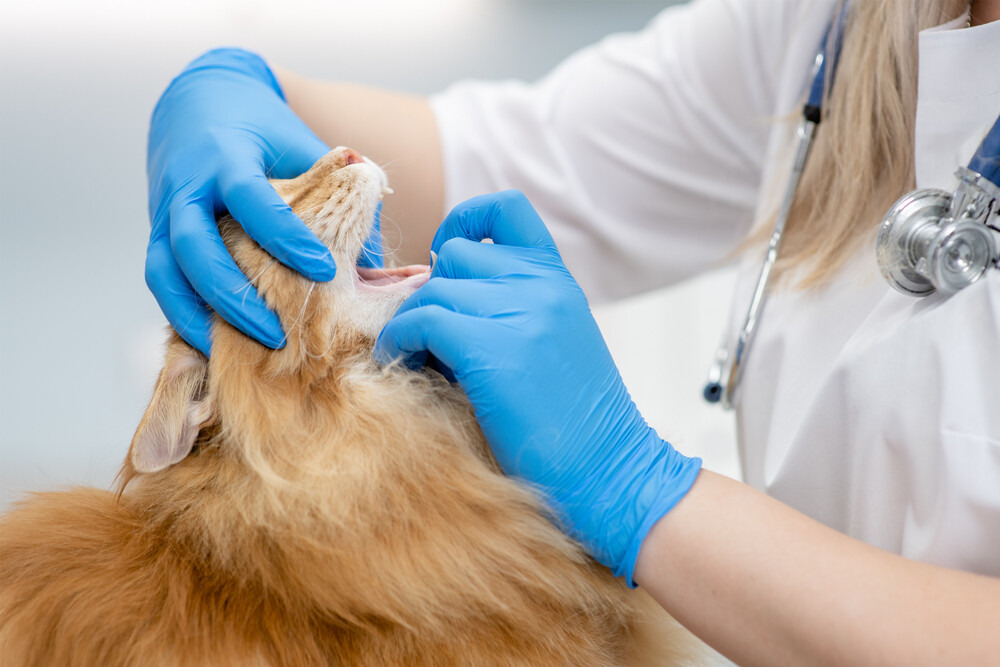
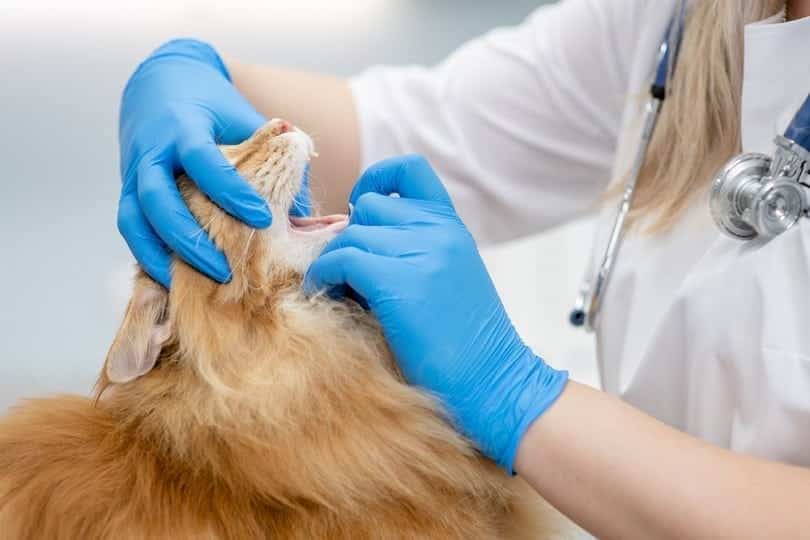
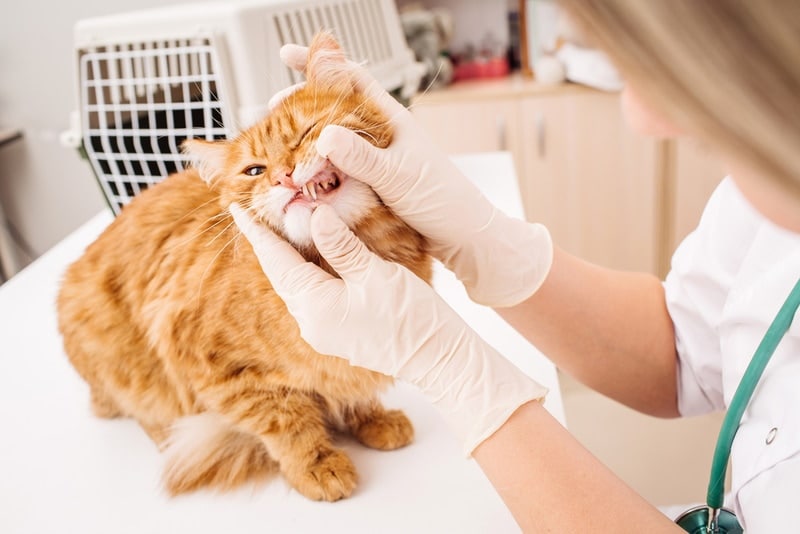
It’s best to start practicing this step while your cat is relaxed and make sure you avoid startling them. Start standing or sitting behind your cat, and place your hand on the top of your cat’s head. Move your fingers and thumb so they sit gently on your cat’s cheekbones, just behind their eyes. See if you can tilt your cat’s head back and pull their upper lip on one side upward with your thumb. With your free hand, pull down their lower lip so you can see all their teeth.

You may need to build up to this in stages, depending on your cat’s temperament. Remember to give them plenty of treats and praise!

cat brushing teeth
Photo Credit: cynoclub, Shutterstock

4. Add a small amount of toothpaste

Next, you’re going to work on adding cat specific toothpaste, but without a brush. Use a cotton bud to place a small amount of toothpaste on your cat’s teeth and rub it in. Hold their head and pull their lips back, like you’ve been practicing.

You may need someone to hold your cat’s front paws or wrap your cat in a blanket. If they resist, simply keep repeating Step 3 until they’re completely comfortable.


5. Start using the toothbrush

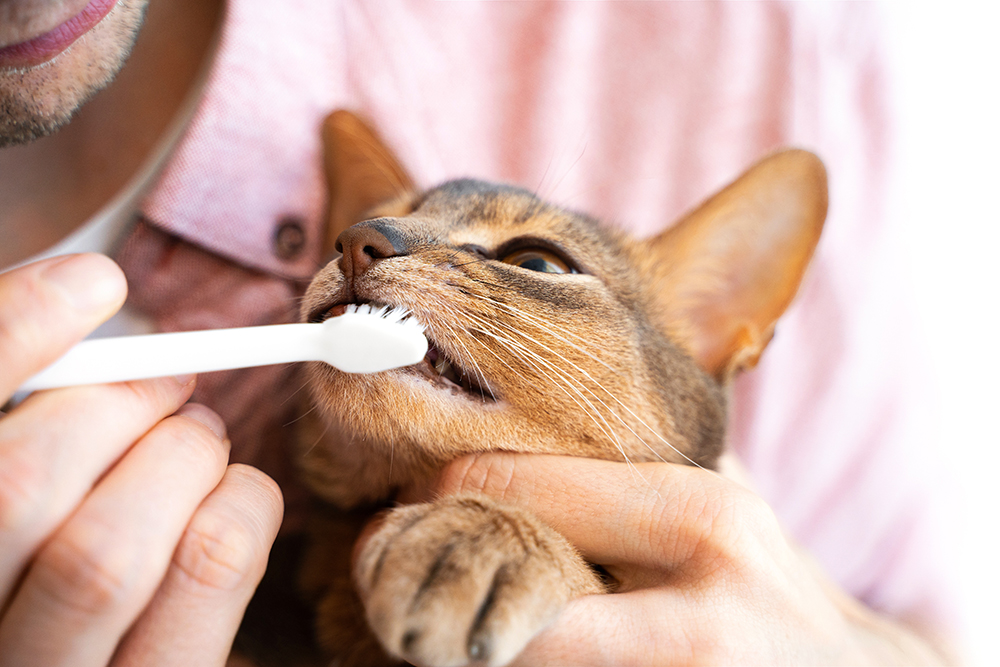
Once your cat is comfortable with Step 4, you can add in using the toothbrush instead of the cotton bud. Start brushing for just a couple of seconds on each side, and then gradually work up to longer sessions until you can get all their teeth brushed on each side.

This video can help you figure out how to brush your cat’s teeth:


6. Ask a vet for help

If, at any point, you’re having trouble or your cat is resisting, ask if you can bring your cat to the vet clinic. Seeing your vet demonstrate how to clean your cat’s teeth may help you work out the best techniques to use.


7. Repeat!

Aim to work up to brushing your cat’s teeth once per day. You may start with just one session a week and build up to daily sessions.

divider 3 paws

Don’t Forget Professional Teeth Cleaning Too!

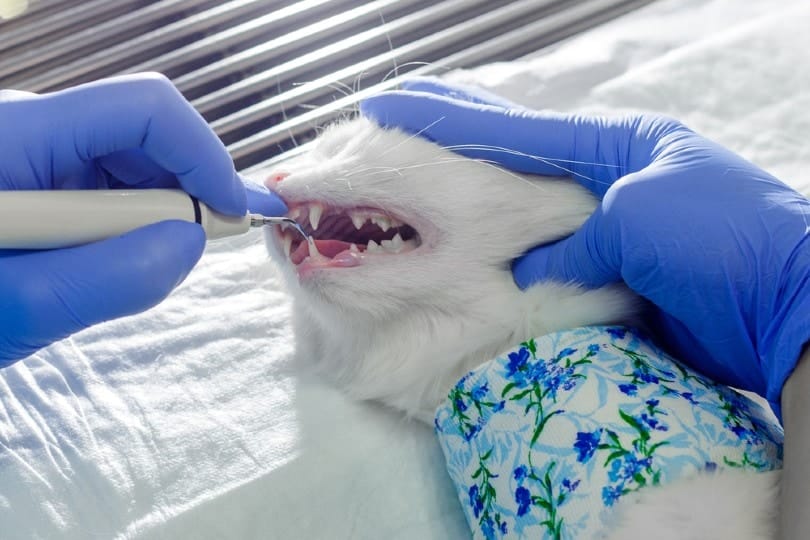
Even if you do the best job brushing your cat’s teeth at home, they may still need a professional cleaning once a year. Your vet will do this under anesthesia. After excessive plaque is removed, it’s much easier to maintain your cat’s teeth at home.

Related Reads:


Featured Image Credit: Kashaeva Irina, Shutterstock

Want content like this delivered to you?

Sign Up For Our Newsletter

News, insights, expert advice, and everything cat

* By submitting, you agree to our Terms & Conditions and Privacy & Cookies Policy.


How useful was this post?

Click on a star to rate (you can leave written feedback after clicking submit)

Help us improve Catster for pet parents!

Your feedback really matters.

What did you like about this post? Also how can we improve it?

Join the conversation

Leave a Reply

You’re very welcome to leave a comment or question. Please know that all comments must meet our community guidelines, and your email address will NOT be published. Let’s have a positive and constructive conversation.


Catster's Digital Magazine is Back!

Vet-approved health & behavior advice

Real cat stories & community features

Chatting About Big Cat Tourism, Lion Hunting, and Learning From Our Mistakes | Chatty Cattys, Episode 26

In this episode of Catster’s Chatty Cattys podcast, Nicole and Dr. Karyn dive into the dark side of big cat tourism and the...

Why Cats Sit by the Door (But Don’t Go Through It)

Door-sitting is one of those quirky little habits that almost every cat owner experiences at some point. You know how it goes: a...

Six Legs Are Better Than Three – How A Tripod Dog and Kitten Found Friendship Through Recovery

Sometimes the most meaningful friendships begin in the most unexpected places. At a Maryland veterinary hospital operated by Last Chance Animal Rescue, two...

The Original Space Invaders – Why Zero Respect for Personal Boundaries Is a Good Thing

Cats have a reputation for being independent, and in many ways they are. But anyone who has tried to work at a laptop...

More related

Yeast Infection in Cats (Malassezia Dermatitis): Our Vet Discusses Signs, Causes & Treatment

Your cat is losing hair and, quite honestly, smells like corn chips. You know it’s not normal, so you call your veterinary hospital...

We Chat With the Creator of the “Ray & Clovis” Cat Cartoon

Animated show Ray & Clovis stars a guitar-playing Iguana and a blue-hued kitty billed as the “incredibly cheerful yet endlessly frustrating roommate.” The...

How to Foster a Cat: 10 Steps to Follow

Providing a loving, calm, and caring home to a cat in need is an incredibly rewarding experience, both for you and your little...

How Old Do You Need to Be to Adopt a Cat? Vet-Reviewed Guidelines & Info

Adopting a cat is a process that involves planning and preparation, as well as the signing of documents. Because of this, most shelters...

Keep reading

Can Cats Eat Black & Green Olives? Vet-Verified Nutritional Science & Info

If you have ever been snacking on a jar of olives, you may notice your cat curiously sniffing whatever you’re snacking on. This may cause you to wonder whether or not cats can eat black and green olives. Since olives...

olives-pixabay

Petting Aggression: Why Cats Bite the Hand They Love & What to Do (Vet-Approved)

You’re sitting there ever-so-innocently petting your beloved feline, and—ouch! That really hurt! Your cat has turned to bite you. Some will flop on their bellies, grab your hand, and kick; others will sound disgruntled as if it were a warning...

aggressive cat biting human hand

How Early Can You Hold a Kitten? Early Life & Vet-Reviewed Safety Tips

Cats are known to be exceptional at caring for their young ones, and there’s nothing more exciting than having a cat give birth to a litter of kittens at home. If you have a cat that has recently given birth,...

man-holding-kitten

How Much Does It Cost to Spay or Neuter a Cat? 2026 Update (Vet-Verified)

Spaying and neutering are both common medical procedures recommended by veterinarians, breeders, and shelters. Spaying or neutering your cat removes the possibility of them reproducing. Besides helping prevent unplanned litters of kittens, spaying and neutering can prevent a wide range...

Two veterinarians holding down a Persian cat at the exam table

If I Have Asthma, Can I Have a Cat? Vet-Reviewed Facts & FAQ

Asthma is a respiratory condition that affects millions of people in the United States. For people with asthma, having a cat may seem out of the question. But is it? While cats can aggravate asthma symptoms, they don’t have to....

Inhaler for asthma patient

Can Cats Eat Dandelions? Vet-Approved Nutritional Benefits & FAQ

If you see your cat nibbling on common dandelions (Taraxacum officinale), it can be easy to want to rush them straight to the vet. But the truth is that dandelions are healthy for your cat in moderation. They offer numerous...

Can Cats Eat Dandelions

Can Cats Eat Dog Pill Pockets? Vet-Reviewed Facts & FAQ

Unfortunately, almost all cat owners experience times when their cats are prescribed medication for a health condition. Cats don’t generally enjoy eating things that don’t taste like their favorite things, like fish, chicken, and beef. If you think about trying...

Can Cats Eat Dog Pill Pockets

5 Cat Marking Behaviors: Vet-Reviewed Facts & Prevention

Cats may be small, but they are territorial little things. It makes a lot of sense if you think about your cat’s wild ancestors. They were only able to survive if they were successful hunters with access to a secure...

cream silver tabby norwegian forest cat marking its territory

Love Cats? So Do We! Join the Catster Community

Stay informed with expert pet care insights delivered straight to your inbox! Discover professional guidance on animal behavior, feeding tips, trusted product picks, and much more.


Sign up for the Catster Email Newsletter

Stay informed with expert pet care insights delivered straight to your inbox! Discover professional guidance on animal behavior, feeding tips, trusted product picks, and much more.