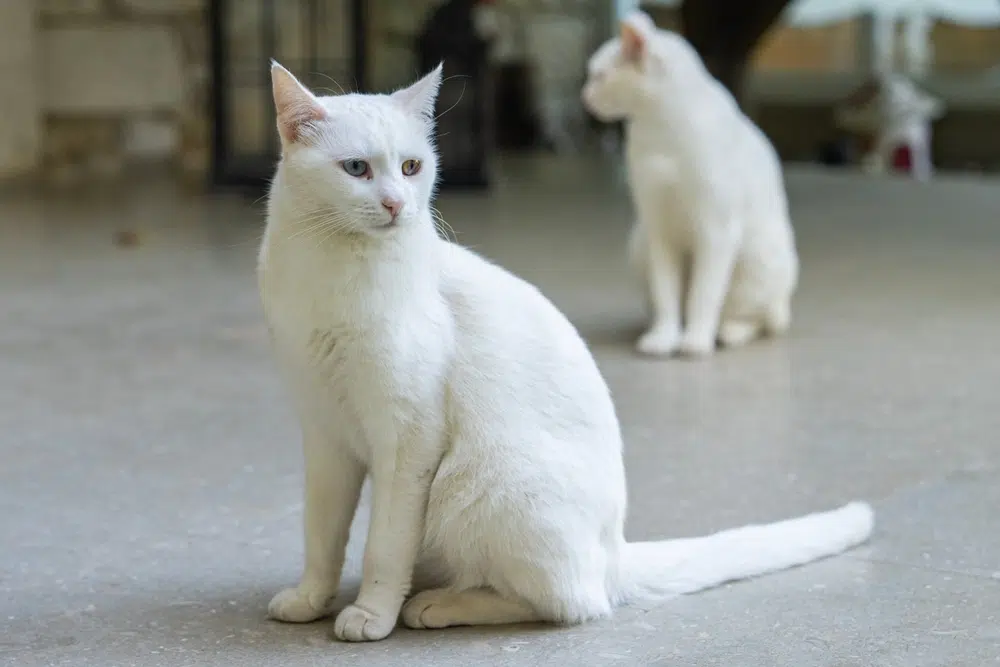
Some cats display what many owners would consider odd or weird behavior regularly. Others settle into a routine and can be quite predictable. This predictability makes changes in behavior even more obvious. If your cat is showing sudden changes in its habits, it is a sign that something is up. It might be as simple as a change in your cat’s routine that has thrown them off. Or it could be a sign of something more serious, such as anxiety or even illness.
Below are the five of the more common causes of your cat acting weird or exhibiting weird behavior, as well as other signs to look for to help identify the likely cause.

The 5 Reasons For Your Cat Acting Weird
1. Depression
It might sound like a uniquely human problem, but cats can get depressed, too. Whether your cat has lost a feline friend or even a close human companion, it can display symptoms of depression that include acting out of character.
Be patient with your depressed cat. Ensure they have food and water and give them space. Speak softly and try getting your cat’s attention using treats and toys to get them out of hiding. Contact a vet if signs last more than 1-2 days.
If you need to speak with a vet but can't get to one, head over to PangoVet. It's an online service where you can talk to a vet online and get the advice you need for your pet — all at an affordable price!

2. Stress
Feline anxiety can be caused by any number of factors, but one of the most common is a change in routine. Cats are creatures of habit. They like to eat at a similar time every day, go outside at the same time, and they like to have the same people around them. If any of these routines change, it can lead to stress. If you can’t revert to your cat’s original routine, try and ease them into the changes gradually.
- Moving house
- Having work done to the house
- A new pet
- A new family member
- Unexpected loud noises
- A dirty litter tray
- Change in diet
- Being left home alone
3. Under Threat
In the wild, cats are both predators and prey. They spend a lot of their time ensuring that they aren’t being threatened by bigger animals looking to predate them. While they might not be under any real threat in your home, the natural instinct to be vigilant remains. If your cat sees, hears, or otherwise senses any disturbance or change that might appear to be a threat, it can lead to stress and subsequent behavioral changes.
Listen out for loud noises that have started in the neighborhood. Maybe a dog has moved in next door and your cat can hear it running around or barking at delivery drivers. The perceived threat could also come from within. If you’ve recently adopted a new cat, a dog, or even introduced a new human family member to the fold, your cat might view them as a threat and this could be causing the weird behavior.

4. Sickness
Wild cats do very well at hiding illness and any sign of weakness that competitors might pounce on. Domestic cats have retained much of this behavior, as well. Odd behavior in your cat, therefore, could be linked to illness, and you should look for other signs.
- Change in eating habits – Monitor your cat’s eating habits so you can determine whether they are eating more or less. An increased or decreased appetite could be a sign of illness, and if the change continues, you should consult a vet.
- Weight changes – A change in eating habits can obviously lead to your cat putting on more weight or losing it, but if your cat’s weight is changing and it can’t be explained by a change in diet or exercise, this is a sign that something is wrong and you should take them to be checked by a vet.
- Change in litter habits – Similarly, a change in eating habits can lead to a change in litter habits, although any changes should be minimal. Changing your cat’s food is another possible culprit of litter habit changes. But gastrointestinal problems can be caused by a host of different illnesses, so keep an eye on increased or decreased urination and pooping, or any evidence of blood or straining.
- Change in exercise and energy levels – You know how active your cat is. If your cat, who normally loves to chase a ball around for half an hour, suddenly has no interest in getting up, it can be a sign of anxiety or depression. It can also be a sign of illness. Even an increase in energy level could be a sign that something is wrong and might warrant further investigation.
- Excessive fur shedding – Your cat’s coat can be one of the first areas to suffer if your cat gets ill. If the normally healthy, clean, luster of the coat has been lost and your cat is shedding, it might be that they have fleas or mites. Both of these can be irritating and both can lead to much more serious illnesses. Speak to a vet to get help with these issues.
- Excessive grooming – Cats are clean animals and most spend a lot of time grooming and cleaning themselves. However excessive grooming might be an indication of something fairly simple like an irritable skin condition or allergic reaction. But it could be a sign of something bigger.
- Vomiting – Some cats might occasionally bring back food that disagrees with them, and it isn’t that uncommon for cats to bring up furballs. It might be cause for concern, however, if your cat vomits more than once, and coughing up furballs can be a sign of overgrooming, nutritional problems, or other health concerns.
5. Lack of Stimulation
Cats need mental stimulation as well as physical exercise. If they are lacking either of these, it can cause them to get ill, but it can also lead to boredom. Ensure your cat gets a good amount of daily exercise. This may mean hosting regular play sessions if your cat is kept strictly indoors. Also provide toys, especially interactive toys, when you are out of the house.
They will keep your cat entertained and keep their minds busy, therefore helping to stave off boredom and depression. Interactive toys include treat toys, licky mats, and more.

Conclusion
Most owners get to know the foibles and habits of their cats. And, similarly, cats get to know the routines and habits of their owners. When human habits change, or when a cat’s surroundings are different, it can cause stress in cats. However, sudden changes in a cat’s demeanor could also be a sign of ill health.
Look for other signs to help identify the cause of weird cat behavior and, if necessary, have your cat checked by a vet to eliminate illness as a cause of the changes.
See also:
Featured Image Credit: Wanwajee Weeraphukdee, Shutterstock
 The 5 Reasons For Your Cat Acting Weird