Another Bird Flu Food Recall – Is Raw Feeding Putting Your Cat's Life At Risk?

In this article
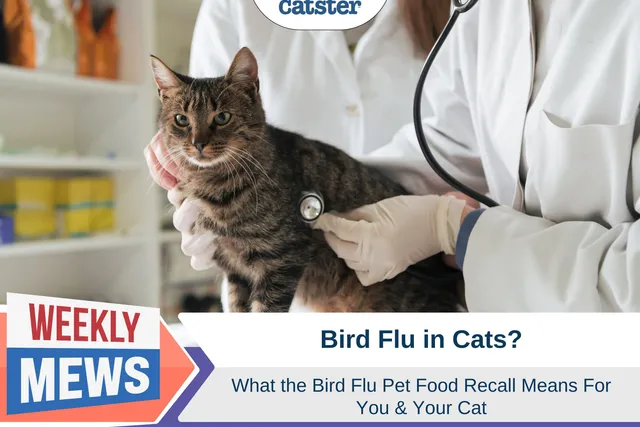
Coming hot on the heels of our report on voluntary recalls by some raw cat food companies due to possible bird flu contamination following the death of an indoor cat late last year, the FDA has issued a recall of another raw cat food product. Wild Coast Raw Boneless Free Range Chicken Formula Raw Pet Food tested positive for the highly pathogenic strain of avian flu, H5N1.

While the recall is limited to specific batches of this food, it once again raises the question of the safety of feeding our cats a raw food diet.
There is no doubt that there are significant health benefits to providing cats with a diet that is rich in high quality, whole food ingredients, but evidence suggests – and the FDA agrees – that the risks associated with feeding cats uncooked meat are too high to justify the perceived advantages.
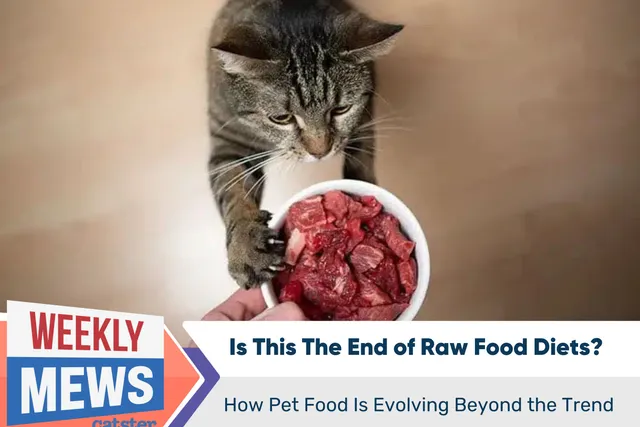
Over the years, cat food, and pet food in general, has undergone an interesting evolution. It all started with off-cuts and leftovers of meat and fish, until we realized that there was more to a feline diet than just muscle meat. Then cat food progressed to more processed formulations of wet and dry food, whose quality may have left something to be desired, but the balance of nutrients was improving. Enter the age of veterinary approved, premium food, tried, tested, and tried again to ensure we could prevent, manage, even treat health conditions through diet alone, albeit a diet so heavily processed that it no longer resembles food. Disillusioned by the bland appearance of these otherwise ideal diets, some pet food companies and owners have gone back to basics, with a more nutritionally complete version of the raw meat menu. Others have gone one step further, taking these sorts of fresh, whole ingredients to create healthy, balanced, lightly cooked meals that provide all the benefits and appeal of a minimally processed diet, with the added safety of cooking to minimize pathogen risk.

What Are the Risks of Raw Feeding?
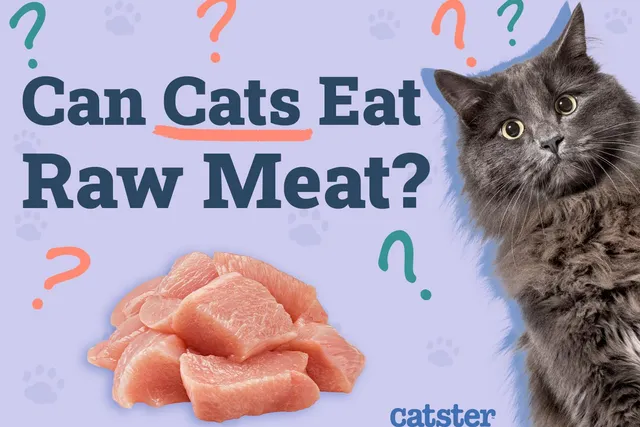
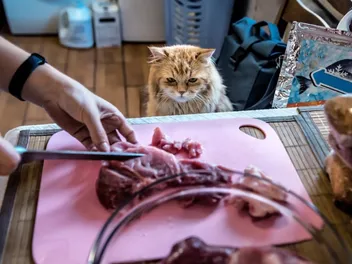
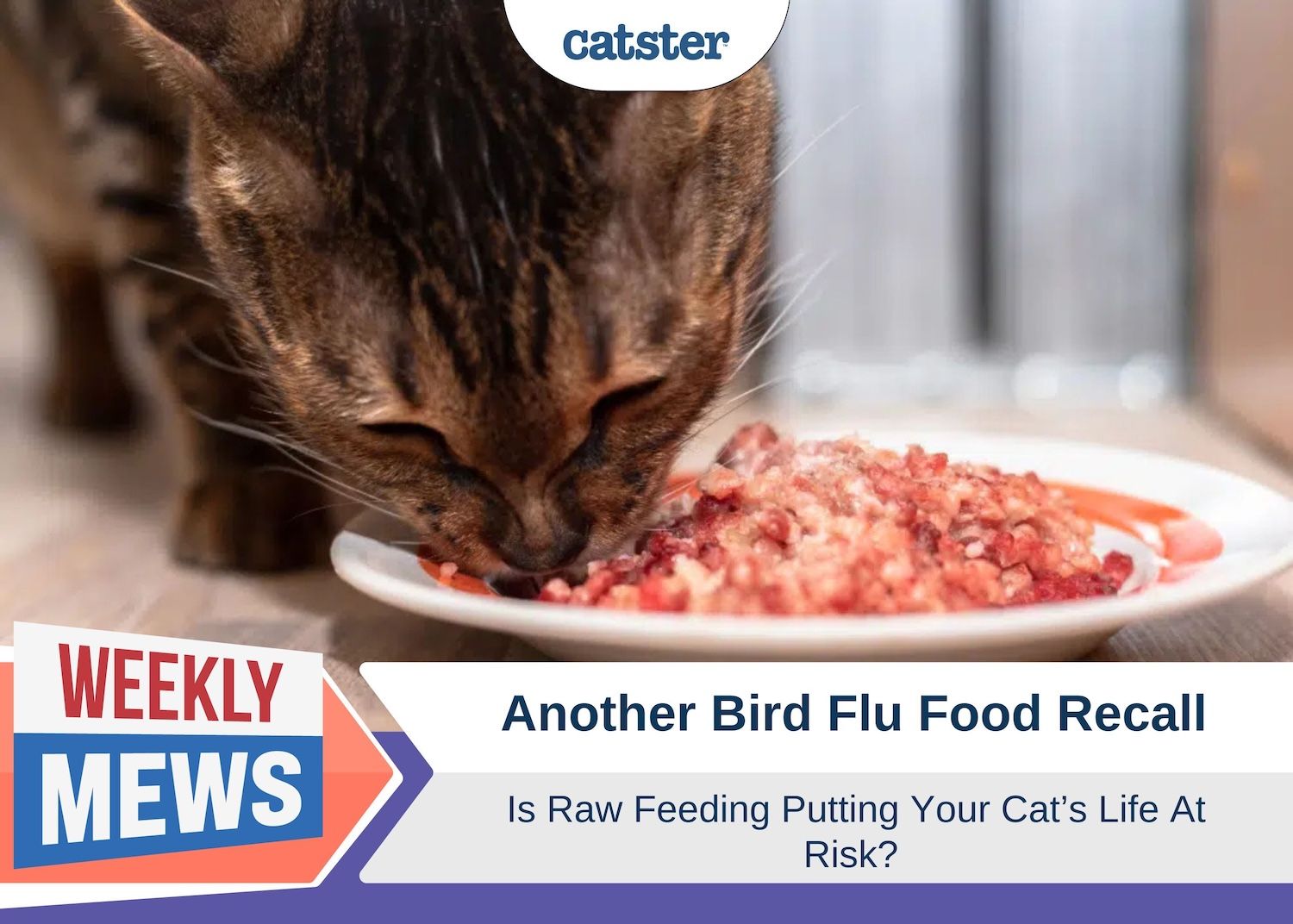
Feeding cats a raw food diet, if done correctly, can provide nourishment and enrichment by giving them everything they need along with the interesting smells and textures associated with raw ingredients. The problem is that the same pathogens that make raw meat dangerous for humans are just as dangerous for our pets. Raw meat, no matter how carefully handled and prepared, carries the risk of being contaminated by pathogens like Salmonella, E. coli, botulinum toxin, and now, bird flu, some of which are deadly, others merely debilitating, and all of which can be eradicated by heating food to a temperature of 165oF.
While many heavily processed pet foods rely on ultraheat treatments to eliminate pathogens and preserve the food, gentle cooking and immediate freezing of food can achieve the same results, with minimal depletion of nutrients. It does remove bones from the safe list of food items, but this is a small price to pay to keep our loved ones safe.
Some raw pet foods undergo a process of low-heat treatment, dehydration, or are ‘freeze-dried’. These processes can have a preservative effect on raw foods, but the only ways to reliably eliminate pathogenic organisms is by heating food to a temperature of at least 165oF, or through high pressure processing (HPP), a non-thermal process that kills harmful bacteria while preserving the nutritional benefits of the product.
What Are the Signs of Bird Flu in Cats?

Although the chances that your cat will be infected with H5N1 are still very low, the risk is there. Cats that become infected with bird flu may exhibit a number of clinical signs, including:
- fever
- lethargy
- low appetite
- reddened or inflamed eyes
- discharge from the eyes and nose
- difficulty breathing
- neurological signs, e.g. tremors, stiff body movements, seizure, lack of coordination, or blindness
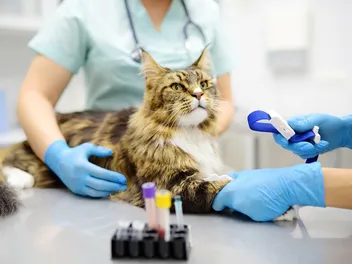
Sadly, bird flu is often fatal in cats, so if you are in any doubt, contact your vet and check with your food supplier to make sure they are screening every batch.
How to Reduce Your Cat’s Risk
There are a number of steps you can take to try to minimize your cat’s risk of coming into contact with bird flu, like keeping them indoors, taking steps to prevent hunting in outdoor cats, and of course, not feeding raw meat.
If you have a supply of cat food already and don’t want it going to waste, you can cook meat products, using a meat thermometer to ensure that the center reaches at least 165°F. Remove any bones, as cooking will cause them to become brittle and risk internal damage, and make sure you handle all raw meat with gloves, and always wash hands thoroughly with an antibacterial cleaner when finished.
Yes, the idea of feeding our cats a menu that more closely resembles their natural, ancestral diet does have its appeal, but it’s worth remembering that the expected lifespan of a cat living off the land is less than half that of the average indoor kitty. Our cats have been domesticated over thousands of years, and we owe it to them to provide them with food that is healthy, nutritious, and above all, safe.
Featured Image Credit: Svyatoslav Balan, Shutterstock
Did You Know?
- Our breaking news articles are featured in our weekly emails. Don't miss out on the latest and sign up for our newsletter below!
Expert cat care, straight to your inbox
News, insights, and useful advice, delivered to you.

No spam — unsubscribe anytime.
By signing up, you agree to our Terms & Conditions and Privacy & Cookies Policy.
How useful was this post?
Click a star to rate. You can leave written feedback afterwards. (We read all feedback.)
Dr. Karyn Kanowski BVSc MRCVS (Veterinarian)
Dr. Karyn comes from Queensland, Australia, and has lived in the UK for the past 10 years. In 2010, she graduated from The University of Queensland School of Veterinary Science and also has a Bachelor’s degree in Zoology. She is passionate about using evidence, experience, and owner collaboration to provide the best solutions for pets, and believes in making reliable information about animal health accessible to all. Dr. Karyn shares her home with five cats, four dogs, and one husband. When she is not in the scrubs, she spends her time writing, gardening, and cleaning up pet hair!