Can My Cat Breastfeed After Being Spayed? Vet-Verified Facts & FAQ


In this article
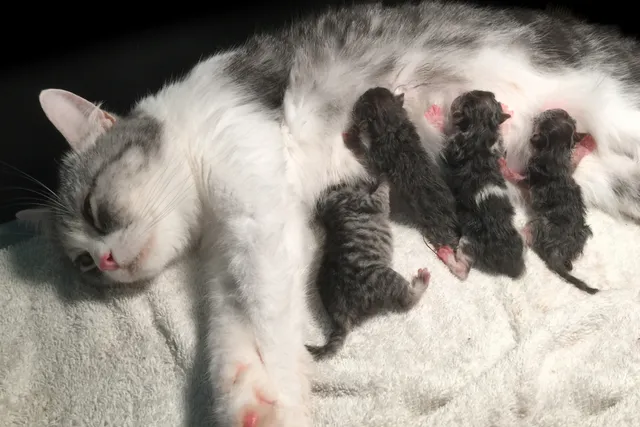
If you participate in a trap-neuter-return program for stray and feral female cats or you currently own a nursing cat, you may have thought about having her spayed. The process is crucial for stray and feral cats to prevent multiple pregnancies, and for your own cat unless you are a breeder. Having your cat spayed also has many health benefits such as preventing uterine infections and reducing the incidence of mammary cancers. But can a cat continue to nurse her kittens after getting spayed?
Yes, mother cats can lactate and continue to nurse their kittens after being spayed. However, unless absolutely necessary, it’s recommended to wait until the kittens have weaned before having the cat fixed.
In this article, we look at the reasons why this is the case.

Can Cats Nurse After Spaying?
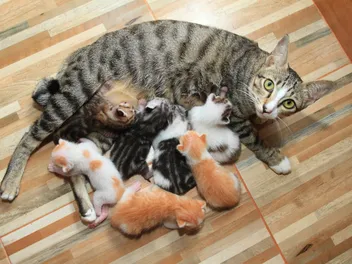
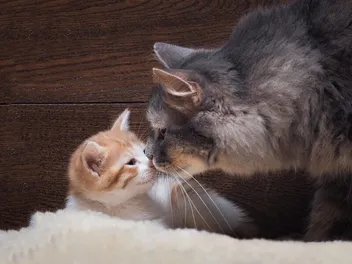
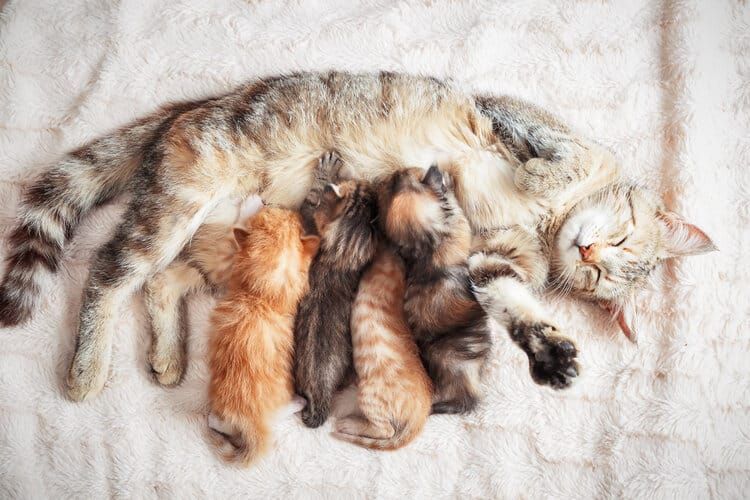
A mother cat will start lactating shortly before giving birth. She will continue to provide milk for her kittens until they have been weaned, even if she has been spayed.

Why It Isn’t Such a Good Idea
There are several reasons that spaying a nursing mother is not a good idea. First, she might produce less milk than she did before the procedure. Second, she might not allow the kittens to nurse due to pain from the surgery. When kittens nurse, they knead the mother’s belly, which might cause her pain near the surgical site.
Also, while cats are lactating, the blood supply to their mammary tissue increases, which can cause excess bleeding during the surgery.
Finally, the mother must be separated from her kittens for 12 to 24 hours after the surgery. So, unless they are weaned or are starting to eat solid food, this is not ideal.
How Are Nursing Mothers Spayed?
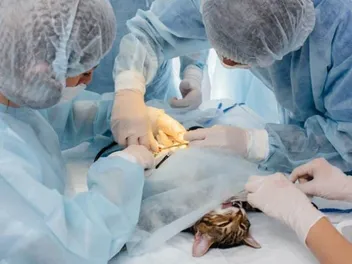
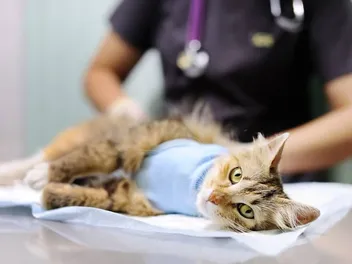
In certain situations, typically with trap-neuter-return programs, it’s necessary to spay a mother cat. Some cats can go into heat while still nursing, though it’s more likely that they will go into heat roughly 5-8 weeks after giving birth, which usually coincides with when the kittens are weaned. Spaying a nursing mother usually entails a flank spay 1 (also known as a side spay).
Traditional spays are done on the belly, but a side spay will make it easier for cats to continue nursing their kittens without those little kneading paws causing them pain. That said, a nursing mother can be spayed the traditional way, and the recovery for either method is the same.
Speak to a vet (which you should be doing anyway if you have a pregnant cat) about the best time to have your cat spayed, and remember that it is possible for her to get pregnant again quickly after giving birth.
When Are Kittens Weaned?
When kittens start to transition from mother’s milk to solid food, they are weaning. Kittens under 4 weeks are entirely dependent on their mother for milk (or formula for foster kittens), and the weaning process traditionally begins around 4 weeks of age.
Kittens themselves will start showing interest in food around this time, which is a great indicator that it's time to start offering moistened kitten food. Other physical signs that the kittens are ready are that they are increasingly mobile and starting to play.
The weaning process should be a slow, gradual process over 3 to 4 weeks, with most kittens being completely weaned by the time that they are 8 weeks of age. The safest time to spay the mother generally starts when her kittens are no younger than 5 weeks old, and it is often best when the kittens are completely weaned.

Can Spayed Cats Produce Milk?
If a cat has been spayed for a while, they would not normally produce milk unless there was a hormonal imbalance. While there are occasional cases of false or pseudopregnancy in cats when they lactate, this occurs when a queen goes into a heat cycle and ovulates but does not become pregnant. As spaying is an ovariohysterectomy, when both the ovaries and uterus are removed, a spayed cat would not be able to ovulate and therefore would not have a false pregnancy.
Conclusion
If your cat is nursing but needs to be spayed, the absolute earliest should be when the kittens are at least 5 weeks old and have started eating solid food. You do not need to wait until her milk is completely dried up, but it's generally recommended to wait until the kittens are no longer dependent on her. By 8 weeks of age kittens are usually fully weaned and eating solid food, and so for most cats, this is the best time to get them spayed.
That said, nursing mothers can continue nursing even after being spayed, which can be the best option for stray and feral cats in a trap-neuter-return program.
Sources
Featured Image Credit: Rashid Valitov, Shutterstock
Expert cat care, straight to your inbox
News, insights, and useful advice, delivered to you.

No spam — unsubscribe anytime.
By signing up, you agree to our Terms & Conditions and Privacy & Cookies Policy.
How useful was this post?
Click a star to rate. You can leave written feedback afterwards. (We read all feedback.)
Kathryn was a librarian in a previous lifetime and is currently a pet writer. When she was a child, she hoped to work in ZOOs or with wildlife in some way, thanks to her all-consuming love for animals. Sadly, she's not strong in the sciences, so she fills her days with researching and writing about all kinds of animals and spends time playing with her adorable but very naughty tabby cat, Bella. Kathryn is hoping to add to her family in the near future – maybe another cat and a dog.