Get

In Your Inbox

Catster is reader-supported. When you buy via links on our site, we may earn an affiliate commission at no cost to you. Learn more.

Why Do Cats Like Rubber Bands? 4 Vet-Approved Reasons

Share

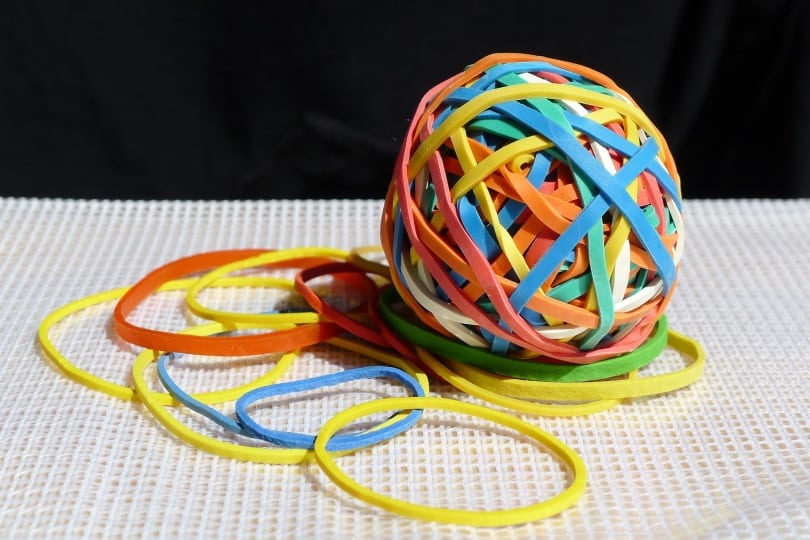
rubber bands_evondue_Pixabay

Cats are peculiar beings, and any cat owner knows that cats will entertain themselves with something simple, such as a milk ring, bottle cap, empty box, piece of paper, or even rubber bands. Even if you buy your cat plenty of cat toys, your cat will still find interest in bizarre things around the home. But why do cats like rubber bands? What is it about them that intrigues cats and spikes interest in playing with them?

If you’re a cat owner and have wondered about the answer to this question, you’ve come to the right spot. In this article, we’ll investigate why cats like rubber bands and the interesting reasons behind the behavior.

divider cats oct 2024

The 4 Vet-Approved Reasons Cats Like Rubber Bands

1. Hunting Instinct

Cats are natural hunters and have a natural prey drive, and the elasticity and springy tendon-like texture of rubber bands inherently attract cats. Since rubber bands have a tendon-like feel, this makes cats feel as if they are pulling the tendon from their prey, and best of all, rubber bands don’t fight back.

As strange as this sounds, rubber bands make cats exercise their natural hunting skills and stimulate their prey drive, which can make them feel accomplished and satisfied. Cats need mental stimulation, and rubber bands can provide this for your cat.


2. They Love the Smell

Rubber bands have a chemical smell that attracts cats. Did you know cats have 45 to 80 million (and possibly up to 200 million)1 scent receptors? That’s impressive, especially compared to humans, who have roughly 5 million.

Rubber bands have a chemical smell, which may mimic hormones that are tempting to cats. Natural rubber bands contain odorants2 that include limonene, which is found in citrus fruits that have a lemony scent.

Rubber bands also contain a compound called triethylamine3 that produces a fishy smell, which is extremely enticing to cats. Humans may not smell these scents in rubber bands, but remember that cats have millions more scent receptors in their noses compared to humans.

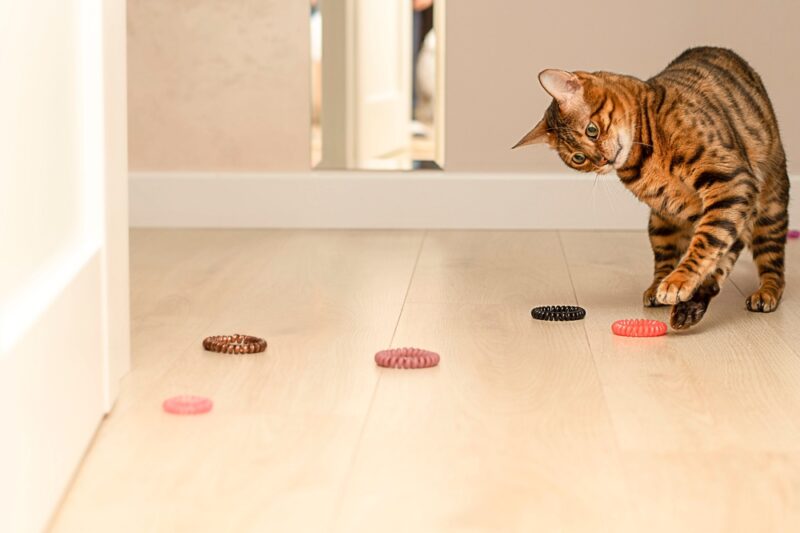
rubber bands
Image By: Steve Buissinne, Pixabay

3. Your Cat May Have Pica

In case you’re not familiar with the term, Pica means the desire to eat non-edible material, and rubber bands certainly fall into this category. Other objects that fall into this category are leather, plastic, wood, paper, and cardboard, which could explain a cat’s attraction to empty boxes. Why some cats may have Pica is not fully understood, but it could be from being weaned too early, compulsive disorders, or genetics.


4. Stress Related

Another possible reason why your cat loves playing with rubber bands is because of stress. A stressed cat may look for ways to self-soothe, and licking, chewing, and sucking on rubber bands may be a stress reliever.

Cats dealing with boredom, anxiety, or even an illness may display odd behaviors such as chattering, knocking things over, ignoring you, pooping outside the litter box, and bouncing off the walls. It’s important to take your cat to a veterinarian if you suspect your cat may be stressed and exhibiting odd behaviors.

If you need to speak with a vet but can't get to one, head over to PangoVet. It's an online service where you can talk to a vet online and get the advice you need for your pet — all at an affordable price!

PangoVet_Mention-in-Content for PangoVet2 save money

How Rubber Bands Can Be Fatal

Unfortunately, rubber bands are not a safe object for your cat to play with and can even be fatal. Rubber bands can cause an obstruction in your cat’s digestive tract that will result in surgery to remove it, and it could be life-threatening if not caught in time. There’s a chance your cat may pass the rubber band, but the tendon-like material can easily get hung up in the digestive tract.

Playing is an important part of keeping your cat mentally and physically engaged, and a great toy will make it much easier. We like Hepper's Catnip Stick Toys because they're sturdy enough to handle intense play and completely filled with organic catnip. You'll love the fun range of pastel colors and your cat will enjoy the prey-like shape!

Hepper Stick Catnip Cat Kicker Toy
  • No Filler - Like all the best cat toys our is stuffed with 100% organic catnip. Cheap cat toys with...
  • Flexible Play - Simple plush shape is great for biting, scratching and pawing. It can start life as...
  • Durably Designed - Our cat safe toys are hand-stitched with a double-lined exterior construction for...

At Catster, we’ve admired Hepper for many years and decided to take a controlling ownership interest so that we could benefit from the outstanding designs of this cool cat company!

What Do I Do if My Cat Swallowed a Rubber Band?

First things first: try not to panic! Rubber bands are not toxic to your cat, and just because your cat swallowed a rubber band does not mean it will cause problems. But it could, and you must not ignore it.

The timeframe of when your cat may pass the rubber band varies, but objects not broken down during the digestion process can stay in your cat’s digestive tract for a long time. It’s vital to know the signs that your cat is having problems after swallowing a rubber band, which include:

  • Changes in their stool
  • Vomiting
  • Not eating
  • No interest in play
  • Excessive sleeping
  • Changes in drinking habits
  • Having a sore tummy

Contact a vet ASAP if you notice any of these signs. The sooner your cat is examined, the better the outcome. If your cat swallows a rubber band, other complications could arise, such as choking, a tangled intestine, getting caught around the tongue, and damaging delicate tissue in the food pipe or inside the mouth.

sick cat lying on blanket
Image credit: one photo, Shutterstock

divider 1 paws

Conclusion

For the best outcome and to avoid a potentially dangerous situation, it is best to keep rubber bands inaccessible and out of reach from your cat. Cats can jump on just about any object, so it’s wise to avoid leaving rubber bands anywhere your cat can access.

Keep rubber bands in a drawer or some other safe area, and ensure your cat has plenty of safe toys to play with. Always contact your vet if you suspect your cat has swallowed a rubber band or some other unsafe object.


Featured Image Credit: evondue, Pixabay

Want content like this delivered to you?

Sign Up For Our Newsletter

News, insights, expert advice, and everything cat

* By submitting, you agree to our Terms & Conditions and Privacy & Cookies Policy.


How useful was this post?

Click on a star to rate (you can leave written feedback after clicking submit)

Help us improve Catster for pet parents!

Your feedback really matters.

What did you like about this post? Also how can we improve it?

Join the conversation

Leave a Reply

You’re very welcome to leave a comment or question. Please know that all comments must meet our community guidelines, and your email address will NOT be published. Let’s have a positive and constructive conversation.


Catster's Digital Magazine is Back!

Vet-approved health & behavior advice

Real cat stories & community features

Chatting About the Rainbow Bridge, Euthanasia, and Laughter During Grief | Chatty Cattys, Episode 24

If you’ve ever felt the loss of a beloved cat, or are dreading the day when your pet crosses the rainbow bridge, you’ll...

The Simple Reasons Cats Refuse to Let Anyone Use the Bathroom Alone

Cats have an extraordinary talent for making themselves present in the most inconvenient places, and the bathroom ranks near the top of the...

A Paw-sitive Milestone: Canada Officially Becomes a Declaw-Free Nation

Canada has officially become a declaw-free nation. On May 25, 2026, a new regulation was filed in Ontario under the Provincial Animal Welfare...

The Surprisingly Simple Ways to Help a Cat With Hairballs

Cats spend an astonishing amount of time grooming. It is part hygiene routine, part comfort ritual, and part instinct that traces back generations....

More related

When Can Kittens Eat Solid Food? Vet-Approved Facts & FAQ

Adopting a kitten is a wholesome moment, but it comes with many responsibilities. While their sleeping requirements are usually easier to manage, their...

How to Keep Cats Away From Certain Areas: 18 Vet-Verified Methods

From kitchen counters to the baby’s room to your dining room table, nothing seems to be off-limits in a cat’s world. Cats somehow...

10 Pet-Friendly Hotels in St Louis (2026 Update)

If you’re traveling with pets, you need a place that not only houses your fur babies but makes them feel welcome. St. Louis...

Siamese Kittens for Sale: 2026 Breeders List in Canada (BC, Ontario, Quebec, Alberta)

Catster advocates for adopting before shopping, though we fully understand there are many reasons for seeking a breeder. So, we encourage it to...

Keep reading

Why Do Cats Show You Their Butt? 6 Vet-Reviewed Reasons

Although cats have lived with humans for millennia, they still do many things that leave us feeling puzzled or confused. One behavior that can surprise or shock new cat owners is a cat’s tendency to show their butt when they...

black cat enjoying when owner scratch at the base of his tail showing the butt

Tonkinese Cat Health Problems: 7 Vet-Reviewed Concerns

Tonkinese cats are known for their beautiful coats and pleasant personalities, but that’s no guarantee of health. Although Tonkinese cats are healthy, they are slightly more likely to inherit some genetic conditions that will need extra care. Every breed of...

Catster_Health Problems Tonkinese Cats

Can Cats Eat Skittles? Vet-Verified Nutritional Facts & Risks

Like humans, cats love the occasional treat. While we might reach for gummy bears or Skittles when our sweet tooth acts up, the same cannot be said for our feline companions. Not only do cats not crave sweets as we...

Can Cats Eat Skittles

Can Cats Get Kidney Transplants? Our Vet Discusses Facts & Considerations

Kidney disease is one of the most common causes of illness and death in cats, with almost 80% of cats over 15 years experiencing some form of renal insufficiency. Although it is usually associated with older felines, younger cats—through congenital...

two different cats standing side by side outdoors in the garden

How to Keep Cats Off Furniture: 7 Tips & Tricks

As a cat owner, you know there’s nothing better than cuddling up with your cat, especially after a long day at work. But there are some places you may not want your cat to be, like on your furniture. Not...

cat sitting on a scratching post

Can Cats Eat Pineapple Leaves? Vet Reviewed Dangers & Advice

Pineapple lovers know the leaves and skin of their favorite fruit have no place in their diet, but cats are rarely as discerning. Many cats enjoy chewing greenery for one reason or another, often not taking the time to check...

Can Cats Eat Pineapple Leaves

Cat Person Wet Cat Food Review 2026: Our Expert’s Opinion

Cat Person Food is a subscription-based cat food company that delivers high-protein, minimally processed food to your door. They utilize only human-grade ingredients and have several recipes to choose from. Their wet food is made with either real, shredded meat...

Cat Person Wet Cat Food Review

11 Best Cat Foods for Nursing Mother Cats in 2026 – Reviews & Top Picks

Motherhood is a tough job for humans and animals. One of the hardest parts of the job is pregnancy and nursing. Not only is the mother responsible for feeding her babies, but she must feed herself enough to make milk...

Gray mother cat feeding kittens while taking a nap

Love Cats? So Do We! Join the Catster Community

Stay informed with expert pet care insights delivered straight to your inbox! Discover professional guidance on animal behavior, feeding tips, trusted product picks, and much more.


Sign up for the Catster Email Newsletter

Stay informed with expert pet care insights delivered straight to your inbox! Discover professional guidance on animal behavior, feeding tips, trusted product picks, and much more.