Senior Cat Grooming: Vet Approved Facts & Tips

In this article
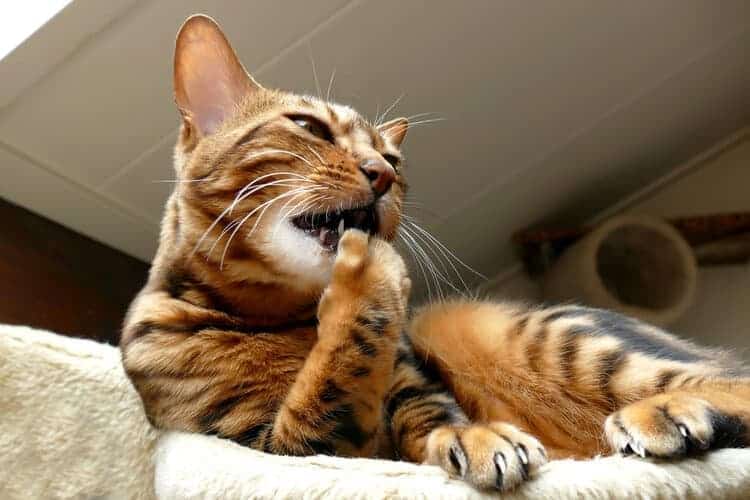
Felines are fastidious creatures. They love to be clean and spend much of each day grooming themselves. As cats age, they sometimes have trouble grooming those hard-to-reach places. Older felines can have trouble contorting into the needed position to reach certain spots, leading to matted fur and lots of tangles.
What can you do to help? When your kitty reaches their senior years, you’ll probably need to do some grooming for them to ensure their coat stays clean and free of mats, helping them feel as comfortable as possible. How do you groom a senior cat? Keep reading to learn all you need to know to successfully groom an older feline!

Grooming Products Recommendations
While cats are generally good at grooming themselves, they occasionally require assistance to remain clean and looking their best. Selecting the right grooming products can significantly enhance the grooming experience, so it’s wise to invest in quality products and tools to make the process easier for both you and your cat.
Why Has My Senior Cat Stopped Grooming?
Senior cats will stop grooming themselves (or groom less often) for many reasons. The biggest reason is that as they age, many cats develop arthritis, which makes grooming more challenging. Arthritis often affects the hips, toes, knees, shoulders, and spine. If those things don’t move as they once did, your pet may have trouble stretching their head to get at a particular spot during grooming.
Obesity is another reason cats may find it difficult to groom properly. Senior felines are more prone to obesity because they are often less active than their younger counterparts, and having extra weight means a more difficult time reaching certain areas of the body.
Your pet might also be experiencing increased oil production from the skin. This is natural and occurs as the cat gets older, but it can cause brittle hair and more matting. It may be that your cat is trying to groom the affected areas, but because of the extra oil production, they just aren’t quite getting the job done.
Finally, there are certain diseases that can result in reduced grooming in felines, including diabetes, kidney disease, and thyroid problems. Sometimes, cats with kidney disease or dental disease are still grooming, but their thickened or infected saliva leaves their coat looking and smelling worse than when they started.
Should I Groom My Senior Cat?
First, you need to book them in for a check-up with the vet. If your cat has stopped grooming themselves properly, there is usually a reason, and if your cat has arthritis, dental problems, or any other health issues, these need to be addressed. Arthritis in particular is often ‘accepted’ as a normal part of the aging process, when there are supplements and medications that can help improve your feline’s quality of life enormously.
Once they have been assessed by your vet, you should absolutely groom your senior cat if they’re having trouble doing so themselves. If your cat can’t groom everything themselves and doesn’t have another cat helping them with grooming, it can lead your pet to develop mats and tangles that can be uncomfortable and even painful.
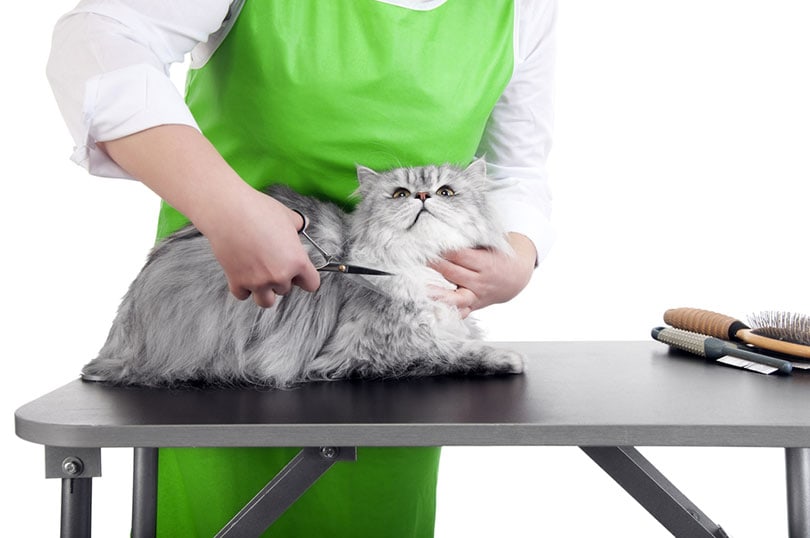
We’ll look at how to groom your senior cat below, but if you feel you’re not up to the task or can’t get rid of all the mats in your pet’s fur, don’t hesitate to call on a professional! For cats with long, fluffy coats, it is often a good idea to at least get the area around their back end (their trousers) clipped short to make their - and your - life a bit easier.

How to Groom a Senior Kitty
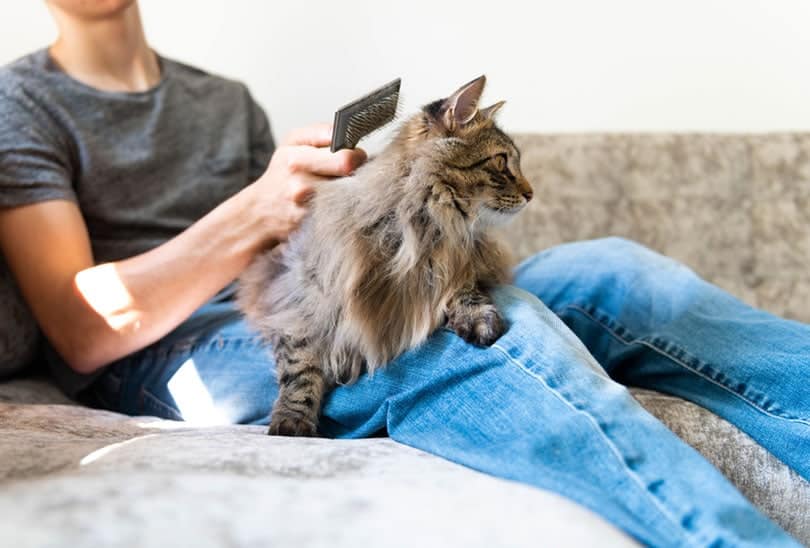
There are a few ways you can help your cat out with grooming when they get older, but the most important thing you’ll need to do is brush them. You may also need to give your pet an occasional bath, their nails should be trimmed regularly, and teeth should be brushed frequently.
Brushing a Senior Cat
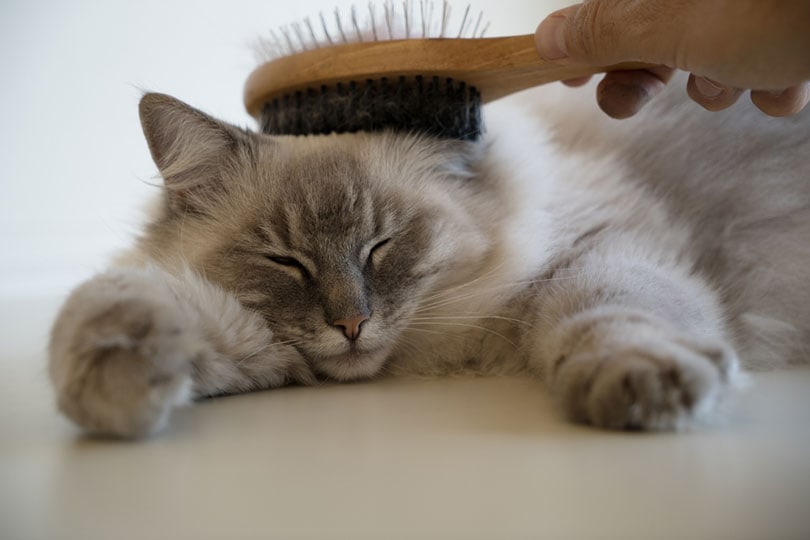
- Make sure you’re using the right kind of brush for your kitty’s fur. Long-haired cats will need a pin brush, but cats with short hair can make do with a bristled or curry brush.
- Get your cat comfortable before you brush them by placing them on a soft surface in an area where they feel safe. You could try using a calming product, such as Pet Remedy Wipes, to help them feel at ease.
- Don’t expect to get it all done in one sitting - if your cat is a bit stiff and sore, or they have lots of knots and matted fur, you will likely need to do this in stages.
- Gently run your hands over your cat from head to tail. This allows you to search out any areas on the body that may be sensitive to the touch so you don’t accidentally hurt them. (And, if the kitty is nervous, this should help calm them down!)
- Once you’ve found any sensitive areas, it’s time to start brushing! Brush your pet, beginning at the head and working your way down to the tail, while avoiding sensitive spots.
- Be extra gentle with brushing around the hind legs, hips, and underbelly, as these can be more sensitive for senior kitties.
- If there are tangles or mats, be gentle! Don’t yank or pull at them or try to force the brush through them. Instead, try to work mats out with your fingers. If they aren’t coming out, you can try putting a smidge of corn starch on them and then brushing through. But if you still can’t remove the mats, you’ll need your vet or a groomer to do it, as the mats will need to be cut out. You may find a small set of grooming clippers useful for getting rid of matted fur, but this must be done with extreme caution - feline skin, especially in older cats, is very fragile.
- Give your pet lots of praise (and maybe even a few treats!) while brushing them.
- If you find anything that seems out of the ordinary while brushing your cat, take them for a vet visit.

Cleaning a Senior Cat
Kitties typically aren’t fond of bathing, and they don’t require bathing often. You can also invest in dry shampoo or pet wipes for cleaning in-between baths.
But every once in a while, the occasion for a bath arises. When that happens, you should know how to bathe your cat.
- Fill a sink or tub with a few inches of warm water (water should reach just above the belly).
- Brush the cat before bathing them!
- Once your pet is in the bath, wet their fur carefully with a cloth or a cup of water. Don’t wet the face or head, though, as this might irritate kitty’s nose, eyes, or ears.
- Use feline shampoo (never human!) to lather your cat’s coat everywhere but the head.
- Rinse the shampoo carefully with a cup or detached shower head. This step might need to be repeated to ensure all shampoo has been removed from your cat.
- You can follow this up with conditioner if you’d like, using the same process as the shampoo.
- After the cat is clean, wrap them in a towel and pat them dry.
- Finally, be sure you’re giving your pet lots of praise and reassurance throughout the bath! You might want to use treats here as a distraction.
And the Rest
Other than brushing and the occasional bath, you can help your senior cat with grooming by trimming their nails regularly. Feline nails get thicker and more brittle as they age, so nail trims are required more often. If you aren’t comfortable doing it yourself, you can have your vet or a groomer do the job.
And don’t forget to brush your kitty’s teeth regularly! Dental disease can develop in older felines, and that can cause pain, which can lead to your cat not wanting to eat. This is another area where a vet or groomer can help if needed.

Final Thoughts
As our feline friends age, they have more trouble grooming themselves. Most of the time, this is because they become less limber due to arthritis, but there are other causes, too, so be sure to book them in for a senior health check with the vet. You can help your cat out, though, by taking on some of the grooming for them.
Senior cats should be brushed regularly to prevent their fur from getting tangled or matted; their nails should be trimmed often, and their teeth should be brushed frequently. You might also need to give them a bath on occasion.
Your cat will be grateful for your help in keeping them clean; plus, brushing kitty will be an excellent bonding experience for you both!
Featured Image Credit: Anna Hoychuk, Shutterstock

Expert cat care, straight to your inbox
Vet-reviewed advice, behavior tips, and the best of Catster. Free, and you can unsubscribe anytime.
By signing up, you agree to our Terms & Conditions and Privacy & Cookies Policy.
Misty Layne lives out in the woods in small-town Alabama with her two Siamese cats —Serafina and Jasper. She also has an array of stray cats, raccoons, and opossums who like to call her front porch home. When she’s not writing about animals, you’ll find her writing poetry, stories, and film reviews (cats, by far, her favorite writing topic, though!). In her free time, Misty enjoys chilling with her cats, playing piano, watching indie and foreign films, photographing abandoned places, and catching up on her never-ending TBR list.
Join the conversation
Ask a question, share your story, or send private feedback.