At What Age Do Cats Start Getting Arthritis? Vet Reviewed Early Signs & Recommendations

Being a cat owner includes dealing with various health conditions, particularly as they age. One common condition in senior pets is arthritis, which is often regarded as just a sign that a cat is naturally starting to slow down. Technically, arthritis can affect a cat at any age, but it is most commonly seen in cats ages 6 years or older.
Let’s take a deeper look at arthritis, how it affects cats, and how you can help your cat get through it and improve their quality of life.

What Is Arthritis?
Arthritis is typically associated with the elderly, both in humans and animals. It’s also known as degenerative joint disease and occurs when cartilage on the joints starts to wear away.
Cartilage is the connective tissue between the bones. It acts as a cushion to prevent the ends of the bones from rubbing against each other. When the cartilage wears away, and the bones start to grind against each other, it can cause extreme pain.
It can also lead to further cartilage damage and the formation of new bone around the joint. This condition, known as osteoarthritis, causes stiffness and limits movement.
In cats, arthritis most commonly affects the elbows, knees, ankles, hips, and spine. Unfortunately, there is no cure, but there are treatments and medications that can help.

How Old Are Cats When They Develop Arthritis?
It is a common disease that affects cats, and a 2011 study found 61% of cats over the age of 6 had osteoarthritis in at least one joint,1 and 48% had it in more than one joint.
The study also discovered that the older the cat gets, the higher the chances of developing arthritis. But younger cats also have the potential to develop arthritis, particularly after an injury to the joint. Causes of arthritis that are not a result of aging include:
What Are the Signs of Arthritis in Cats?
When a cat is injured or sick, they don’t typically show signs of illness or pain. When you start to see something wrong with your cat, the illness or injury has progressed beyond the cat’s ability to hide it.
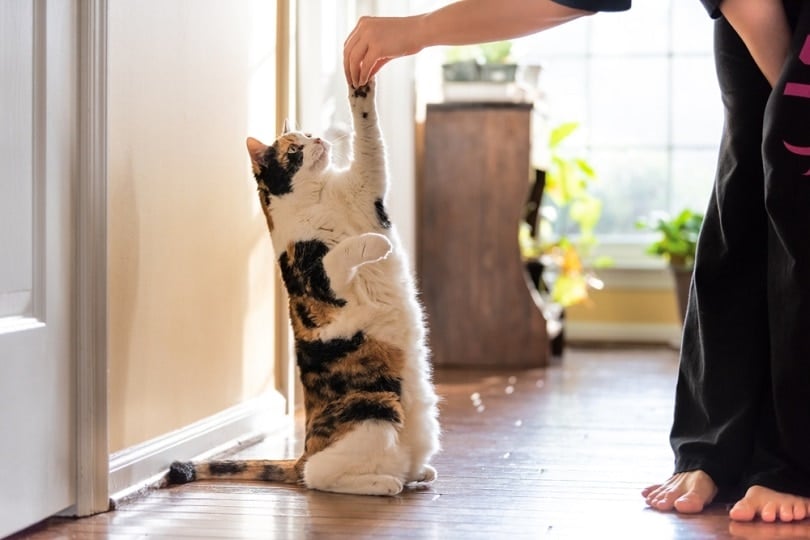
Before you realize your cat has arthritis, you might notice that they are slowing down and not running and jumping as much as they used to.
Signs of arthritis can include:
Most of these clinical signs don’t occur suddenly but gradually, so they may be challenging to notice. That is why taking your cat to your vet for annual wellness checks is essential, particularly as they age.
What Are the Causes of Arthritis?
It’s not just one cause that can lead to osteoarthritis, but several factors.

Checklist for Arthritis in Cats
Since it can be difficult to tell when a cat has arthritis, a checklist can help you determine if you should take your cat to the vet sooner rather than later.
Occasionally, going through a simple checklist as your cat ages might help you catch arthritis in its early stages. These six questions are simple versions of the kinds of questions that a vet will ask:
- Does your cat jump down normally?
- Does your cat jump up normally?
- Does your cat climb down steps or stairs normally?
- Does your cat climb up steps or stairs normally?
- Does your cat chase moving things like prey or toys?
- Does your cat run normally?
You can take videos of your cat with your phone while they’re running up the stairs, jumping, and playing, which you can show your vet.

How Does the Vet Diagnose Arthritis?
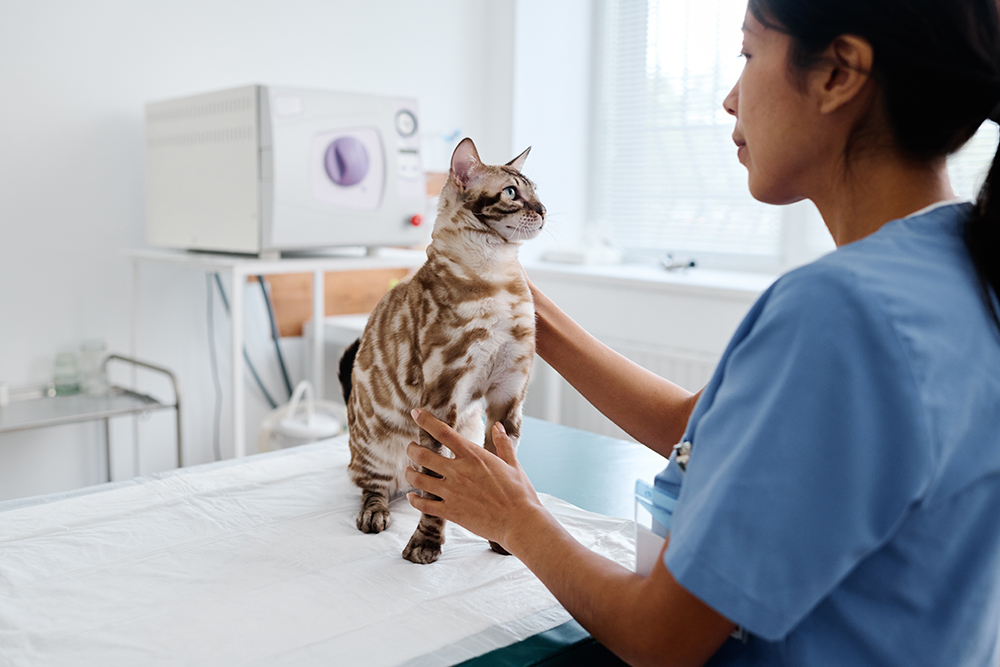
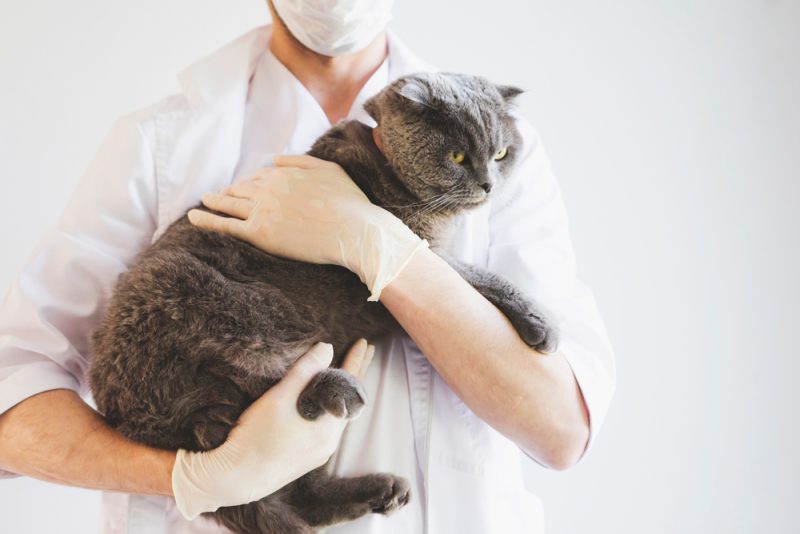
The vet will start by reviewing your cat’s medical history and finish up with a physical exam. They will look for:
The veterinarian will also take X-rays of your cat’s bones to confirm a diagnosis and discuss treatment options.

How Do You Treat Arthritis?
What Should You Do for Your Cat at Home?
Beyond keeping your cat at a healthy weight and administering medication and supplements, you can modify your house to make it easier for your cat to navigate.
Litter Box
Cats might stop using the litter box if they find it painful to get in and out, so invest in a box with one lower side.
Ramps
If your cat likes to snuggle on your couch or bed but can no longer jump high enough, invest in steps or ramps. They will make it much easier for your cat to get up and down and prevent them from accidentally injuring themselves by jumping and missing.
Appropriate Cat Bed
You can find orthopedic beds for cats with arthritis that can make sleeping more comfortable. A heated bed or pad for cats is also helpful because heat can relieve the pain. Just be careful with the heat level, and don’t ever use a human heating pad; cats have sensitive skin and are more likely to burn.
Keeping your cat comfortable and feeling secure when you are away will have them well rested and ready to play when you return. The Hepper Nest is a modern cat bed designed to meet the specific needs of cats. Its high sides offer a sense of security and the bowl shape gives support like a warm hug from their favorite person. Learn more about why your cat will thrive in your absense with the Hepper Nest by clicking here.

- COMFY KITTY - Your cat or kitten will have an amazingly deep sleep in this self warming, nesting cat bed. The warm, fluffy cat bed lining provides calming stress relief for cats of all ages.
- PRETTY HOME - This round cat bed has a modern and unique design that’s perfect for a sleek indoor look. We don’t think of it as cat furniture but think of the Cat Nest as a “cat home”.
- SPACE SAVER - Reclaim your desk, window sill, or couch from kitten encroachment. This calming nest cat bed has an elevated, space-saving hideout so comfortable your kitty can't resist!
At Catster, we’ve admired Hepper for many years and decided to take a controlling ownership interest so that we could benefit from the outstanding designs of this cool cat company!
Same Floor
If you live in a home with multiple levels, keep everything your cat needs on one floor: their litter box, food, water, toys, etc.
Non-slip Mats and Rugs
If your tiled or laminated floors are slippery, the flooring might cause your cat to slip and fall. Invest in non-slip mats and rugs, so your cat doesn’t injure themselves.
Elevated Bowls
Elevated food and water bowls can make eating and drinking easier for your cat because they don’t have to bend down. Also, consider picking up a cat fountain to encourage your cat to drink more water. Most are tall enough that your cat can drink sitting or standing.

- NO MESS - The 360° tray on this cat food and water bowl set has a raised design to catch and contain stray crumbs and drips. Protect your indoors and floors from wet and messy meals!
- WHISKER FRIENDLY - Shallow and wide metal containers with flat bottoms ensure your kitty can enjoy mealtime free from whisker fatigue!
- CHEW-SAFE MATERIALS - Kittens and cats love chewing on silicone and soft rubber - but it's a choking hazard. Our cat feeding station materials are anti-chew for a 100% safe feeding frenzy!
Choosing the right food and water bowls for our feline companions can pose certain challenges for pet owners. The Hepper NomNom Cat Bowl provides a chic and innovative solution that supports cat specific needs, such as shallow bowls and a subtle elevation that fosters whisker relief, posture comfort, and improves digestion. It features an elegant contemporary design with a wide wrap-around tray aimed at minimizing any messes from ending up on your floor! Furthermore, this bowl is entirely dishwasher safe, so pet owners are able to spend more time with their cats instead of cleaning up after them. Discover why the Hepper NomNom Cat Bowl is right for both you and your kitty by clicking here.
At Catster, we’ve admired Hepper for many years and decided to take a controlling ownership interest so that we could benefit from the outstanding designs of this cool cat company!

Conclusion
Observing your cat over the years will familiarize you with their body language and moods. You’ll likely be the first to notice anything unusual and pick up when something is wrong. Even if it seems insignificant, take your cat to see the vet.
Also, be proactive, keep your cat at a healthy weight, and visit your vet every year. Speak to them about any of your concerns. They can help you develop a healthy diet and exercise plan to keep your cat healthy, which can go a long way toward preventing arthritis, at least for a while.
Sources
Featured Image Credit: Alex Zotov, Shutterstock

Expert cat care, straight to your inbox
Vet-reviewed advice, behavior tips, and the best of Catster. Free, and you can unsubscribe anytime.
By signing up, you agree to our Terms & Conditions and Privacy & Cookies Policy.
Kathryn was a librarian in a previous lifetime and is currently a pet writer. When she was a child, she hoped to work in ZOOs or with wildlife in some way, thanks to her all-consuming love for animals. Sadly, she's not strong in the sciences, so she fills her days with researching and writing about all kinds of animals and spends time playing with her adorable but very naughty tabby cat, Bella. Kathryn is hoping to add to her family in the near future – maybe another cat and a dog.
Join the conversation
Ask a question, share your story, or send private feedback.