Can Cats Get Bird Flu? Our Vet Explains Signs & Prevention Tips
In this article
Your cat’s habit of preying on birds may concern you when you worry about their exposure to bird flu and if they could become sick with the virus. Unfortunately, bird flu has caused sickness in various mammals, including domestic cats.
Bird flu has been a hot topic in the United States since the US Department of Agriculture (USDA) reported an outbreak in February 2022. For over 2 years, the influenza virus has been circulating among wild birds, poultry, and bovine herds and infected some humans. Recent reports suggest it may be on the rise, so we want to discuss the risks and how to keep your feline friend safe.

Cats Can Get Bird Flu?
Bird flu is the common name for the highly pathogenic avian influenza A (H5N1). “Highly pathogenic” means the disease can be severe in infected animals. The virus has a strong affinity for domestic poultry, with over 100,000,000 of these birds being affected compared to 169 dairy herds, and sporadic infections in other mammals1. Wild birds spread the virus but only sometimes show signs of illness.
There are currently 34 reported US cases of bird flu in domestic cats, with cases in Colorado, Michigan, Minnesota, Idaho, New Mexico, Texas, South Dakota, Montana, Oklahoma, and Ohio2. Cases have also occurred in other countries like Poland, South Korea, and France.
Now, this number is not high compared to the farm animal statistics, so bird flu is still considered uncommon in cats. However, more cats than people have contracted bird flu. Eating infected birds or living on a poultry or dairy farm are risk factors for your cat getting bird flu. You should pay particular attention to outbreaks in your area, as these are high-risk times for your cat.

What Are the Signs of Bird Flu in Cats?
Bird flu can present with respiratory, gastrointestinal, or neurological signs in cats. Some cases have been severe and fatal, and others mild. Immunocompromised, young, and geriatric cats may be more susceptible to severe signs of bird flu. Signs to watch out for if your cat has been exposed to bird flu include:
- Coughing
- Sneezing
- Red or watery eyes
- Diarrhea
- Anorexia
- Fever
- Behavioral changes
- Muscle pain
- Lethargy
- Wobbly gait
- Panting
- Breathing difficulties
- Abnormal gum color
- Organ disease
- Depression
- Seizures
- Collapse
If you suspect your pet is suffering from bird flu, you should contact your vet directly for an assessment. They can provide you with more information and a care plan.

How to Protect Your Cat From Bird Flu

Unfortunately, there’s no feline vaccination for bird flu, and the disease can be severe if it infects your cat. The best way to keep your cat safe is to avoid contact with wild birds since even healthy birds can carry the virus. First and foremost, we recommend keeping your cat inside since it is the only surefire way to avoid contact with outside birds.
Even cats within a cat enclosure or “catio” can be exposed to wild birds or their virus-contaminated excretions. If your cat is known to hunt and you can’t keep them inside 24/7, you could train them to wear a leash and harness and take them for walks.
Avoid letting them out in peak hunting times like dawn and dusk. Try putting a bell, bird-safe collar, or bib on your cat to hinder their hunting abilities.
You can also try to keep wild birds out of your yard, but that is not foolproof. Avoid having bird feeders, baths, or water features that attract wild birds. Don’t leave any food outside, including pet food, which can attract birds looking for an easy meal.
If there are areas where birds tend to perch or forage, you can use aluminum foil or fishing wire to deter them. Predator decoys can also be very effective in keeping wild birds off your property; the sight of a snake or owl is sure to scare away little birds hoping to avoid being eaten.
If you have pet birds at home, bring them indoors if possible. Don’t let your cat have any contact with outdoor pet birds. Outdoor poultry are most likely to contract the bird flu. Wash your hands and change your clothes after interacting with your birds and their coop so you don’t spread the virus to your cat.
If your birds show signs of bird flu, such as sudden death, lethargy, respiratory signs, diarrhea, and a wobbly gait, call your veterinarian or the USDA toll-free hotline (866-536-7593).
Food safety is also important since your cat could be exposed to the virus through food. Don’t feed your cat raw poultry or bovine products, including meat, eggs, and unpasteurized milk. Cooking to 165°F will kill any virus in these products, and remember to use good hygiene so other food isn’t contaminated by these products.
Frequently Asked Questions
Can Cats Get Sick From Being Around Birds?
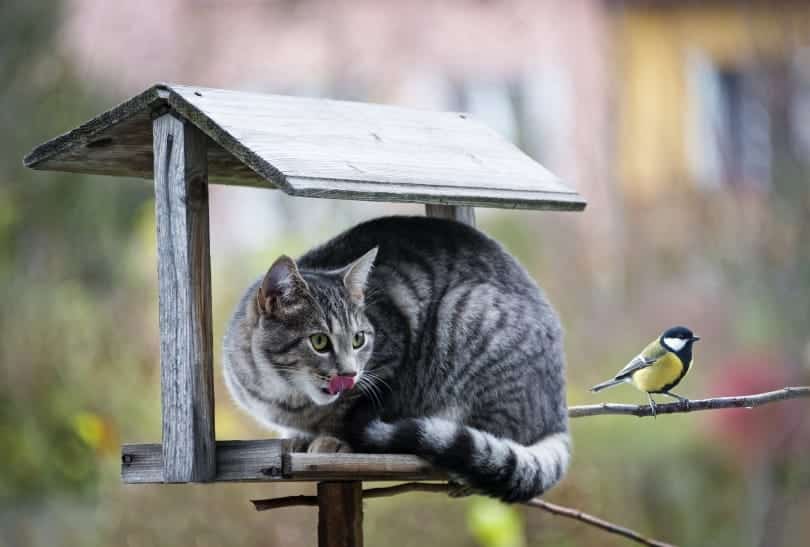
Being around birds and their droppings could lead to your cat being infected with bird flu. Preying on birds and eating raw bird meat can also be a source of infection in cats. Cats might also be infected by cows. Bird droppings often contain Salmonella bacteria, which can also make your cat sick.
Is a Cat With Bird Flu a Risk to Humans?
Cats present minimal risk to humans since human infections have only occurred sporadically with exposure to poultry or dairy cows. Currently, only 11 people have been confirmed to have contracted bird flu.
However, it is theoretically possible for a sick cat to infect a human, especially if you have close contact with the cat. Your cat’s saliva, urine, or feces could contain the virus if they are infected.
If you have been exposed to bird flu via your cat, monitor yourself for any signs of illness, including a sore throat, respiratory signs, eye problems, headaches, muscle aches, diarrhea, and fever.
Pay close attention to your health, especially in the first 10 days after exposure. Contact your health department if you notice any signs, and visit the CDC website for more information.

Conclusion
Disease outbreaks can be scary, not only for our health but also for that of our beloved pets. Bird flu can infect cats and people, but it only occurs sporadically. It is still considered a low threat to human health; however, since flu viruses change constantly, the CDC is monitoring the situation.
To be on the safe side, we recommend taking precautions to prevent your cat from being exposed to bird flu in the first place.
Sources
Featured Image Credit: megaflopp, Shutterstock

Expert cat care, straight to your inbox
Vet-reviewed advice, behavior tips, and the best of Catster. Free, and you can unsubscribe anytime.
By signing up, you agree to our Terms & Conditions and Privacy & Cookies Policy.
Dr. Ashley Darby BVSc (Veterinarian)
Ash has worked in mixed and small animal emergency clinics and general practice ever since 2017 after graduating from Sydney University. She grew up in South Africa and England before moving to Australia, and her passion for animals came from many childhood safaris in the Kruger National Park.
Ash lives with her husband Ben, two energetic Springer Spaniels, and one very tolerant black cat. She also competes in dressage, eventing, and show jumping with her horse, Atlas.
Join the conversation
Ask a question, share your story, or send private feedback.