Get

In Your Inbox

Catster is reader-supported. When you buy via links on our site, we may earn an affiliate commission at no cost to you. Learn more.

Why Does My Cat Growl? Meaning, How You Should React & FAQ (Vet-Verified)


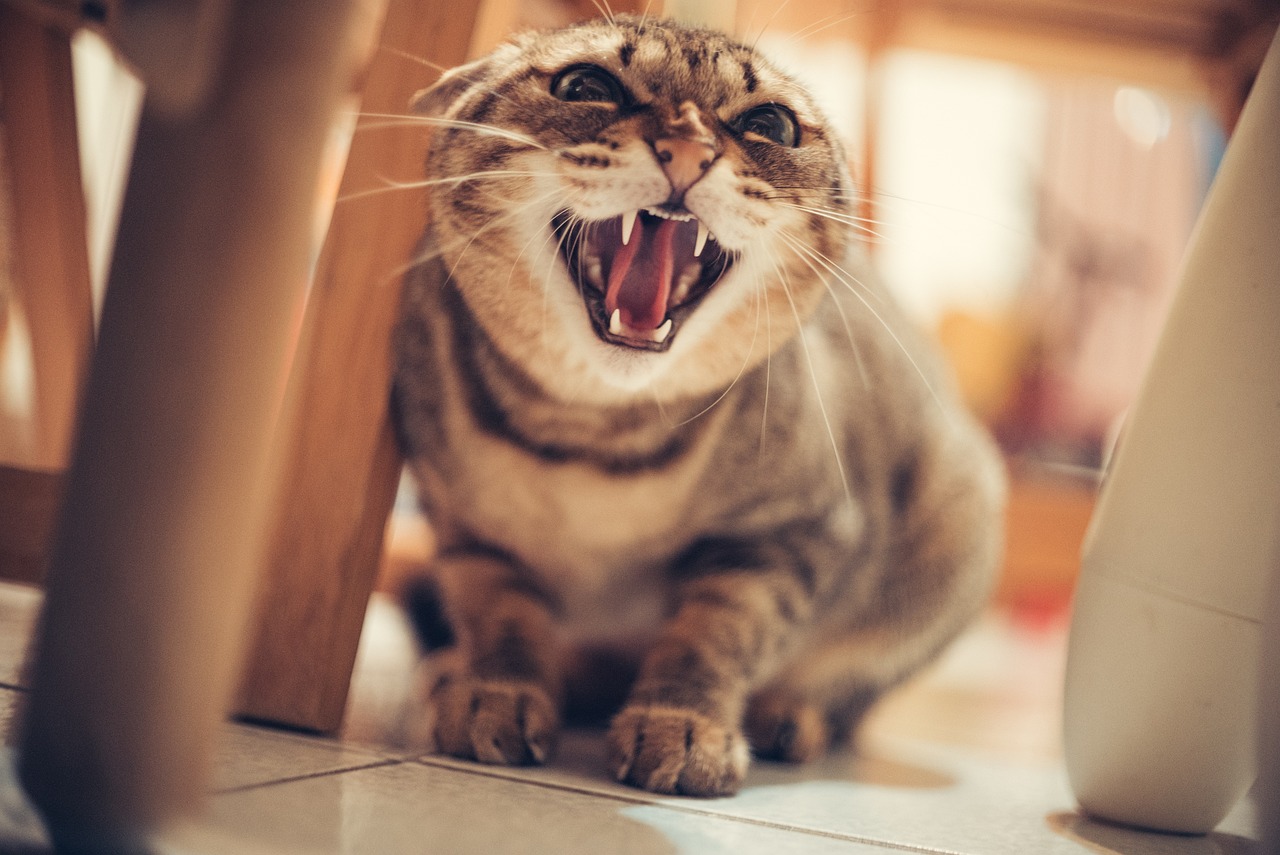
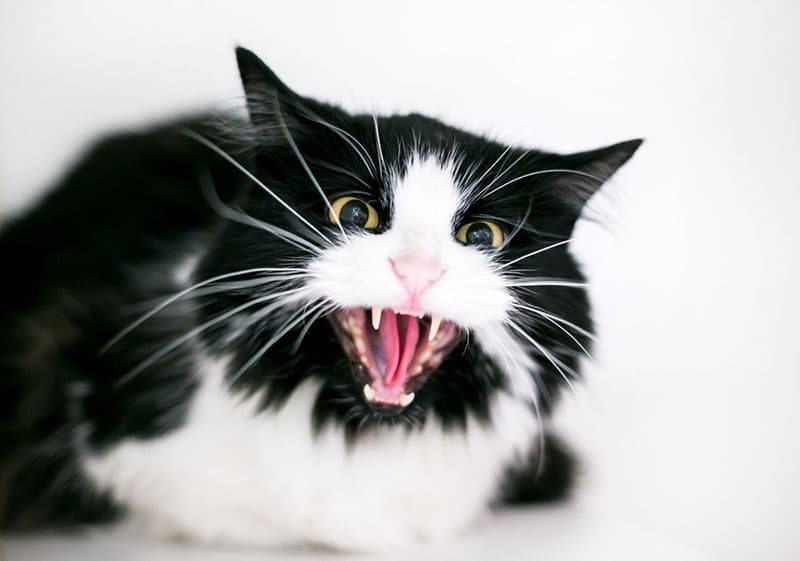
angry cat hissing

Pet cats are usually friendly and interactive with their human companions. But sometimes, they display aggressive behavior, such as growling. You may be wondering why cats growl and what it means when they do it. Is your cat acting territorial, protective, or dramatic? Are they in pain, feeling stressed, or just in a bad mood? How should you react when your cat growls? Here’s what you need to know.

divider 2 cats

Why Is Your Cat Growling? What Should You Do About It?

Cats can growl for various reasons, so it’s a good idea to understand them all. This way, you can better determine exactly why your cat is growling at people or in specific circumstances.

1. Territorial Behavior

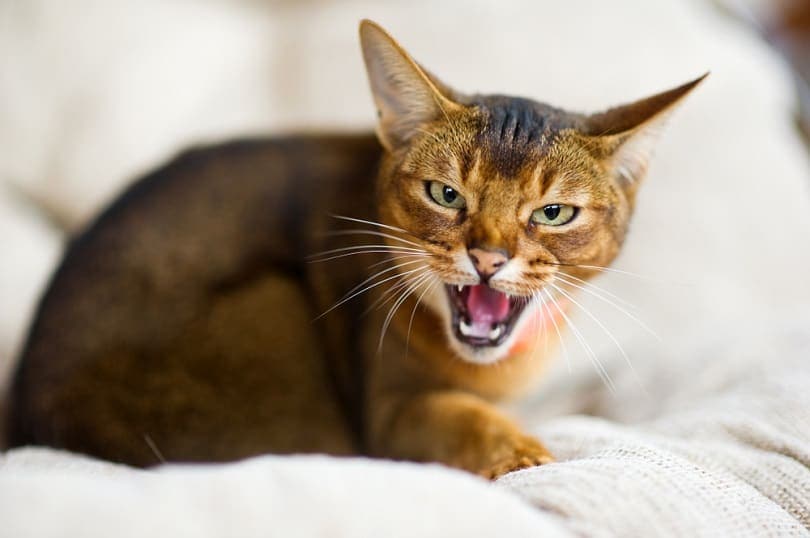
An Abyssinian cat hisses at the camera, exposing and showing fangs
Image Credit: Slava Dumchev, Shutterstock

It is common for the average cat to growl for territorial reasons. They might feel like their space is being encroached on and they don’t like it, so they will growl to protect that space. Maybe a visitor gets too close to their bed, or a family member tries to coax them out of a hiding spot that they enjoy inhabiting. Whatever the case, those cat growling sounds are communicating that they want everyone and everything to back off their perceived territory.

What to Do:
Someone, especially a stranger, is liable to get injured by a scratch if they get too close. Give your kitty enough space, and approach them carefully, slowly, and lovingly when necessary. Chances are that the growling will subside when the territory is seen by your kitty as safe from threats again.

2. Stress and/or Anxiety

Stress and anxiety can be the cause of growling in cats, as it helps relieve the negative feelings and provides a bit of relief. Your cat might growl because you’ve just moved to a new home, and they feel unsafe in the space.

What to Do:
Your kitty will start to feel safe and comfortable as they get to know their new home. Giving them time to explore on their own and space to find their new “territory” should help put them at ease and reduce, if not eliminate, the growling behavior.

3. Perceived Threat

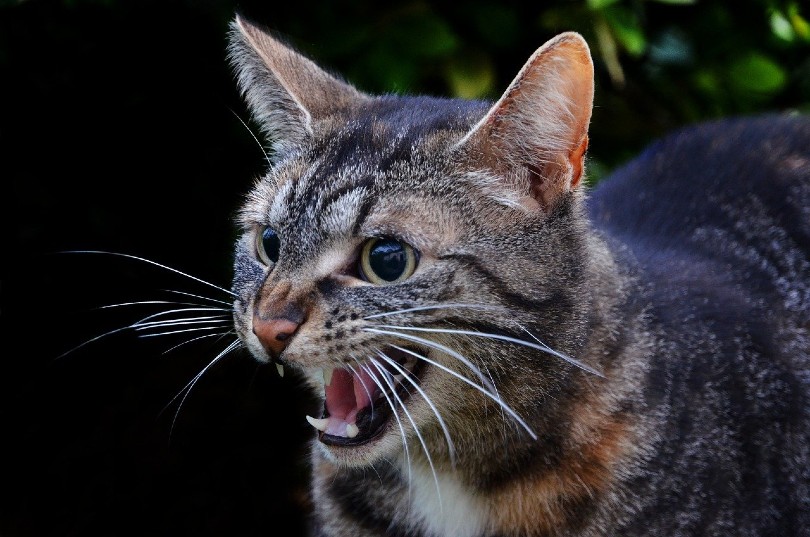
Aggressive cat growling
Image Credit: pixbull, Shutterstock

If they feel threatened, a cat can growl in response. They might see a shadow outside a window and believe that it’s a predator trying to get them. They may hear a strange noise in the house that scares them. They could feel threatened by the commotion going on in the house that’s unusual to them.

What to Do:
Whatever the case, cats use their growls as a defense mechanism that will hopefully help scare the threat away. Once the perceived threat disappears, so should the growling.

4. Annoyance

Sometimes, all it takes is a bit of annoyance to make a cat growl. Growling due to annoyance is usually just a form of communication, and actual aggression is not part of the equation. They might growl because there is too much noise happening in the room that they’re trying to sleep in, or they are tired of all the lights and action happening when visitors are around. They might be frustrated due to a lack of exercise, activity, or interaction with household members.

What to Do:
Determining what the annoyance is and addressing the cause should put an end to the growling. For example, if more exercise and/or interaction are needed, commit to spending at least 15 uninterrupted minutes playing with your cat by using interactive toys and engaging in active games. If noise, lights, and other commotion bother your cat, put them in a quiet room where they can rest and relax when you can’t keep things quiet in the rest of the house.

5. General Warning

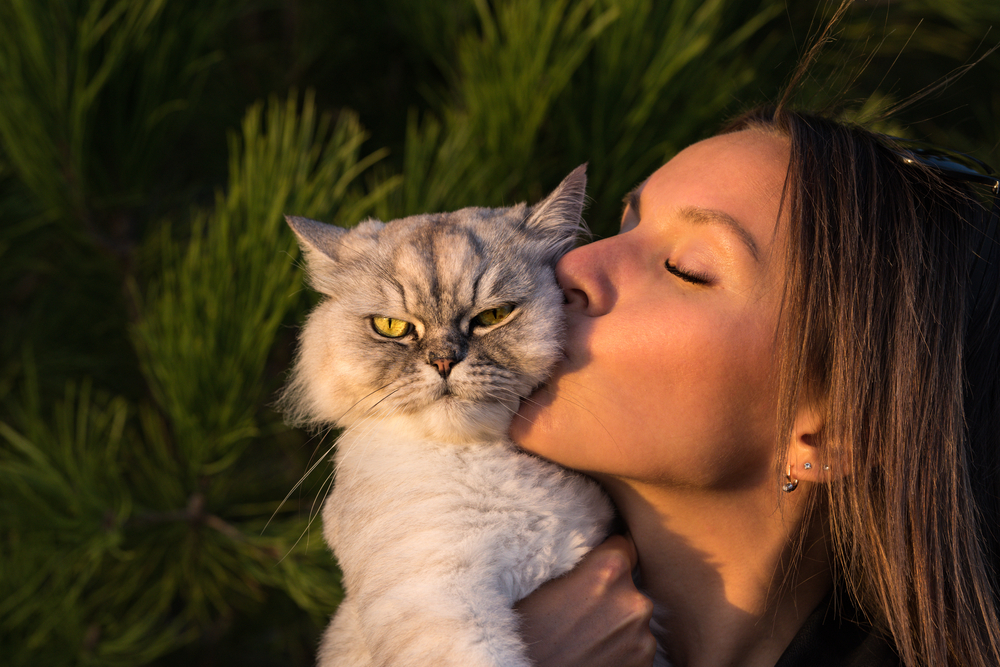
owner petting a hissing angry tabby cat
Image Credit: Anna Kraynova, Shutterstock

If it is not easy to decipher why your cat is growling, they could be doing it as a general warning. They could be in pain, and growling is their way of warning that they aren’t in the mood to interact because of it. They might growl to warn away visitors as soon as they walk in the door just in case anyone considers getting too close during their visit. They might even growl because they don’t want toys forced into their faces by kids in the house.

What to Do:

If you or someone else gets growled at while getting close to your cat, back away, and give them the space that they’re requesting. If they seem to change behaviors, such as eating, playing, or sleeping, schedule a checkup with the vet to determine whether the growling is due to pain. If visitors seem to induce growling, give your cat a space of their own to hang out where they can’t be bothered whenever anyone outside of the family is in your home.

divider 2 cats

Learn the Cat Growling Sound

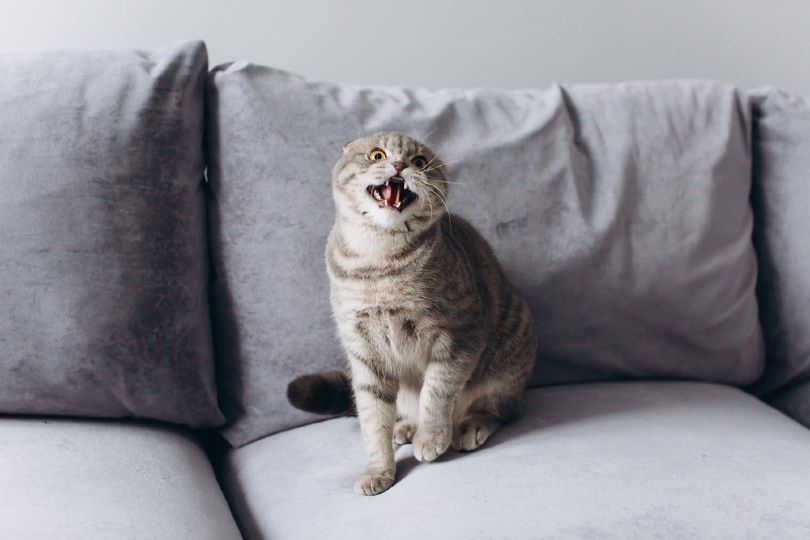
When a cat growls, they create the noise by pushing air through their vocal folds. This results in a deep, slightly rumbly noise that sounds “guttural” when experienced. The lips are usually slightly apart, and the top lip might even curl up like when a dog growls. Growling is usually accompanied by plenty of hissing when a cat is ready to take action. Check out this video that features the distinctive cat growling sound that every feline owner should be aware of:

divider 3 paws

Frequently Asked Questions

Why Do Cats Growl at Each Other?

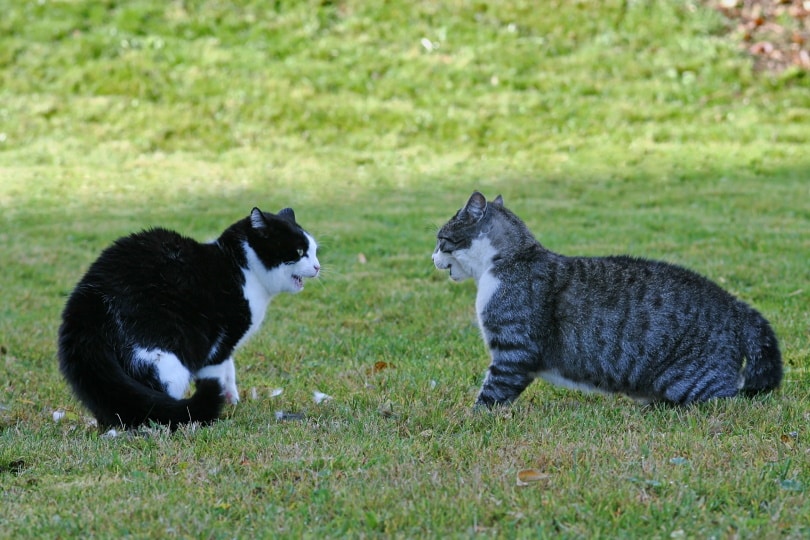
Cats do not just growl at people and things. They are highly likely to growl at each other for one or more different reasons. But why do cats growl at each other? One reason is that they are simply feeling threatened by one another. They could also be fighting over the same territory, trying to figure out which will prevail and take over, or fighting over a mate.

If more than one cat lives in your household, make sure that each has plenty of space to call their own and that it’s possible to separate them if aggressive trouble starts. Ensure that the cats get along before leaving them together unsupervised. You should also have all your cats spayed and neutered.

domestic-cats-fighting
Imahe Credit: Vshivkova, Shutterstock

Kitten Growling: Does It Happen?

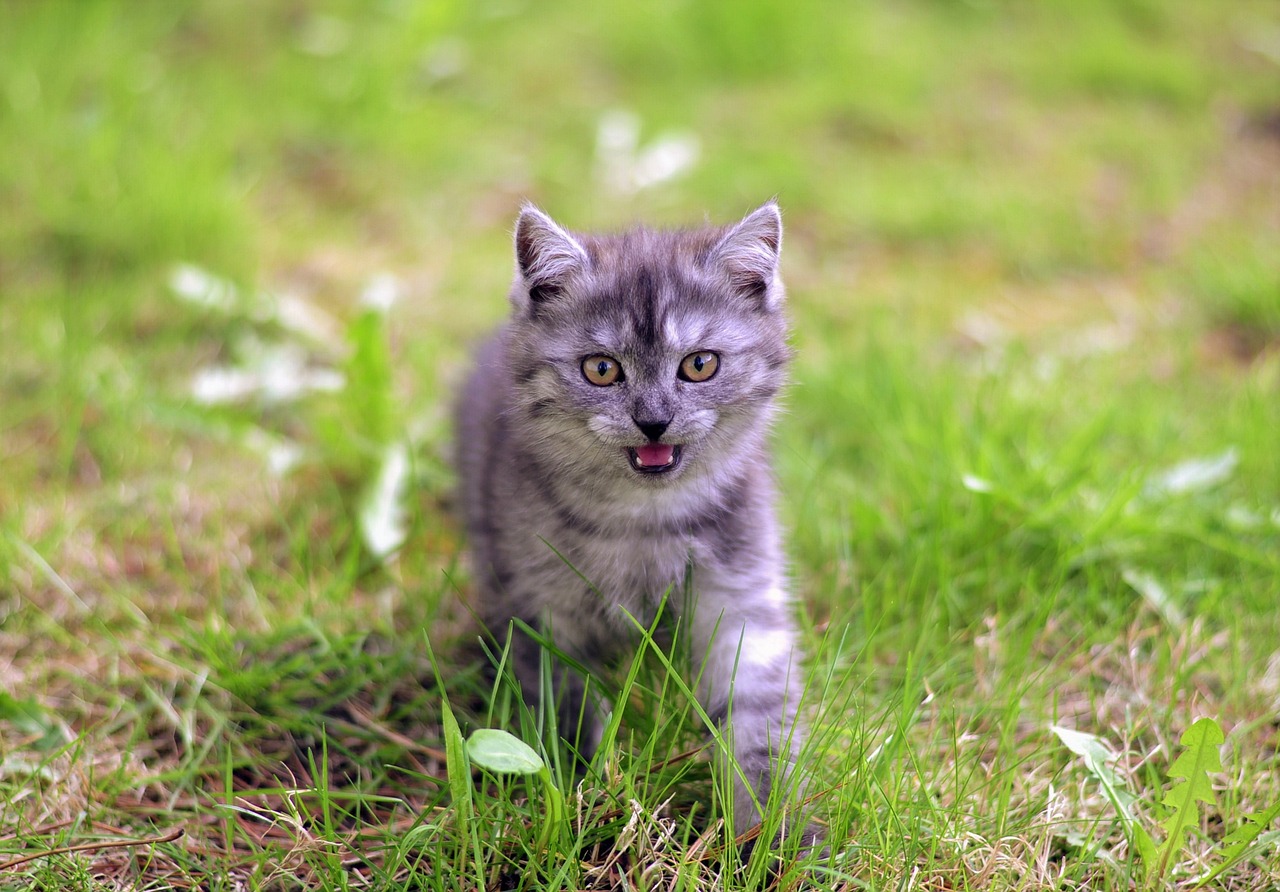
Yes, kittens are capable of and willing to growl when it suits them. They can growl for any of the reasons that an adult cat might growl. Check out Oscar, the kitten that growls to protect their perceived property—which happens to be a ball.

divider 2 cats

Conclusion

A cat growling is a natural way of communicating. It lets people and other animals know that they are not welcome under the circumstances. A cat that growls should be treated with respect, and space should be provided immediately to help alleviate the potential for aggressive behavior.

If your cat seems to be growling more than normal, and you can’t determine the reason for the change in the behavior, then get them checked over by your vet to rule out pain or illness.


Featured Image Credit: Fang_Y_M , Pixabay

Want content like this delivered to you?

Sign Up For Our Newsletter

News, insights, expert advice, and everything cat

* By submitting, you agree to our Terms & Conditions and Privacy & Cookies Policy.


How useful was this post?

Click on a star to rate (you can leave written feedback after clicking submit)

Help us improve Catster for pet parents!

Your feedback really matters.

What did you like about this post? Also how can we improve it?

Join the conversation

Leave a Reply

You’re very welcome to leave a comment or question. Please know that all comments must meet our community guidelines, and your email address will NOT be published. Let’s have a positive and constructive conversation.


Talk With A Vet Online

Peace of mind,
anywhere, anytime

Affordable vet advice

Kitty Playtime: What Raphael’s Hunt Taught Me About Life

Welcome to the Wednesday Cats of Catster! Every week, we share a story from one of our cat-loving Catsters. This week is about...

Can Cats Eat Tamales? Vet-Approved Facts & Alternatives

While cats are obligate carnivores that require a primarily meat-based diet, not all forms of meat are healthy for cats. Tamales, for example,...

Can Cats Eat Donuts? Vet-Reviewed Nutritional Facts & FAQ

Many cats are clingy and are interested in everything their owner does, especially eating. So, if you are snacking on a delicious doughnut,...

6 Surprising Cat Digestive System Facts (Vet Verified)

Approximately a third of US households keep cats, making them the second most popular species of pet after dogs. But very few of...

More related

Scottish Fold Cat Health Problems: 7 Vet-Reviewed Issues

Scottish Fold cats have found their way into many pet lovers’ hearts with their unique folded ears and sweet personalities. As with any...

Peterbald Cat Breed: Info, Pictures, Temperament & More

When folks think about the quintessential hairless cat breed, their minds will probably go right to the Sphynx. But there are many other...

Why Do Cats Stare at Nothing? 4 Possible Reasons

Experienced cat owners know that no matter how much we bond with and learn about our pets, there will always be at least...

Can I Use Dog Dewormer on Cats? Vet Reviewed Facts

Cats that have not received preventative treatment commonly contract worms, and although seeing the parasites in your cat’s vomit or stool is unpleasant...

Keep reading

Can Kittens Climb Stairs? Early Development & Safety Info (Vet-Verified)

Often, kittens are too small to climb stairs easily, but it depends on the kittens and the stairs. Carpeted stairs are easier for kittens to climb since they can use their claws to climb up. Indeed, climbing is very easy...

Cute tabby and white kitten asleep at bottom of grey carpeted stairs

3 Homemade Pumpkin Cat Treat Recipes To Enjoy This Fall

Cats are obligate carnivores, meaning they need a meat-based diet. That said, there’s nothing wrong with treating your furry friend to a few little treats now and again, and, if you’re feeling crafty, you can DIY your own cat treats...

Homemade Pumpkin Cat Treat Recipes To Enjoy This Fall

Can Cats Drink Pedialyte? Vet Approved Advice

Pedialyte is an oral solution consisting of mostly water with added electrolytes. It is commonly used as a treatment for dehydration in children, but what about Pedialyte for cats? Can cats drink Pedialyte? Yes, cats can drink unflavored Pedyalite! If...

Can Cats Drink Pedialyte

How Do I Tell If My Cat Is Constipated? 8 Vet-Reviewed Signs to Watch For

If you’ve noticed that there hasn’t been poop in the litter box for a few days (and your cat isn’t going somewhere else), it could mean that your cat is constipated. Some signs of constipation are more obvious than others,...

cat pooping on the grass

Average Cost of a Vet Visit for Cats in 2026: How Much You Can Expect To Pay

Cats require our love, care, an enriched environment to express their natural behaviors, and high-quality food to thrive. They also need to see the veterinarian regularly to ensure their health stays strong throughout their life. It is easy to tabulate...

Vet doctor holds cat in his arms and talking to the owner

Do Feral Cats Know How to Purr? Vet-Approved Facts & FAQ

Hearing your cat purr is usually a sign you’re doing something right. Whether they have a full belly and are thanking you, or they are simply enjoying the affection you’re providing, their contentment is heartwarming. But have you ever wondered...

Stray cats eating on the street

Is Caladium Toxic to Cats? Vet Approved Facts & Safety Tips

The pinkish-red and green heart-shaped leaves of the caladium plant make it a vibrant addition to any household. However, its pretty appearance is deceptive: Caladium is toxic to cats, dogs, horses, and humans1. Ingesting the plant can make your cat...

Catster_Is Caladium Toxic to Cats

Cat Lice vs Fleas: Vet-Reviewed Key Differences

Sooner or later, every pet owner will find tiny bugs crawling on their pet’s skin. But are they fleas or cat lice? It can be hard to tell the difference between the two small pests. Therefore, this article will teach...

Lice VS Fleas

Love Cats? So Do We! Join the Catster Community

Stay informed with expert pet care insights delivered straight to your inbox! Discover professional guidance on animal behavior, feeding tips, trusted product picks, and much more.


Sign up for the Catster Email Newsletter

Stay informed with expert pet care insights delivered straight to your inbox! Discover professional guidance on animal behavior, feeding tips, trusted product picks, and much more.