Can Cats Eat Passion Fruit? Vet Approved Feline Nutrition Advice


In this article
Our feline friends love treats, and we love giving treats to them! Most of the time, we stick with cat-specific treats, but sometimes, it’s tempting to let our kitties have a bite of whatever we’re eating (especially when they have their cute faces stuck on our plates). But a lot of people food isn’t healthy for cats.
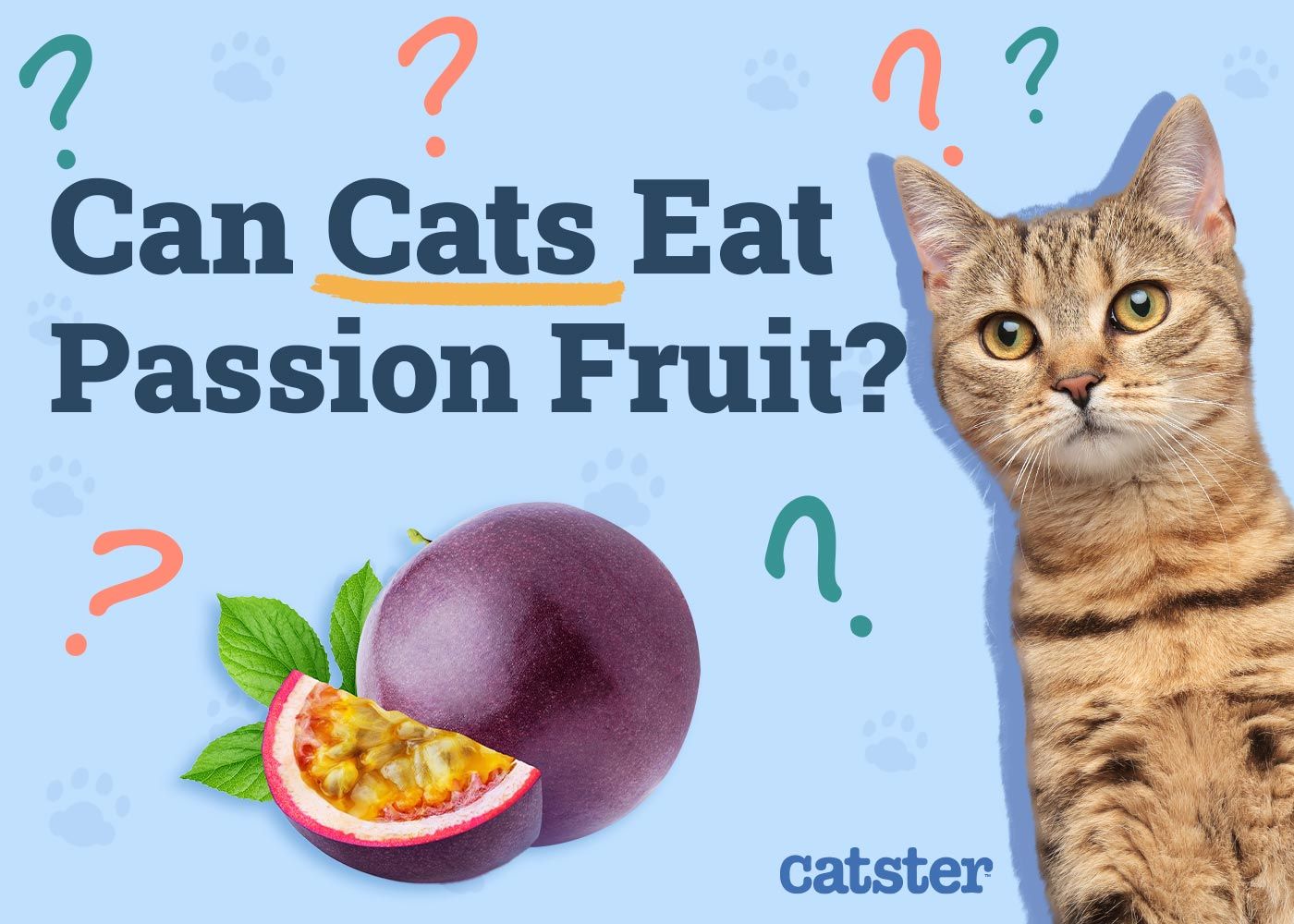
Many wonder if fruits are safe for our cats to eat, and in some cases, they are. But when it comes to passion fruit, you’re better off not feeding passion fruit to your pet. Why is that? Keep reading to find out what you need to know about passion fruit and felines!

Why Can’t Cats Eat Passion Fruit?
As long as you’re feeding your cat the passion fruit commonly found in the supermarket, it isn’t toxic to cats. However, some parts of the passion fruit might cause problems with your kitty’s digestive system (which we’ll discuss below). Plus, chances are your cat won’t have any interest in passion fruit.
If your kitty manages to steal a small bite of a ripe passion fruit, they should be fine, though. They may experience some mild gastrointestinal upset at most, so keep an eye on them if you discover they’ve had this fruit.

Dangers of Feeding Passion Fruit to Cats
Studies on how safe passion fruit is for felines haven’t been carried out, but anecdotal evidence indicates that the ripe, commercially available varieties aren’t toxic, but it’s probably something you don’t want to give your cat on purpose. There are some parts of the passion fruit plant that may be toxic, including the roots and the leaves. However, the flesh of the ripe fruit isn’t toxic.
One thing that passion fruit contains that might not do well with your cat’s system is compounds such as piceatannol. In humans, piceatannol is thought to improve insulin sensitivity and overall metabolic health, but how they would affect felines is unknown. Passion fruit also has a lot of vitamin C, which cats don’t need to take in as part of their diet because they are capable of producing their own vitamin C.
Another downside of passion fruit is the rind. The rind isn’t edible, and it contains cyanogenic glycosides which can become the active form of cyanide when eaten, so if your kitty consumes it, stomach upset may occur. In large quantities or if unripe fruit is eaten, toxicity may occur. The rind is thick so if large pieces are eaten, blockages in the gastrointestinal tract could occur (not to mention the possible choking hazard the rind poses).
Then, there are the seeds of this fruit, which may also be a choking risk and can possibly cause stomach upset. Always keep any leaves or roots of the passion fruit plant away from the cat.
Can Cats Eat Fruit?
Some fruits are safe for felines to consume, but it’s important to know that your cat doesn’t need fruit in their diet. In fact, the majority of cats won’t even like fruit (possibly because they cannot taste sweetness like we can). Felines are obligate carnivores, so their bodies need animal proteins to thrive. Meat gives your kitty all the nutrients they need; without meat in their diet, your cat will become unwell.
So, yes, some fruits are safe, but if you try to add fruit to your pet’s diet, only give it to them on occasion as a treat. Fruit isn’t a necessity for felines and, in fact, shouldn’t comprise more than 2% of their diet. With that being said, before introducing any new food item you're unsure about to your cat's diet, it's always best to check with a veterinarian first.
What Fruits Are Safe for Cats to Eat?
There are a handful of fruits that are cat-safe, which you can give to your pet in moderation. These include:
- Apples
- Apricots
- Bananas
- Berries
- Cantaloupe
- Honeydews
- Kiwis
- Mangos
- Nectarines
- Pears
- Pineapple
- Strawberries
- Watermelon

- NO MESS - The 360° tray on this cat food and water bowl set has a raised design to catch and contain stray crumbs and drips. Protect your indoors and floors from wet and messy meals!
- WHISKER FRIENDLY - Shallow and wide metal containers with flat bottoms ensure your kitty can enjoy mealtime free from whisker fatigue!
- CHEW-SAFE MATERIALS - Kittens and cats love chewing on silicone and soft rubber - but it's a choking hazard. Our cat feeding station materials are anti-chew for a 100% safe feeding frenzy!
Learning about what your cat can and cannot eat is a crucial part of keeping them happy and healthy! Choosing a bowl to serve cat-friendly foods in is another important decision pet owners face. Satisfy the specific needs of your cat with the innovative design of the Hepper NomNom Cat Bowl. Learn why it’s our (and our cats!) favorite food and water dish here.
At Catster, we’ve admired Hepper for many years and decided to take a controlling ownership interest so that we could benefit from the outstanding designs of this cool cat company!

Conclusion
Passion fruit probably shouldn’t be given to your feline. Though the purple variety isn’t considered toxic, some elements of this fruit may still cause stomach upset or blockages in the gastrointestinal tract in your kitty. Cats don’t actually need fruit in their diets (in fact, most don’t find fruit very enjoyable), but if you want to give fruit to your pet as a treat, stick to fruits that have been deemed cat-safe, and don’t let it make up more than 2% of kitty’s diet.
Sources
Featured Image Credit: October22, Shutterstock

Expert cat care, straight to your inbox
Vet-reviewed advice, behavior tips, and the best of Catster. Free, and you can unsubscribe anytime.
By signing up, you agree to our Terms & Conditions and Privacy & Cookies Policy.
Misty Layne lives out in the woods in small-town Alabama with her two Siamese cats —Serafina and Jasper. She also has an array of stray cats, raccoons, and opossums who like to call her front porch home. When she’s not writing about animals, you’ll find her writing poetry, stories, and film reviews (cats, by far, her favorite writing topic, though!). In her free time, Misty enjoys chilling with her cats, playing piano, watching indie and foreign films, photographing abandoned places, and catching up on her never-ending TBR list.
Join the conversation
Ask a question, share your story, or send private feedback.