How to Stop a Cat From Killing Birds: 9 Vet-Reviewed Methods


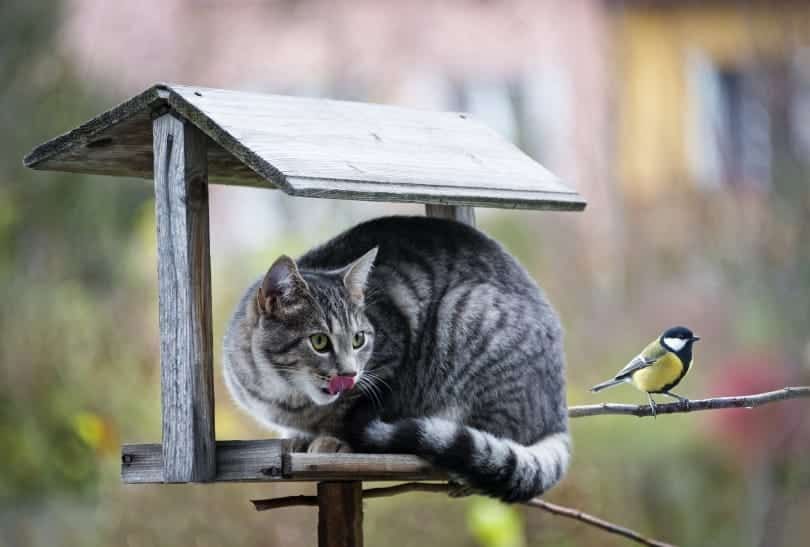
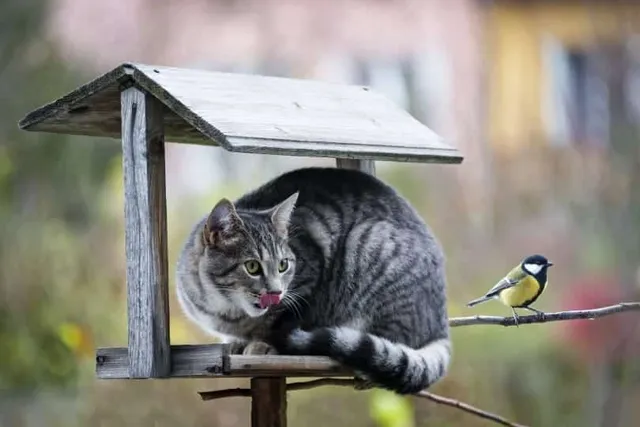
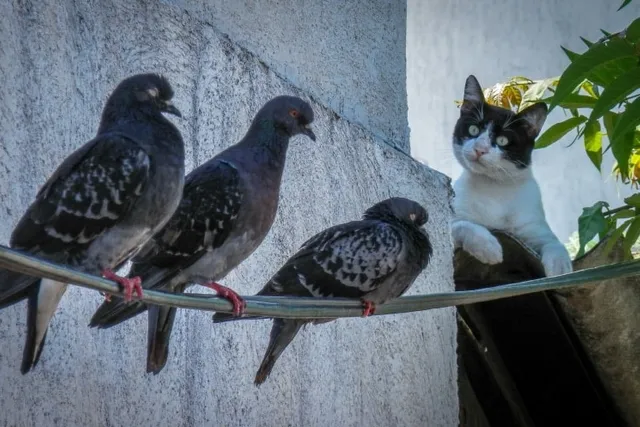
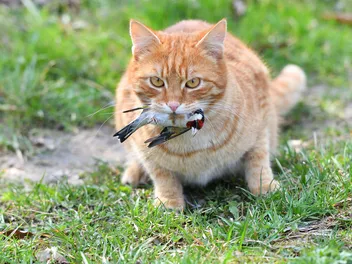
Your house cat might seem like a big pushover when they’re snuggling on your lap, but those hunting instincts are often just below the surface. Domestic cats kill a huge number of birds in the U.S.A., with the number estimated to be somewhere around 1.3 to 4 billion every year1. Some of these will be feral cats, and while we don’t have any control over that, we can consider how to stop our own cats from coming home with a feathery present.
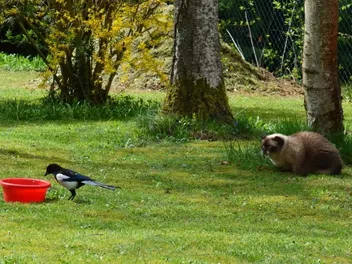
Cats are natural predators, so by hunting and catching birds, they’re just doing what they were designed to do. Despite this, there are still things that we can do as cat owners to reduce the chances of your cat killing birds.

How to Stop a Cat From Killing Birds
1. Keep your cat indoors.

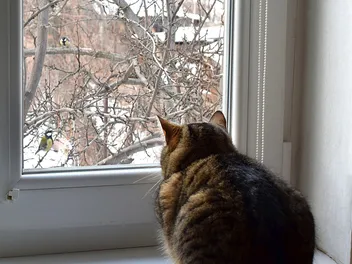
The best way to stop your cat from killing birds is to simply keep them indoors. The transition to living as an indoor cat can take time for your cat to adjust to. It’s often easiest to start this transition at the start of winter. Many cats prefer to be snuggled up somewhere warm during the colder months, anyway, so by the time spring rolls around, they’ll be used to living indoors.
You can still provide your indoor cat with outdoor spaces, either as a permanent outdoor cat enclosure or a temporary enclosure that you can put on the lawn during warmer weather. Make sure your indoor cat has plenty of enrichment to provide opportunities for jumping, scratching, and exploring that they might usually have found outdoors.
2. Put a bell on your cat’s collar.

Cats love to sneak up on their prey, but if you use a collar with a loud bell on it, you’re giving birds a chance to hear your cat stalking them before they pounce. This isn’t a failsafe method, as some cats easily learn how to hunt and kill birds while wearing a bell collar!
3. Use a Birdsbesafe collar.
An alternative to a bell with a collar is from a brand called Birdsbesafe. Its collar has been shown to reduce bird deaths by up to 87%. These bright collar sleeves are designed to be placed over your cat’s existing collar, and the colors are easily visible to birds, even if your cat’s fur blends in with the surrounding environment. Songbirds, which are among a cat’s most common targets, can see bright colors particularly well.
This collar is designed to be comfortable and soft, so your cat can wear it all the time. It can also make your cat look like a cute little clown!
4. Don’t allow your cat outside during fledgling season.

As baby birds start to spread their wings and leave the nest, they’re at a high risk of being predated by cats. Fledgling birds aren’t great at flying yet, so they can often get stuck on the ground and become a prime target for cats. Fledglings are usually leaving the nest around springtime, but this may vary depending on your region.
5. Keep your cat indoors at dawn and dusk.

If you don’t want to keep your cat indoors all the time, consider restricting their access to the outdoors at certain times of the day. Birds are most vulnerable at dawn and dusk when they leave or return to their roosts and nests. By keeping your cat indoors at these times, you can reduce the opportunities that they may have to stalk birds.
6. Train your cat to wear a harness and leash.

If you like to sit in the garden with your cat on a sunny day, but you notice them sneaking off toward the trees where the birds are, then it might be time to teach your cat to wear a harness and leash. This does take time to get them used to the idea, but once they are, you can allow them to sit in the garden wearing their harness, safe in the knowledge that they can’t run off and stalk birds.
If you need guidance on training your cat to use a leash or harness, we suggest you speak to a professional trainer or a vet.
7. Install a cat-proof fence
If your cat tends to go into your neighbors’ backyards to catch birds, consider installing an oscillatory or a wireless fence to keep them within your boundaries. Oscillatory fences prevent your cat from jumping out using simple physics. Wireless fences use a central power unit to create a zone around your house within which your cat can stay. Your cat wears a collar with a receiver. If they try to leave the zone, the collar gives either a tone or a static correction. Most cats quickly learn to stay within their own backyard.
If you don’t like the idea of using a correction collar, you can install cat-proof fencing with an arched design at the top of the fence. This stops your cat from being able to climb up and jump over the fence.
8. Use a CatBib.
One item to consider using is a CatBib. These fabric bibs attach to your cat’s collar and interfere with their hunting skills by preventing them from pouncing effectively. The bib is available in two sizes, depending on your cat’s size and hunting abilities. What it doesn’t do is interfere with your cat’s ability to run, climb trees, jump, sleep, groom, or do anything else apart from killing birds!
9. Adopt or rehome a stray cat.

If it’s a stray cat that’s killing birds in your backyard, then the best way to solve the problem is to either consider adopting the cat yourself or ask a local shelter to help rehome them. Many stray cats adapt well to life as indoor cats, and they’ll probably be only too happy when they discover that they don’t have to hunt for their dinner anymore!
However, feral cats that have never had any interaction with humans aren’t recommended for rehoming as indoor cats because they may never truly adapt to this way of life. You may still be able to find a shelter that can find them a home at a country barn, where they can work on keeping the rodent population down instead of hunting the birds in people’s backyards.
Conclusion
If your cat is attacking birds whenever they go outside, don't punish them for it, as they're only doing what they were designed to do. Instead, you should take these steps to slow and ultimately, stop the behavior. By keeping your cat inside and playing with them regularly, you can protect local birds and maintain your cat's physical and mental health.
Featured Image Credit: Kuttelvaserova Stuchelova, Shutterstock
Expert cat care, straight to your inbox
News, insights, and useful advice, delivered to you.

No spam — unsubscribe anytime.
By signing up, you agree to our Terms & Conditions and Privacy & Cookies Policy.
How useful was this post?
Click a star to rate. You can leave written feedback afterwards. (We read all feedback.)
Christian started writing for a local newspaper as a teenager, and he's been involved in the publishing industry for most of his adult life. Combining his love of writing with a passion for animals, he is currently the Director of Editorial at Pangolia and the Editor-in-Chief at Catster.
Christian lives in the Philippines with his wife, son, and four rescue cats: Trixie, Chloe, Sparky, and Chopper.