Can My Cat Wear a Harness All the Time? 4 Vet-Reviewed Risks & Safety Tips!


In this article
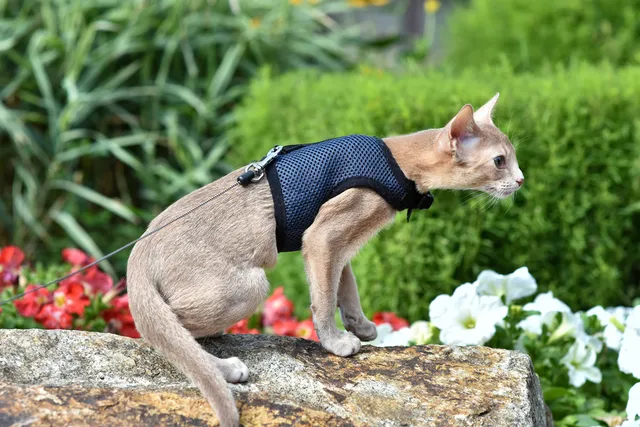
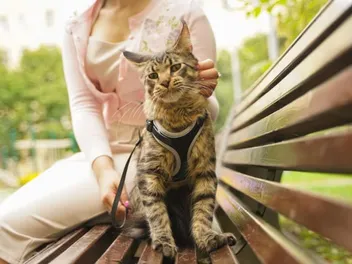
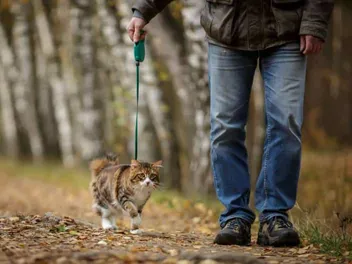
Who says you can’t walk a cat? Admittedly, not all felines are willing to be harnessed and leashed to go outside with you for a nice walk, but many do enjoy the activity. Getting a harness on and off a cat can be a challenging experience, though. Our kitties aren’t always fans of the process! So, what if we simply left the harness on all the time?
Can your cat wear a harness all the time? While it seems smart, in theory, having your kitty wear a harness at all times is not advisable. Harnesses are great for certain situations, but there are risks to leaving them on full-time. What are those risks? Read on to learn more!

How to Safely Use a Harness With Your Cat
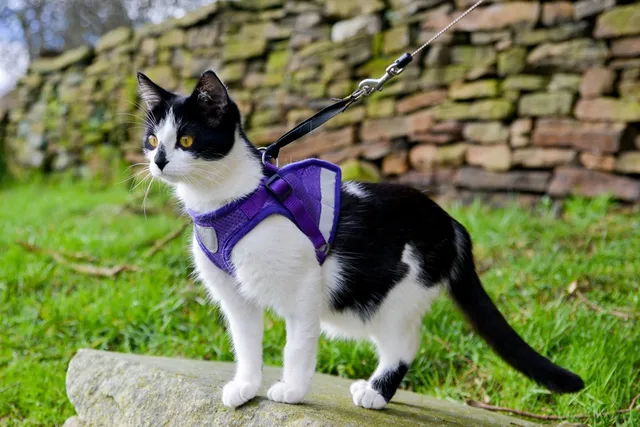
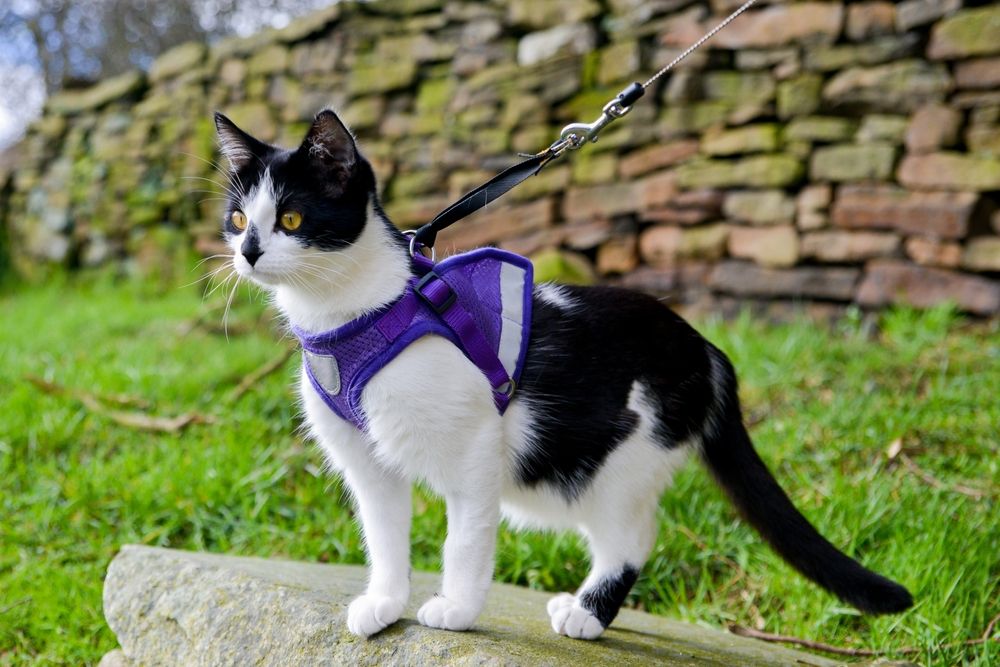
If you use a harness to walk your cat on a leash occasionally, you should be sure you’re using it correctly. Below are some tips on how to do just that!
Choose the correct harness
You don’t want to pick out a harness meant for a dog (even a small one) because it won’t be suitable for your feline. Cat harnesses are meant to stretch if they ever get snagged onto an object, providing your cat with the opportunity to escape. Dog harnesses are designed to keep a dog in place if it gets snagged somewhere. Always use a cat-specific harness to ensure it fits your pet correctly. A harness that fits correctly will be neither too tight nor too loose but will merely fit snugly. You can figure out the right size harness to get by measuring the girth of the kitty’s chest.

Introduce the harness slowly
Felines are not fans of change, so you don’t want to just pick up your pet and cram it into a harness. That will only lead to a hatred of harnesses on your cat’s end. You’ll need to introduce the harness slowly. Begin by letting your pet look at it and sniff around. Then move on to putting the harness on your pet while inside for short periods. Finally, work your way up to your cat wearing the harness for longer periods, then move to wearing the harness outside.
Keep an eye on your pet while it wears the harness
If you see signs of discomfort or distress, remove your cat from the harness or adjust it as needed to make it comfortable. And if the cat absolutely hates the harness and doesn’t learn to enjoy it, don’t force them to wear it!
Are you looking for the perfect cat harness? We suggest Hepper's Cat Harness & Leash Set, which includes a nicely designed, machine-washable harness made from soft, sturdy velvet and mesh.
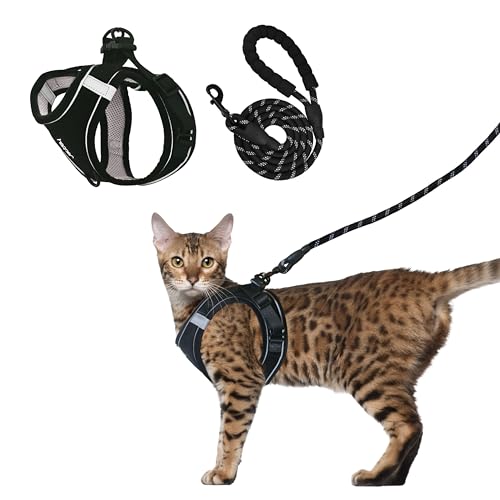
- Escape Proof - Cat leashes and harnesses for walking aren't all equally secure. Our double aluminium D-rings ensure strength when outside, as does the reinforced stitching on this step in vest.
- Superior Comfort - Our cat harnesses are lightweight, made with premium velvet fabric, breathable mesh, with soft edging and resilient cushioning. Also, it is machine washable. Looks and feels great!
- Free Extra Strength Leash - You don't need to worry about your cat escaping this harness. This cat leash is made of thick nylon climbing rope with rotating clamp to keep the strongest kitties at bay.
This harness is easy to put on and take off and features reinforced stitching, reflective stripes, and quick-release buckles. This set also includes a great leash made from durable nylon climbing rope.
At Catster, we’ve admired Hepper for many years and decided to take a controlling ownership interest so that we could benefit from the outstanding designs of this cool cat company!
The 4 Risks of Wearing a Harness All the Time
Though harnesses can undoubtedly be beneficial in helping kitties explore the world safely, wearing one long-term does have a few risks.
1. Safety Concerns
The biggest issue with a cat wearing a harness all the time is safety. If your kitty is wearing a harness while it goes out and about its day, the harness could easily get stuck on a piece of furniture, or your pet could get tangled up in it. And either of these could result in injury or harm to your feline. And if this happens while you’re at work and no one is home, then your pet is going to be hurt or distressed for who knows how long until you get home. It’s just not worth it.
Please note that a poorly fitting harness can easily tangle around your cat’s legs and limit or completely cut off the blood supply to their limbs. Cats should not be left unattended with a harness.

2. Can Cause Discomfort
Even if your cat is comfortable wearing a harness while exploring the world outside, it doesn’t mean the harness will be comfortable if worn full-time. Wearing a harness too often could cause hair loss and skin irritation from the harness rubbing against your pet. This is even more likely if the harness is a bit too tight or just a tad too loose, or if it’s made from a material that your cat is allergic to. For example, the rubber lining of some harnesses might cause discomfort for cats that are sensitive to rubber. Repeated contact with a material their skin doesn’t agree with might lead to contact dermatitis.
3. Can Cause Stress
Keeping your cat in a harness longer than needed can also result in the cat becoming stressed, frustrated, or anxious. After all, you wouldn’t want to be stuck somewhere or in something that you didn’t like, right? And stress and anxiety can lead to negative behaviors like aggression and excessive grooming. Your pet might even try to try to escape the harness by chewing at it or slipping out; either of those could injure your pet.

4. Gets in the Way of Grooming
If your pet is wearing a harness all the time, it means there will be places on its body that it can’t groom due to the harness being in the way. And not being able to properly groom can end in matted fur, a frustrated kitty, and hygiene issues.
All of the above risks can be minimized by simply using a harness as directed—for short periods and always under supervision. And these risks don’t mean there aren’t also benefits to your pet wearing a harness as needed. Harnesses allow the cat to explore the outside world safely, which provides mental stimulation. Plus, walking your cat on a leash while it wears a harness means your pet is getting plenty of exercise!
Final Thoughts
Your cat should not always wear a harness, as a handful of risks are associated with long-term harness-wearing. Some of these risks include stress, anxiety, discomfort, health issues, and risk of injury. Letting your pet wear a harness as directed (for short periods only) is much safer.
To make wearing a harness the most comfortable it can be for your pet, ensure you’re getting a cat-specific harness that properly fits them. Then, introduce the harness slowly to get them used to it. Some cats will never go for a harness, so don’t force your pet if it doesn’t enjoy it. But many felines will be comfortable with a harness and will enjoy getting to explore the great outdoors!
Featured Image Credit: Abis Photos, Shutterstock
Expert cat care, straight to your inbox
News, insights, and useful advice, delivered to you.

No spam — unsubscribe anytime.
By signing up, you agree to our Terms & Conditions and Privacy & Cookies Policy.
How useful was this post?
Click a star to rate. You can leave written feedback afterwards. (We read all feedback.)
Misty Layne lives out in the woods in small-town Alabama with her two Siamese cats —Serafina and Jasper. She also has an array of stray cats, raccoons, and opossums who like to call her front porch home. When she’s not writing about animals, you’ll find her writing poetry, stories, and film reviews (cats, by far, her favorite writing topic, though!). In her free time, Misty enjoys chilling with her cats, playing piano, watching indie and foreign films, photographing abandoned places, and catching up on her never-ending TBR list.