Can Cats Eat Asparagus? Vet-Reviewed Nutrition and Safety Explained


In this article
While you might love asparagus in risotto or as a side for your steak, should you be offering any leftover asparagus to your cat?
Plenty of cats have a curious streak and love to investigate the smells (and tastes!) coming from your kitchen. But does that mean we should let our cats eat asparagus? In simple terms, most cats can eat asparagus in moderation if prepared appropriately. However, that doesn’t mean they need it, as a cat’s diet is based primarily on animal protein.
We’ll answer all your questions, including whether asparagus is appropriate for cats and if there are actually any benefits to letting your kitty take a nibble on this green vegetable.

Is Asparagus Toxic to Cats?
Luckily, the brief answer to this is a firm no. Asparagus, scientific name Asparagus officinalis, is not included on the ASPCA’s or the Pet Poison Helpline’s list of common poisons. However, some other plants from the asparagus family or with asparagus in its name are listed as toxic and should be differentiated from the actual Asparagus officinalis. One of them is asparagus fern, which is toxic to cats.
There are a few scenarios where you’d want to avoid feeding your cat asparagus. However, if it is safe to offer to your cat, it’s important to do so only very occasionally. Let’s take a closer look at why you might want to avoid feeding your cat asparagus and ways to do it safely.
Asparagus and Vitamins
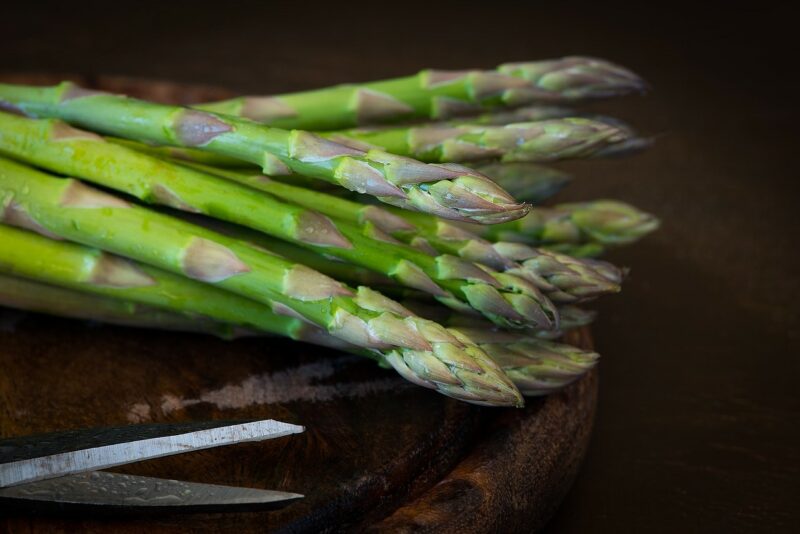
Asparagus is an extremely well-balanced vegetable in terms of nutrition. It’s a wonderful source of potassium, folic acid, vitamin B6, and thiamin. As well as being an excellent source of fiber, it’s low in calories. A 3.5-ounce serving of asparagus, or 100 grams, only contains 20 calories yet provides around 2 grams of fiber and 3.8 grams of carbs.
Given these great credentials, you might be tempted to start adding a little asparagus to your kitty’s diet. Keep on reading to see why you shouldn’t, as your cat will not reap the same benefits as you will, and excess of vegetables can lead to a digestive upset and other potential health issues.
Is Asparagus Safe for Cats?
If your cat seems to like eating asparagus, then the good news is that it’s safe for some cats in moderation, as long as you prepare the asparagus properly. But asparagus is an alkaline vegetable, and as a result, eating it is not a good idea for all cats and should never be a regular occurrence.
Any cat who has been diagnosed or is predisposed to a urinary tract disorder should not be given asparagus. A side effect of eating asparagus could be that the pH of your cat’s urine will change, increasing the risk of urinary crystal formation that may lead to signs of a urinary disorder and even a blocked bladder, which is a life-threatening condition.
In case of struvite crystals and stones that have a higher chance of developing in an alkaline urine, alongside other metabolic predisposing factors and presence of an infection, moderate acidification of urine is the aim of treatment, alongside dietary factors and increasing water intake.1
Another important point is that the asparagus foliage, which is sometimes referred to as fern, is not safe for cats, and cats should never consume it. Also, keep in mind various other plants, such as asparagus fern and others that are considered toxic to cats, as these can be easily mistaken with Asparagus officinalis due to similarities in name.
So, let’s assume your cat doesn’t have a history of urinary tract infections, and you’ve decided to feed them a little asparagus. What’s the best way to prepare it?

Can Cats Eat Raw Asparagus?
Many cats would probably give a stem of raw asparagus an exploratory chew, but they might not enjoy the crunchy texture of an older and more fibrous stalk. They’re probably more likely to savor the top part of a younger and tenderer stem. It’s best to chop this up into very small pieces so it doesn’t pose a choking hazard, though.
Can Cats Eat Cooked Asparagus?
If you do want to feed your cat asparagus, then cooking it is probably the safest way. Steaming or boiling the stems will make it easier for your cat to chew the asparagus before swallowing, as cats are not great at chewing their food anyway. Don’t give your cat cooked asparagus that’s been seasoned with anything like salt, garlic, or onions. These are toxic for cats and would do more harm than good.
It’s also worth remembering that asparagus should only ever be fed as an occasional treat, rather than making up a large or regular portion of your cat’s diet.
Can Cats Eat Asparagus Ferns?
As already briefly discussed, it’s important to note that asparagus ferns are a plant directly unrelated to the vegetable of the same name. They are a common houseplant, though, so it’s worth a mention. Asparagus fern is also sometimes called emerald fern, Flagstaff fern, foxtail fern, and racemose asparagus, among other names!
Unlike its vegetable counterpoint, asparagus ferns, Asparagus densiflorus or Asparagus setaceus, are poisonous to cats and are listed on the Pet Poison Helpline as a plant with mild toxicity to cats.
If the berries or greenery are ingested, it can cause abdominal pain, diarrhea, and vomiting. Skin irritation may also occur if your cat brushes past this plant close enough to get it on their skin.

Interesting Facts About Asparagus
The root of the name “asparagus” comes from the Greek language, where it means “shoot” or “sprout.” The Latin name for asparagus is Asparagus officinalis.
From seed to harvest, it takes up to 3 years to produce a crop of these lush green stems.
While China might lead the way in terms of global production, the U.S. is home to the self-proclaimed “Asparagus Capital of the World” in Oceana County, Michigan.
Are Vegetables Safe for My Cat to Eat?
Vegetables are packed full of fiber, vitamins, and minerals, as well as a range of antioxidants. It might seem logical to want to feed your cat vegetables, given how beneficial they are to humans. But will your cat really benefit from vegetables in their diet?
We all know that cats eat meat, but did you know they’re also defined as “obligate carnivores?” This means their digestive systems are specifically designed to thrive on a meat-only diet. Your cat’s digestive system is not designed to digest plant matter in even the smallest quantities. Always consult with a vet before introducing any new ingredients to your cat’s diet.
Which Vegetables Can I Feed My Cat?
If you still want to give your kitty a small portion of vegetables on a special occasion, then some won’t harm them. Vegetables, including peas, carrots, and asparagus, are safe for most cats to eat in small quantities. However, remember that your cat isn’t going to get much nutritional value from them.
Certain types of vegetables shouldn’t be fed to your cat in even the smallest quantities. These include garlic, onion, mushrooms, and tomatoes.
Summing Up
We hope you’ve enjoyed our article about whether cats can eat asparagus. The answer, for most cats, at least, is that they can do it in moderation and very infrequently. But whether they should is something that only you can decide with the information we presented and with valuable advice from your vet.
However, if your cat has a urinary tract issue, it’s crucial to consult with your veterinarian, who is likely to recommend avoiding alkaline foods like asparagus, which could change the pH of your cat’s urine unfavorably.
We would always recommend sticking to a high-protein and meat-based diet for your kitty. This way, you can rest easy in the knowledge that they’re eating something specifically prepared for their obligate carnivore needs!
See Also:
Sources
Featured Image Credit by: Mustafa ezz, Pexels, Foodie Factor, Pexels

Expert cat care, straight to your inbox
Vet-reviewed advice, behavior tips, and the best of Catster. Free, and you can unsubscribe anytime.
By signing up, you agree to our Terms & Conditions and Privacy & Cookies Policy.
Christian started writing for a local newspaper as a teenager, and he's been involved in the publishing industry for most of his adult life. Combining his love of writing with a passion for animals, he is currently the Director of Editorial at Pangolia and the Editor-in-Chief at Catster.
Christian lives in the Philippines with his wife, son, and four rescue cats: Trixie, Chloe, Sparky, and Chopper.
Join the conversation
Ask a question, share your story, or send private feedback.