Can Cats Eat Mushrooms? Vet-Verified Facts, Risks & FAQ


In this article
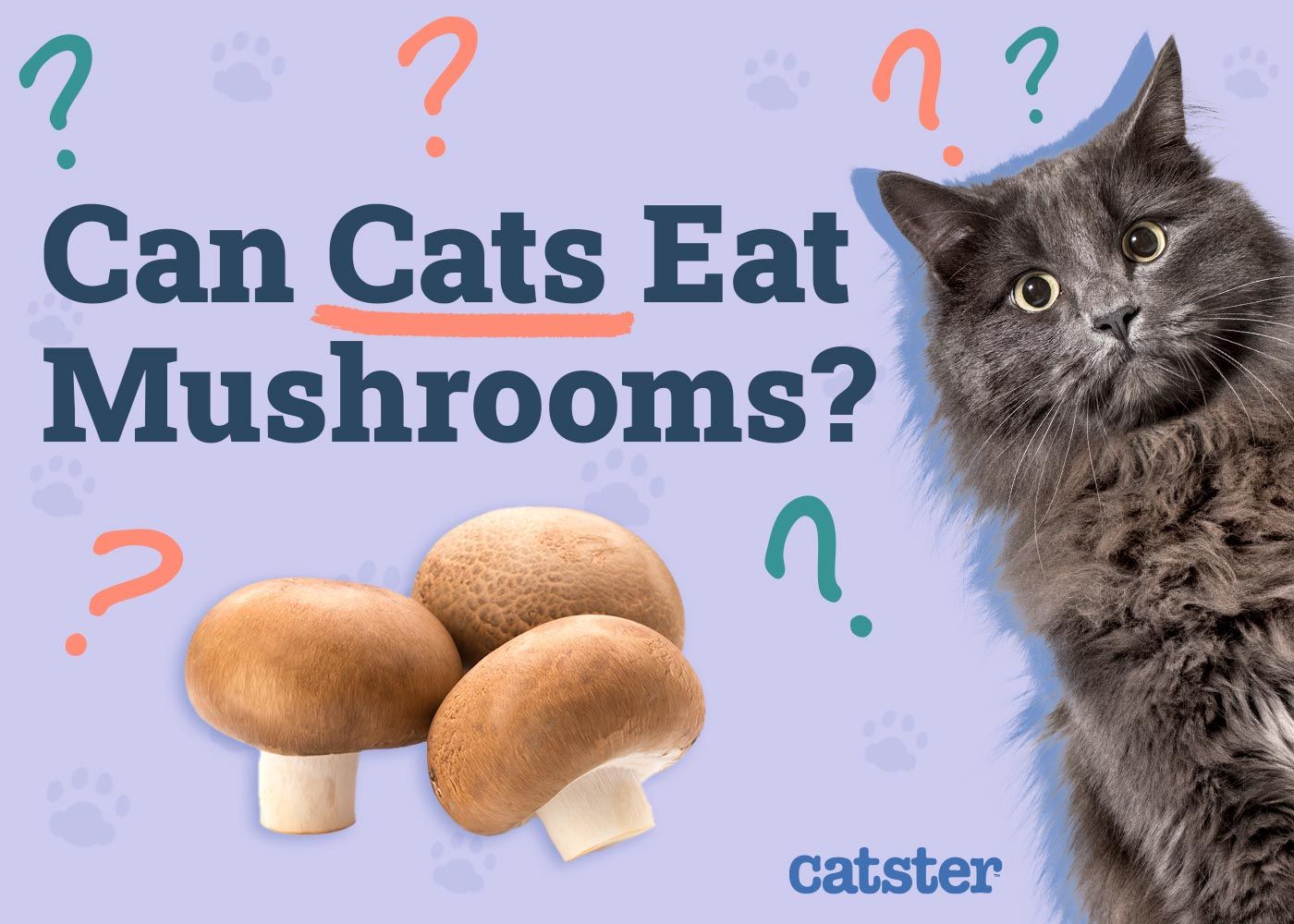
If you’re cooking a delicious mushroom risotto, you might be surprised to find your cat brushing up against your legs and showing interest in your vegetarian dinner. You might even be tempted to give your cat a piece of mushroom, but is this safe? Can cats eat mushrooms?
In short, some shop-bought mushrooms can be safe for cats, but in general, you should avoid giving your cat any mushrooms. Let’s find out a little more about this unusual pairing.

Disclaimer
Why Might Cats Like Mushrooms?
Strange as it might sound, some cats enjoy the taste and texture of mushrooms. Mushrooms contain high levels of glutamate, an amino acid that gives foods a distinctive savory flavor, sometimes called “umami.”1
Cats can detect savory flavors, and they enjoy them too! The umami flavors are also linked to the amino acids in meat protein, so your cat is more likely attracted to mushrooms for the protein and savory flavor.

Are Mushrooms Safe for Cats?
Some store-bought mushrooms can be safe for cats to taste in very small quantities, but most prefer meat-based snacks. Mushrooms are not suitable as a regular part of your cat's diet. If you decide to share a small piece of mushroom with your cat, speak to a vet first and serve it cooked without any seasonings.
While some cats might like the taste and texture of mushrooms, there’s nothing in a mushroom nutrition-wise that can’t be found in your cat’s food! Rather than feed your cat mushrooms, it’s safer and more appropriate to serve healthy commercial treats designed for cats. Ask a veterinarian about the best food and treat options for your cat.
What About Wild Mushrooms?
Cats should never be fed wild mushrooms. They can be very hard to identify, and unless you’re a professional mycologist (mushroom scientist), we’d recommend never trying to self-identify wild mushrooms for either yourself or your cat to eat!
The North American Mycological Association (NAMA) says that cats do not often eat wild mushrooms out of choice. However, they seem attracted to dried Amanita muscaria and pantherina mushroom species, which can be fatal if eaten. Both these mushrooms have a fishy scent, which is likely why cats are attracted to them.
It’s unlikely that your cat will come across these mushrooms, but if you’re unsure, volunteers from the NAMA can help you safely identify them. In the fall, as mushrooms start to appear, it’s a good idea to check your backyard each day and remove them as they appear.
Some wild mushrooms are harmless, but others can be fatal. And it’s complicated to tell the difference between the two!


Signs of Mushroom Poisoning in Cats
If your cat has eaten wild mushrooms, the Animal Poison Control Center (APCC) and the ASPCA warn you to watch out for the following signs:
- Gastrointestinal Issues: Vomiting or diarrhea within a few hours of consumption should be a warning sign you need to contact your vet. Mild cases can resolve themselves in time, but severe cases can cause dehydration and electrolyte imbalances.
- Muscarinic Effects: Some mushrooms can affect the parasympathetic nervous system. This can lead to severe drooling as well as a decreased heart rate. Gastrointestinal issues may also be present.
- Neurological Effects: These can include unsteadiness when walking, tremors, sensitivity to touch or sound, agitation, and depression. Diarrhea and vomiting can also occur.
- Liver Toxicity: This is the most concerning sign of mushroom poisoning, commonly associated with the death cap mushroom. Signs can be delayed for up to 24 hours after ingestion and can include gastrointestinal issues, decreased energy and appetite, and a yellowing of the skin. Left untreated, it can progress to liver failure and, ultimately, death.
- Kidney Toxicity: Types of mushrooms that lead to kidney damage are uncommon in North America. They cause nausea, vomiting, and diarrhea, and it takes anywhere from 12 hours to a week for kidney damage to occur, which may be irreversible.
The signs that a cat has eaten poisonous mushrooms depend on the type of mushroom. If possible, take a photo of the mushroom, keep a small sample, and then dispose of the rest very carefully, making sure you don’t get any on yourself!

- NO MESS - The 360° tray on this cat food and water bowl set has a raised design to catch and contain stray crumbs and drips. Protect your indoors and floors from wet and messy meals!
- WHISKER FRIENDLY - Shallow and wide metal containers with flat bottoms ensure your kitty can enjoy mealtime free from whisker fatigue!
- CHEW-SAFE MATERIALS - Kittens and cats love chewing on silicone and soft rubber - but it's a choking hazard. Our cat feeding station materials are anti-chew for a 100% safe feeding frenzy!
Learning about what your cat can and cannot eat is a crucial part of keeping them happy and healthy! Choosing a bowl to serve cat-friendly foods in is another important decision pet owners face. Satisfy the specific needs of your cat with the innovative design of the Hepper NomNom Cat Bowl. Learn why it’s our (and our cats!) favorite food and water dish here.
At Catster, we’ve admired Hepper for many years and decided to take a controlling ownership interest so that we could benefit from the outstanding designs of this cool cat company!

Wrapping it up
Some cats seem to enjoy the savory taste of shop-bought mushrooms, but it’s best to steer clear of all mushrooms since they can upset your cat's stomach. It is safest to stick to food and treats created specifically for your cat. Their digestive systems are designed to process a meat-based diet, after all!
You should never feed your cat a wild mushroom, even if you think you’ve identified it safely. If you see your curious cat showing an interest in or eating a small piece of wild mushroom, we recommend contacting a vet immediately and keeping a close eye out for any of the signs we listed above.
Cats can be pretty curious creatures, but in this instance, it’s safest to keep cats and mushrooms away from each other!
Expert cat care, straight to your inbox
News, insights, and useful advice, delivered to you.

No spam — unsubscribe anytime.
By signing up, you agree to our Terms & Conditions and Privacy & Cookies Policy.
How useful was this post?
Click a star to rate. You can leave written feedback afterwards. (We read all feedback.)
Emma is a freelance writer, specializing in writing about pets, outdoor pursuits, and the environment. Originally from the UK, she has lived in Costa Rica and New Zealand before moving to a smallholding in Spain with her husband, their 4-year-old daughter, and their dogs, cats, horses, and poultry. When she's not writing, Emma can be found taking her dogs for walks in the rolling fields around their home...and usually, at least some of the cats come along, too! Emma is passionate about rescuing animals and providing them with a new life after being abandoned or abused. As well as their own four rescue dogs, she also fosters dogs for re-homing, providing them with love and training while searching for their forever homes.