Can Adult Cats Eat Kitten Food? Vet-Verified Facts & FAQ


In this article
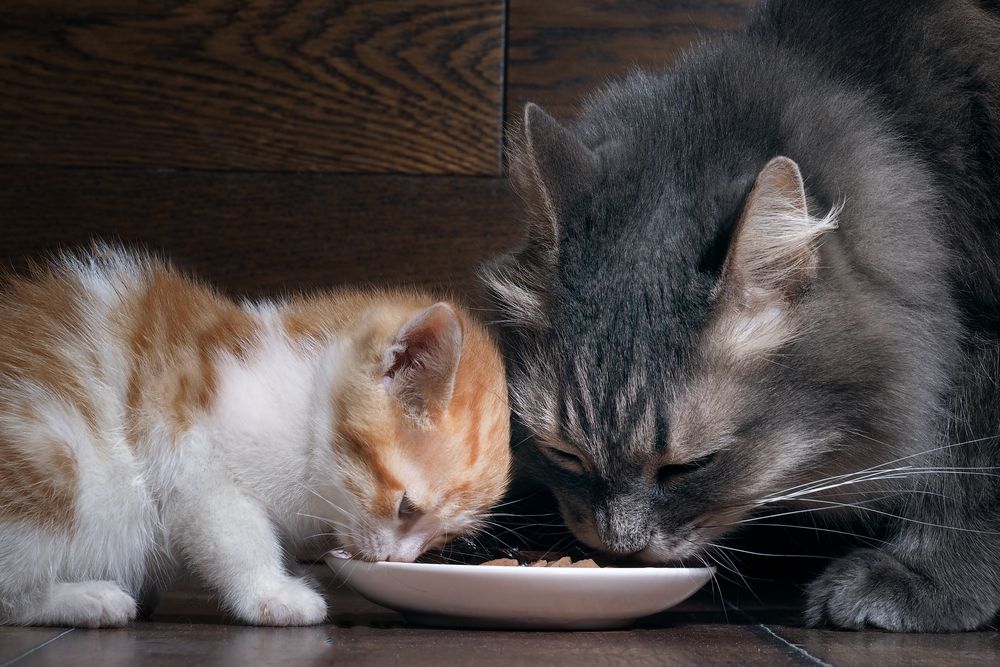
You already know it is important to feed your kitten age-appropriate food, but what if you accidentally feed kitten food to your adult cat? Can adult cats eat kitten food? Yes, you can feed kitten food to your adult cat; however, only under specific circumstances. If you want your cat to live a long and happy life, you must understand the specific dietary requirements your pet needs. In pursuing that knowledge, pet parents often discover that the food they feed their furballs changes over their lifespan.
For example, kitten food is recommended for cats up to the age of 12 months (24 months for Maine Coons), upon which you have to switch to a food formulated for adults. Why is this the case, and why would giving kitten food to an adult cat is a bad idea?
Here is everything you need to know.

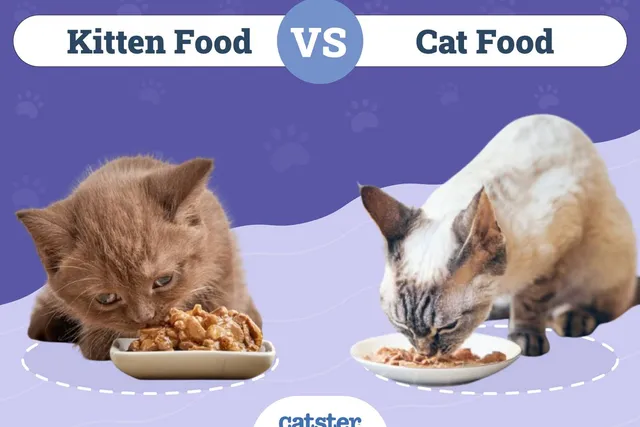
The Differences Between Kitten and Adult Cat Food
Adult cat food and kitty food are formulated differently since they serve the needs of different physiologies. The following are the main differences between them:
1. Number of Calories
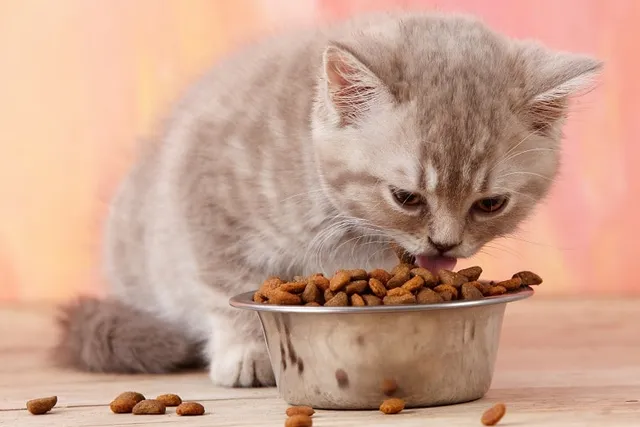
Kitten food contains more calories than adult cat food. This is because kittens are still growing, and there is more going on in their bodies than mature cats. As such, they have a higher energy requirement.
Additionally, it does not help that kittens are endless balls of energy, burning through calories rapidly. They must consume a lot of food to avoid a calorie deficit, which can compromise their well-being. However, their tiny stomachs cannot allow them to hold down a lot of food. Therefore, the solution to that problem is to make their food as calorie-dense as possible.
On the other hand, adult cats do not have any more growing to do. Therefore, their food is strictly for maintenance purposes, and mature cats are not as playful as kittens, meaning they do not expend as much energy. They do not need nearly as many calories in their food as kittens. You have to remember that any unused calories are converted into fat. So, if your adult cat eats kitten food it can promote unhealthy weight gain due to it being so high in calories.
However, pregnant cats should be on a high-calorie diet to take care of their unborn babies. The average adult cat requires 50–70 calories per 2.2 pounds (1 kg) of their body weight every day to remain healthy. An experienced veterinarian should help you determine your cat's ideal daily calory requirements.
2. Amount of Protein
As is the case with calories, kittens also require higher levels of protein in their food to facilitate the tissue-building process. That is why commercial kitten food has a much higher protein content (35%–50%) than adult cat food (25%–40%).

3. Fats and Fatty Acids Content
Unlike dogs, cats are obligate carnivores; they eat meat and meat products exclusively. This can make it difficult for a pet parent to ensure their cat gets all the necessary nutrients from their food. This is especially true when it comes to fats and fatty acids. Since cats do not consume starch, they need high amounts of dietary fat in their food for energy.
Kittens, especially, need much higher amounts of fats in their diet due to how active they are. Fatty acids, on the other hand, are crucial for optimal growth and development. They also support organ functions. As a result, kitty food has a higher fat and fatty acid content than adult cat food.
4. Minerals and Vitamins
Regardless of age, any cat requires a healthy amount of minerals and vitamins to stay healthy. Nonetheless, kittens require almost twice as much phosphorus and calcium to facilitate the process of bone-building. That is why kitty food has higher levels of these minerals than adult cat food does.

Can Kitten Food Be Beneficial to Adult Cats?
After comparing the nutritional profile of kitten food to that of adult cat food, it would seem like an adult cat has no business eating kitten food. However, there are certain times when an adult cat can eat kitten food and receive its benefits.
When adult cats become seniors (past the age of 11 years), they become susceptible to a number of diseases, some of which cause a decrease in their appetite, hence resulting in weight loss. If your senior cat is losing weight due to a lack of appetite, you should consider giving them kitten food. The benefit of kitten food is that the cat does not have to eat much of it to meet its daily caloric requirements. Also, you will not have to force-feed the cat.
Additionally, cats find it extremely tasty, thanks to the fatty nature of kitten food. The taste alone will be enough to get your senior cat eating again, and the same goes for choosy cats. True to their feline heritage, some cats will not eat food that does not interest them, which might cause them to lose weight. If that is your cat, consider using kitten food as a temporary solution since they cannot resist it.
Nonetheless, before getting your senior cat on a kitten food diet, make sure that you have consulted with your vet.
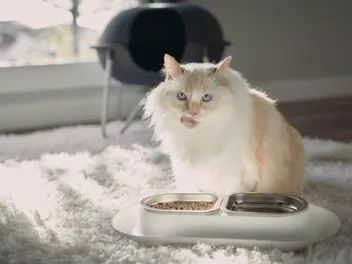
While many kittens grow out of the essential supplies you buy for them when they are young, finding a product that can last them a lifetime is like hitting the cat jackpot - which is why we love the Hepper NomNom Cat Bowl so much. Its unique cat-inspired design offers dual, stainless steel bowls that are wide and shallow, crucial for neck support when kittens are little and benefits mature cats by offering whisker relief. If you want to learn more about what other advantages the NomNom will provide for your growing kitten, click here.

- NO MESS - The 360° tray on this cat food and water bowl set has a raised design to catch and contain stray crumbs and drips. Protect your indoors and floors from wet and messy meals!
- WHISKER FRIENDLY - Shallow and wide metal containers with flat bottoms ensure your kitty can enjoy mealtime free from whisker fatigue!
- CHEW-SAFE MATERIALS - Kittens and cats love chewing on silicone and soft rubber - but it's a choking hazard. Our cat feeding station materials are anti-chew for a 100% safe feeding frenzy!
At Catster, we’ve admired Hepper for many years and decided to take a controlling ownership interest so that we could benefit from the outstanding designs of this cool cat company!

How to Introduce Kitten Food to an Adult Cat
If you decide that kitten food or treats could do your adult cat good, introduce it gradually to them. Restrain from abrupt changes, as they can cause gastrointestinal problems thanks to the sudden calorie increase.
The best way to transition is by mixing equal parts of their standard food with kitten food. After doing that for about 2 weeks, you can increase the portion size of kitten food while decreasing that of their regular food until their entire meal consists of pure kitten food.

Conclusion
Adult cats can eat kitten food. However, it is not recommended since its calorie-dense nature promotes obesity in adult cats. Pregnant or senior cats with appetite issues are the only two groups of adult cats that should be fed a kitten diet. Healthy adult cats should not eat kitten food, and kittens should not eat adult formulations. Before switching your cat's food, check with your veterinarian to ensure it's suitable for your pet. See Also:
Featured Image Credit: Irina Kozorog, Shutterstock
Expert cat care, straight to your inbox
News, insights, and useful advice, delivered to you.

No spam — unsubscribe anytime.
By signing up, you agree to our Terms & Conditions and Privacy & Cookies Policy.
How useful was this post?
Click a star to rate. You can leave written feedback afterwards. (We read all feedback.)
Christian started writing for a local newspaper as a teenager, and he's been involved in the publishing industry for most of his adult life. Combining his love of writing with a passion for animals, he is currently the Director of Editorial at Pangolia and the Editor-in-Chief at Catster.
Christian lives in the Philippines with his wife, son, and four rescue cats: Trixie, Chloe, Sparky, and Chopper.