Get

In Your Inbox

Catster is reader-supported. When you buy via links on our site, we may earn an affiliate commission at no cost to you. Learn more.

Can Cats Eat Pears? Vet-Verified Nutrition Facts & FAQ

Share

Can Cats Eat Pears

Fruit is a tasty addition to a healthy diet for humans and even for dogs, as it provides plenty of dietary fiber and many other essential minerals and vitamins. It is well known that dogs can have small amounts of fruit as a part of their regular diet, but cats, however, are obligate carnivores and do not require fruit or plant foods in their diet. Still, many pet parents wonder: can cats eat pears? Are pears safe for cats as an occasional treat?

The answer is yes, even carnivores like cats can safely taste a small amount of certain fruits, including pears, every now and then. However, these foods are treats only, not a dietary necessity, and there are a few essential factors to consider before feeding your feline pears or any other fruits. In this article, we’ll take a look at some of the potentially safe aspects of feeding your cat pears, as well as the hazards to be aware of.

divider single cat paw oct 2024

Are Pears Safe for Cats?

For the most part, pears are a healthy treat to feed your cat occasionally. The fleshy part of the fruit contains beneficial vitamins, antioxidants, fiber, and moisture that can be good for your feline. The seeds, however, are not safe. The seeds of pears contain cyanogenic glycosides, which can be harmful, even fatal, in large amounts. If you decide to feed your cat a piece of pear as a treat, make sure it is free from any seeds.

While pears are safe for cats in small amounts, remember that cats are obligate carnivores and do not require anything in their diet other than the nutrition provided by meat, which is sufficient for their health. However, there are nutrients contained in pears, including vitamin A, water, and dietary fiber.

Other than the seeds, there are other hazards to be aware of when feeding pears to your cat, notably the sugar content. Pears should always be given raw and fresh and cut into small, digestible pieces. Avoid canned pears since they are often swimming in sugary syrup. Even raw pears have a naturally occurring sugar content and should only be given sparingly in small amounts.

Fiber is a vital part of any animal’s diet, and most fruits are high in dietary fiber, which is great for the most part. Cats, however, do not require added plant fiber, and excessive amounts may cause gastrointestinal upset such as diarrhea, gas, or soft stools.
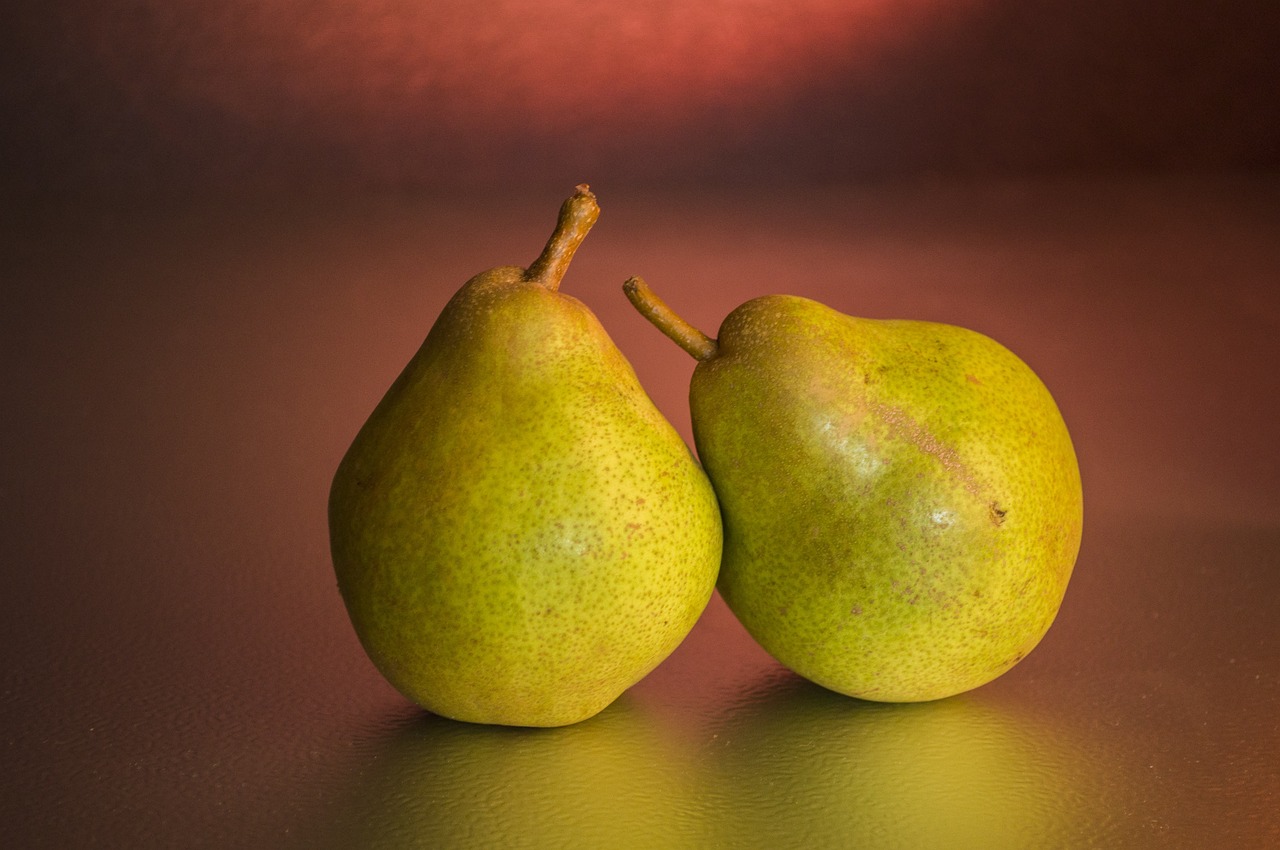
pears on the table
Image Credit: AD1981, Pixabay

Cats and Sugar

Pears contain a lot of sugar, and while it’s considered by most to be a “healthy sugar” as it is not concentrated and refined, in large amounts it is still unnecessary and can contribute to health problems for your feline. While sugar is not toxic to cats, it is still best to avoid including it in their diet as much as possible.

Most people don’t realize that cats cannot taste sweetness since they lack the receptors to detect it. Cats can taste bitterness, but they likely won’t enjoy a sweet treat like a pear anyway! Moreover, their gastrointestinal tract lacks the enzymes to efficiently process high sugar loads, and while a small bite of pear is unlikely to cause harm in a healthy cat, offering it regularly or in large amounts could disrupt the gut microbiome.

Some cats suffer from conditions like diabetes or obesity and should not have any sugar in their diet, including pears and other fruits. Sugar, even from natural sources, provides unnecessary calories to cats and may worsen certain health conditions. Cats do not require carbohydrates or sugar in their diet, and any fruit or sugary treat should only be given occasionally, if at all. In reality, cats do not benefit nutritionally from fruit.

A cat sits near a ripe yellow pear
Image Credit: Olena Belevantseva, Shutterstock

Some Fruits to Avoid

While pears, apples, and bananas are fine for cats in tiny amounts offered occasionally, there are certain fruits that you should avoid giving your cats altogether, including the following:

  • Cherries
  • Grapes and raisins
  • Lemons
  • Grapefruit
  • Persimmons

divider cat faces oct 2024

Final Thoughts

Pears are a generally safe but nonessential treat to give your feline in moderation. They contain water and some vitamins, along with dietary fiber, but cats obtain all the nutrients they need from a complete and balanced meat-based diet. Be sure that the pears are fresh, the seeds are removed, and they’re cut up into small, edible pieces. The main concern with feeding your cat pears is the sugar content, which can cause serious health concerns when fed in excess. Above all, the key is moderation, and a few small pieces now and then shouldn’t do any harm for a healthy cat.


Want content like this delivered to you?

Sign Up For Our Newsletter

News, insights, expert advice, and everything cat

* By submitting, you agree to our Terms & Conditions and Privacy & Cookies Policy.


How useful was this post?

Click on a star to rate (you can leave written feedback after clicking submit)

Help us improve Catster for pet parents!

Your feedback really matters.

What did you like about this post? Also how can we improve it?

Join the conversation

Leave a Reply

You’re very welcome to leave a comment or question. Please know that all comments must meet our community guidelines, and your email address will NOT be published. Let’s have a positive and constructive conversation.


Talk With A Vet Online

Peace of mind,
anywhere, anytime

Affordable vet advice

Why Chicken Bones Are More Dangerous for Cats Than Most Parents Realize

Chicken bones seem harmless enough, but for cats, they can cause serious damage quickly. Whether your cat swiped a piece off the counter...

Fantastic Pet Pantries and Where to Find Them

Let’s face it: times are really tough right now, and those of us in the 99% are struggling with the cost of just...

Ask Dr. Paola – Help! My Cat Refuses to Drink Water! (April 13, 2026)

Welcome to our “Ask Dr. Paola” series, where every Monday we bring expert advice straight from Dr. Paola Cuevas (MVZ) to help our...

Why Healthy Cats Still Vomit Sometimes (And How to Respond)

A cat that just vomited needs a specific kind of care, and the feeding decisions you make in the next few hours actually...

More related

Why Do Cats Roll in Dirt? 6 Vet-Verified Reasons for This Behavior

Have you ever looked into your backyard only to find your cat rolling and writhing around on the ground? If so, there should...

What’s the Best Material for a Cat Scratching Post? Vet-Approved Tips & Tricks

Scratching posts are wonderful and necessary items that help keep your cat entertained while fulfilling a natural and necessary instinct. Furthermore, having the...

What are the Side Effects of Prednisolone & Prednisone? Our Vet Explains

Glucocorticoids like prednisone and prednisolone have many useful functions in veterinary medicine. In fact, they have been prescribed as a treatment for nearly...

How Do Cats Greet Each Other? Feline Communication Explained

We know how cats typically say hello to us, but how do they greet each other? Cats say hello to each other by...

Keep reading

Can Cats Eat Seafood? Vet Approved Facts & Health Guidelines

It’s a popular belief that cats love fish, even though fish are not a natural part of a feline’s diet. Some cats don’t care for fish at all, while other kitties are always trying to snag a piece of tuna...

Can Cats Eat Seafood

When Can Kittens Eat Dry Food? Vet Approved Facts & FAQ

Kittens are adorable little creatures that require a lot of attention and care to grow up healthy and happy. One of the most important aspects of their care is feeding. As kittens grow, they will need to transition from milk...

When Can Kittens Eat Dry Food

Why Cat Ear Sores Shouldn’t Be Ignored (Even Small Ones)

You’re giving your cat a head scratch when your fingers catch on something rough. You pull your hand back and look closer – there’s a scab on the edge of their ear. A crusty patch. Maybe some hair loss around...

close up cat with eye sore

Can Cats Eat Cheese? Vet-Approved Facts & FAQ

Cheese is a food long associated with being a feline favorite, and while cheese isn’t toxic to cats, various ingredients within it, primarily the dairy content, are not good or healthy for cats and may instigate problems. A small piece,...

Can Cats Eat Cheese

Why Is My Cat Shaking While Purring? 4 Vet-Reviewed Reasons

Purring is the most common sound we hear from cats. No matter their size, all cats purr. Even kittens start purring when they’re only a few days old! And yet, we still don’t understand much about this infamous cat sound....

bengal kitten purring

Neakasa AirStep Odor-Eliminating Cat Litter Box Step Review 2026: Our Expert’s Opinion

For most cat owners, the battle against litter box odors is an endless one. It doesn’t seem to matter how good your litter is at absorbing odors, how often you scoop, or how much you spend on the newest automatic...

Neakasa AirStep Odor-Eliminating Cat Litter Box Step Review 5

Can Cats Kill Weasels? Our Vet Explains

The domestic cat is the most popular pet animal in the world today. Domesticated thousands of years ago, cats have followed humans all over the world throughout history. As a result, they’re considered invasive in many parts of the world,...

Siberian Weasel

Can Cats Drink Almond Milk? Vet Approved Nutrition Facts

In recent years, there has been a huge movement away from cow’s milk toward other lactose-free options, including almond and soy milk. While many of us enjoy the lactose-free benefits of these milk replacements, can cats drink almond milk. The...

Can Cats Drink Almond Milk

Love Cats? So Do We! Join the Catster Community

Stay informed with expert pet care insights delivered straight to your inbox! Discover professional guidance on animal behavior, feeding tips, trusted product picks, and much more.


Sign up for the Catster Email Newsletter

Stay informed with expert pet care insights delivered straight to your inbox! Discover professional guidance on animal behavior, feeding tips, trusted product picks, and much more.

