Can Cats Eat Carrots? Vet-Reviewed Nutritional Facts & FAQ


In this article
Carrots are a common ingredient in most kitchens and can be enjoyed cooked or raw. They are also a common ingredient in dog food and some cat food formulas. But what about your cat? Yes, cats can enjoy carrots as an occasional snack. Even though cats are obligate carnivores, carrots can be a healthy addition to their diet. However, they need to be prepared correctly for them to be safe.

Can Cats Eat Carrots?
While there are undoubtedly certain ingredients that we shouldn’t share with our cats, a few boiled carrots stolen off your plate or added to your cat's food bowl won't do any harm. However, there are things you need to keep in mind; carrots should only be an occasional treat (if your cat enjoys them), they should be free from spices, and they should be appropriately prepared.
Do Cats Enjoy Carrots?
While carrots are non-toxic to cats, some cats won’t eat them. Most cats are known to be picky eaters, and it's possible that if you add carrots to their bowls, they may turn their noses up. However, some cats may be more curious and want to try a little nibble. They will be more drawn to the texture, color, and smell of the carrots rather than the taste, as cats don’t actually have taste buds that can detect sweetness, and carrots taste very different to them than to us 1.
If your cat chooses not to expand its pallet to carrots, you can rest easy knowing they don’t need carrots or any other vegetable since they are obligate carnivores and rely only on meat.
Are Carrots Good for Cats?
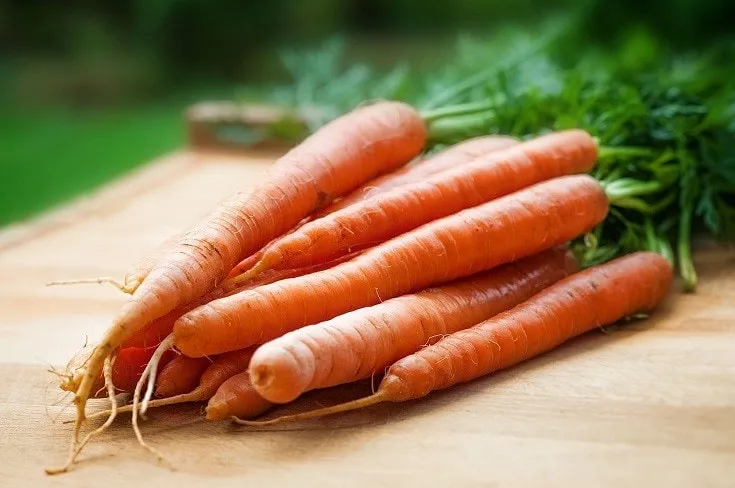
While cats get all their nutrients from meat sources, carrots can provide some vitamins and minerals as an occasional treat. Even though cats can't convert beta-carotene to vitamin A, carrots contain many other helpful vitamins and minerals. Carrots have vitamin B6, which assists with the production of plasma and aids in fighting inflammation, while vitamin K1 helps with blood clotting. Potassium in carrots helps with the prevention of hypokalemia 2.
Other beneficial vitamins and minerals include:
Can Carrots Improve a Cat's Eyesight?
The first thing that may pop into mind when linking carrots to health, is vision. The myth goes that carrots can improve vision, so can they do the same for cats? While this statement has a tiny nugget of truth, eating lots of carrots will not give you or your cat flawless vision.
The carrot’s vitamin A (retinol) is the basis for the veggies improving eyesight. Retinol is necessary for good vision, especially in dim light. However, cats have a very limited ability to convert beta-carotene to vitamin A and must be fed a form of vitamin A that the body uses immediately, as opposed to being stored.
When released into the bloodstream, vitamin A travels to the retina at the back of the eyeball. The rods of the eyes are the most sensitive to low levels of vitamin A and are most important in dim light. Therefore, consuming more vitamin A when there is a deficiency could help improve low-light vision.
So, while carrots can help improve eyesight, especially in low-light situations, cats will need to get their vitamin A from another source since they are limited in their ability to convert the beta-carotene to vitamin A. Therefore, carrots will most likely not improve your cat’s eyesight.

What are the Downsides to Feeding Your Cat Carrots?
Too many carrots in your cat's diet can contribute to excess sugar, which can contribute to diabetes and obesity. If your cat enjoys the taste of carrots and you want to add them to their diet, keep it to a minimum. Generally, your pet's treats should only make up 10% of their diet.
One of the biggest drawbacks is that carrots can pose a choking hazard, especially if they steal a chunk off your plate, or you offer them a large piece. The other drawbacks include carrots cooked up with spices that may cause harm to your feline, such as onions and garlic, which are toxic. Other common ingredients added to carrots, like salt, pepper, and butter are not good for your pet and should not be added to your cat’s snack.
How to Feed Your Cat Carrots
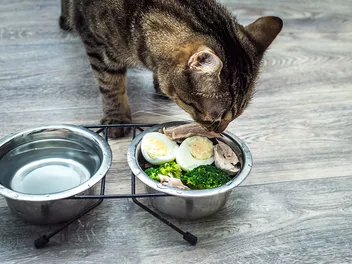
Your cat can enjoy carrots occasionally in its diet as long as they are prepared properly. While raw carrots provide the most nutrients, they can pose a choking hazard, so it’s best to serve your cat soft, cooked carrots. The carrots can be steamed, roasted, or boiled, but should not include any seasoning or butter. They should be cut into small pieces if given as a treat, or you can mash some up into your cat's wet food or kibble.
Conclusion
Cats are obligate carnivores that get all the nutrients they need from meat and don't require carrots in their diet, but there is no harm in giving your cat carrots as an occasional treat if they enjoy them. If your cat shows interest in eating carrots, it's best to feed them cooked, soft carrots that are chopped up small to prevent the risk of choking. Most importantly, always consult a veterinarian before giving your cat any new food.
Expert cat care, straight to your inbox
News, insights, and useful advice, delivered to you.

No spam — unsubscribe anytime.
By signing up, you agree to our Terms & Conditions and Privacy & Cookies Policy.
How useful was this post?
Click a star to rate. You can leave written feedback afterwards. (We read all feedback.)
Christian started writing for a local newspaper as a teenager, and he's been involved in the publishing industry for most of his adult life. Combining his love of writing with a passion for animals, he is currently the Director of Editorial at Pangolia and the Editor-in-Chief at Catster.
Christian lives in the Philippines with his wife, son, and four rescue cats: Trixie, Chloe, Sparky, and Chopper.