15 Turkish Angora Cat Colors & Patterns (With Pictures)


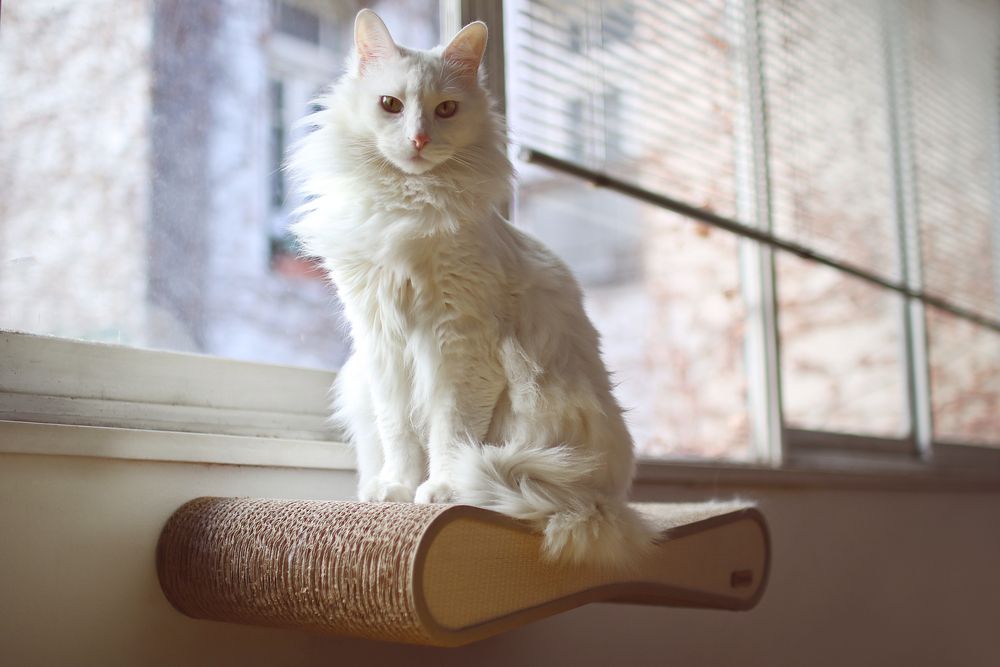
The Turkish Angora cat was first imported to Ankara, Turkey, by Egyptian traders in the 14th century. The breed originated in the Ankara region of Turkey, historically known as Angora, and is considered one of the naturally occurring cat breeds. They became known as the Ankara cat and share some ancestry with other Turkish native cat populations, including the Turkish Van. They are often described as being dog-like because they will welcome many visitors to your home and are intelligent enough that they can be trained to perform a few tricks and exhibit positive character traits. They'll happily live with other dogs and cats, get along with many family members, and make excellent companions and pets. Despite their long coat, they require minimal grooming.
Although they're most often recognized for their long white coat, the Turkish Angora cat comes in a wide range of colors and markings. Let’s take a look at the colors and patterns of this lovable breed.

The 15 Turkish Angora Cat Colors & Patterns
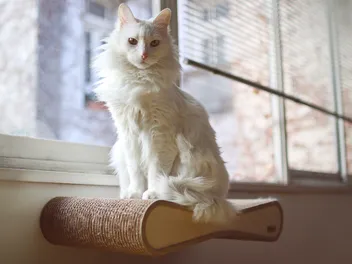
1. White

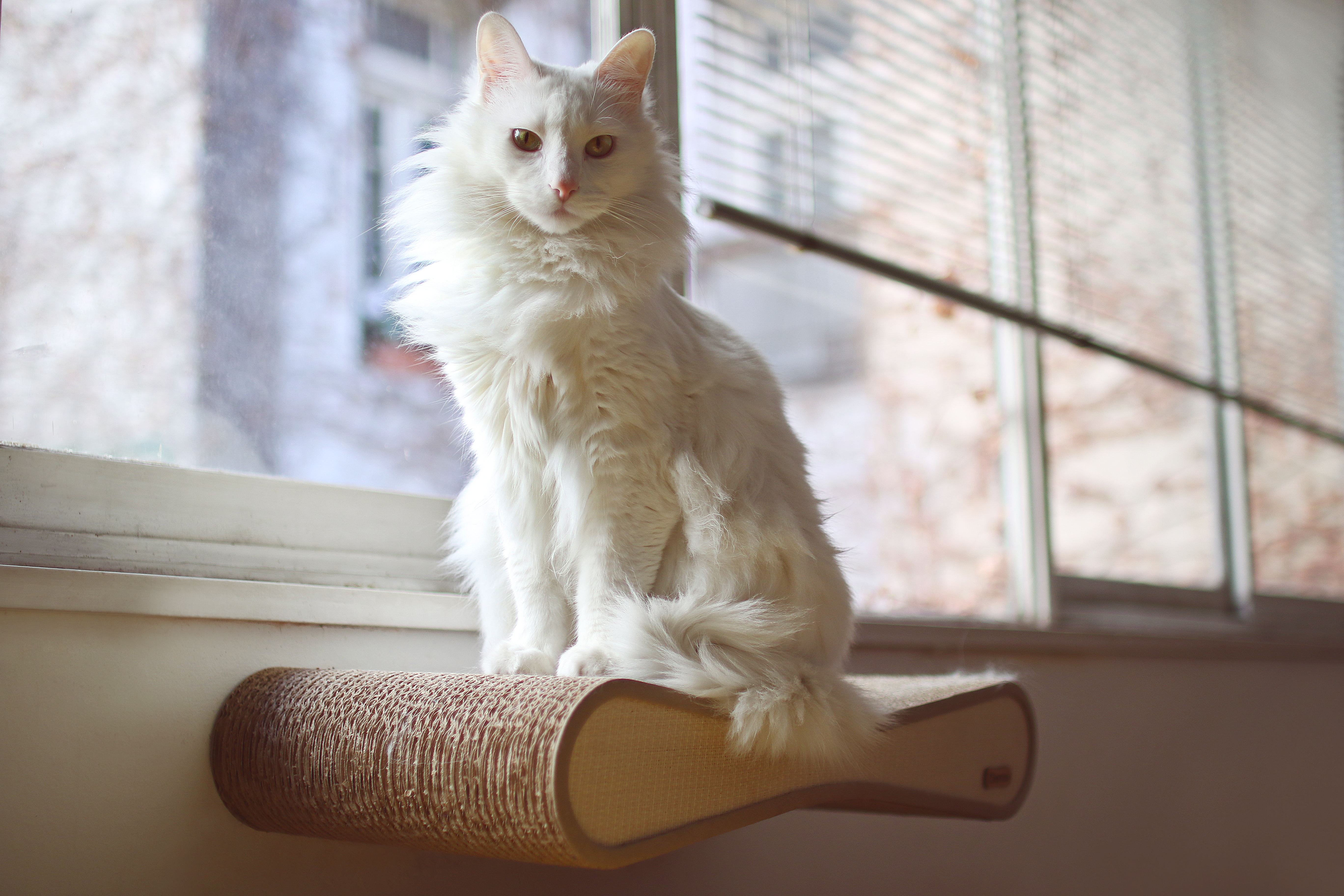
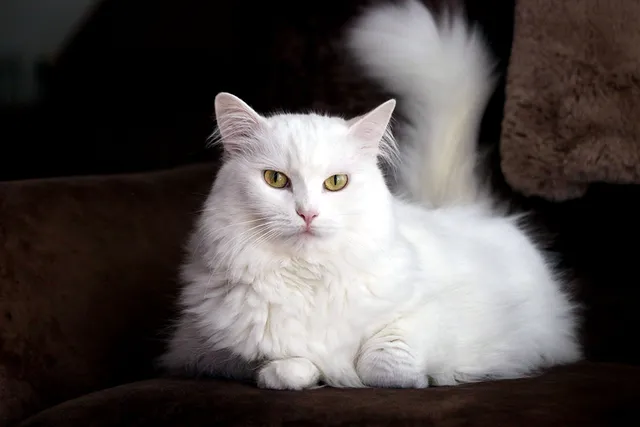
The pure white Turkish Angora cat is arguably the most desirable coloring. However, it comes at a cost. White cats are not only prone to getting sunburn, but they are also predisposed to skin cancer, particularly squamous cell carcinoma, and are most likely to develop the illness around the ears, nose, and eyelids because these are the areas where the hair is thinner, and the skin is more exposed to ultraviolet (UV) light.
2. Red

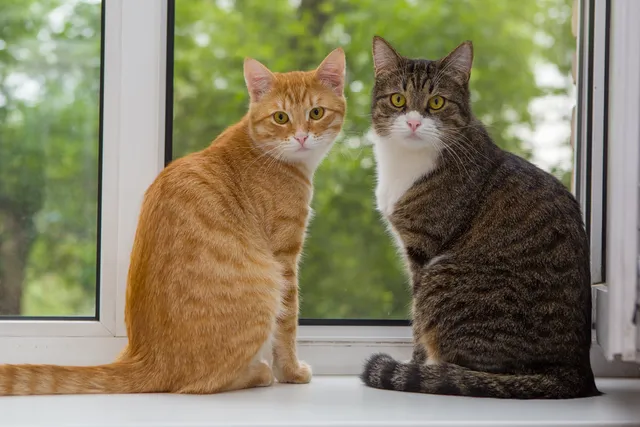
Red, ginger, or orange Turkish Angora cats carry a ginger gene. This gene is on the X chromosome. Because female cats have two of these chromosomes, they would need the ginger gene to be present on both to show a ginger coat. In contrast, male cats only have a single X chromosome. As a result of this, approximately one in five ginger cats is female.
3. Cream

The cream color is a dilution of the red or ginger color. It is caused by a dilution gene that lightens the orange pigment. Cream cats may also have white markings. This means that while ginger cats are typically male, the same isn’t necessarily true of cream cats. However, the cream color is very unusual.
4. Black

Ever since the Middle Ages, black cats have been associated with Satan and witches. As such, despite their stunning looks, they are often the last color of cat to be adopted at shelters or bought as kittens. In Japan, however, it is believed that women with black cats will attract more male suitors, making the black Turkish Angora the ideal companion.
5. Blue

What we think of as being gray fur is usually described as being blue, and it is a highly sought-after and popular coat color, especially with the Turkish Angora cat. The term “blue” is used in cat coat genetics and breed standards to describe a diluted black coat that appears gray. Caught in certain lights, the coat will have a blue sheen to it, hence the name.
6. Silver

Silver is one of the more recognizable colors, and when combined with the long and luscious locks present in the Turkish Angora, they make for a strikingly colored cat. You can usually tell that a silver tabby is a Turkish Angora by the breed’s unique head shape. They have a fine-boned, wedge-shaped head with large, upright ears.
7. Tortoiseshell

Tortoiseshell cats, also known as torties, are often described as being the divas of the cat world. Some owners describe tortoiseshell cats as having strong or spirited personalities, although there is limited scientific evidence linking coat color to temperament. Torties are also known for having lots of energy, and this is a characteristic that some Turkish Angora cats may display as well.
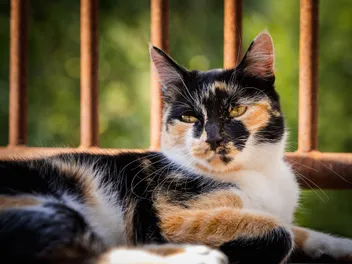
8. Calico

The calico coloring is usually thought to be a coat that consists of a combination of orange, black, and white, with white being the dominant color. However, calico can refer to any three colors.
9. Dilute Calico

If your calico cat has pastel or lighter colored markings, she may be a dilute calico. The lightening of the colors means that the coat is made up of gray, silver, and cream markings. Again, though, your dilute calico Turkish Angora cat could have a range of dilute colors in the coat.
10. Blue-cream

In the same way that the dilute calico is a lighter version of the calico coloring, the blue-cream marking is a dilute tortoiseshell marking, and it is a rare color. Blue replaces the tortie’s black, while cream replaces the tortie’s red or orange marking.
11. Solid Color

White is the most common color of Turkish Angora cats, but they do come in a variety of hues and shades from black to white and blue to cream. A solid color cat is one that has a single color in its coat.
12. Bicolor

Bicolor Turkish Angoras have coats that consist of two colors. Commonly, these colors are any two of white, black, orange, gray, or silver, but can consist of almost any accepted color.
13. Tabby

The tabby Turkish Angora cat has characteristic tabby markings and is distinguishable by the M shape on the forehead. Owners of this color of cat may describe it as being intelligent but also slightly aloof. The tabby cat comes in four different and distinct patterns.
14. Smoke

The smoke pattern usually consists of a darker outer coat with a pale silver or white undercoat. The pattern has the appearance of smoke clouds. It is an unusual color pattern.
15. Odd-Eyed

Turkish Angora cats typically have blue, green, or amber eyes, but the most highly prized are those that have odd eye colors, usually one blue eye and one amber, gold, or green eye.

Turkish Angora Colors And Markings
The Turkish Angora is a friendly, loving, and intelligent cat. They have long, luscious hair, and while white is the most commonly seen color, the Angora can come in a variety of different colors ranging from tabby to ginger. Although not a coat color or marking, the odd-eyed Angora is one of the most highly prized examples of the breed.
You might be interested in:
Featured Image Credit: Aymara Herrera, Shutterstock
Expert cat care, straight to your inbox
News, insights, and useful advice, delivered to you.

No spam — unsubscribe anytime.
By signing up, you agree to our Terms & Conditions and Privacy & Cookies Policy.
How useful was this post?
Click a star to rate. You can leave written feedback afterwards. (We read all feedback.)
Christian started writing for a local newspaper as a teenager, and he's been involved in the publishing industry for most of his adult life. Combining his love of writing with a passion for animals, he is currently the Director of Editorial at Pangolia and the Editor-in-Chief at Catster.
Christian lives in the Philippines with his wife, son, and four rescue cats: Trixie, Chloe, Sparky, and Chopper.