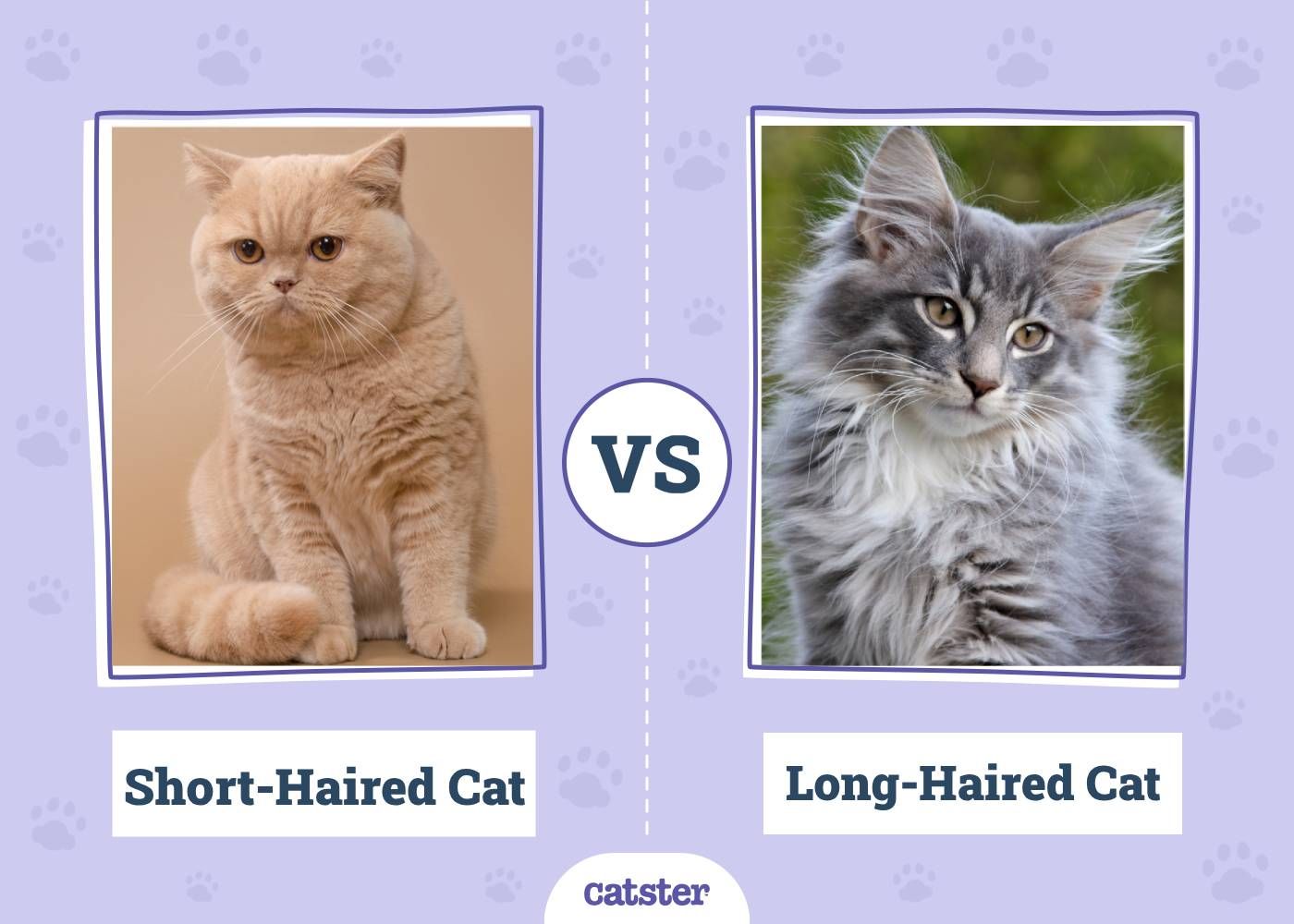
Short-Haired Cat vs. Long-Haired Cat: Vet-Verified Differences (With Pictures)


In this article
If you're thinking about bringing a cat into your home but are unsure whether to choose a long-haired or short-haired breed, you've come to the right place. Before making a decision, it's important to consider the pros and cons of long hair vs short hair cats to determine which one is the best fit for you and your family. Sometimes, the decision comes down to personal preference, or there may be allergies to consider. Whatever the case, we examine both in detail here to help you make the best decision possible.

Visual Differences

At a Glance

Overview of Short-Haired Cats

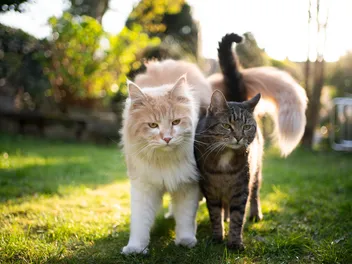
Short-haired cats do not typically require daily grooming or have the problem of hair mats and tangles. Typically, short-haired cats do not shed that much, but this isn’t always the case, as it depends on the type of coat, as well as the overall health and lifestyle of the cat. Still, they do not need regular brushing (once a week should suffice), and you’re less likely to see long, flowing, loose hair in your home. Simply put, short-haired cats have sleek, short coats that are much easier to maintain.
What Are Common Types of Short-Haired Cats?
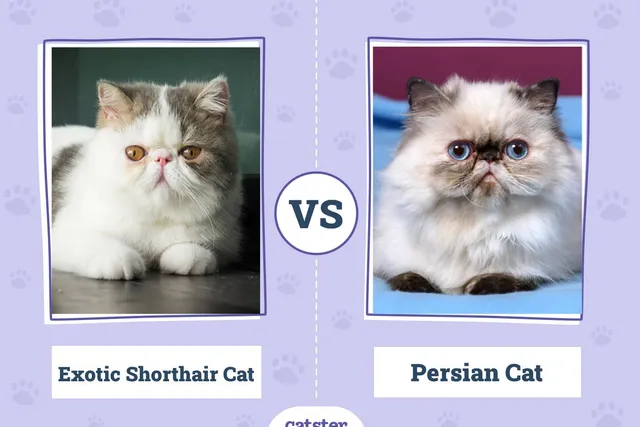
There are many common breeds of short-haired cats: the American Shorthair, the British Shorthair, the Oriental Shorthair, and the Exotic Shorthair, to name a few. There are also the Domestic Shorthairs, which aren’t considered purebred cats but rather a mix of various breeds. So, what are the differences?
The American Shorthair is native to the United States and traces its roots back to the Domestic Shorthairs. After decades of selective breeding, the name was changed in the early 1960s to differentiate the breed from other short-haired cat breeds and establish its own standards.
As for the British Shorthair, the Oriental Shorthair, the Exotic Shorthair, and other short-haired breeds, they are all similar in terms of having short coats, and the maintenance is relatively the same.

Characteristics & Personality of the American Shorthair
Given there are a few types of short-haired cats, we’ll focus on the American Shorthair and the Domestic Shorthair in comparison. The American Shorthair is purebred and a popular breed to own in the United States. American Shorthairs tend to have short and sturdy bodies with muscular builds. They have short, dense coats with long, flowing tails and short legs. They are known for having endurance, strength, and balance. They come in many different patterns and colors but are famously known for their grey and brown tabby coats. They can also have solid colors, bi-colored, tri-colored, striped, or shaded looks.
These cats are affectionate and intelligent and love to snuggle with their owners. They are also content watching birds and other wildlife go to and fro from a window. The American Shorthair does have an independent streak and will engage in play, but only if it suits their needs at the time.
Characteristics & Personality of the Domestic Shorthair
Domestic Shorthairs come in various sizes, colors, and statures with muscular, medium-sized builds. They have round heads, paws, and faces, and the coats are short and sleek. Given these cats are “mutts,” they vary in colors, markings, and personalities.
Since the personalities vary, you never know what kind of cat you’ll end up with in terms of behaviors. For example, the vast possibilities are calm, docile, affectionate, vocal, quiet, playful, or social. They have superb balance and hunting skills, and they typically display a playful personality above all else. They have tons of energy and require outlets for their hunting skills, such as cardboard boxes, toys, cat tunnels, a cat tree, and scratching posts, for example.

What Are Common Short-Haired Cat Breeds?
To give you a glimpse of short-haired cat breeds, here are common ones to consider:
- Russian Blue
- Siamese
- British Shorthair
- Exotic Shorthair
- Oriental Shorthair
- Devon Rex
- Abyssinian
- Bombay
- Cornish Rex
- Scottish Fold
- Bengal
- Tonkinese
Pros
- Coats are low maintenance
- May shed less
Cons
- None

Overview of Long-Haired Cats

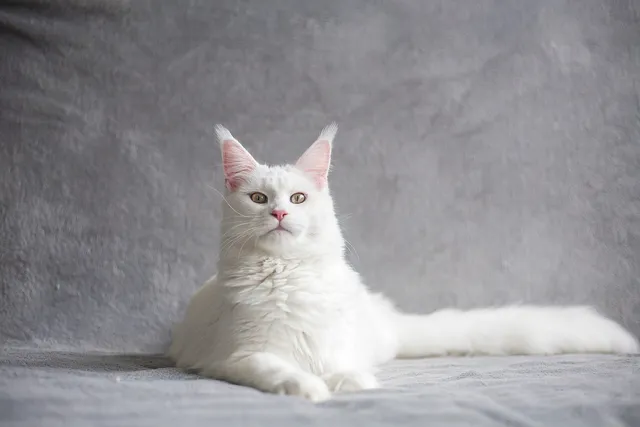
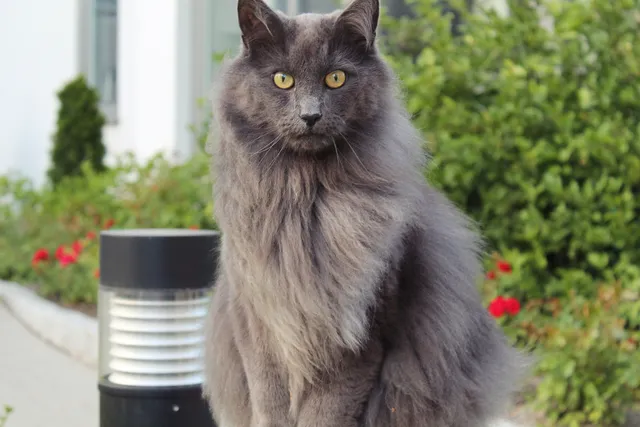
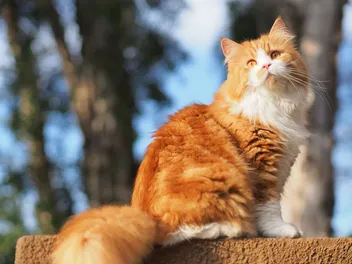
The main factor that separates short-haired cats from long-haired cats is the coat. Long-haired cats have long, soft, and fluffy coats, but if you decide on one of these fluffy felines, be prepared to invest in a quality grooming brush.
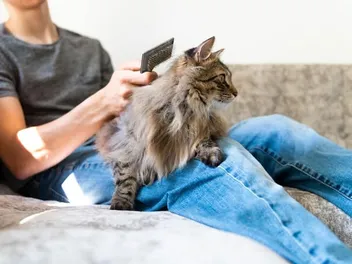
Ideally, these cats require good grooming at least three to four times per week to keep mats and tangles under control. Another factor to consider is that if the coat becomes extremely matted, it may require trimming by a veterinarian or professional groomer (you can do this yourself, but ensure you learn the proper technique).
There is much debate on whether short-haired cats shed less than long-haired cats, and if this makes them better suited for allergy sufferers. The truth is, both types shed and can trigger allergies. Dander production is individual, based on the cat’s biology, grooming habits, and skin health; and both short- and long-haired cats can produce similar amounts.
When you live with a long-haired cat, you’ll really want to keep lint rollers handy to get the long cat hair off clothing, bedding, and furniture. However, if you want to snuggle with a fur baby with soft and luxurious fur, a long-haired cat is for you.
What Are the Common Types of Long-Haired Cats?
Like short-haired cats, there are certain types of long-haired cats. For example, you have the Domestic Longhair, the American Longhair, and the British Longhair, to name a few. The only difference is that the Domestic Longhair is not purebred, whereas the American Longhair and the British Longhair are pedigree.
The Domestic Longhair’s lineage cannot be traced, and these cats are not recognized by the Cats Fanciers Association (CFA) given their hybrid status. The CFA also does not recognize the American Longhair or the British Longhair; however, the latter is recognized by The International Cat Association (TICA).

Characteristics & Personality of the Domestic Longhair
The British Longhair tends to be calm, relaxed, and reserved but also playful. However, they form strong bonds with their owners and do well with children. One of the most popular breeds, the British Longhair, is similar to their British Shorthair counterparts in terms of temperament, and they make excellent companions, given their social nature and desire to play.
Characteristics & Personality of the British Longhair
The British Longhair is calm relaxed, and reserved but also playful. However, they form strong bonds with their owners and do well with children. One of the most popular breeds, the British Longhair, is similar to their British Shorthair counterparts in terms of temperament, and they make excellent companions, given their social nature and desire to play.

What Are Common Long-Haired Cat Breeds?
There are quite a few wonderful long-haired cat breeds to consider if you desire long, fluffy, and soft coats. Let’s have a look.
- Persian
- Ragdoll
- Ragamuffin
- Himalayan
- Maine Coon
- American Bobtail
- Birman
- Norwegian Forest Cat
- Siberian
- LaPerm
- Turkish Angora
- British Longhair
- Balinese
Pros
- Long, soft, fluffy coats
- Often have more relaxed temperaments
Cons
- Coat requires extensive maintenance
- More prone to developing hairballs
- May shed more than short-haired cats

Do Long-Haired Cats Get Hotter Than Short-Haired Cats?
While it might seem like long-haired cats would struggle more in warm climates, coat length isn’t as important as you might think. Although long fur can trap some heat, it also provides insulation against the sun and hot surfaces, much like it protects against the cold. Most cats, regardless of coat type, are good at regulating their body temperature by seeking shade, resting during the hottest parts of the day, and drinking more water. If your cat lives indoors with access to fans or air conditioning, fur length is unlikely to have a major impact on their comfort, but coat density may have more of an effect.
Can You Spot Flea-and-Tick Infestations in Long-Haired Cats?
Yes you can, however, it might be a bit harder to spot fleas and ticks embedded in a long coat, and it may prove challenging to spot with a long-haired cat. Of course, keeping your cat on flea-and-tick preventatives is the best way to protect them from these nasty parasites, leaving your long-haired cat flea- and tick-free.

Are Short-Haired Cats More Energetic?
Not necessarily. The energy level of any cat depends more on genetics, age, health status and breed rather than the coat type. Whichever you decide, you can then search for particular cat breeds in either the short-haired or long-haired category with the type of temperament you’re searching for. For example, do you want an energetic, short-haired cat? If so, consider the American Shorthair. If you desire a laidback and affectionate cat with long hair, consider the Maine Coon.

Conclusion
The most significant decision you face when choosing between a short or long-haired cat is simply the coat. As we’ve learned, long-haired cats require much more coat maintenance than short-haired cats, but the temperament will depend on other factors, such as age, breed, and genetics. If you don’t want to deal with lots of hair in your home, you may want to consider a short-haired cat because they tend to shed less.
Also see:
Sources
https://www.trupanion.com/pet-blog/article/cat-fur-length-guide
https://www.aspcapetinsurance.com/resources/domestic-shorthair-cat-facts/
https://www.aaha.org/your-pet/pet-owner-education/ask-aaha/pets-and-shedding/
https://www.hillspet.com/cat-care/cat-breeds/domestic-shorthair?lightboxfired=true#
https://www.aspcapetinsurance.com/resources/american-shorthair-cat/
https://www.aspcapetinsurance.com/resources/domestic-longhair-cat-facts/
https://www.webmd.com/pets/cats/what-to-know-about-british-shorthair
https://www.vetstreet.com/our-pet-experts/10-long-haired-cat-breeds-we-love
https://embassylakesanimalhospital.com/blog/grooming-long-haired-cat/
Featured Image Credit: Left : OksanaSusoeva, Shutterstock | Right: Image Credit: Elisa Putti, Shutterstock
Expert cat care, straight to your inbox
News, insights, and useful advice, delivered to you.

No spam — unsubscribe anytime.
By signing up, you agree to our Terms & Conditions and Privacy & Cookies Policy.
How useful was this post?
Click a star to rate. You can leave written feedback afterwards. (We read all feedback.)
Rachel Giordano is a Pensacola, Florida-based musician and writer. She lives with her partner and their two dogs, Sophie, a Boston Terrier, and Aero, a Border Collie/Sheltie mix. Rachel holds a Bachelor of Arts degree in communication and loves writing about all types of cat breeds. When she’s not writing about cats, she loves to write suspense/thriller novels. A musician by night and writer by day, she enjoys sharing her knowledge of the needs and requirements of our furry friends.