15 Common Cat Myths That Need to Be Debunked (Vet-Verified)



According to the American Veterinary Medical Association, there are at least 60 million pet cats in the United States. With so many cats in our homes, you might expect that we know everything there is to know about them. Unfortunately, that’s not the case, and due to their history, there are still plenty of cat myths that can have dangerous consequences. The sooner we can put those myths behind us, the better, which is why we addressed 15 common cat myths below that we need to debunk as quickly as possible.

The 15 Myths About Cats That Need to Be Debunked
1. Black Cats Are Unlucky

This is a myth that came from European folklore, that linked black cats with witches and satan. However, there is zero truth to it and it is nothing more than a superstition. Black cats are no more lucky or less lucky than cats of any other color. Unfortunately, this myth has led to the mistreatment of many black cats over the years. Some shelters say that black cats are less likely to be adopted 1.
2. Pregnant Women Can’t Live With Cats
This is a well-intended rumor because of the potential risk of toxoplasmosis, a parasite that can be found in cat feces that can cause damage to a fetus in-utero. Although the risk is small, it is strongly advised that pregnant women avoid cleaning the litter box. However, if this isn’t possible, then pregnant women are advised to wear disposable gloves and to wash their hands with soap and water immediately after cleaning the litter box. The box should also be changed daily, as Toxoplasma isn’t infectious until 1 to 5 days after the feces is shed 2.
3. Cats Always Land on Their Feet

Cats are incredible climbers, and because of their insane ability to correct their body position while in the air, called the cat righting reflex, some people think that a cat always lands on their feet 3. The truth is that they can only land on their feet when they have enough time to correct their body position while falling.
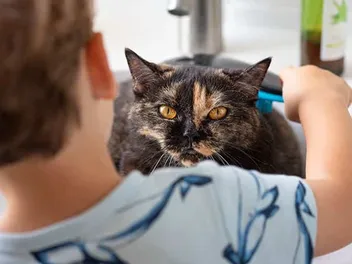
4. Cats Hate Water
While it is true that some cats don’t like water, others have no problem with it. Moreover, many cats like running water and will even play with it or drink from it. All in all, it really depends on the individual, so get to know your pet, and don’t wind up surprised if your cat actually enjoys their time in the bath.
5. You Can’t Train a Cat

While it’s certainly easier to train a dog than it is to train a cat, that doesn’t mean training a cat is impossible. You can train them to stay off certain things, perform basic tricks, and other basic tasks. You’ll find more success with positive reinforcement, and treats are pretty much always a must during training sessions.
6. Cats Love Milk
Ok, so your cat might love the taste of milk, but that doesn’t mean you should give it to them. Like most mammals, your cat loses the ability to process lactose as they grow up, meaning that milk is likely to upset their stomach.
The majority of cats are lactose intolerant, so we recommend avoiding giving your cat a drink of milk, as water is always the best choice for them. If you want to spoil them, give them a little catnip or another one of their favorite treats instead, like plain, cooked chicken.
7. Cats Only Purr When Happy

When you hear your cat purring, it’s only natural to think it’s because they're happy and content, which is sometimes true, but it’s definitely not always the case. Cats will also purr because they’re nervous, in pain, or sick. Look at their overall body language when purring as well as any abnormal behaviors to determine if they’re actually content or if something else could be wrong.
8. Cats Are Nocturnal
When people talk about cats, they often say they’re nocturnal. That’s not completely true, though. Cats are crepuscular, which simply means they’re more active at dusk and dawn. This is when wild cats hunt, and it’s why you’ll see them sleeping throughout much of the day.
But cats will also sleep at night, which isn’t what nocturnal creatures do! Cats simply sleep a lot (between 12 and 18 hours per day), and they’re just as likely to sleep in the middle of the night as they are to sleep in the middle of the day.
9. They’re Loners

While feral cats typically hunt alone, they tend to live in groups of related animals. Cats can be very social creatures (with their humans) in the right circumstances, so they’re not living completely outside their norm when you bring a pet cat into your home. Some cats can tolerate or even enjoy living with another cat, but this depends on the cats. If they are related animals, they are more likely to enjoy one another’s company. If they are unrelated, they are likely to tolerate each other but on occasion, true bonding between unrelated cats does occur. Cats also actively enjoy hanging out with you as their owner, even if they don’t follow you around as much as some dogs do.
10. They Don’t Need Frequent Vet Trips
While many cat owners don’t take their cats to the vet every year like they should, that doesn’t mean they don’t need those visits. Cats need just as many vet visits as dogs, and because cats are so adept at hiding their illnesses, they might be sick and you don’t even realize it! That’s why it is usually best for cats to get a checkup at least once a year, but it should be every 6 months for seniors.
11. Declawing Is Essentially the Same as Trimming Their Nails

This is potentially one of the most unfortunate and dangerous myths about cats. Trimming cat nails doesn’t cause any serious harm to your cat, even if they don’t like you doing it. Meanwhile, declawing is a surgical procedure that would be the equivalent of amputating your fingers at the knuckles closest to the fingertips.
Unless a vet recommends the procedure for a medical reason, you should never declaw your cat, as it leads to long-term pain that your cat will have to deal with for the rest of their life, as well as potentially long-term behavioral issues.
12. Cats Can See in Complete Darkness
There’s no doubt that cats have incredibly sharp vision and can see well in low-light situations. But low light doesn’t mean no light. When things are completely dark, cats can’t see.
This is why outdoor cats typically hunt at dusk and dawn. There’s not as much light, which helps them stay hidden, but there’s enough light that still allows them to see well.
13. Indoor Cats Don’t Need Vaccines

Some people seem to think that since their cats are spending most or all of their time indoors they don’t need vaccines. This simply isn’t true. While it is true that indoor cats are less likely to develop various conditions, it’s always possible for them to catch something.
Current vaccine recommendations for indoor cats say that all kittens should receive their primary vaccinations against the cat flu viruses (feline distemper complex). The cat flu viruses are hardy and can enter a house on inanimate objects such as someone’s shoe. Therefore, even if your cat never goes outside, they can still be at risk of one of these viruses.
Feline Leukemia Virus (FeLV) is a more complicated situation because it does require cat to cat contact to be transmitted. However, the current guidelines suggest that all kittens receive the FeLV vaccination after a negative blood test. This vaccination should be boosted one year later, at which point you can discuss with a veterinarian whether your cat needs this.
14. They Can Live on a Vegan Diet
As veganism and vegetarianism continue to grow in popularity, you might decide you don’t want to consume animal products anymore, and that’s perfectly fine. However, while humans don’t need to consume animal products to survive, that’s not the case with cats.
Cats are obligate carnivores, meaning they need to consume meat to survive. Commercial cat food comes with all the animal products they need, but if you’re making their food for them, you need to ensure you’re meeting all their dietary needs, including feeding them animal proteins.
15. Cats Don’t Love Their Owners
One of the biggest debates is about whether dogs or cats are better pets. Sure, cats tend to be more independent, but that doesn’t mean that cats don’t love and adore their owners, as can be seen whenever they come running up to you after you’ve been gone for a few hours or when they curl up next to you or demand your pets and attention.
Conclusion
Now that you know a little more about some of the common cat myths out there, you can debunk them the next time you hear them. Knowledge is a powerful tool that you can use to keep your cat happy and healthy, and with a little more knowledge, you can be an even more responsible pet owner moving forward.
See also:
Sources
https://www.bluecross.org.uk/advice/cat/wellbeing-and-care/12-common-cat-myths-debunked
https://www.avma.org/resources-tools/reports-statistics/us-pet-ownership-statistics
https://www.cdc.gov/parasites/toxoplasmosis/gen_info/pregnant.html
https://www.purina.co.uk/articles/cats/behaviour/common-questions/do-cats-land-on-their-feet
https://www.animalhumanesociety.org/resource/cat-keeping-you-awake-how-manage-night-activity
https://www.merckvetmanual.com/cat-owners/behavior-of-cats/normal-social-behavior-in-cats
Featured Image Credit: Nadezhda Zaitceva_shutterstock
Expert cat care, straight to your inbox
News, insights, and useful advice, delivered to you.

No spam — unsubscribe anytime.
By signing up, you agree to our Terms & Conditions and Privacy & Cookies Policy.
How useful was this post?
Click a star to rate. You can leave written feedback afterwards. (We read all feedback.)
Adam is a seasoned freelance writer and passionate animal lover who has dedicated years to rescuing countless animals. With a decade of experience as a freelance writer and an even longer history of animal rescue, he has honed his skills in both fields. Adam is also a proud father of three and thrives on challenges and new adventures.