How Big Do Bengal Cats Get? Vet-Verified Average Size & Growth Information


In this article
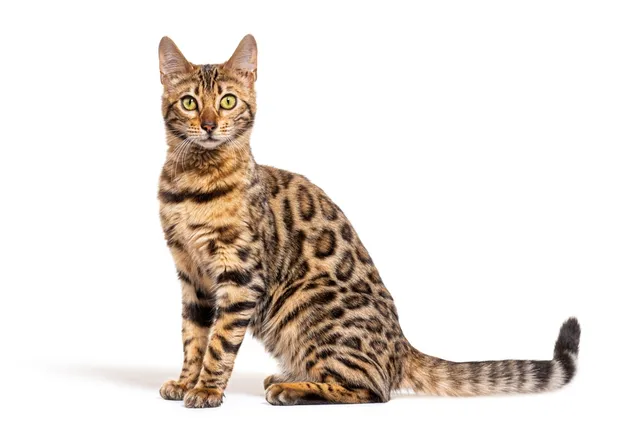
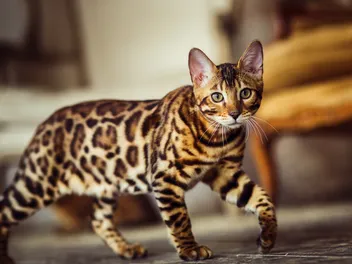
Bengals are fascinating cats with an even more interesting history. These relatively modern cats were developed in the 1990s by an American breeder, Jean Mill, who crossed an Asian Leopard Cat with a domestic cat. Thanks to their wild ancestry, these gorgeous hybrids have a wild look, but don't let their appearance fool you. These sweet-natured cats tend to be affectionate and highly intelligent.
But what should one expect regarding the size of a full-grown Bengal cat, given the wild ancestry in their DNA? Bengals are slow growers that wind up being medium to large when they're fully grown with an average weight of 8-16 pounds and average length of 16-18 inches. Read on to learn more about how big Bengals cats get and the factors affecting their final size.

Bengal Breed Overview
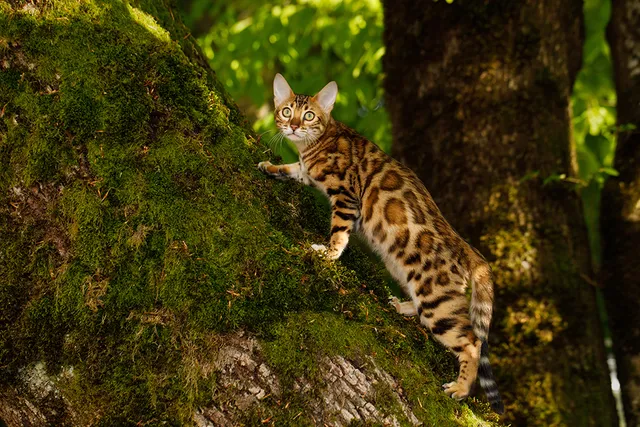
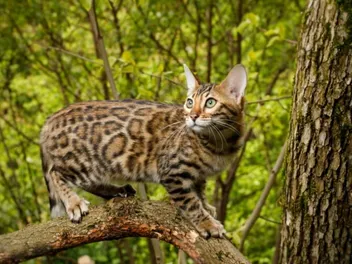
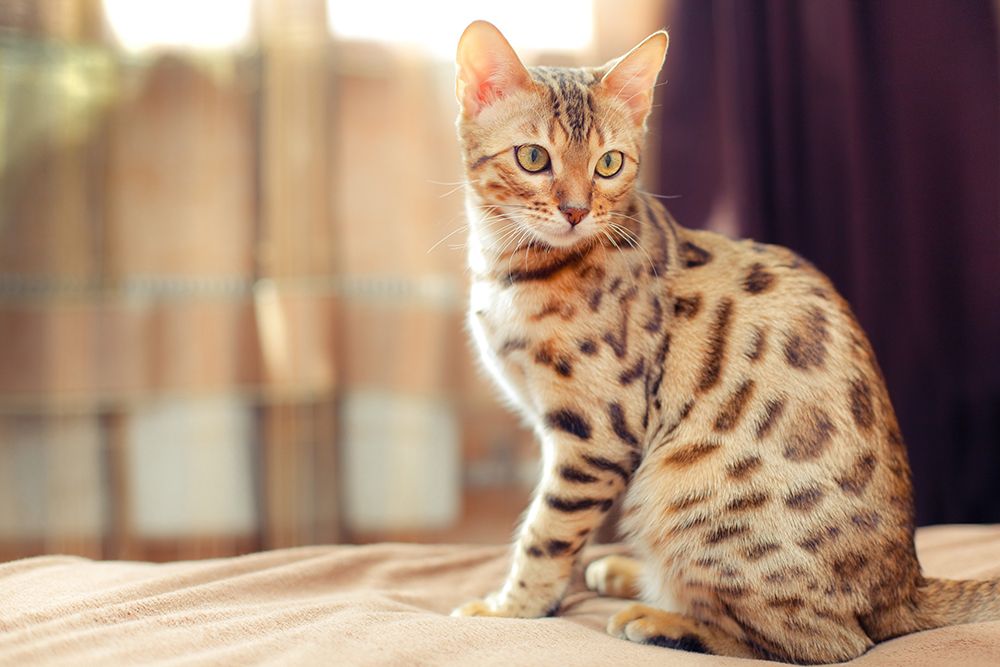
Bengals are truly breathtaking cats with stunning spotted coats and striking facial markings. Their leopard-like spots and coats can come in various colors, including rust, charcoal, black, and silver. Some even appear to shimmer like glitter in the sunlight.
Bengals are sweet and loving cats that bond tightly with their humans. They're highly athletic and require plenty of opportunities for exercise, including space to run, jump, and play to be happy. They love to play games like fetch and can learn tricks relatively easily.
An inadequately exercised and engaged Bengal can become bored easily. This can lead to problematic behaviors like scratching the furniture or meowing excessively.

Bengal Size and Growth Chart
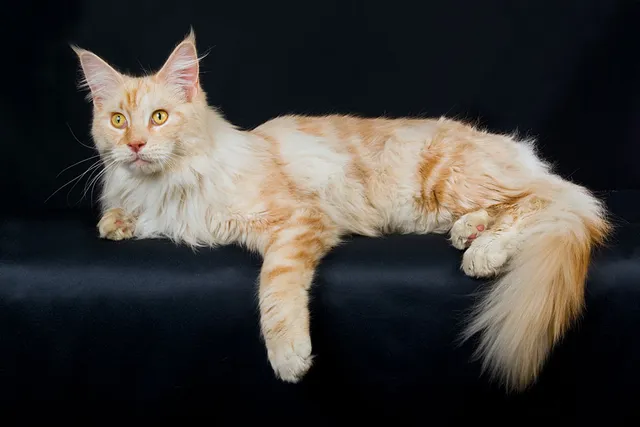
Bengals are sleek and muscular cats. They range in weight between eight and 15 pounds, 13 to 16 inches in height, and 16 to 18 inches in length. They are often perceived as large cats, however, full-grown Bengal cats don't grow to be as big as some other breeds. Maine Coons are generally accepted as one of the largest domestic cat breeds, weighing up to 22 pounds and measuring up to 40 inches in length!
| Age | Weight Range | Length Range |
| 2 months | 2 to 3.9 lbs | 7 to 9 inches |
| 3 months | 3 to 4.8 lbs | 7.8 to 10 inches |
| 6 months | 5.9 to 11.9 lbs | 10 to 12 inches |
| 9 months | 6.9 to 14.9 lbs | 12 to 13.9 inches |
| 12 months | 7.5 to 15 lbs | 13.9 to 15.9 inches |
| 24 months | 8 to 16 lbs | 16 to 18 inches |
When Does a Bengal Stop Growing?
The average Bengal doesn't actually stop growing until they're about two years old. This is a smidge older than other cat breeds, which stop growing when they're around 18 months.
At around two years of age, Bengals will achieve full behavioral maturity, too. That's not to say your cat will lose its playfulness as soon as it turns two. Some Bengals remain kitten-like their whole lives.
Factors Affecting the Size of Bengal
Nutrition
Bengals require a balanced and nutritious diet to fuel their active lifestyles and to grow and maintain muscles. Like other cat breeds, Bengals are obligate carnivores, requiring a diet high in animal protein. Cats with inadequate access to quality nutrition may experience slower growth rates and develop dietary deficiencies.
Activity
Bengals are naturally active cats; however, how much activity your Bengal is getting can impact their size. If you're not giving your pet enough opportunities for exercise, they could end up heavier than the average Bengal.

Sex
As with many cat breeds, male Bengals are typically larger and heavier than their female counterparts.
Lineage
Bengals are a cross between a domestic cat and an Asian Leopard Cat. Your cat's lineage, including how far removed they are from their wild ancestors and which domestic breed makes up the other half of their DNA can affect their size. Bengals of lower generations can weigh as much as 15 pounds, while those of a higher generation are similar in size to other domestic house cats. Most modern Bengals are bred with other Bengals, which averages out the gene pool, though there may still be a big size variation.
Ideal Diet for Maintaining a Healthy Weight
A Bengal should eat quality commercial cat food that is complete and balanced for their life stage. Though Bengals have a very high activity level that enables them to burn off calories faster than their lazier counterparts, they don't require a specialized diet. A Bengal should eat quality commercial cat food that is complete and balanced for their life stage. However, when it comes to portion sizing, your vet will be the best resource. They can take your cat's size, lifestyle, and overall health status into account to suggest a caloric range that best suits your pet.

How to Measure Your Bengal
Measuring your Bengal allows you to keep tabs on your pet's height and weight, especially as they're growing, to ensure they're hitting the right milestones. Knowing your Bengal cat's size will also come in handy when purchasing products like collars, leashes, and cat carriers, so you must learn how to measure your cat properly.
- Using a flexible measuring tape, measure the part of your cat's neck where a collar would naturally sit to get the neck circumference measurement for collars.
- Measure around your cat’s chest just behind their shoulders to find their chest size. This measurement is handy when fitting your cat for harnesses.
- Determine your cat's length by measuring from the base of their neck to the tail base.
- Determine your cat's height by measuring from the floor to the top of their shoulder. Do not include the head in your measurement.
- Place your cat on a scale to determine their weight. This can be tricky as cats often don't sit nicely like dogs do. Alternately, you can also weigh yourself first, zero the scale, and then step back on while holding your cat. Subtract your weight from the number displayed when you held your cat to determine their weight.

Conclusion
Bengals are a truly spectacular breed, both in appearance and personality. These beautiful cats can grow to be slightly bigger than the average domestic cat, though it does take them longer to reach physical and behavioral maturity. A full-grown Bengal cat can be anywhere between 8 and 15 pounds and 13 to 16 inches tall. However, factors such as their diet, activity level, lineage, and gender can impact their sizing.
Featured Image Credit: Shvaygert Ekaterina, Shutterstock
Expert cat care, straight to your inbox
News, insights, and useful advice, delivered to you.

No spam — unsubscribe anytime.
By signing up, you agree to our Terms & Conditions and Privacy & Cookies Policy.
How useful was this post?
Click a star to rate. You can leave written feedback afterwards. (We read all feedback.)
For Chantelle, writing and animals are the two driving forces in her life. Growing up on the Canadian prairies surrounded by pets, she now shares her home with five cats, two guinea pigs, and a bearded dragon. Chantelle, her husband, and their child pride themselves on being dedicated pet parent, even spending a fortune on wall-mounted cat shelves to provide their cats with an indoor jungle gym. When she's not snuggling with her cats or photographing their humorous moments, Chantelle is exploring the Rocky Mountains, rewatching her favorite Netflix series, and reading up on various random subjects.