You're Probably Feeding Your Cat Wrong (Here's How to Fix It)

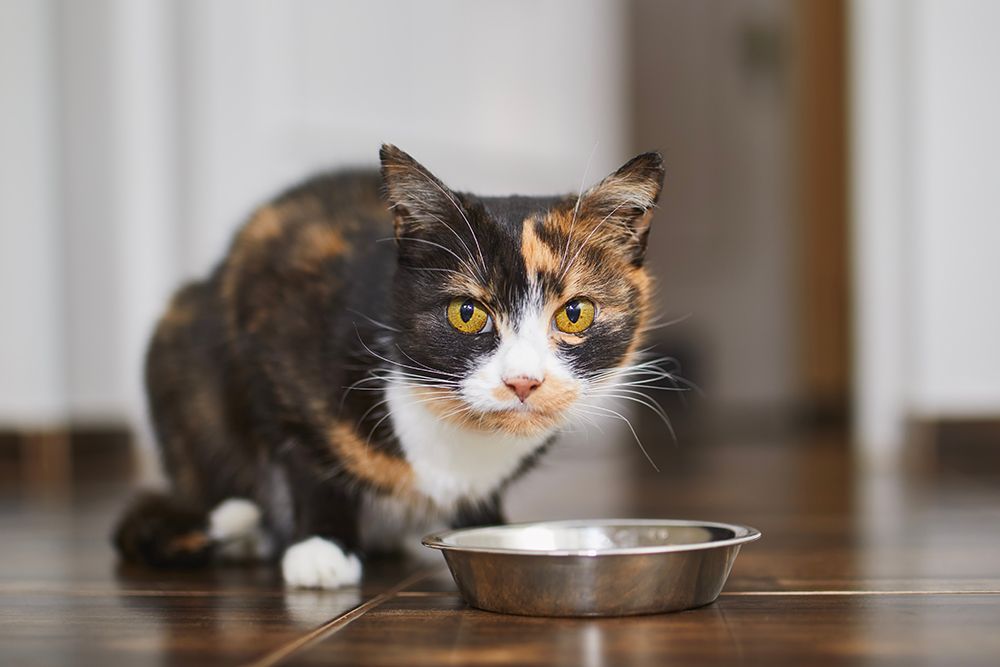
Many cat parents pour kibble into their cat's bowl whenever it looks empty, maybe top off the water, and call it a day. The cats seem fine, so what's the problem? Turns out, the way most of us feed our cats, while convenient, isn't actually ideal for their health. Feeding your cat properly involves more than just putting food in a bowl. It's about understanding what they need nutritionally, how much they should eat, and when they should eat it.

Start With the Right Food

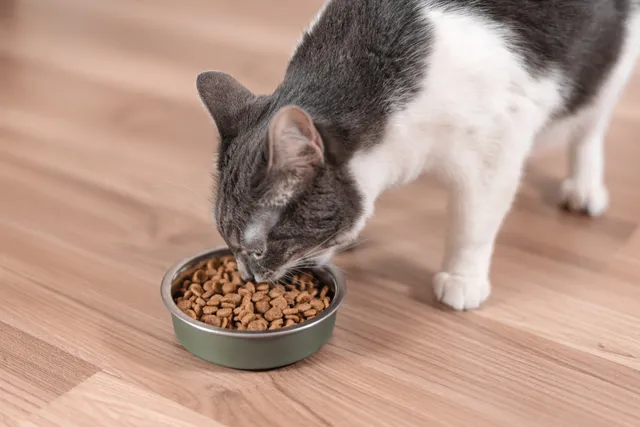
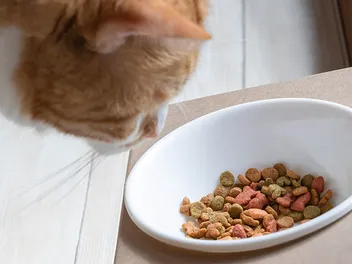
Not all cat food is created equal, and trusting the brand name alone won't cut it. Cats need kibble with at least 26% protein, but more is better, especially for kittens or nursing mothers. Studies show that cats eating food with less than 40% protein can actually lose muscle mass over time. The type of protein matters too. Animal-based protein is far superior to plant-based protein for cats because cats can meet all their amino acid requirements from animal sources.
Look for fats and oils that come from animals. Cats need omega-3 and omega-6 fatty acids for energy, inflammation control, vitamin absorption, and healthy skin and coat. Fat should make up at least 9% of the dry matter in cat food. Fiber is the final piece. Most quality cat foods contain about 5 to 6% fiber on a dry matter basis. Too much or too little leads to digestive issues.
Decoding Food Labels
The AAFCO (Association of American Feed Control Officials) recommends these nutrient ranges based on dry matter: protein 25 to 60%, fat 10 to 20%, fiber less than 10%, phosphorus around 0.5%, calcium around 0.6%, and taurine around 0.1%.
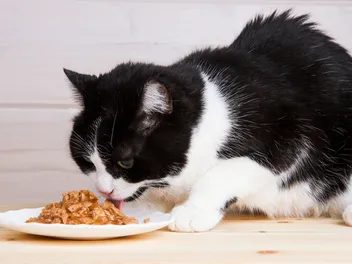
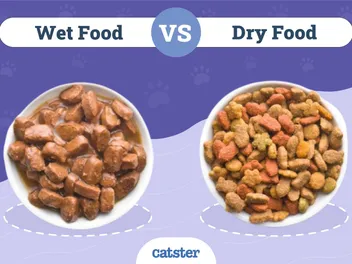
Here's where it gets tricky. These percentages are based on dry matter, meaning everything except moisture. Dry food labels will show numbers close to these ranges, but wet food labels look dramatically different because they include all that moisture content. If wet food contains 75% moisture, it's only 25% dry matter. You'll need to multiply the listed values by 4 to get the true dry matter percentage.
How Much Should They Actually Eat?
Cats need roughly 20 to 35 calories per pound of body weight. Most cat food packages include feeding guides, but these are just starting points. Every cat's needs vary based on genetics, metabolism, and lifestyle.
Once you know your cat's calorie needs, you can determine portions based on the food's calorie content. If Felix needs 245 calories per day and his dry food contains 366 calories per cup, divide 245 by 366. That's about two-thirds of a cup daily. If Luka needs 300 calories per day and her wet food contains 183 calories per can, divide 300 by 183. That's a little over one and a half cans daily. These are daily totals that you'll divide by however many times you feed per day.
If you're mixing wet and dry food, calculate how much of each your cat needs, then cut both portions in half to avoid doubling up on calories.
Why Scheduled Feeding Beats Free Feeding
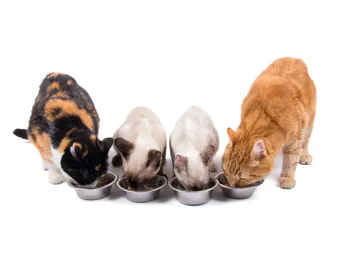
Many cat owners leave food out all day, letting their cats graze whenever they want. This seems convenient, but it leads to overeating and makes tracking daily intake nearly impossible. Scheduled meals work better. Feed your cat once in the morning and once at night with about 12 hours between meals.
In the wild, cats eat sporadic meals whenever they catch prey. Your domestic cat knows food will always be there, but some still can't resist gorging themselves. Those extra calories add up fast, leading to weight gain and potentially obesity, which creates other health problems.

The Right Way to Feed Your Cat
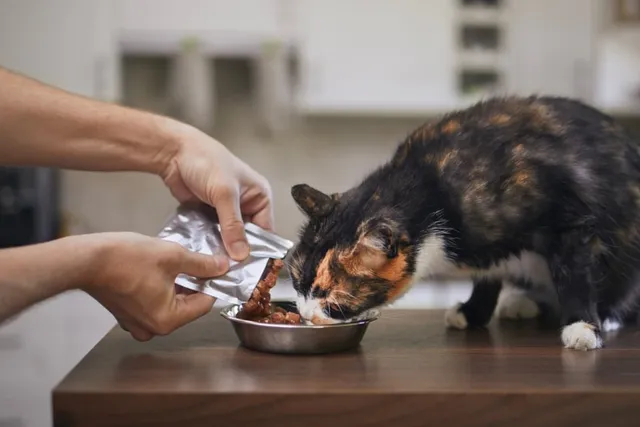
Clean their food and water bowls every single day to prevent bacterial buildup. Measure out exactly how much your cat should eat, then divide that amount by the number of daily meals. Before mealtime, get your cat moving with a toy or puzzle feeder to engage their prey drive and keep them active.
Put food out at the same times daily. After a few weeks, your cat will adjust so well that they'll start reminding you when mealtime approaches. Once your cat finishes eating, remove the food bowl, store leftover food properly, and wash the bowl. Always leave fresh water available throughout the day.
What This Actually Looks Like
Creating a feeding routine doesn't have to be complicated. Choose your times, measure the portions, engage your cat with a quick play session, put the food down, and pick it up when they're done. The hardest part is staying consistent, especially when your cat sits beside their empty bowl looking betrayed. Stand firm. They're not starving. They're testing whether you'll cave.
The Payoff
Proper feeding prevents obesity while giving your cat the nutrients they need to thrive. It establishes a routine that reduces anxiety and creates opportunities for mental and physical stimulation. Once your cat learns the schedule, mealtimes become predictable moments they look forward to. You'll know they're getting exactly what they need without guessing whether they've eaten too much or too little. Taking the time to feed them properly is one of the most impactful things you can do for their long-term health and happiness.
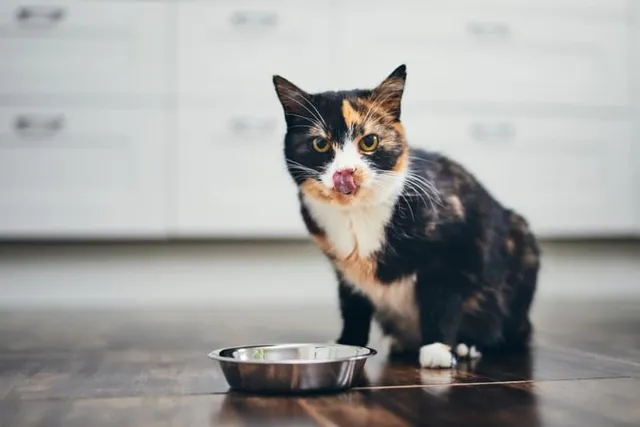
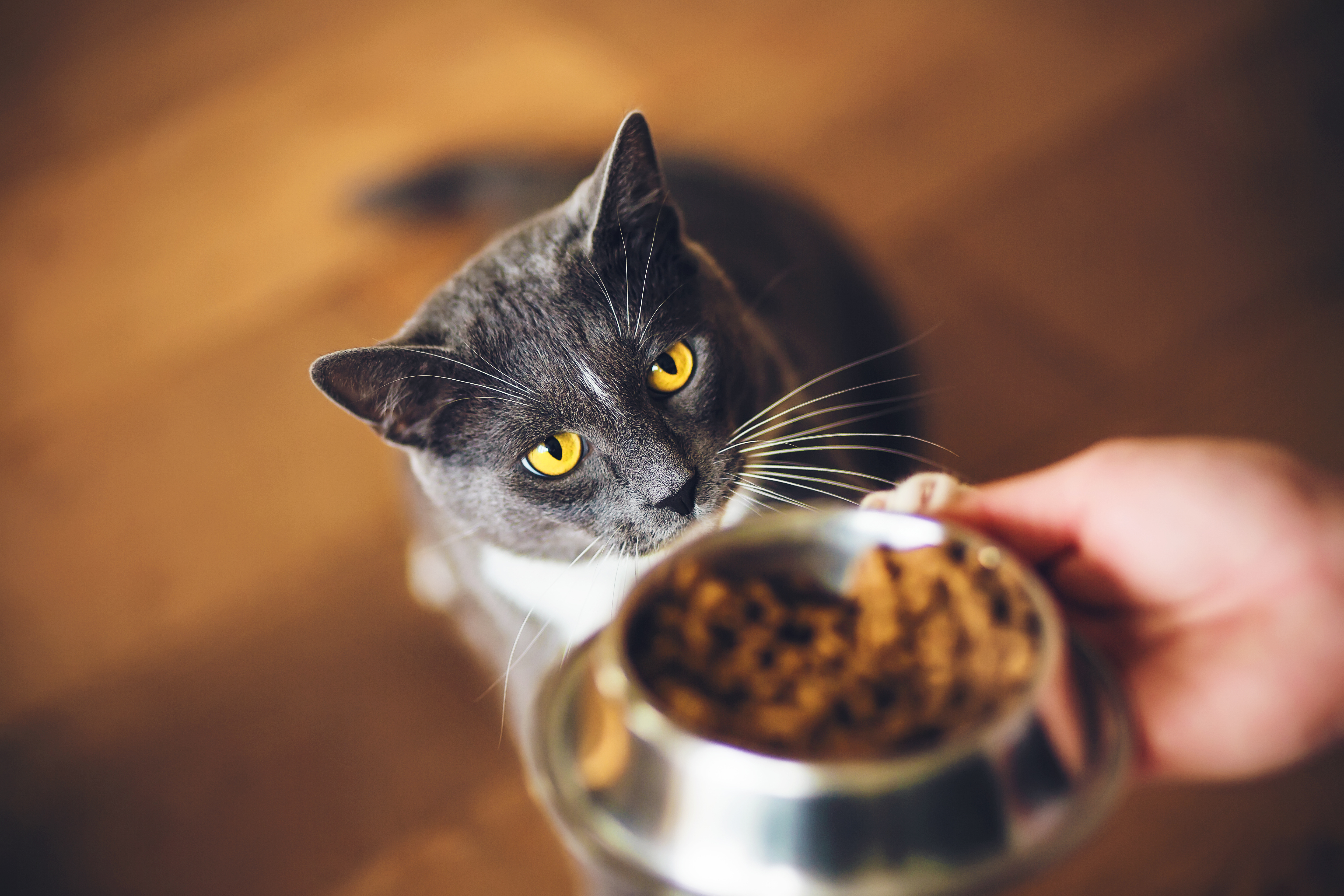
Feature Image Credit: Jaromir Chalabala, Shutterstock
Did You Know?
- Our brand-new posts are rounded up and included in our weekly emails. Don't miss out on the latest - sign up for our newsletter below!
Expert cat care, straight to your inbox
Vet-reviewed advice, behavior tips, and the best of Catster. Free, and you can unsubscribe anytime.
By signing up, you agree to our Terms & Conditions and Privacy & Cookies Policy.
Dan has been working in the pet world for over 4 years covering cats, dogs, and all other pets in between. He loves helping pet parents keep their companions happy, healthy, and of course, totally spoiled! Originally from London, Dan now travels and works remotely, which unfortunately means no pets at home, but it gives him plenty of opportunities to fuss over other people's furry friends.
Join the conversation
Ask a question, share your story, or send private feedback.