Cats on Roombas: A Strange Relationship Explained (Vet-Verified)


In this article
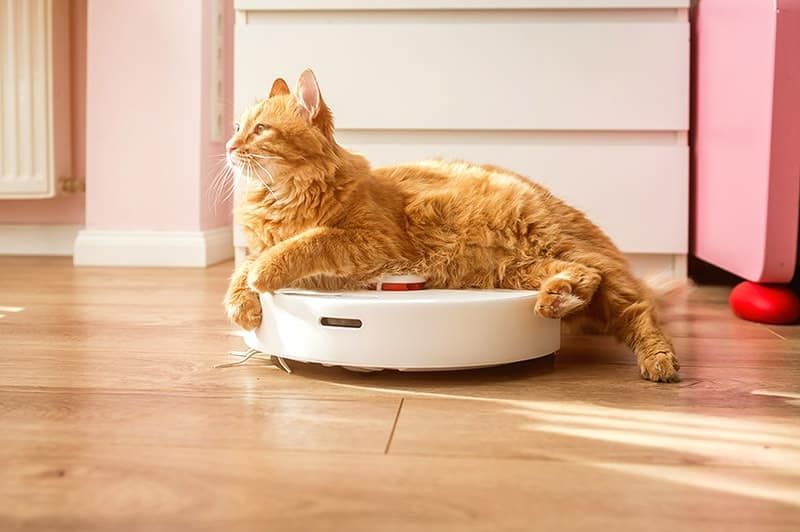
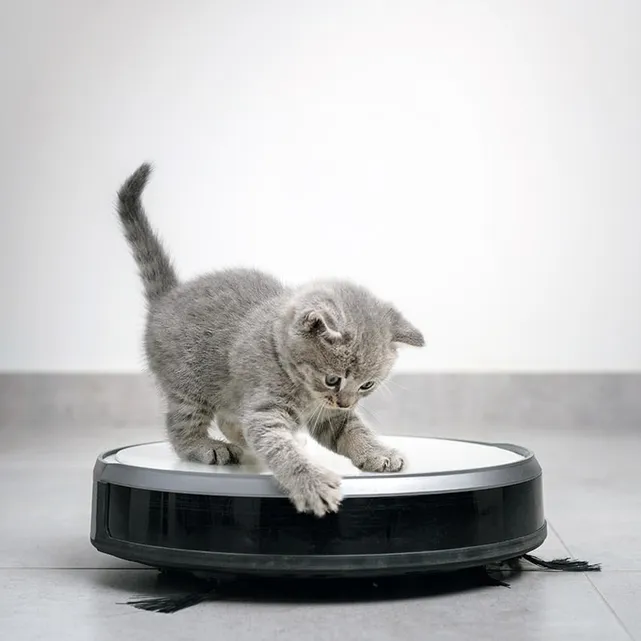
Cats make great companions, are playful, and often engage in strange behaviors, such as riding on a Roomba, which is an automatic indoor vacuum. If your cat does this and you would like to know more about this behavior, why they enjoy it, and how to keep them safe, read on! We'll provide several possible reasons behind this behavior and discuss how you can ensure your cat’s safety.

How Did a Cat on a Roomba Become Popular?
The internet has plenty of adorable animal content, but the phenomenon of cats on Roombas is truly special. Videos of the content often spread quickly across social media platforms. The combination of the cat’s graceful movements and the Roomba’s robotic technology creates a surprising contrast that is fun to watch and often leads to comical situations that can brighten anyone’s day.

Why Do Cats Like to Ride Roombas?
1. Territory Surveying
Cats enjoy looking over their territory, which is why they enjoy cat perches. The Roomba enables them to move around in their territory and survey it from ever-changing angles without expending energy. This benefit is likely highly appealing to your pet.
2. Predatory Instincts
Cats are natural hunters with strong predatory instincts, and the movement of a Roomba, with its subtle vibrations and unpredictable path, can trigger a cat’s hunting behavior. The vacuum’s motion resembles a small animal's, stimulating a cat’s curiosity and predatory drive.

3. Movement and Noise
The movement and noise produced by a Roomba can be captivating to cats. Its smooth gliding and the gentle hum of its motor can intrigue cats and make them feel like they’re interacting with a live creature.
4. Playfulness
Cats are playful animals that enjoy engaging with their environment. The Roomba’s movements can provide an opportunity for play, and some cats might see it as a moving toy to interact with. Cats can pounce on the Roomba, bat at it, or follow it as if participating in a game.
5. Curiosity
Cats are famously curious animals. Any new object or movement in their environment will likely capture their attention, leading them to investigate and interact with it.
6. Heat and Comfort
Some Roomba models generate heat while in operation. Cats like to seek out warm spots for comfort, and the warmth emitted by a running Roomba might make it an appealing place to sit for a while.
Why a Cat Might Not Want to Ride a Roomba
1. Noise
Roombas emit a consistent noise while in operation. Some cats are naturally more sensitive to loud or unusual sounds and may become fearful or anxious when a Roomba is running.
2. Unpredictable Movements
While the unpredictable movements of a Roomba can be captivating to some cats, they can be unsettling to others. Cats are creatures of habit and often prefer routines and predictability.

3. Invasion of Space
Cats are territorial animals, and a Roomba moving around in their territory can be an intrusion. If your cat views the Roomba as a potential threat to their territory, they may respond with fear or aggression.
4. Personality and Temperament
All cats have unique personalities. Some are more confident and curious, while others are shy and introverted. A cat’s temperament will significantly influence how they respond to the presence of a Roomba in their environment.
How Can I Ensure That My Cat Is Safe Around a Roomba?
1. Supervision
Always supervise your cat while they’re on the Roomba to prevent accidents and ensure that the cat isn’t stressed or scared.
2. Secure Placement
Make sure the cat is positioned securely on the Roomba while still being able to step off easily if they want to.
3. Positive Association
Associate the Roomba with positive experiences for the cat. You can use treats or toys to connect positively with the machine and help them feel more comfortable.
4. Stress Avoidance
If your cat appears uncomfortable or stressed, it’s best to stop the Roomba and allow them to dismount. Doing so can help them understand and trust that they aren’t trapped and that they can try again later.
How Can I Get My Cat to Get Used to a Roomba?
- To get your cat used to a Roomba, introduce it to your cat in a calm and controlled environment. Place the Roomba in a stationary position with the motor turned off, and let your cat sniff and investigate it to help them become familiar with it before it starts moving.
- Create positive associations with the Roomba by offering treats, praise, and pets whenever your cat is near it.
- Turn on the Roomba and let them observe it in motion from a distance. Observe your cat’s reactions, and turn it off if they show signs of stress or fear.
- Gently place your cat next to the Roomba while it’s stationary and turned off. Allow your cat to get used to it and continue to use treats and positive reinforcement to create a positive experience.
- Once your cat is comfortable around the Roomba, turn it on and let it move for short durations.
- Always pay close attention to your cat’s body language and behavior. If your cat seems stressed, scared, or uncomfortable, stop the Roomba immediately and provide reassurance.
- If your cat shows fear or discomfort, respecting their feelings is important. Not all cats will get used to being near or riding a Roomba. Forcing the experience can lead to stress and anxiety and reduce their chance of ever liking it.
- Always end each training session positively with treats, praise, and affection to help your cat associate the experience with positive outcomes, which can cause them to look forward to the next session.
Final Thoughts
While some cats fear the Roomba, many enjoy playing with them. Some cats will even get on them and take rides around the house. These machines likely activate the cat’s strong prey drive while chasing and playing with it, and they also enjoy the free ride around the house to look over their territory. Most Roombas also provide warmth.
Always supervise your cat while they get used to the Roomba to ensure they aren’t frightened or injured. Start slow, and use positive reinforcement to train your cat to ride it. If you have several cats, you can purchase several Roombas and start a Cats on Roombas video series on social media!
Featured Image Credit: Sharomka, Shutterstock
Expert cat care, straight to your inbox
News, insights, and useful advice, delivered to you.

No spam — unsubscribe anytime.
By signing up, you agree to our Terms & Conditions and Privacy & Cookies Policy.
How useful was this post?
Click a star to rate. You can leave written feedback afterwards. (We read all feedback.)
Ed Malaker is a veteran writer who has contributed to a wide range of blogs that cover tools, pets, guitars, fitness, and computer programming. When he’s not writing, Ed is usually performing DIY projects around the house or working in the garden. He’s also a musician and spends a lot of time helping people fix their guitars and composing music for independent films.