Will a Cat Litter Deodorizer Work? Vet-Approved Facts & Info


In this article
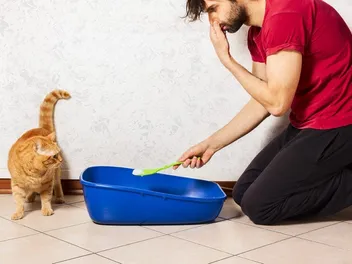
There’s no doubt that people everywhere love cats. In fact, they outnumber dogs in some countries. However, there’s one thing that most people find unappealing about cats: their stinky litter boxes. Indeed, few things are more offensive to the nose than the smell of cat poo.
To the rescue comes cat litter deodorizer! This is a product that you can spread on cat litter to neutralize the smell of your cat’s waste. However, does it actually work? The answer is that cat litter deodorizers do help control litter box odor, but they aren’t considered a substitute for litter box hygiene and maintenance.
Now that you know a cat litter deodorizer will work, there’s a good chance that you have other questions. For example, is litter deodorizer safe for cats? What else can you use to stop a cat litter box from smelling? We answer these questions and several others here. If eliminating the smell left behind by your feline friend is your goal today, read on!

Is Litter Deodorizer Safe for Cats?
You’ll be relieved to know that cat litter deodorizer made specifically for cats is safe for them. One problem, though, is that some cats might object to the heavy fragrances that some companies use in their cat litter deodorizers. The scent of some deodorizers can be very potent, especially in a covered litter box, and some cats don't like that at all.
What Else Can You Use to Stop a Cat Litter Box From Smelling?
Aside from a cat litter deodorizer, you can do several other things to stop a cat litter box from smelling. Some work better than others, but all of the methods here will help you reduce or eliminate litter box odors.
Add a Few Spoonfuls of Baking Soda
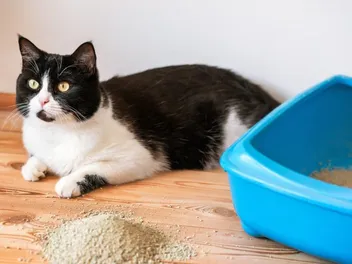
The active ingredient in many commercial litter deodorizers is baking soda. Baking soda has been around for decades and is a fantastic odor-neutralizer. It’s also cat-safe, costs very little, and is easy to use. You can put 2 or 3 tablespoons of baking soda in the bottom of the litter box every time you change the litter.
Use an Air Filter
A HEPA (high-efficiency particulate air) air filter with a carbon filter inside it will help control odors in your home, including those emanating from a litter box.
Scoop the Poop Daily
This odor-reducing method is a no-brainer, but in today’s busy world, it is also something many cat owners forget. The more poop in a litter box, the stinkier it will become. Cleaning your cat’s litter box daily is a great way to keep the smell to a minimum.
Replace the Litter Box
Plastic litter boxes can inherently retain odors, and over time, you may notice that the problem isn’t the litter but rather the box itself. Replacing the litter box might be a good idea in such a scenario.
Ventilate the Area
Another way to help control cat litter odor is to open a window or door or place your cat’s litter box in a well-ventilated area. Good airflow will help reduce the odor.
Wash the Litter Box
It is recommended to thoroughly clean the litter box at least once a week, or more often if you have more than one cat.
Did you know there's an enzyme cleaner that does it all? The Hepper Advanced Bio-Enzyme Pet Stain & Odor Eliminator Spray permanently removes the very worst smells and stains (truly, everything you can imagine!), and they offer a 100% satisfaction guarantee! Click here to get yourself a bottle.

- ADVANCED ENZYMATIC CLEANER - Penetrates the most stubborn smells and stains at the deepest molecular levels to dissolve any pet mess you encounter and lift it away at the source.
- FOR ANY MESS, ON ANY SURFACE - This pet odor eliminator cleans your carpets, floors, furniture, fabrics, and more. Whether it's urine, feces, vomit, or drool, you can erase all foul spots and smells!
- FRESH, NATURAL ODOR - Our unique formulation doesn't rely on dangerous or unpleasant chemical fragrances to get the job done. We eradicate smells and stains, not just cover them up.
At Catster, we’ve admired Hepper for many years, and decided to take a controlling ownership interest so that we could benefit from the outstanding products of this cool cat company!

How Often Do You Need to Change Cat Litter?
Most cat litter is effective at reducing the odor left behind by your cat. However, cat litter isn't made to last forever and in most cases, needs to be changed regularly. Also, several factors affect the frequency of changing your cat’s litter.
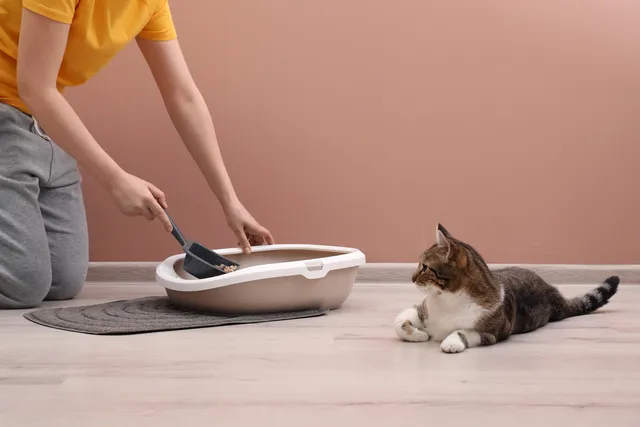
You should scoop out used litter from your litter box at least once daily. In addition, the litter as a whole should be replaced at least once a week. If you have multiple cats using the same litter box, this frequency needs to be increased.
How often you change your cat's litter also depends on your cat. Some cats are very fastidious and won't use their litter box if they find it too unpleasant. For those cats, you might need to change the litter more often. Then, of course, there’s the nose right on your face. If your nose tells you it's time to change the cat litter, you should take its advice.

How Much Litter Should You Put in a Cat Litter Box?
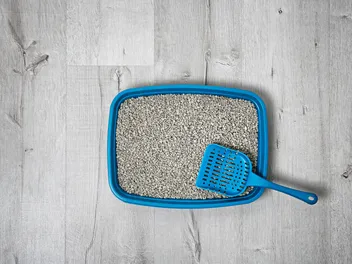
In most situations, you only need 2 to 3 inches of litter. Though many cats can deal with more litter depth, it’s difficult for the litter deodorizer placed in greater depths to effectively control the smell from such a depth.
Do Closed Cat Litter Boxes Smell Less?
There's no denying that some cats love enclosed spaces like boxes. That's why such cats like doing their business in a closed litter box. The question is, do closed cat litter boxes smell less than open boxes? The answer is that, unfortunately, this isn’t always the case. While a closed litter box may help contain odors in some circumstances, it doesn’t reduce them. It’s also important to remember that some cats might not prefer a closed litter box.
Do Air Purifiers Get Rid of Cat Litter Smell?
As mentioned earlier, an excellent way to neutralize odors from your cat's litter box is to place an air purifier nearby. Air purifiers work by pulling air in with a suction fan and filtering it before blowing it back out. When they do, the microscopic particles that cause pet odors are absorbed by the activated charcoal and other filters inside the air purifier. They can also help reduce other odors throughout your house and make the air cleaner for you and your cats. For that reason, many cat fanciers find air purifiers to be an excellent odor-reducing solution.

Final Thoughts
As we've seen, cat litter deodorizers work and are an accepted method of reducing the unpleasant odors emanating from a cat litter box. However, some cats might object to the litter deodorant’s strong scent, and a different deodorizer or odor-reducing method may be more pleasant for your pet. We hope you find a solution that works for your cat and keeps the litter box odors to a minimum.
Sources
https://pets.thenest.com/cat-litter-deodorizer-work-6475.html
https://www.preventivevet.com/cats/7-ways-to-reduce-litter-box-smell-and-messes
https://www.litter-robot.com/blog/how-often-to-change-cat-litter/
https://www.worldsbestcatlitter.com/2021/04/are-you-using-too-much-cat-litter/:
https://modkat.com/blogs/modkat-purrr/what-are-the-benefits-of-an-enclosed-litter-box
Featured Image Credit: xamnesiacx84, Shutterstock
Expert cat care, straight to your inbox
News, insights, and useful advice, delivered to you.

No spam — unsubscribe anytime.
By signing up, you agree to our Terms & Conditions and Privacy & Cookies Policy.
How useful was this post?
Click a star to rate. You can leave written feedback afterwards. (We read all feedback.)
Gregory Iacono former chiropractor and self-taught writer. Greg has experience in a wide variety of subjects including video script. As a man of clinical experience, Greg has the ability to digest a complex subject and make it accessible to the reader. Greg enjoys traveling and spending time with his two daughters and son.