Activated Charcoal for Cats: Our Vet Discusses Benefits and Risks

In this article
If you’ve ever had to bring your dog or cat to the vet for eating something potentially dangerous, you may have taken home a black substance either in liquid, tablet, or powder form. This is activated charcoal—it's not a health food or skin-care treatment, but rather a material commonly used to bind and absorb toxins in pets.
So, how does it work and is it safe? This article will explain how activated charcoal works and discuss common uses and potential risks.

What Is Activated Charcoal?
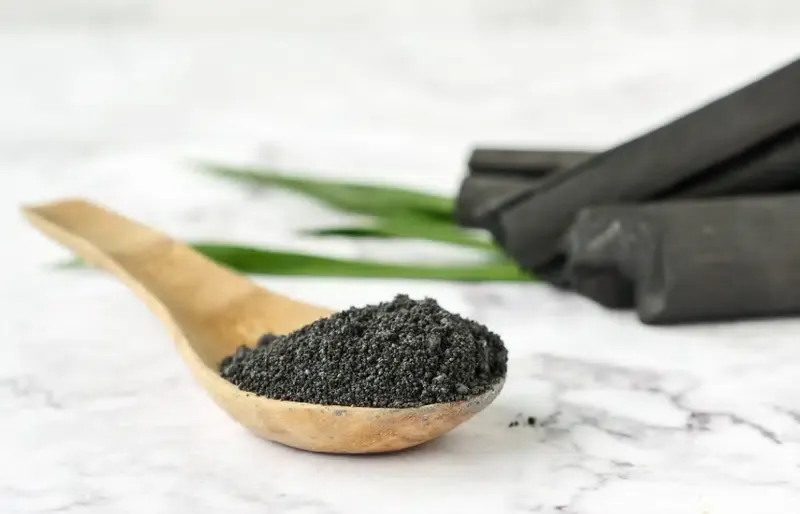
Let’s start by clarifying one thing: Activated charcoal and activated carbon are the same things. The terms can be used interchangeably.
Activated charcoal is a material with excellent absorbent properties, meaning it can bind potential toxins in the gastrointestinal tract (stomach and bowels). This, in turn, prevents the toxin from being absorbed into circulation and causing problems.
Activated charcoal is made by taking wood or something similar and burning it at extremely high temperatures. This burning is done in the absence of oxygen, and the resulting product is then treated with chemicals like nitrogen. This treatment creates a network of holes and pores in the charcoal, affording the structure a very high surface area that can attract and hold organic chemicals.
In more simple terms, activated charcoal acts like a sponge in the bowels, mopping up toxins and holding on to them until they can be excreted.

What Is Activated Charcoal Used for in Cats?
Activated charcoal is used to bind toxins, minimizing their absorption and reducing the risk of intoxication. Commonly ingested toxins for which activated charcoal is used include:
- Paracetamol (very toxic to cats!)
- Lily plants (also very toxic to cats!)
- Non-steroidal anti-inflammatory medications (such as ibuprofen or meloxicam)
- Chocolate
- Rodenticides (rat bait)
- Marijuana
How Is Activated Charcoal Given?
Activated charcoal must be given orally. Unfortunately, this does present a significant challenge. Most cat owners will be aware of how difficult it can be to administer medications to cats.
There are three main ways it can be given at home:
Most of the time, syringing is easiest. Mixing into food can be difficult, as many cats will not eat their food if it has a strange black sticky liquid in it. Giving tablets to cats is difficult too, as the activated charcoal tablets are fairly large, and multiple tablets are usually required to reach the required dose.
If giving charcoal via a syringe into the mouth proves unsuccessful, some veterinarians will give it via a tube. This involves using a nasogastric tube—a thin tube that passes up the nostril and into the stomach. Sedation may be required to pass the tube. We must also mention that giving activated charcoal can get messy, so make sure to do it away from furniture and not while wearing your nicest clothes!

What Happens If You Miss a Dose?
Missing a dose is unlikely to cause any issues, but doubling the next dose may not have any benefit. For this reason, if you miss a dose of activated charcoal, just skip this dose, and resume the normal dosing when the next one is due.
Potential Side Effects of Activated Charcoal
Thankfully, activated charcoal is very safe. Side effects are very rare, though it helps to know what signs to be on the lookout for:
- Vomiting or regurgitation
- Dehydration
- Electrolyte disturbances
- Constipation
If accidentally inhaled by your cat, aspiration pneumonia (infection of the lungs) can occur. If activated charcoal contacts the eyes, abrasions of the cornea (clear front surface of the eye) can occur.
It is worth noting that most animals given activated charcoal will have very dark (or even jet-black) stools for 1–2 days. This is completely normal!
Seek veterinary advice if you’re concerned about your pet’s well-being.
Frequently Asked Questions
1. Can I Give My Cat Activated Charcoal Without a Vet Visit?
This is certainly not advisable. If your cat has eaten something potentially dangerous, arrange a visit to your veterinarian or nearest vet emergency clinic as soon as possible. Activated charcoal is not right for every cat and every toxin.
First, if the dose of toxin ingested is very high, activated charcoal alone may not be enough to prevent signs of intoxication. Your vet may recommend other treatments, such as the induction of vomiting, fluids via a drip, or certain true “antidotes.”
Second, activated charcoal is not safe to use with some underlying conditions. Examples of these include dehydration, elevated sodium levels, kidney disease, megaesophagus, and neurological disease.
2. How Long Does Activated Charcoal Need to Be Given For?
Activated charcoal doses are based on your cat’s weight, as well as the potential toxin at hand and the amount ingested. For most toxins, between one and five doses of activated charcoal are required. For some toxins, a longer course may be recommended.
Conclusion
Activated charcoal is an excellent remedy for many toxins. If your cat has been prescribed activated charcoal after eating something hazardous, don’t underestimate its significance, and do your best to give all the doses. The ability of activated charcoal to mop up toxins in the gastrointestinal tract, preventing them from causing damage, is very useful.
If your cat has eaten something that has you worried, do not hesitate to contact your veterinarian.
Sources
Featured Image Credit by: Momentum studio, Shutterstock

Expert cat care, straight to your inbox
Vet-reviewed advice, behavior tips, and the best of Catster. Free, and you can unsubscribe anytime.
By signing up, you agree to our Terms & Conditions and Privacy & Cookies Policy.
Dr. Joe Mallat DVM (Veterinarian)
Joe is a veterinarian from Sydney, Australia. When he's not at his office, he enjoys cooking, exercising, and exploring the wilderness in Australia. He has worked for 2 years at a mixed-species practice on the mid-north coast of New South Wales, treating animals of all sizes. His areas of particular interest include internal medicine, wound management and oncology. Joe's love for the profession comes not only from helping cats, but also from helping their parents and working with wonderful teams of people.
Joe completed his Bachelor of Veterinary Biology and Doctor of Veterinary Medicine at the University of Sydney in 2020.
Join the conversation
Ask a question, share your story, or send private feedback.