Get

In Your Inbox

Catster is reader-supported. When you buy via links on our site, we may earn an affiliate commission at no cost to you. Learn more.

Can You Put Baking Soda in Cat Litter? Vet Approved Facts & Safety Advice


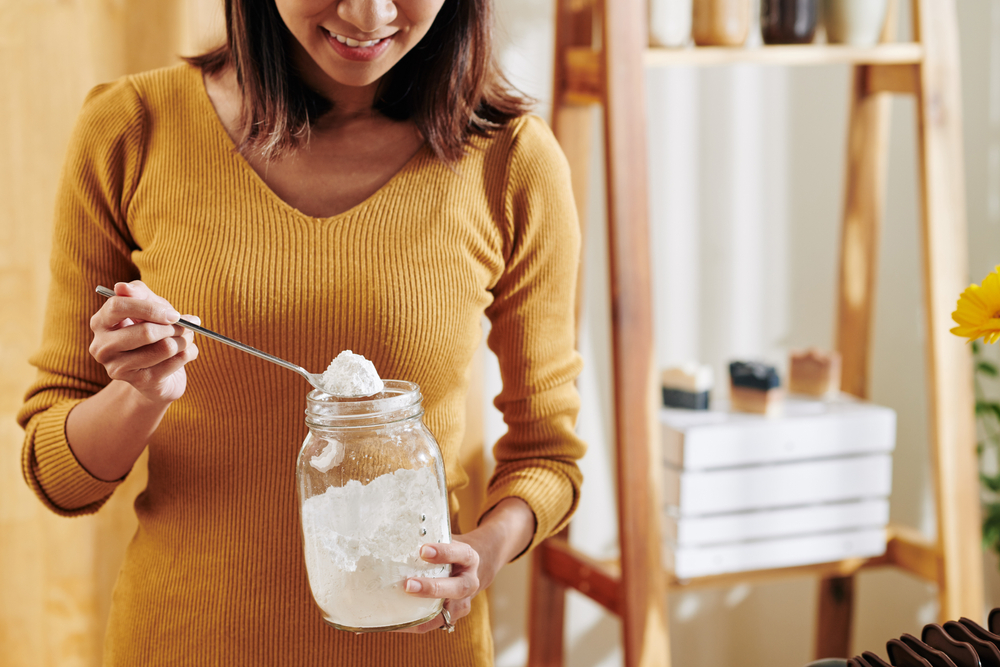
woman in a yellow sweater with jar of baking soda

Cat ownership changed forever when kitty litter was invented in 1947.  You didn’t have to let the family pet outside to do their business anymore which was a relief for many pet owners.  Absorbent clay did the job, but it raised other issues, namely, odors coming from the box. Nevertheless, the industry continues to thrive, with experts forecasting it to reach $1.6 billion by 2025.

Ed Lowe’s company, Tidy Cat, was the first to introduce scoopable litter onto the market. That helped with odor control to some degree as soiled litter clumped together making it easy to remove without having to change the whole litter tray. However, many people have reached for an old staple that’s been around since 1846; baking soda. You may wonder if it’s safe to use. Considering you can use it as a toothpaste, hair conditioner, and antacid, we can assure you it’s safe and effective to use baking soda in your cat’s litter tray, in small amounts. 

divider 2 cats

The Discovery of Baking Soda and Its Uses

While other chemists had discovered sodium bicarbonate earlier, John Dwight and Austin Church made it a commercial baking product. The company changed its name to the familiar Arm & Hammer in 1867. It didn’t take long for people to find other uses for the chemical compound, particularly for personal care. Baking was only the start.

It’s worth noting that the manufacturer also aligned itself with nature and its “Beautiful Birds of America” trading cards. This association reinforces its safety. The company capitalized on its other uses and ventured into different market segments, such as laundry detergent and a deodorizer for your fridge and freezer. It finally made it to the pet market in the 1980s with Arm & Hammer Cat Litter products.

jar of baking soda and spoon on white background
Photo Credit by: focal point, Shutterstock

How Baking Soda Works

Baking soda or sodium bicarbonate has a pH of 9.0, making it an alkaline substance. The pH of  normal, healthy cat urine is between 6.3–6.6. The idea for using baking soda in a litter box is the theory it will neutralize the foul-smelling and highly acidic urine odor. That’s the same principle with other uses, such as carpet deodorizers and putting a box of it in the fridge to remove odors.

If you're dealing with stubborn smells in your litter box or elsewhere in your house, a good cat litter deodorizer can work wonders.

Hepper Advanced Bio-Enzyme Cat Litter Deodorizer Powder
  • Bio Enzymatic Cat Litter Freshener - Smart formulation uses natural ingredients eliminating cat...
  • Save Money - Stuff for cats isn’t the cheapest. With this litter box odor eliminator, you’ll...
  • Every Litter, Every Surface - Are you afraid this additive won’t work on your litter? Fear not!...

We recommend Hepper's Advanced Bio-Enzyme Cat Litter Deodorizer, an all-natural litter additive that fights odors using bio-enzymes. This effective deodorizer is fragrance-free and works on all types of cat litter. It's also effective anywhere you have lingering odors, including diaper pails, garbage cans, and kennels!

At Catster, we’ve admired Hepper for many years and decided to take a controlling ownership interest so that we could benefit from the outstanding designs of this cool cat company!

How to Use Baking Soda in a Litter Box

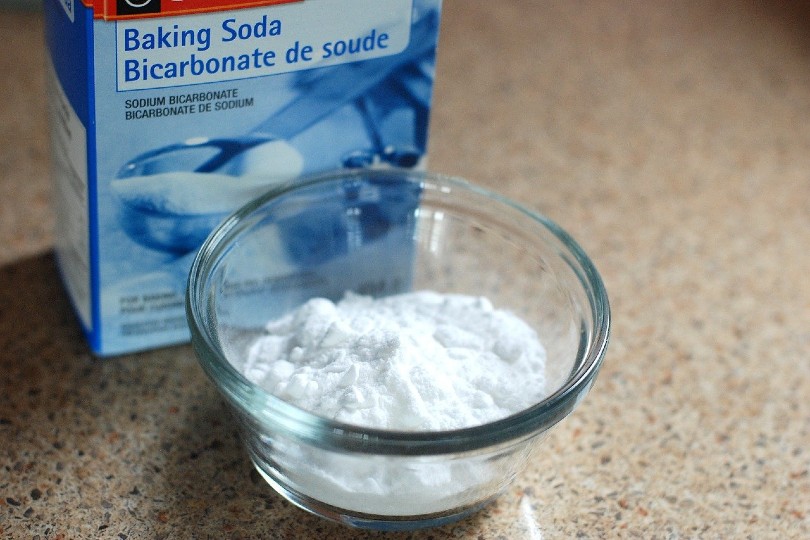
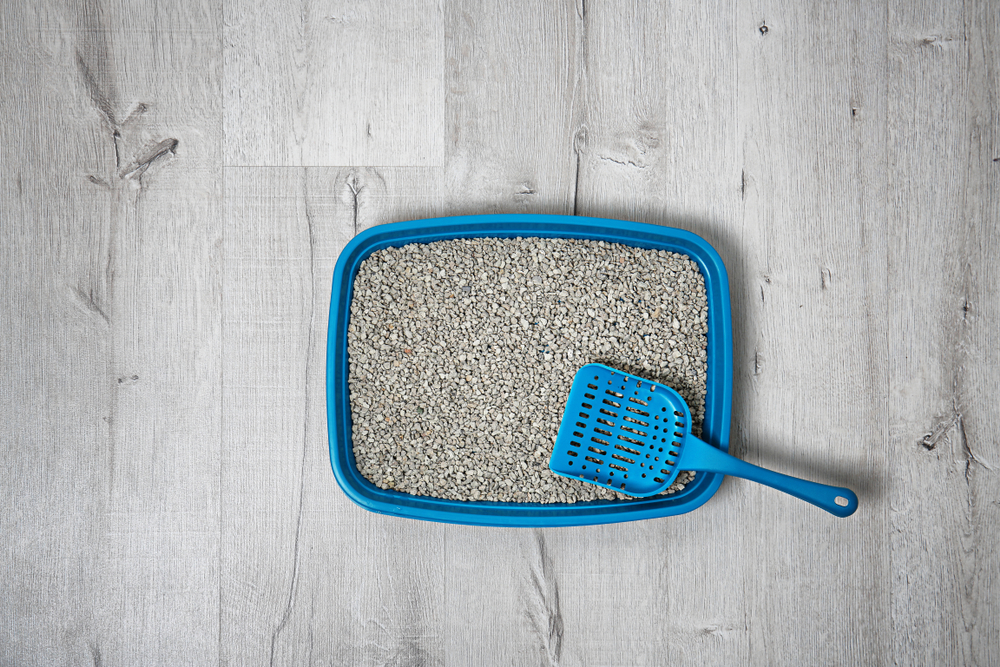
Baking soda has many uses in the home and is an affordable alternative to many cleaning products.  It is particularly effective when combined with white vinegar, and this combination can be used to clean your cat’s litter tray.  Baking soda doesn’t have an odor, but it has a bad taste that your cat won’t like. All you need to do is mix a few tablespoons into the litter.

jar of baking soda and bottle of vinegar
Image Credit by: focal point, Shutterstock

The Risks of Using Baking Soda

Baking soda is one of the most versatile substances you’ll find. You can use it for just about anything, from soothing an upset stomach to putting out fires. However, everything has risks. The negatives with it include dust, which can be irritating if inhaled. Ironically, one of the reasons pet owners use clumping litter is to minimize dust. Baking soda just adds to the problem.

It’s not likely any cat would ingest it, but baking soda can cause toxicity if eaten in large quantities.  Toxicosis may be seen with ingestion of 10-20 g/kg of body weight.  This equates to approximately 2-4 teaspoons per kg of body weight.  With only a few teaspoons of baking soda in a litter box, this level of ingestion is very unlikely.

The final risk is the increased amount of ammonia gas produced when the pH is increased.  Urea in urine is turned into ammonia gas by bacteria and the rate of ammonia production may be higher when the pH is increased by using baking soda. More research is needed in this area.


divider 1 paws

Final Thoughts

Baking soda is a safe additive to use in your cat’s litter for neutralizing acid and its odors. It doesn’t pose any significant risks if used this way. However, you should use only a few tablespoons at most. We also suggest storing the container out of reach of kittens and small children. The primary issues exist with accidental ingestion and not everyday use.


Featured Image Credit: Dragon Images, Shutterstock

Want content like this delivered to you?

Sign Up For Our Newsletter

News, insights, expert advice, and everything cat

* By submitting, you agree to our Terms & Conditions and Privacy & Cookies Policy.


How useful was this post?

Click on a star to rate (you can leave written feedback after clicking submit)

Help us improve Catster for pet parents!

Your feedback really matters.

What did you like about this post? Also how can we improve it?

Join the conversation

2 Responses

    1. Hi Dale, thanks for your comment, the recommendation is to do this sparingly, mix a few tablespoons into the litter but don't overdo it.

Leave a Reply

You’re very welcome to leave a comment or question. Please know that all comments must meet our community guidelines, and your email address will NOT be published. Let’s have a positive and constructive conversation.


Talk With A Vet Online

Peace of mind,
anywhere, anytime

Affordable vet advice

Do Cats Hate Having Their Whiskers Touched? Vet-Verified Facts & Info

Whiskers aren’t just there to make your cat look cute. They act as an important sensory feature to pull signals from the environment...

An Introduction to Raphael in Eight Questions (and Answers)

Welcome to the Wednesday Cats of Catster! Every week, we share a story from one of our cat-loving Catsters. This week is about...

Can Cats Drink Alkaline Water? Vet-Reviewed Nutritional Fatcs & FAQ

While alkaline water may have some health benefits, it should not be provided to felines. Alkaline water can harm a cat’s digestive system,...

How to Keep Cat Claws Dull Safely: Vet-Approved Tips

What’s that old saying—when you love someone, you have to love everything about them. Well, that’s definitely put to the test when you...

More related

Cornish Rex Lifespan: How Long Do They Live? Vet-Reviewed Facts

In 1950s England, a random genetic mutation produced a kitten with an unusual curly coat. From this single kitten, the Cornish Rex breed...

Scatter Feeding Cats – Making Mealtimes More Interesting & Longer Lasting

You may already be aware that I share my home with a few cats. Five to be exact. Each one with its own...

Do Cats Like Privacy When They Poop? Vet-Reviewed Feline Preferences

Cats may not value your privacy, especially when you’re just trying to sneak off to the bathroom. Maybe you don’t mind the four...

9 Best Cat Foods for Cats with Allergies in 2026 – Reviews & Top Picks

While food allergies are rare in cats, they can cause significant issues and discomfort for cats that are allergic to certain foods. It’s...

Keep reading

15 Hazards That Could Hurt or Kill Your Cat & How to Avoid Them (Vet Reviewed)

When you are at home relaxing with your cat, you might be totally oblivious to all the hazards around the home. After all, we don’t foresee some events, making it difficult to navigate. While we could go on for hours...

vet wrapping cat's injured paw with bandage

Does Pine Sol Kill Fleas on Cats? Vet-Reviewed Effectiveness & Safety Explored

Pine-Sol is a well-known cleaning product for kitchen and bathroom floors. There is some information surrounding the product and how it may affect fleas on cats, but we can confidently say that Pine Sol does not kill fleas on cats....

Cat wearing collar scratching and itching

How to Get Cats to Get Along: 9 Tips & Tricks

Getting a new cat seems like a great idea. You’ll have a new pet to love and care for, and your current kitty will have a new friend to nap and play with. However, some cats don’t get along. Instead...

young woman introducing two cats with each other

7 Signs Your Cat Wants You to Play With Them: Vet Verified Cues to Look For

Cats love to play, just like dogs. Although it may seem vastly different from dogs, cats can show us signs letting us know they want to play. Knowing how to read your cat’s body language is an excellent way to...

cat playing with owner

Do Devon Rex Cats Shed a Lot? Vet-Verified Tips to Reduce Cat Hair & FAQ

The Devon Rex cat, with its pixie-like appearance and charming personality, is an increasingly popular breed of feline. While these cats are known for their curly hair, endearing nature, and playful antics, one of the most common questions prospective owners...

woman brushing calico tortoiseshell Devon Rex

5 Best Cat Exercise Wheels in 2026 – Reviews & Top Picks

The benefits of exercise1, both mental and physical, are well-established when it comes to human beings. Regarding our feline friends, exercise is no less vital but rarely performed. With up to 50% of adult cats being overweight2, this lack of...

Smoky cat running on exercise wheel or training apparatus

Does Baby Powder Kill Fleas on Cats? Vet-Reviewed Facts & Safety Explored

Fleas are cats’ most common skin parasite. They not only cause skin problems but can also transmit diseases to you and your cat. Finding effective and safe ways of killing fleas is essential to avoid problems. Baby powder contains talcum...

Baby talcum powder container on wooden background

8 Health Benefits of Coconut Oil for Cats: Vet Approved Guide & Tips

Coconut oil is a versatile and natural product that has gained popularity in recent years. It is derived from the meat of mature coconuts and is known for its numerous health benefits for humans. But did you know that coconut...

a kitten playing with coconut