Why Do Cats Try to Eat Plastic? 5 Vet-Reviewed Reasons for This Behavior


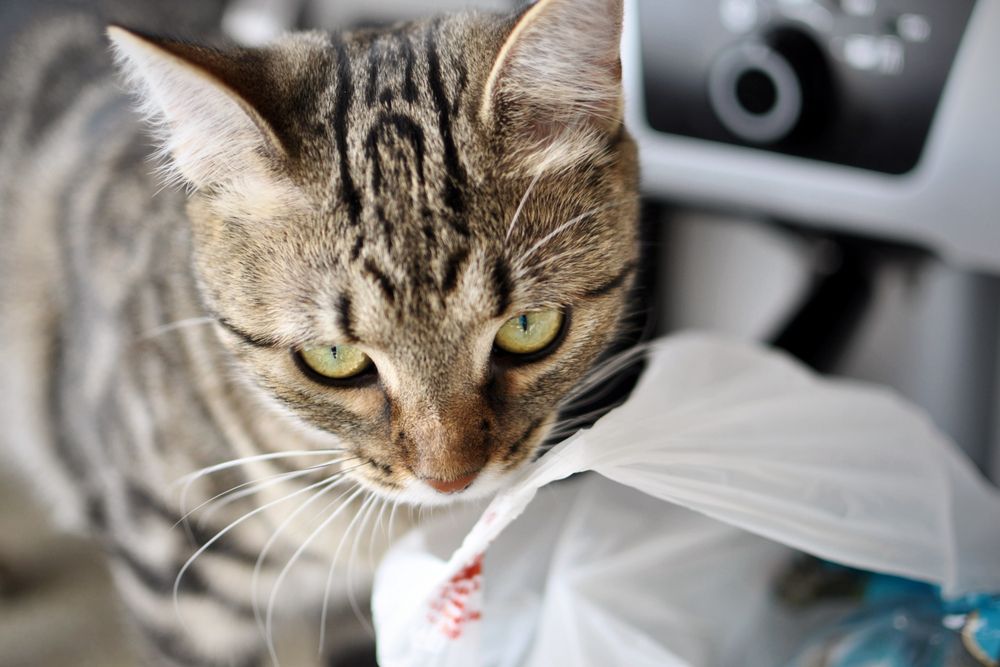
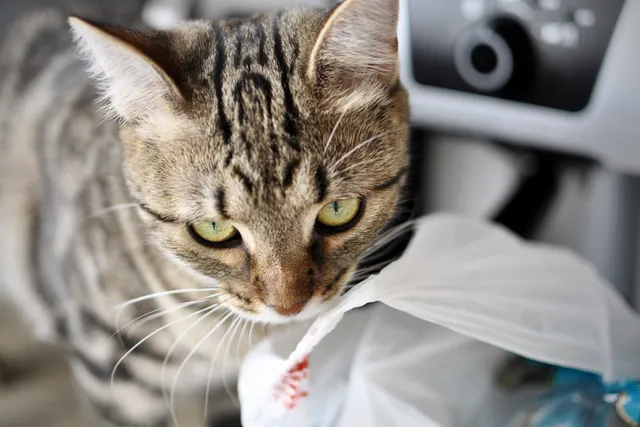
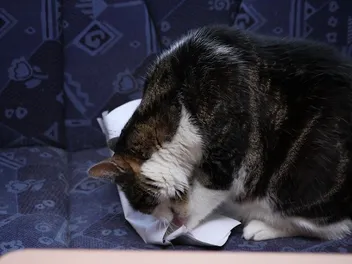
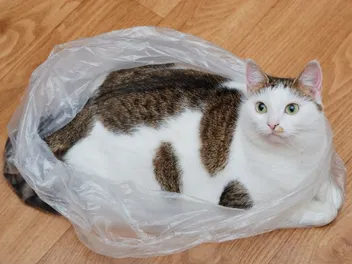
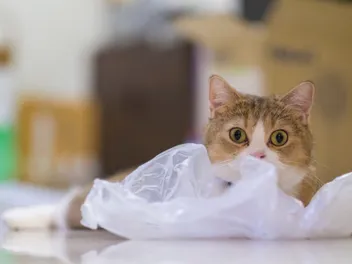
Have you ever looked over as you’re unpacking the groceries to see your cat innocently chewing on a plastic bag? What’s up with that? The technical term for a cat eating a non-food item is “pica,” so in this case, we’re specifically looking at plastic pica. There may be a good reason behind your cat’s plastic pica habit, and it’s important to find out the cause of the problem. We probably don’t need to tell you that eating plastic is bad for your cat in more ways than one and it may lead to a blockage of their stomach or intestines. Some plastic bags contain tasty remnants of food, which can attract your cat, while others are made with animal by-products that can smell tasty too. If you notice your cat trying to chew any type of plastic, make sure to take it away before they ingest any. If your cat managed to swallow a piece of plastic, consult with a veterinarian. Let’s take a look at the main reasons why cats try to eat plastic.

First Things First
We suspect that some cats chew plastic as they like the texture and maybe even the taste of plastic, but in reality, we don’t know for sure. There are few speculations into why they are interested in plastic or other inedible materials, and some of the assumptions include dietary deficiencies, stress, anxiety, underlying medical disorders such as gastroenteritis, neurological illness, boredom, compulsive disorders, early weaning, lack of socialization and many others. Further research is required to characterize pica in cats, allowing us to better understand it so we can help the cats. Let’s go through five of the more common reasons most cats may be chewing plastic.
The 5 Reasons Why Cats Try to Eat Plastic
1. Their Diet May Be Nutritionally Inappropriate
If your cat’s regular food isn’t meeting their nutritional needs, they may be compelled to eat other items to make up the shortfall. But on the other hand, they may have just developed a bad habit. It’s impossible to know for sure. Of course, plastic doesn’t contain any nutritional benefits for your cat at all. But if the plastic contains meat or other tasty foodstuffs, your cat might give it a nibble, anyway.
Solution:

2. Your Cat Is Stressed or Bored
We know that cats can come across as independent and in control, but our little furry friends are actually easily affected by changes in their environment. Something that you may not even consider stressful, like rearranging the furniture or inviting a friend over, can cause your cat to feel anxious and stressed out. This might lead them to indulge in self-soothing behavior, which, in some cases, can include plastic pica. But boredom and frustration may also lead to this strange behavior.
Solution:
3. Your Cat Is Curious
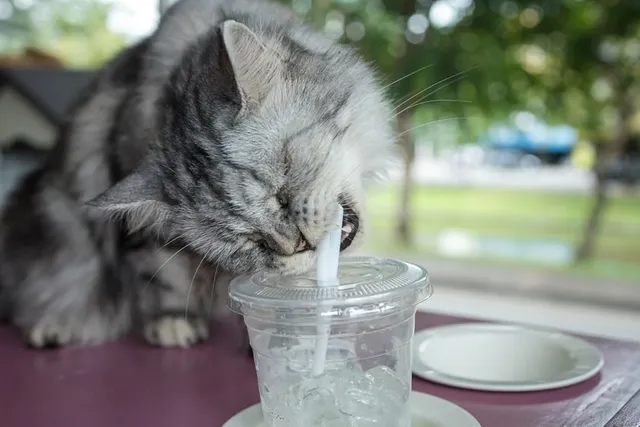
Some cats, especially inquisitive kittens, love to investigate the world around them. This includes eating things that they really shouldn’t! Some cats retain their playful, kitten-like tendencies well into adulthood, and they may not be able to resist chewing on a plastic item that’s been left lying around. Kittens may also chew on plastic objects more during the teething phase, when their mouth may be slightly uncomfortable.
Solution:

4. Your Cat May Have a Medical Condition
Pica can be a sign of your cat trying to self-soothe themselves. If you catch your cat chewing on plastic or any other non-food item, this may be the first sign that they’re feeling unwell. Cats are masters of hiding illness, so keeping an eye out for subtle signs like this can give you a clue that your cat might not be feeling 100%.
Solution:
5. Your Cat May Not Have Been Properly Socialized
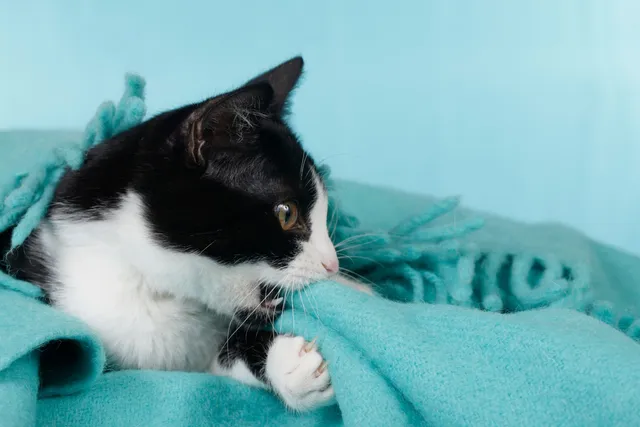
Kittens and younger cats can be more prone to various self-soothing behaviors, such as chewing and suckling on various objects or textures, especially if they have been weaned early or have not been adequately socialized. Sometimes, these behaviors may even become compulsive and can be challenging to manage. There may be a genetic predisposition for pica in some breeds, like Siamese and Birman cats, and these cats also have a tendency to suckle on wool.
Solution:
Keep Plastic Out of the Reach of Your Cat
It’s a good habit to start putting away any plastic items that your cat might try to investigate. Plastic bags are particularly dangerous because they can become a choking or suffocation hazard if your cat does manage to swallow a piece or if they get their head stuck inside the bag.
Keep bags safely tucked away in drawers, invest in a trash can with a sturdy lid so your cat can’t reach the liner, and remove any other items you think your cat might decide to chew on.
If your cat happens to be chewing on the outer covering of electrical cables, this is even more dangerous. Try to make sure your cat only has access to a room without any electrical items plugged in when you’re not able to supervise them.
Giving your cat a diversion is always a good option, so offer them a variety of safe toys and enrich their environment. You can even get chew sticks for your cat to gnaw on.

Always speak to your vet if you see your cat eating something plastic. If you see them doing it once, the chances are that they’ve also tried it when you’re not watching them. It’s important to understand why your cat is chewing on or eating plastic so you can help your furry friend get better.
When to Take Your Cat to the Vet
If you saw your cat munching on plastic before you could intervene, or they have started feeling poorly, refusing their food, retching, becoming lethargic, vomiting, developing diarrhea or straining to defecate, or showing signs of a hunched and painful abdomen, this is the time to urgently see your vet. Chewing plastic can also lead to cuts inside the mouth and on the tongue that may bleed, cause pain, and need urgent attention. Pieces of plastic that cats swallow can easily cause a stomach or intestinal blockage, and they may need a gastroscopy or even surgery to remove the pieces. The longer the condition is left untreated, the worse health complications may arise.
Conclusion
Some cats start showing interest, usually from a very young age, in eating plastic and other inedible materials. This can also occur at any stage in a cat’s life. There may be several reasons why this happens, and the most important ones are explained above. They indicate that there is an underlying issue. If the cause is boredom, stress, or anxiety, you may manage it at home by improving mental, physical, and environmental stimulation. If there are medical reasons, that will require a veterinary workup. Either way, make sure you keep all plastic and other inedible materials your cat is showing interest in well out of their reach.
Sources
Featured Image Credit: luckat, Shutterstock
Expert cat care, straight to your inbox
News, insights, and useful advice, delivered to you.

No spam — unsubscribe anytime.
By signing up, you agree to our Terms & Conditions and Privacy & Cookies Policy.
How useful was this post?
Click a star to rate. You can leave written feedback afterwards. (We read all feedback.)
Emma is a freelance writer, specializing in writing about pets, outdoor pursuits, and the environment. Originally from the UK, she has lived in Costa Rica and New Zealand before moving to a smallholding in Spain with her husband, their 4-year-old daughter, and their dogs, cats, horses, and poultry. When she's not writing, Emma can be found taking her dogs for walks in the rolling fields around their home...and usually, at least some of the cats come along, too! Emma is passionate about rescuing animals and providing them with a new life after being abandoned or abused. As well as their own four rescue dogs, she also fosters dogs for re-homing, providing them with love and training while searching for their forever homes.