My Cat Ate Plastic: Our Vet Explains What to Do

In this article
Cats, particularly young ones, are very inquisitive creatures. Unfortunately, this curious nature can sometimes get them into trouble! They can accidentally chew and swallow things they shouldn’t, particularly when playing, and this could include plastic. Depending on the type of plastic eaten, your cat could suffer serious health complications.
This article explores this in more detail and what you can do to help your cat.

How Do I Know if My Cat Ate Plastic?
If your cat has eaten some plastic that has got stuck in his stomach or small intestine, food and water might not be able to pass through. This blockage and irritation will cause food to be vomited back up again. Your cat may also stop being able to defecate or alternatively may have diarrhea or blood in his stool due to the inflammation in his gastrointestinal tract. You may notice small pieces of chewed plastic in the vomit or stools.
Cats with blockages are usually off-color, won’t want to eat or drink much, and become progressively more lethargic. Some cats might even collapse completely in difficult situations.
Abdominal discomfort may be seen; your cat might look at his stomach more often than normal and may adopt a different way of positioning himself to try and get more comfortable. They may react or cry out if you touch their abdomen. If your cat develops peritonitis, they may also get a high temperature due to infection.
Other conditions can present with similar signs, such as pancreatitis (painful inflammation of a small organ called the pancreas) or inflammatory bowel disease. So unless you know for sure that your cat has consumed something he shouldn’t have, your vet will probably need to run some tests.


What to Do if Your Cat Eats Plastic
1. Stop Them From Eating Anymore
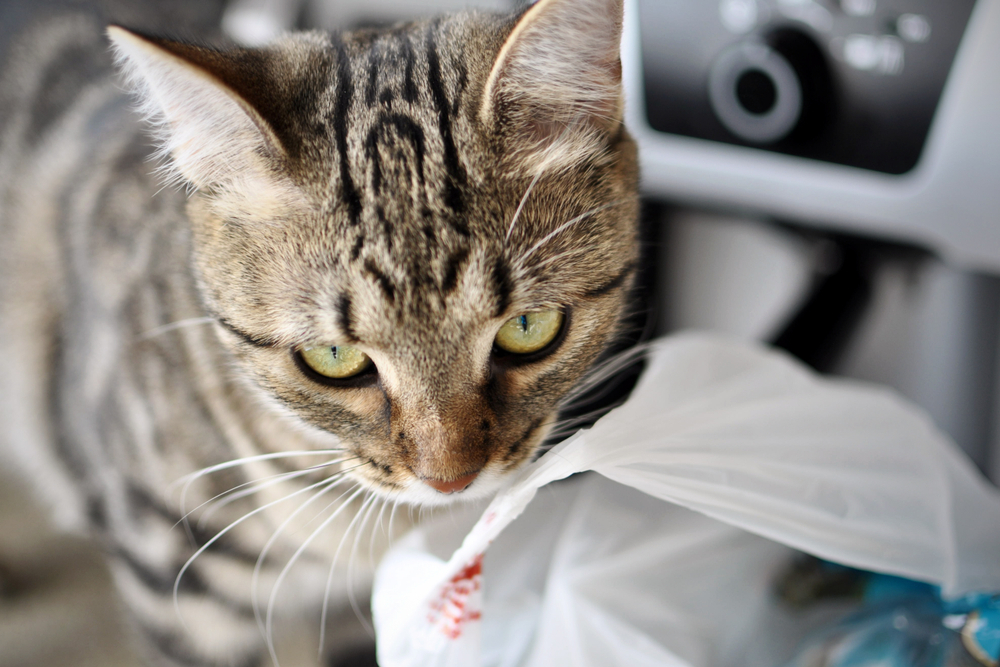
Remove your cat from the area so that you can clean up any remaining plastic. If it was a type of plastic wrapper or your cat ate a plastic bag, you should try and identify the contents of the bag. The contents could also be very harmful to your cat, such as cleaning chemicals, chocolate, sugar-free gum, and medication.
2. Assess Your Cat’s Condition
Is your cat still bright and alert? Any signs of choking or discomfort? You could check to see if there is any plastic still in his mouth, but only if you feel it is safe to do so. Take care when checking; some cats can bite and scratch if they are in pain or feeling stressed.
3. Call Your Veterinarian
Contact your veterinary clinic as soon as possible if you think your cat swallowed plastic, regardless of the type or amount, even if they seem okay now. Try and tell them how much your cat may have eaten, whether it was a type of hard/sharp plastic, and whether it contained any potentially harmful products. Let them know if your cat is showing signs, such as choking or throwing up.
4. Follow Your Veterinarian's Advice
If your vet wants you to bring your cat into the clinic for an examination, please do so as soon as possible, as treatment is more likely to be successful if carried out early enough.

How Does a Vet Find Out if a Cat Ate Plastic?
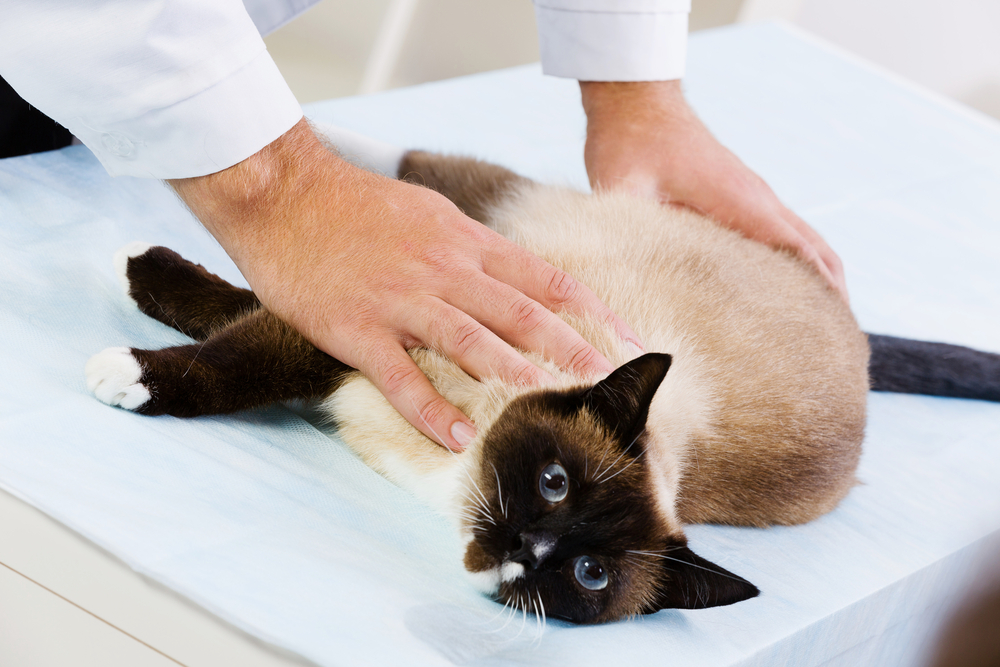
Your veterinarian will start by examining your cat. They will check their heart rate, temperature, and hydration status. They will also feel their abdomen to check for signs of bloating or pain. Depending on their findings, they may then need to do further tests.
Blood samples may be run as a general health screen and can help to rule out other conditions such as pancreatitis. Diagnostic imaging is then used to look for evidence of a blockage. X-rays are usually the starting point, but not all plastics show up well, particularly if they are soft or broken into pieces. Other diagnostics can be performed, such as ultrasound, a non-invasive way of scanning your cat’s organs, or even endoscopy, where a long, flexible camera is passed into the stomach. Sometimes a foreign object can be removed using the little forceps on the end of an endoscope; however, this is more difficult if the object is rounded or smooth.
Ultimately, exploratory surgery may be needed to thoroughly examine your cat’s digestive tract and remove any obstructions that are found. Abdominal surgery also has the benefit of allowing the veterinarian to examine the organs for damage and obstruction directly and remove any plastic.


Frequently Asked Questions
Will My Cat Be Okay If He Has Eaten Plastic?
In most cases, your cat will be fine as long as prompt advice is sought from your veterinarian. Your vet may even advise you to monitor your cat, particularly if they only ate a small amount of plastic or are not showing signs of ill health.
It may be possible to give your cat some medication to induce vomiting if the item is still in the stomach and is deemed safe. Large or sharp items may cause damage to the esophagus (food pipe) if vomited up, and cats may inhale their vomit if they’re struggling, so it’s important never to attempt to make your cat vomit at home.
The success of abdominal exploratory surgery depends on how quickly the procedure was performed and how much damage the guts have already suffered. If caught early enough, your cat’s prognosis is typically good.
If things have been left untreated for a while, the damage to your cat’s organs may be more severe. For example, if a hole in the gut lining has occurred, bacteria and food could leak into the abdominal cavity and cause dangerous peritonitis. This can be a potentially fatal complication.
Peritonitis must be treated through additional flushing/rinsing of the abdominal cavity, repairing or removing any damaged areas of intestines, and medication like antibiotics.
Depending on the nature of the treatment required, your cat may need to stay in the hospital following his procedure. This will allow the veterinarian to monitor them closely for any signs of infection or wound breakdown.
Can Cats Digest Plastic?
Cats are much less likely to eat things they shouldn’t than dogs are, but accidents still occur. If your cat swallowed plastic then this can cause many complications, as plastic is not digestible, so it won’t break down in your cat’s stomach. Some plastic items could be swallowed whole, such as a small plastic toy which might cause a physical obstruction. This could block food and water from passing through the stomach or small intestines.
Pieces of chewed-up plastic could cause issues, too, particularly if they are rigid and sharp. Sharp fragments can potentially become lodged in the wall of the stomach or intestines and could cause inflammation or even a dangerous perforation (hole or tear). The signs may not be apparent immediately and could take a couple of days to develop. Pieces of plastic could cut your cat’s mouth and tongue, and choking is another possible risk.
Symptoms of a gastrointestinal obstruction can include:
These signs could be seen if a hole in the intestines occurs too, plus your cat may collapse or have a high temperature due to an infection called peritonitis caused by leaking gut fluids.

How Long Will Plastic Take to Pass?
Plastic is indigestible, which means if it is small enough, it will pass through the digestive tract relatively unchanged. Little pieces of cellophane or plastic bag may not cause any issues. Large or sharp pieces of plastic may get stuck and cause a blockage. Plastic can often get stuck in the narrow exit from the stomach, known as the pylorus, or in the small intestines.
Gut transit time varies from cat to cat, depending on their diet, age, and health status. It can vary considerably from around 1 to 2 days.
Can They Die From It?
It is possible, yes. Plastic is indigestible, and it could cause a blockage. If this is left untreated, your cat could become very unwell. The risks increase if he becomes dehydrated through vomiting or develops life-threatening peritonitis.
This is why you should call your veterinarian for advice as soon as possible. If treated promptly, most cats do very well. It is also worth noting that the plastic itself is not likely to be toxic, but if it contains something poisonous to cats, it could be problematic.

How Do I Stop My Cat From Eating Plastic?
While it can be amusing to see your cat playing with plastic sweet wrappers, elastic bands, or tinsel, don’t encourage it since your cat may accidentally swallow them. You should get your cat to play with appropriate cat-safe toys instead. Monitor these toys for any signs of wear and tear and replace them if they become broken.
Keeping your cat mentally stimulated and well-exercised will help keep boredom at bay and reduce destructive behaviors. Invest in puzzle feeders or interactive toys to help keep them amused and provide lots of positive interaction through regular play and grooming.
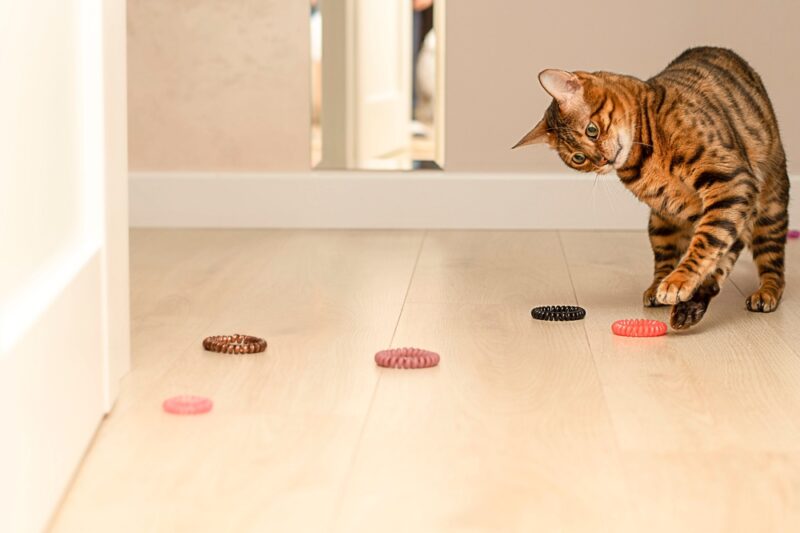
If your cat is a particular fan of a certain kind of plastic, like beads or hair bands, always keep them well out of reach. Make sure trash cans are well secured so your cat can’t access them, and always clean up any wrappers rather than leaving them lying around the house. According to Earthday.org, decreasing your cat's exposure will help minimize the risks of eating plastic in the first place.


Wrapping Up
If your cat ate plastic, you should consult a veterinarian. Your cat’s prognosis will depend on the type of plastic he has eaten, how long it may have been causing a blockage, and the overall health status of your cat. The sooner you seek help for your pet, the better his outcome.
Contact your vet immediately if your cat has eaten something he shouldn’t have!
Related Read:
Sources
Featured Image Credit: luckat, Shutterstock

Expert cat care, straight to your inbox
Vet-reviewed advice, behavior tips, and the best of Catster. Free, and you can unsubscribe anytime.
By signing up, you agree to our Terms & Conditions and Privacy & Cookies Policy.
Dr. Joanna Woodnutt BVM BVS (Veterinarian)
Joanna is an experienced veterinarian working in the UK. She has written about pets and their health for many blogs, pet magazines and pet websites and loves to help readers understand their pets through her writing.
She has started her own freelance company so she can help more pet parents than just the one standing in front of her in a consultation room.
She enjoys teaching and educating clients, so a career in writing, public education and pet health is the perfect combination for her.
Join the conversation
Ask a question, share your story, or send private feedback.