What to Do with a Stray Cat That Won’t Leave? Vet-Approved Tips & Tricks


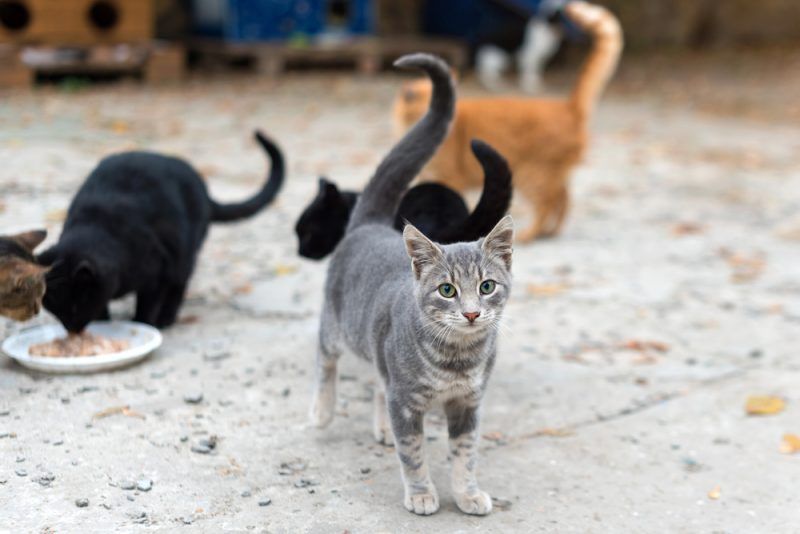
If you have a stray cat outside your home, you should first assess the animal's condition. What you should do with a healthy cat is much different from what you should do with one that needs medical attention. Provide food and water for the feline, at least for now, while you try to find other sources of help. If you can set up a cardboard box or other sheltered area, do that too. If it is particularly hot or cold out, this is even more important.
Assuming that the cat lets you, check for identification. Friendly felines that are simply lost often tend to like people. If the cat is in poor health or injured or you are unable to provide ongoing care, contact your local animal control or an animal shelter. You can also consider a humane trap to capture the cat and transport them to your local animal shelter.
For a more in-depth guide on what to do, keep reading.

The 8 Tips on What To Do If a Stray Cat Won’t Leave
Important
1. Assess the Cat’s Condition
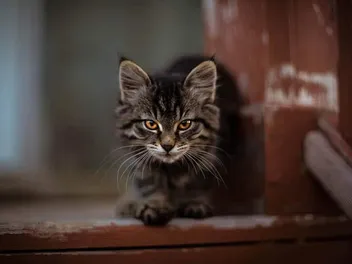
Once you notice a cat that’s starting to hang around your home, approach them cautiously and observe them. You want to determine if the cat is injured, distressed, or otherwise needs assistance. Limping, wounds, disheveled fur, labored breathing, and excessive sneezing are all signs of problems. These signs warrant prompt veterinary attention.
You should also pay attention to the cat’s body language. If the cat is frightened, it may be harder to care for them, as they may not approach you purposefully.
2. Provide Food and Water

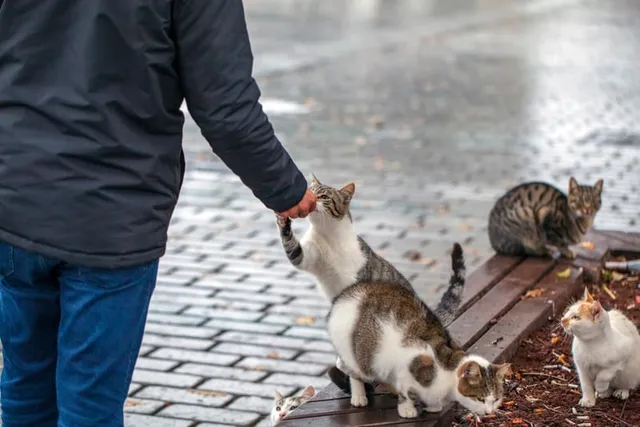
You should provide the cat with some food and water, as strays will often not be able to fend for themselves. (On the other hand, feral cats prey on wildlife and are often pretty good at surviving.)
Place the food and water in a secluded area where the cat can access it without feeling exposed. Be patient, as the cat will likely be wary at first. However, the cat may approach you as it becomes more comfortable with you.
Feeding Strays
3. Create a Safe Space
Try to set up a makeshift shelter out of a cardboard box, plastic bin, or dedicated outdoor cat shelter. Line the inside with straw or hay (try avoiding blankets, as these can make the cat colder should they get wet).
Place this shelter in a quiet spot away from heavy foot traffic. It will provide the cat with some much-needed shelter while you follow the next steps.
4. Check for Identification
If you can get close enough, you should check for identification. If the cat is simply lost, you may be able to find their owner’s contact information. If you do find this information, contact the owner.
Sadly, it isn’t practical to check for a microchip at home. However, if you take the cat to the animal shelter, they will likely check for you.
5. Contact Animal Control or the Shelter

If the cat is distressed or injured and you are unable to provide care, contact your local animal control or a nearby animal shelter. They can send someone to assess the cat’s condition and take appropriate action. Usually, the cat will be placed in the shelter.
If you’re unable to keep the feline, you should take the cat to the shelter. However, if you’re unable to catch them, you can call the animal shelter to come and do that for you.
Alternatively, you can trap the cat yourself. Many fearful cats aren’t necessarily feral, but they can be hard to catch. You should use a humane trap to capture your feline safely. Avoid using traps that may harm the cat, of course. Once the cat is captured, you can transport them to your local animal shelter or rescue organization.
6. Post Flyers and Online Listings
If you believe that the cat may be a lost pet, consider creating flyers or posting online about the feline. Often, pet owners will be looking at lost-and-found pet groups on social media, as well as any community pages, for information about their feline. They may have even posted information about their cat, which you may be able to identify.
Social media is a great way to locate the owners of a lost cat, assuming the cat has an owner.
7. Consult Neighbors

You should also speak with your neighbors about whether they know the cat. Even if it isn’t their cat, they may have seen them around (confirming that they are a long-time stray) or know the owner. Neighbors may also be able to provide information about rescues in your area, especially if they’ve been in a similar situation themselves.
8. Consider Long-Term Care
If the cat’s owners cannot be tracked, you may want to consider providing long-term care. For a stray cat, this means providing food, water, and a place for the cat to sleep. Trap-and-release programs are also very important to prevent the cat population from growing further.
Alternatively, you can choose to make the cat an indoor cat and offer them a forever home. In many instances, most adopted cats end up become loving indoor pets this way!
Conclusion
If a stray cat has been hanging around your home, you should first be concerned with the cat’s needs. Ensure the cat doesn’t need medical attention and has access to food, water, and shelter. If a cat is friendly, there is a very good chance it is a lost pet. However, even lost pets can be skittish, so don’t assume a cat is feral just because it doesn’t come to you right away.
You can then contact your local animal shelter or animal control to pick up the cat—or consider adopting if it’s something you’re seriously considering.
Featured Image Credit: IMG Stock Studio, Shutterstock
Expert cat care, straight to your inbox
News, insights, and useful advice, delivered to you.

No spam — unsubscribe anytime.
By signing up, you agree to our Terms & Conditions and Privacy & Cookies Policy.
How useful was this post?
Click a star to rate. You can leave written feedback afterwards. (We read all feedback.)
Kristin is passionate about helping pet parents create a fulfilling life with their pets by informing them on the latest scientific research and helping them choose the best products for their pets. She currently resides in Tennessee with four dogs, three cats, two fish, and a lizard, though she has dreams of owning chickens one-day!