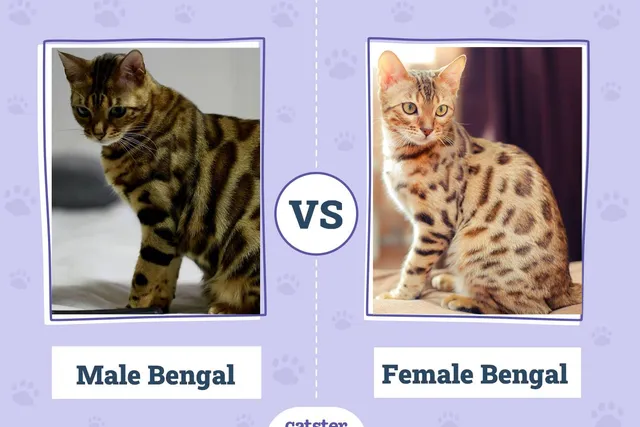
Male vs Female Cats: Vet-Reviewed Differences (With Pictures)



In this article
When choosing a cat as a pet, understanding the main differences between male and female cats can be beneficial, as one might be more suited to your household than the other. However, individual personalities and early socialisation are what usually make the most difference between cats, regardless of their sex. Neutering and spaying reduce those differences further.
Keep reading as we discuss size, temperament, training, health, and breeding to help you understand both sexes better so you can make an informed choice about what is right for your home.

Visual Differences

At a Glance
Cats 101
Cats are among the most popular and beloved pets worldwide, behind only dogs as many people’s favorites, and they have been keeping us company for thousands of years. They are graceful, independent, and playful, often entertaining everyone in the home. They form strong bonds with their family, and some will be effective hunters, getting rid of all kinds of pests, from mice to flies. They come in various colors, patterns, and sizes, and you can get them with long, short, or no hair. Owning a cat is a big responsibility that requires lifelong dedication and care, with some cats living well into their late teens.
The biggest and most obvious difference between males and females is in their external reproductive organs. Male cats have testicles and a penis, which is located below the anus, while females have a vulva, with a somewhat bigger gap between the two. If a male has been neutered, the testicles will no longer be present.

Male Cat Overview
Personality / Character
Cats all have unique personalities, and no two cats will be the same, regardless of sex. That said, one prominent trait of male cats that have not been neutered is their tendency to be more territorial than females. Unneutered males, in particular, may exhibit behaviors like urine marking, scratching, and defending their territory. Such behaviors are greatly reduced with neutering.
Young male cats are often playful and have abundant energy, so they enjoy interactive playtime with their owners and will love chasing after balls and toy mice. They can be affectionate, and some may even stay within a few feet of their owners throughout the day, greatly depending on their personality and lifestyle, rather than on sex.

Training
While cats take a bit more time to learn commands, in comparison to dogs, you can still teach them to come when called, use the litter box, and a few other tricks. Although it’s often believed that males tend to be more playful and relaxed than females, which can make them more open to learning, this will greatly depend on their personality and age, rather than sex. Through positive reinforcement and regular training, you can teach them to use a scratching post instead of the furniture, while some cats may even learn how to use the toilet instead of the litter box, and do other simple tricks by starting while they are still a kitten and remaining patient and consistent.
Health & Care
Neutering your male cat is an essential step in their health and care. Neutering helps prevent unwanted behaviors like spraying, roaming, and aggression, and reduces the risk of certain health issues, such as infectious diseases contracted through mating. Your male cat will also need regular veterinary checkups and vaccinations to stay healthy and detect problems early. You should consider brushing your cat’s teeth as frequently as possible with a cat-specific toothpaste, trim their nails if they get too long, and check their ears regularly for signs of mites or infection, especially if they spend time outside.

Breeding
Breeding male cats should be approached with careful consideration and responsible practices. Consider your male cat’s health, temperament, and genetic background before breeding. Aim for the breed’s improvement and avoid overpopulation by testing the cat for genetic diseases and underlying health conditions. If you are planning to breed your male cat, consider working with a reputable breeder or seeking guidance from your veterinarian. Some breeders offer stud services, where you can bring your male cat to mate with a selected female cat from another breeder.
Female Cat Overview
Personality / Character
Like male cats, female cats have unique personalities, and no two will be the same. Although many anecdotally suggest that female cats are calmer or more independent, there is no real evidence to support such claims. Depending on their individual character, age, lifestyle, and health, they may go from very playful, affectionate individuals to withdrawn or not so cuddly cats. This really has nothing to do with their sex. Female cats are generally less territorial than unneutered males and won’t wander off looking for a mate, but they might argue with other unfamiliar cats who enter their territory.

Training
Female cats are just as smart as males and can learn the same tricks, mainly depending on their personality. Plenty of positive reinforcement, including treats and extra petting, can help speed up the process. Holding short training sessions at the same time each day can also help get them into a routine that helps keep them focused, so they learn more quickly.
Health & Care
Spaying your female helps prevent unwanted pregnancies and reduces or even completely eliminates the risk of certain reproductive health issues like uterine infections and mammary tumors. It also helps reduce behaviors associated with heat cycles, such as yowling and spraying. Like with male cats, female cats need regular checkups to ensure that they are healthy and up to date on their vaccinations. Teeth cleaning, nail clipping, and ear maintenance are also important.

Breeding
Like with male cats, breeding female cats requires careful consideration, especially keeping in mind overpopulation as well as unwanted kittens and cats surrendered to shelters every year. Ensure that your cat is the appropriate age and healthy enough to get pregnant, and provide a safe and clean environment for the mating and birthing process. If successful mating occurs, provide proper care and nutrition for your pregnant cat. Monitor her closely during the pregnancy, and consult with your veterinarian for guidance on appropriate diet, exercise, vaccinations, and prenatal care. Educate yourself about the signs of labor, and be prepared to assist during the birthing process if necessary.
Which Sex Is Right for You?
All cats make wonderful pets, and there is little difference between the males and females, especially when they are spayed and neutered. Their personalities can be variable, depending on early upbringing and socialisation, age, and lifestyle. Both can be affectionate and friendly, or more independent and withdrawn, regardless of sex. Males that haven’t been neutered can be more territorial toward other animals and are often prone to roaming.
See also:
Featured Image Credit: (L) Katelyn Greer, Unsplash | (R) Jack Blueberry, Unsplash
Expert cat care, straight to your inbox
News, insights, and useful advice, delivered to you.

No spam — unsubscribe anytime.
By signing up, you agree to our Terms & Conditions and Privacy & Cookies Policy.
How useful was this post?
Click a star to rate. You can leave written feedback afterwards. (We read all feedback.)
Ed Malaker is a veteran writer who has contributed to a wide range of blogs that cover tools, pets, guitars, fitness, and computer programming. When he’s not writing, Ed is usually performing DIY projects around the house or working in the garden. He’s also a musician and spends a lot of time helping people fix their guitars and composing music for independent films.