One Household Item That Kills More Cats Than You’d Think


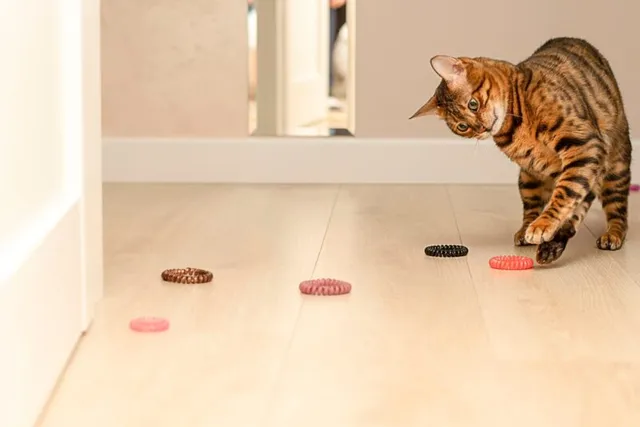
Cats will eat the weirdest things. Hair ties vanish from bathroom counters. Earbuds disappear from nightstands. Ribbon from last night's gift wrapping gets batted across the kitchen floor until it suddenly... doesn't exist anymore.
Most of those oddball snacks either pass through harmlessly or cause straightforward problems vets deal with all the time. But string, thread, ribbon, yarn, dental floss—those are different. They create a specific type of emergency that's both more common and more deadly than most cat owners realize.
The mechanics of what string does inside a cat's body are genuinely disturbing. And the cruelest part? Cats often seem fine at first. By the time obvious symptoms appear, the damage can already be severe enough to require emergency surgery, or worse.
Here's what every cat owner needs to know about why that innocent piece of ribbon is actually one of the most dangerous things your cat can swallow.

Why String Becomes a Death Trap Inside Your Cat

Unlike a toy or small object that might pass through or cause a simple blockage, string creates what veterinarians call a linear foreign body. The mechanics are genuinely disturbing.
Picture your cat's intestines pulsing to move food through the digestive system, like an earthworm crawling forward. Now imagine a piece of string in there. One end gets stuck (maybe wrapped around the base of the tongue or caught in the stomach), while the other end gets pulled along by those natural gut movements.
Here's where it gets dangerous. The intestines keep trying to push that stuck string along, and those pulsing movements cause the gut to bunch up around the string like a closed accordion. This bunching becomes so severe that it cuts off the blood supply to the intestinal tissue. The gut starts dying. Dead tissue becomes leaky to bacteria, then ruptures completely, spilling intestinal contents into the abdomen and causing peritonitis, a life-threatening infection.
Your cat can die from eating a piece of string, and it can happen fast.
The Tongue Trap You've Never Heard About
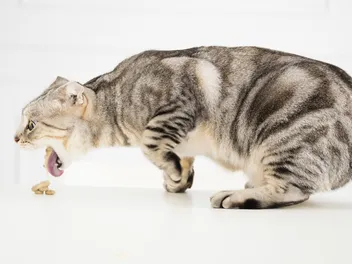
Those backward-facing barbs on your cat's tongue act like a one-way reel for string. Once string touches those barbs, your cat literally cannot spit it out. The tongue movements just pull more string in, wrapping it around the base of the tongue. Cats will paw desperately at their mouths and retch repeatedly, but they cannot dislodge it themselves.

What You'll See (and What You Won't)
Symptoms depend entirely on where the string is and what damage it's causing.
String stuck in the mouth: Choking behavior, pawing at the face, retching, visible thread hanging from the mouth
String in the stomach: Lethargy, refusing food, vomiting
String causing intestinal problems: Extreme lethargy, complete loss of appetite, vomiting, diarrhea, painful abdomen, rapid deterioration into dehydration and septic shock
Here's the cruel part: some cats seem fine initially. By the time obvious symptoms appear, the damage may already be severe.
The One Thing You Must Never Do
If you see string hanging out of your cat's mouth or rear end, do not pull it. Pulling can tighten any bunching in the intestines and cause catastrophic damage. Leave it alone and get to the vet immediately.
What Happens at the Emergency Vet
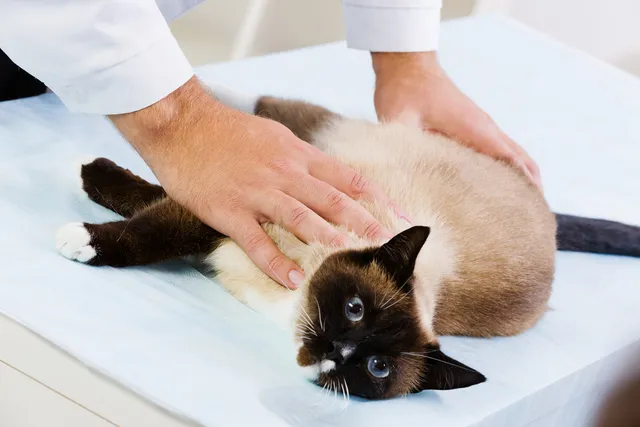
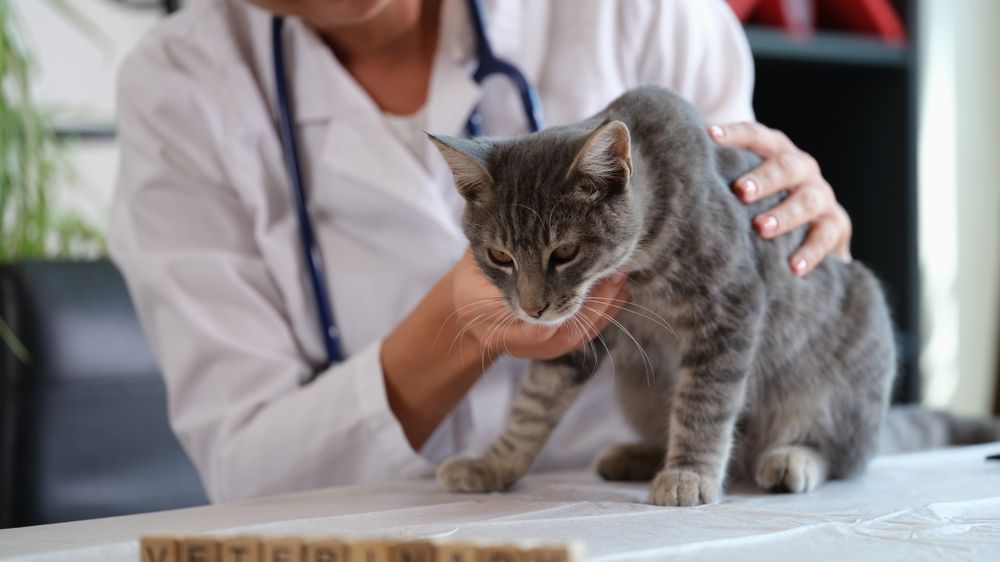
Most cats require sedation or anesthesia just for a thorough examination, since checking for string damage can be painful. If the string is only in the mouth, removal under anesthesia is straightforward and most cats recover quickly.
If the string has been swallowed, your vet needs X-rays or ultrasound to look for obstruction patterns. The string itself doesn't show up on imaging, but the bunched-up tissue and trapped gas around it does.

When Surgery Becomes Necessary
String beyond the mouth almost always requires surgical removal because it doesn't digest.
For string in the stomach, surgery involves a single incision with excellent outcomes and recovery in just a few days.
For string in the intestines, surgery becomes complex. Surgeons need multiple incisions along the length of the affected bowel because pulling the string out through one opening would cause further damage. Recovery typically takes 10 to 14 days with higher complication risks.
In worst-case scenarios where the intestine\ is already damaged or ruptured, sections of bowel may need to be removed entirely. These surgeries carry the highest complication rates, and a significant percentage of cats don't survive.
The Bottom Line on Survival
Most cats who eat string will make a full recovery, but only if their owners recognize the problem early and seek immediate veterinary care. The timeline matters enormously. A cat treated within hours has vastly better odds than a cat who goes untreated for a day or more.
For cats with severe linear foreign bodies and peritonitis, the statistics are grim despite aggressive treatment.

Keep Your Cat Safe
The simplest solution is prevention. Store thread, ribbon, yarn, tinsel, and dental floss where your cat cannot access them. Dispose of meat strings in sealed bins. Supervise play with any string-like toys and put them away when you're done. Kittens are the worst offenders, so be especially vigilant during that first year.
That piece of ribbon might seem harmless, but inside your cat's body, it can transform into a surgical emergency in a matter of hours. When it comes to string, the only safe amount for your cat to eat is none.
Feature Image Credit: megaflopp, Shutterstock
Did You Know?
- Our brand-new posts are rounded up and included in our weekly emails. Don't miss out on the latest - sign up for our newsletter below!
Expert cat care, straight to your inbox
News, insights, and useful advice, delivered to you.

No spam — unsubscribe anytime.
By signing up, you agree to our Terms & Conditions and Privacy & Cookies Policy.
How useful was this post?
Click a star to rate. You can leave written feedback afterwards. (We read all feedback.)
Dan has been working in the pet world for over 4 years covering cats, dogs, and all other pets in between. He loves helping pet parents keep their companions happy, healthy, and of course, totally spoiled! Originally from London, Dan now travels and works remotely, which unfortunately means no pets at home, but it gives him plenty of opportunities to fuss over other people's furry friends.