How Does Hairball Control Cat Food Work? Vet-Approved Facts & FAQ


In this article
Watching a cat groom itself is such an interesting and strangely soothing sight. They look so relaxed while they groom, not to mention the funny positions they manage to get themselves into. What isn’t very soothing or fun, though, is hearing the dreaded retching sounds coming from your cat at 3:00 am while they stand on your bed. Hairballs are an unpleasant reality of cat ownership, and a hairball from time to time is pretty expected for most cats. Some cats have significant issues with hairballs, though.
Vomiting hairballs frequently can be uncomfortable for your cat, and if hairballs become large, they can possibly become lodged in your cat’s throat if they try to vomit it up. Large hairballs can also create blockages in the stomach and intestines, so controlling hairballs is important.
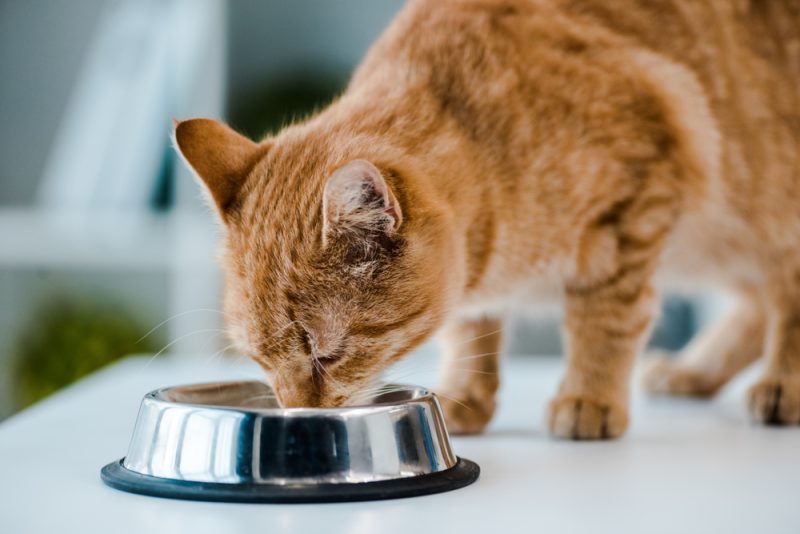
Hairball control cat food is an easy way to make the management of hairballs easier, keeping your cat safer and more comfortable. Hairball control cat food works primarily because of its high fiber, helping food and hair move through your cat's digestive tract.

How Does It Work?
There are multiple types of products that can help prevent and reduce the frequency of hairballs for cats, from supplements to prescriptions to foods, and each option functions a little bit differently. The primary function of hairball control food is that these foods are high in fiber. Some of these foods are high in insoluble fiber, while others contain soluble fiber, but most of them contain both soluble and insoluble fiber.
Soluble fiber helps prevent hairballs by adding bulk to the digestive tract contents, helping food and hair move through more efficiently. It also supports digestive health because the large intestine breaks down soluble fibers into short-chain fatty acids, which provide energy for the cells that keep the large intestine functioning properly. Common sources of soluble fiber include fruits, legumes, oats, beet pulp, barley, psyllium, pectin, inulin, and plant gums.
Insoluble fiber functions by adding bulk to everything in the digestive tract and with a “sweeping” function, but it doesn’t have the same function of supporting the health of the large intestine in the same way that soluble fiber does. Common sources of insoluble fiber are lignin, cellulose, and hemicellulose.
All hairball control cat foods are high in fiber, but not all high-fiber cat foods are marketed as hairball-control foods. Multiple medical conditions may require a high-fiber diet, and the diets required for these conditions may help reduce hairballs. However, hairball control cat food shouldn’t be used in place of a prescribed medical diet to help manage a condition.

What Are the Different Types of Hairball Control Cat Food?
Hairball control cat foods come in just about every price range you could hope for. If you are on a tight budget, many grocery store cat food brands have hairball control foods available. If you have a larger pet food budget, you will still be able to find hairball control foods in higher-end brands also.
Keep in mind that cat foods are generally relatively low in carbohydrates, including fiber. This is because cats are obligate carnivores that require very few carbohydrates to survive and thrive. What this means is that the average cat food isn’t going to be high enough in fiber to help reduce hairballs. There are supplements, medications, and treats that can help reduce hairballs, though, so a hairball control food isn’t an absolute necessity for many cats that struggle with hairballs.
Why Is It Used?
Cats that have hairball problems can often benefit from the use of a hairball control food. If your cat is experiencing hairballs, though, it’s best to talk to a vet about your concerns to determine if a hairball control food is the best course of action for your cat.
Hairball formation is usually down to two groups of causes: increased ingestion of hair and altered motility of the upper digestive tract. A veterinarian may need to investigate further to help determine a diagnosis, such as inflammatory bowel disease or skin disease causing overgrooming.
These foods aren’t suitable for all cats, depending on their age, weight, health status, and medical history. The addition of a hairball control food can significantly reduce the risks associated with frequent or large hairballs, making them a great tool in the toolbox of things used to manage hairballs.
Advantages of Hairball Control Cat Food
The main advantage of using a hairball control cat food is obvious. These foods are formulated specifically to reduce the number of hairballs a cat experiences. A hairball control food is unlikely to completely eliminate hairballs for cats that have notable hairball problems, but it will reduce the number of hairballs to a far more manageable level.
Disadvantages of Hairball Control Cat Food
Hairball control foods are much higher in fiber than other types of cat food. While most cat foods contain 1–2% fiber content, hairball control foods can be as high as 8%. This can lead to problems for some cats, including digestive upset. Just like in people, excessive amounts of fiber can create the opposite effect from the expected digestive health and support, instead leading to diarrhea or constipation.
If your cat is on a hairball control food, it’s extremely important to keep a close eye on their litter box habits. Ideally, you shouldn’t keep your cat on a hairball control food permanently unless recommended by a veterinarian.
All hairball diets should be formulated to be complete and balanced to ensure adequate nutrient intake despite the higher fiber content.

Frequently Asked Questions (FAQs)
Are these foods available in multiple textures?
Yes, there are wet and dry hairball control cat foods. Wet foods may be of greater benefit for some cats than dry hairball control foods because the high moisture content improves hydration. The better hydrated a cat is, the less likely they are to experience hairball formation.
Most hairball control foods are dry foods, though. The reason for this is how difficult it is to provide adequate nutrition, moisture, and fiber content in wet food.
Are these foods appropriate for all cats?
No, they aren’t. Hairball control foods are contraindicated in cats with certain medical conditions and dietary needs. They are also not recommended for kittens, and they are often not recommended for senior kitties as well. This is why we recommend discussing the problem with a veterinarian.

Are these foods necessary for all cats?
Not always. There are multiple ways to manage hairballs in cats, and some cats may require multiple interventions. Not only can foods, treats, and supplements help, but so can brushing more frequently and preventing overgrooming.
Is a hairball control cat food a good first-line treatment for frequent hairballs?
The first thing you should do if your cat is experiencing frequent hairballs is to talk to a vet. There are multiple conditions that can lead to excessive hairballs, so it’s important that a vet rules out medical issues that may be leading to hairballs. Simply feeding your cat a hairball control food may temporarily mask a medical problem.
Conclusion
Hairball control foods are high-fiber cat foods that help improve overall digestion. These foods help hair that a cat has swallowed during grooming pass through their digestive tract efficiently instead of becoming lodged in the intestines or vomited up.
Some cats can experience dangerous hairballs, so managing frequent hairballs should be a high priority. It’s a good idea to have a vet rule out any medical conditions before switching your cat to one of these foods, though.
Featured Image Credit: RJ22, Shutterstock
Expert cat care, straight to your inbox
News, insights, and useful advice, delivered to you.

No spam — unsubscribe anytime.
By signing up, you agree to our Terms & Conditions and Privacy & Cookies Policy.
How useful was this post?
Click a star to rate. You can leave written feedback afterwards. (We read all feedback.)
Brooke Billingsley, a former veterinary assistant for nine years, became a nurse in 2013. She lives in Arkansas with her boyfriend of five years, surrounded by her beloved pets: three dogs, two cats, five fish, and two snails. Brooke has a soft spot for special needs animals, caring for a three-legged senior dog and a widely known cat with acromegaly and cerebellar hypoplasia. She has developed a keen interest in fish keeping and is always learning how to provide the best environment for her aquatic pets. In addition to her passion for animals, Brooke enjoys gardening and maintains a vegetable garden during the summer. She stays active with yoga and received her 200-hour yoga teacher certification in 2020. Brooke also hosts a podcast that delves into folklore and myth, dedicating her spare time to research and writing. She embraces the philosophy that every day is an opportunity for learning and growth, continually working to acquire new skills and knowledge.