Can Cats Eat Barley? Vet-Approved Facts & FAQ


Barley is not necessarily unhealthy for cats. It is mostly indigestible to felines, which makes it primarily act like fiber in their digestive tract. Therefore, most barley will move through their system without being digested or providing any nutrition. Although cats can eat barley, it shouldn't make up a large amount of their diet and they shouldn't eat large amounts at once as it can cause intestinal blockage. Most cats can handle a little bit of barley just fine without it causing issues.
However, it is large amounts that you have to worry about. If your cat eats too much barley, it could potentially get lodged in their digestive system. This is called an intestinal blockage and can be quite serious in many situations. Because your cat cannot digest it, too much of the barley can get lodged in their intestines and not move. Intestinal blockages require surgery to remove the blockage.

Should Cats Eat Barley?
Barley does provide a small number of nutrients for cats. Primarily, it provides fiber, which is vital for your cat’s digestive system. Fiber is necessary to keep your cat’s digestive system working correctly and moving efficiently. Most foods that cats eat do not provide much fiber, so high-fiber foods must be a part of their regular diet.
Furthermore, barley also provides a range of nutrients for your cat to benefit from. However, it is not as nutrient-dense as most other ingredients out there. We generally recommend that your feline eat only a small amount of barley.
Sometimes, you may find barley in cat food. However, this barley has been processed to be safe for cats and is only included in small amounts. It is a vital form of fiber for cats and provides some other sorts of nutrients as well. However, the barley found in cat food is very different from giving your cat raw barley.
As a digestive aid, a small amount of barley can help prevent hairballs and help keep your cat regular. Sometimes, cats may regurgitate barley grass, but this isn’t necessarily anything to worry about.
It can be useful to your cat’s digestive system, but only in smaller amounts. The amount found in some cat foods is generally appropriate, as barley is commonly used as a source of fiber in these cases. You may find more barley in weight control cat foods since it can also help your cat remain full for an extended period.
You can also feed your feline plain barley as a supplemental treat. However, you will need to cook and mash it first. Cooking barley makes it easier to digest, so we do not recommend feeding raw barley when possible. In some cases, this may cause blockages and stomach upset.

What Other Grains Can Cats Eat?
In small amounts, cats can eat most types of grain. For instance, rice is okay in small amounts, as are oats and whole wheat. Generally, you only want to feed your cat whole grains, as these are nutritionally complete. White grains have been processed to remove the most nutritional part of the grain, which is not necessarily what we want for our feline.
Furthermore, grains provide important fiber, though this is highest when the grains are whole.
Generally, we recommend feeding grains as a part of your cat’s usual complete cat food. If your cat food has grains in it, then they are likely there for a reason. However, you don’t necessarily need to go out of your way to feed your cat whole grains in other ways.
Typically, it is only a small amount of grain that is useful.
Can I Use Barley for Cat Grass?
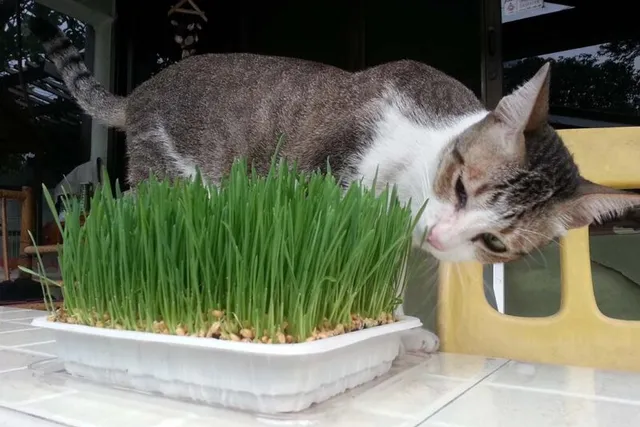
You can use barley for cat grass. However, it won’t necessarily be as easy for your cats to digest as “regular” cat grass, which is usually oat or wheat. With that said, barley is becoming a more popular choice. If you have some barley seeds lying around, you can use them to grow your cat grass.
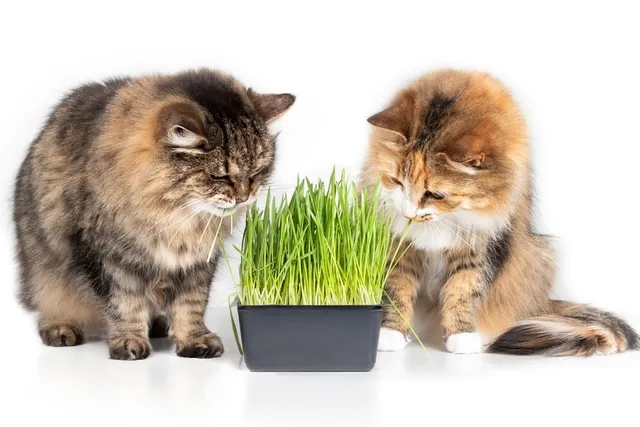
You can keep fresh barley grass in a pot for your feline to snack on indoors. It usually needs to be placed near a window, since it prefers full sun. It will quickly grow to about 4 feet high, giving your cat plenty to nibble on.
Sometimes, commercial cat grass is barley. You can usually check the ingredient list for specifics if there is one. Other times, you can find the exact type of cat grass printed in small letters somewhere on the packaging. If there are no specifics mentioned, you probably want to find a different brand of cat grass.
However, we do recommend cat grass over barley, since it is specifically grown for cats to eat. Barley? Not so much.

Conclusion
Cats can eat barley, and it is a common ingredient in cat food. Barley provides much-needed fiber that cats need to stay regular and keep their digestive system healthy. It also includes a range of other vitamins and minerals. However, it is not completely digestible for cats and does not meet all of their dietary needs. Therefore, it is most helpful when included in a well-balanced diet, like commercial cat food.
You can also utilize barley as cat grass, though this is less common. In small amounts, barley is typically healthy for cats. However, you do have to watch for signs of an intestinal obstruction, which may occur if your cat consumes too much barley. Because it is not very digestible, barley can become stuck in the digestive tract if your cat eats too much of it.
See Also:
Sources
https://www.capegazette.com/article/barley-grass-can-be-nutritious-treat-your-cat/40104
https://mycatgrass.co.uk/grow-your-own-cat-grass-instructions-barley/
http://www.petmd.com/cat/conditions/digestive/c_ct_gastrointestinal_obstruction
Featured Image Credit: uirams, Pixabay
Expert cat care, straight to your inbox
News, insights, and useful advice, delivered to you.

No spam — unsubscribe anytime.
By signing up, you agree to our Terms & Conditions and Privacy & Cookies Policy.
How useful was this post?
Click a star to rate. You can leave written feedback afterwards. (We read all feedback.)
Kristin is passionate about helping pet parents create a fulfilling life with their pets by informing them on the latest scientific research and helping them choose the best products for their pets. She currently resides in Tennessee with four dogs, three cats, two fish, and a lizard, though she has dreams of owning chickens one-day!