Manx Cat vs American Bobtail Cat: Key Differences (With Pictures)


In this article
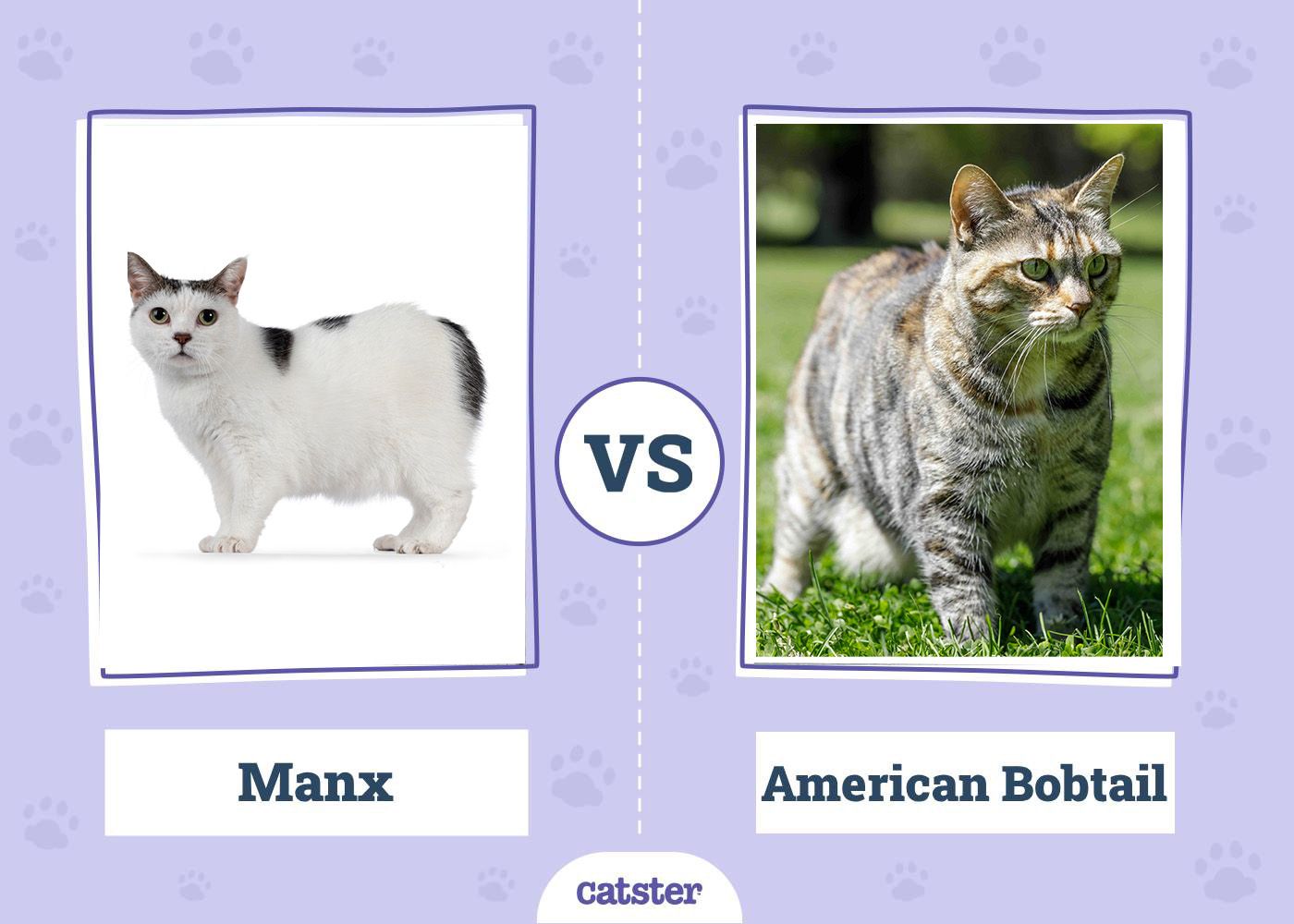
The Manx Cat and the American Bobtail Cat share one physical characteristic: they both have short, cropped tails. However, while the Bobtail cat has the eponymous bobbed tail, the Manx is more likely to have no tail at all. Both breeds are considered intelligent and friendly, making them a good choice for family pets.
However, they have very different origins and somewhat different physical characteristics, and while both breeds require regular grooming, one is higher maintenance than the other.
Read on to learn of the differences between these two short-tailed breeds, as well as some traits that they both share, to determine which is the most suitable breed to welcome to your family.

Visual Differences

At a Glance

Manx Cat Overview
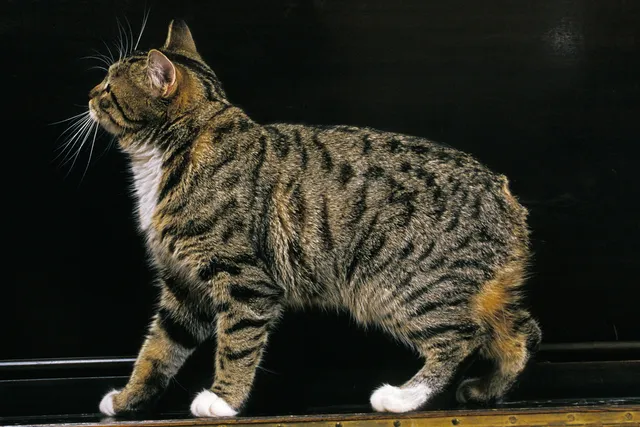
The Manx is considered one of the world’s oldest breeds and hails from the Isle of Man, a small island located between Great Britain and Ireland. The island is relatively small, and the confined breeding area meant that the genetic mutation associated with taillessness had spread throughout the population.
This same genetic mutation can be associated with health problems, and Manx cats may require closer health monitoring to ensure a long and healthy life. Manx cats can be tailless, have a small stump of a tail, or have a full tail.
Appearance
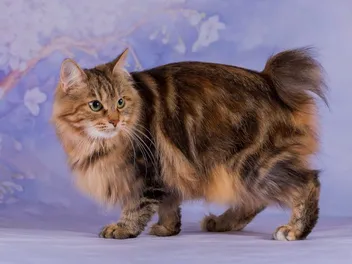
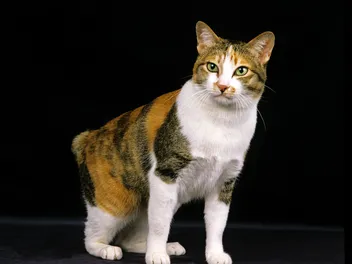
The most obvious physical characteristic of the Manx cat is their bobbed tail. A genetic mutation causes a shortened or absent tail due to abnormal development of the caudal spine, which can cause a lack of tail, but many Manx cats do have a tail stump, and some are born with full tails. Manx cats typically have longer hind legs than their front legs, giving them a rounded, arched appearance and a distinctive gait. They are compact, heavy-boned, and muscular, often feeling heavier than they appear.
Personality
The Manx is considered a friendly cat, but they can take time to warm up to strangers. Once they bond with their family, the Manx can be difficult to shake. The friendly breed is also known to be a communicative cat and will hold conversations with their owners.
They are sometimes described as being doglike because they are not only a loyal friend to humans but may also be taught some of the same behaviors as dogs. They're good with children, they often do well with other cats, and can bond closely with family dogs.
Health & Care
The Manx is physically strong and a hardy cat that is generally healthy as a breed. However, the same mutation that causes the lack of a tail can lead to spinal problems, commonly referred to as Manx syndrome. Some Manx cats suffer from spina bifida, while the shortened spine can also lead to bowel problems and a lack of bladder control.
In rare cases, a deformed spine can lead to shortened or weak limbs, especially at the rear. The Manx has a double coat and comes in both longhair and shorthair varieties. In both cases, owners must brush them regularly, usually twice a week, to prevent matting and keep their coats healthy.
Training
The doglike Manx is intelligent and likes to please their owner, and they're more receptive to training than many other cat breeds. As well as making litter training and house training easy, the trainability of the Manx cat is such that they can be taught name recall and basic tricks like fetch, but this requires patience and plenty of tasty treats.
Suitable for:
The Manx cat’s combination of physical and personality traits makes them an excellent choice as a family pet, including for families with children and other cats. They need a moderate amount of daily attention and regular grooming, and owners must be prepared to spend time with their cats daily to get the most from this ancient breed.
American Bobtail Overview
While the Manx is considered an ancient breed and one that developed naturally over time, the American Bobtail is a relative newcomer to the feline world. Although the Bobtail did develop naturally at first, intentional breeding led to the breed that we have today.
This intentional breeding is generally believed to have begun in the 1960s in the USA to develop a feline resembling a wild Bobcat in appearance but with a more amiable and affectionate nature.
Appearance
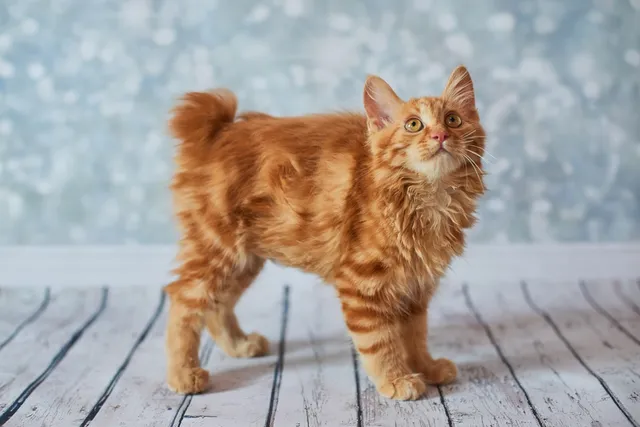
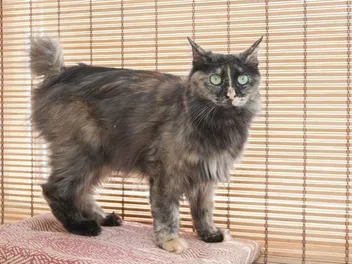
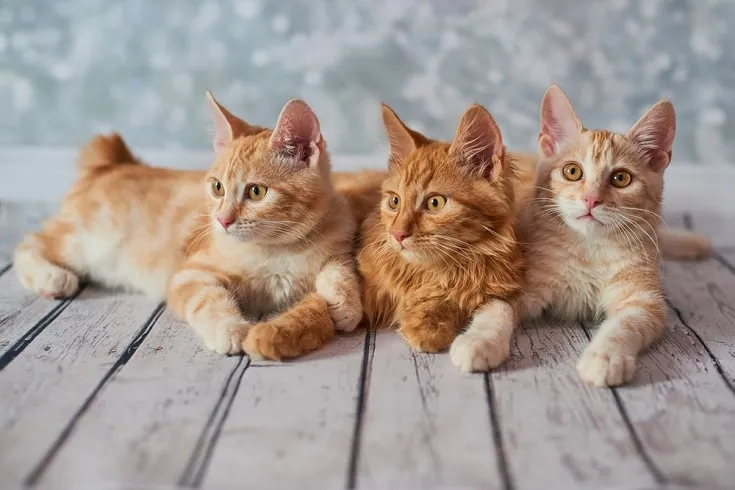
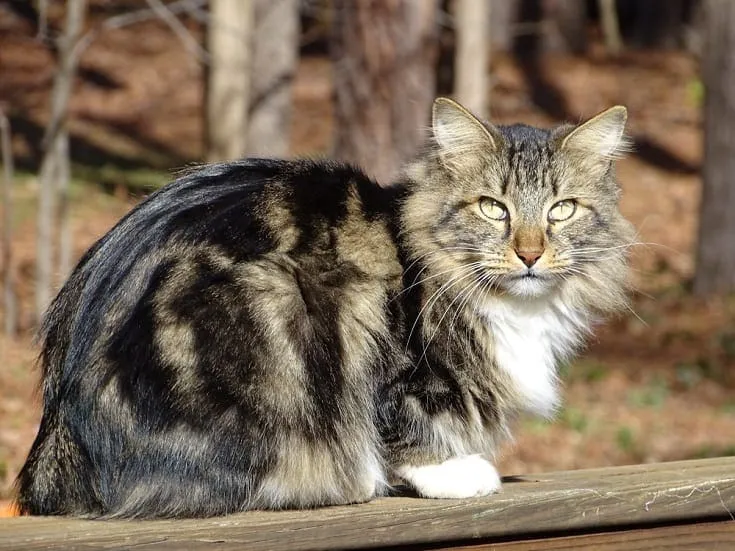
Although Bobtails can have tails of somewhat different lengths, they will not usually be longer than about 4 inches or roughly one-third of the length of a standard cat tail. The tail can be smooth or ridged, thin or thick, but it will be short. The tail is flexible and often used for communication, and the breed has a broad, solid build with strong bone structure.
The Bobtail has an athletic and rugged build. The breed retains some of its wild appearance and is available in shorthaired and longhaired variants. Regular grooming is recommended, since Bobtails can be moderate to heavy shedders.
Personality
Intentional breeding programs have given rise to a domesticated cat that is generally docile as well as sweet, loving, and family-orientated. They make good family companions and are a popular choice for families with children, and the Bobtail’s occasional participation in therapy programs reflects their calm, people-oriented temperament.
Health & Care
The docile breed does not require a lot of exercise but will benefit from having regular daily playtime with the family, which will also keep the cat in good physical condition. However, they often enjoy regular attention and affection from their family. They enjoy spending time on your lap and generally in your company.
As a moderate to heavy shedder, the Bobtail benefits from regular grooming and is not considered a suitable breed for allergy sufferers. The Bobtail does not share the same genetic spinal health risks as the Manx. They generally have normal spinal development, and breed-related spinal or neurologic disorders are not commonly reported.
Training
Like the Manx, the Bobtail is a loving cat that likes to please their owners and can be trained. Not only does this make litter training and scratching post training easy, but it also means that your cat can be taught to play fetch and other simple games using positive reinforcement.
Suitable for:
The Bobtail also makes a good family pet. They not only tolerate human attention but also often crave affection. They get along with children and often integrate well with other cats and even dogs. Although grooming is relatively easy, the Bobtail's coat requires regular brushing and can shed moderately to heavily, so they are not considered suitable for those with cat allergies.
Ideal Family Cats
Both the Manx and the Bobtail are considered excellent family cats. They are loving and readily accept affection. They benefit from daily attention and play sessions with their owners and may not be suitable for families that are out all day and evening.
Their managable care requirements and loving nature make them suitable for first-time cat owners who want an easy and enjoyable introduction to feline ownership.

Health Problems
A genetic mutation affecting spinal development causes the tailless and stumped tail of the Manx cats. In some cats, this may not pose any further health problems, but spine deformities can lead to spina bifida. Your cat may experience uncontrollable bowel and bladder emptying, and their rear limbs may be shortened if the spine is especially malformed. The tails do not require any special attention or healthcare, however.
Other than that, American Bobtails and many Manx cats developed naturally and tend to be hardy and have generally good health. They live roughly the same length, about 12 to 15 years, and new owners can expect a lifetime of affection and love.
Trainability
The Manx and American Bobtail are both described as being doglike. They are affectionate and shadow their owners around the house. They are also two of the breeds that are considered relatively trainable.
Training cats requires patience, and there has to be something in it for the cat, whether it’s affection and admiration or, more likely, tasty treats. At the very least, their ease of training can make litter and scratching post training relatively trouble-free, but it is also possible to teach them simple tricks and games, especially with positive reinforcement.
Which Breed Is Right for You?
The Bobtail and the Manx share several characteristics other than the short-tails. They make good family pets that are loving and devoted. They can both be trained easily and require regular grooming to maintain their coats, whether you have a shorthaired or longhaired variation.
Unfortunately, Manx cats carry a genetic mutation associated with taillessness that can lead to spinal and neurologic problems; luckily, these conditions do not occur in all individuals. In contrast, the American Bobtail does not share the Manx tailless gene and typically has normal spinal development, making it a generally healthy and robust breed.
Featured Image Credit: Left - Ievgeniia Miroshnichenko, Shutterstock | Right - PradaBrown, Shutterstock
Expert cat care, straight to your inbox
News, insights, and useful advice, delivered to you.

No spam — unsubscribe anytime.
By signing up, you agree to our Terms & Conditions and Privacy & Cookies Policy.
How useful was this post?
Click a star to rate. You can leave written feedback afterwards. (We read all feedback.)
Christian started writing for a local newspaper as a teenager, and he's been involved in the publishing industry for most of his adult life. Combining his love of writing with a passion for animals, he is currently the Director of Editorial at Pangolia and the Editor-in-Chief at Catster.
Christian lives in the Philippines with his wife, son, and four rescue cats: Trixie, Chloe, Sparky, and Chopper.