10 Most Vocal Cat Breeds (With Info & Pictures)
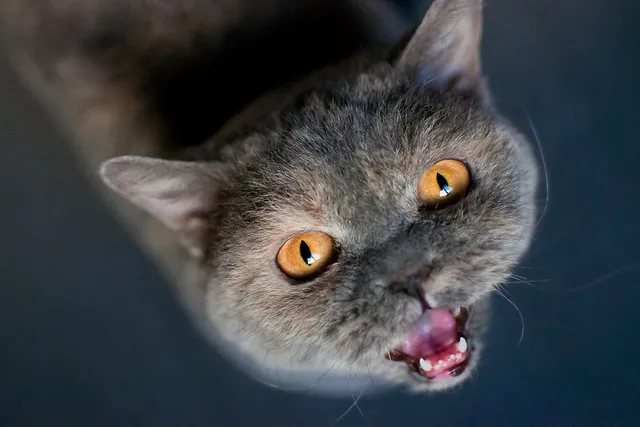
A dog’s bark may be louder than a cat’s meow, but our kitty friends can still muster up some serious sounds if they want to. Ask anyone who’s tried to lock their cat out of the bedroom against their will and tried to sleep through the angry yowling that follows. If you’re expecting a quieter pet, you should be aware that some breeds are known for being especially talkative. Here are the 10 most vocal cat breeds you’ll find.

The 10 Most Vocal Cat Breeds
1. Siamese

| Country of origin: | Thailand |
| Weight: | 6-14 pounds |
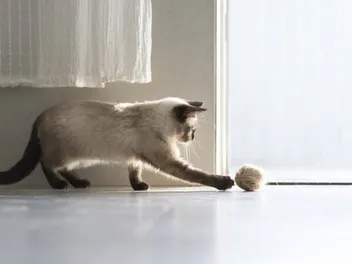
When it comes to having a lot to say, the Siamese cat ranks at the top of the chart. As one of the oldest purebred cats, the Siamese was introduced to the world in the late 1800s but existed long before that in their native Thailand. Well-known for being a vocal cat breed, the Siamese is also one of the most intelligent and people-oriented felines. They love their people, and they love to tell them so too! Curious, affectionate, and glamorous, the Siamese is one of the most popular cat breeds in the world.
2. Oriental

| Country of origin: | England |
| Weight: | 8-12 pounds |
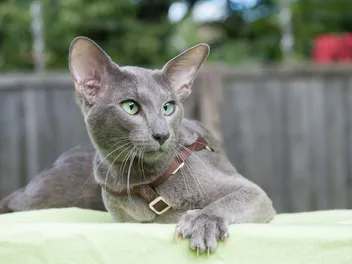
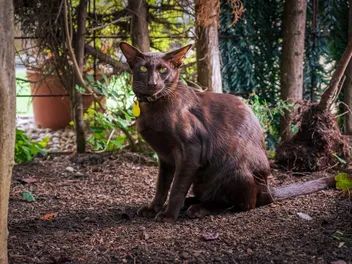
The Oriental was developed from the Siamese by British breeders after World War II. According to the breed standard, a Siamese must be one of four point colors. Therefore, kittens born with solid or other coat patterns became part of the Oriental breed foundation. Knowing that the Oriental is essentially a Siamese cat in different colors, it shouldn’t surprise you that this breed is also one of the most vocal.
Like the Siamese, the Oriental is affectionate, intelligent, and endlessly curious. They can be trained more easily than other breeds too. However, their vocal stylings are not for the faint of heart. They will insist on being heard, no matter how you feel about it.
3. Balinese

| Country of origin: | United States |
| Weight: | 5-8 pounds |
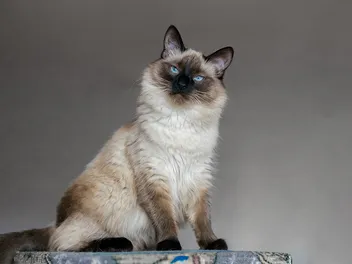
Like the Oriental, the Balinese were also developed from Siamese cats. It’s thought that the breed descends from long-haired Siamese kittens born in the 1950s due to a genetic mutation. Breeders in California and New York developed this long-haired version of the Siamese. In addition to the luxurious coat, the Balinese are more refined in their manners. Although still vocal, they tend to be less demanding and needy than the Siamese or Oriental. The Balinese is smart, playful, affectionate, and a low-shedding breed.
4. Bengal

| Country of origin: | United States |
| Weight: | 8-15 pounds |
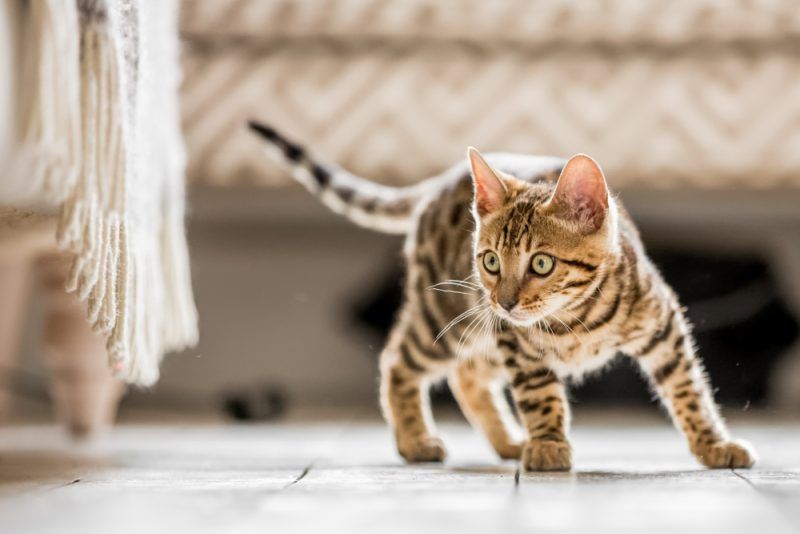
The gorgeous Bengal cat looks like a wild leopard, but they’re completely domesticated. As a fairly new breed, the Bengal was developed in the United States in the 1980s. Playful, powerful, and affectionate, the Bengal makes a wonderful companion. While they can be vocal cats, some have more to say than others. Bengals have soft, plush fur with a variety of spot patterns. Their eyes can be any color, from blue to gold to green. An interesting quirk of this breed is their unusual fondness for water.
5. American Bobtail

| Country of origin: | United States |
| Weight: | 7-16 pounds |
The American Bobtail was developed in America in the 1960s. The characteristic tail is the product of natural selection, observed in feral cats by breeders and further developed. When they vocalize, American Bobtails produce sounds beyond just the traditional meow. Listen for an excited American Bobtail to trill, click, and chirp instead. This breed will change your mind if you’re convinced all cats are selfish and uninterested in human interaction. The American Bobtail bonds closely with their family and loves to spend time with them. They’re playful and have strong hunting instincts, but they love to carry on a conversation as they stalk their toys.
6. Siberian

| Country of origin: | Russia |
| Weight: | 12-20 pounds |
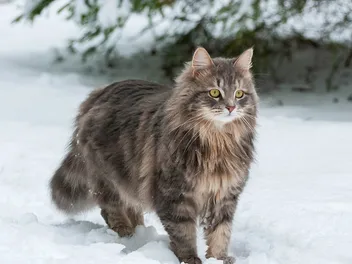
As the national cats of Russia, Siberians have existed in their homeland for hundreds of years. These enormous, triple-coated cats only recently made their way to the United States and gained formal recognition in 2006. They’re athletic, playful, fearless, and get along well with children and other pets. They love to jump and climb, which can be tough on your house due to their size! Siberian cats prefer to vocalize in purrs, chirps, and mews rather than louder tones.
7. Turkish Van

| Country of origin: | Turkey/Southwest Asia |
| Weight: | 7-12 pounds |
The Turkish Van is an uncommon breed with unique, piebald coloring. Their coats are primarily white with a solid color on the head and tail area. Known as the “Swimming Cat,” the Turkish Van’s coat is water resistant. This curious cat is in constant motion and has plenty to say about what they are doing and discovering. They crave attention but only on their own terms. They may not enjoy living with children who may not understand kitty boundaries.
8. Ocicat

| Country of origin: | United States |
| Weight: | 12-15 pounds |
They may look like a wild Ocelot, but the Ocicat is a fully domestic animal, developed from a single spotted kitten born to Siamese and Abyssinian parents. Officially recognized in 1987, this spotted breed is athletic and adaptable. They dislike being alone and love to “talk” to their owners. If you aren’t paying enough attention to an Ocicat, they’ll demand it, probably by loud vocalizing. Full of energy and intelligence, this breed can develop behavior issues without regular exercise and mental stimulation.
9. Peterbald

| Country of origin: | Russia |
| Weight: | 6-10 pounds |
The Peterbald is not a well-known breed, but they are unique in appearance and unforgettable in personality once you meet one. Kittens are born hairless or with short hair that falls out as they age. The Peterbald’s skin needs daily attention to keep it soft and clean. They are extremely social with both humans and other pets. They love to spend time with their family and “chat” about their day. The Peterbald is playful, athletic, and doesn’t like being alone.
10. Turkish Angora

| Country of origin: | Turkey |
| Weight: | 8-12 pounds |
The Turkish Angora is a rare, beautiful cat that loves to socialize and vocalize while they’re doing it. As a separate breed from the Turkish Van, the Angora was traditionally white but is now found in multiple colors. The Turkish Angora is a graceful but energetic cat. They enjoy climbing, jumping, and playing with toys. All registered Turkish Angoras must be able to trace their ancestry back to their country of origin. The breed is still maintained in the Turkish zoo where an American couple first talked the keepers into letting them bring cats back home for breeding.
Conclusion
These 10 breeds are some of the most vocal cats you can find, but every cat expresses themselves in their own way. Sometimes, a change in how your cat talks can indicate something is wrong. If your normally talkative kitty suddenly has less to say or a quiet one begins vocalizing frequently, they could be dealing with a medical or emotional issue. Cats are good at hiding when sick or in pain, so we have to look for less obvious clues, including changes in their vocal nature.
Sources
Featured Image Credit: Ian McGlasham, Shutterstock
Expert cat care, straight to your inbox
News, insights, and useful advice, delivered to you.

No spam — unsubscribe anytime.
By signing up, you agree to our Terms & Conditions and Privacy & Cookies Policy.
How useful was this post?
Click a star to rate. You can leave written feedback afterwards. (We read all feedback.)

Elizabeth Gray is a lifelong lover of all creatures great and small. She got her first cat at 5 years old and at 14, she started working for her local veterinarian. Elizabeth spent more than 20 years working as a veterinary nurse before stepping away to become a stay-at-home mom to her daughter. Now, she is excited to share her hard-earned knowledge (literally--she has scars) with our readers. Elizabeth lives in Iowa with her family, including her two fur kids, Linnard, a husky mix and Algernon, the worldʻs most patient cat. When not writing, she enjoys reading, watching all sports, and spending time outdoors with her family.