Mandalay Cat Breed: Info, Pictures, Care & More

In this article
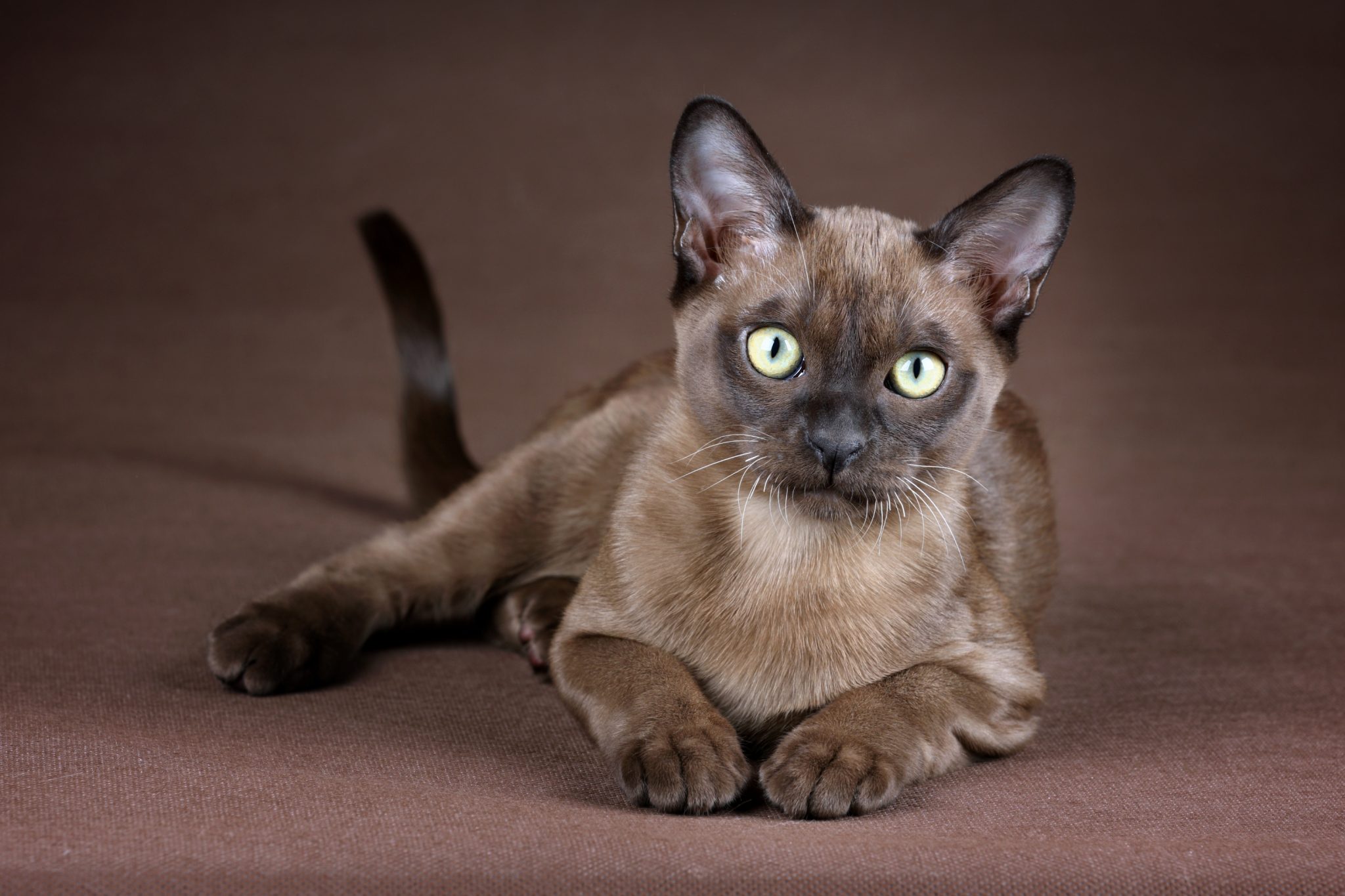
The term Mandalay refers to a city in Myanmar (formerly Burma) that was once the ancient royal capital. The Mandalay cat pays homage to its deep connection to the Burmese cat, to whom it is closely related. However, the Mandalay cat did not originate in Myanmar or Mandalay. Instead, it came out of Oceania. Today, the Mandalay cat is very rare and represents one of the most interesting officially recognized breeds in the world. You will be hard pressed to find a Mandalay cat in the Western Hemisphere, but if you do, you are lucky.
Breed Overview
Height:
Weight:
Lifespan:
Colors:
Suitable for:
Temperament:
The Mandalay cat is a mixture of a Burmese cat and a domestic shorthair. The domestic shorthair must be a solid color in order to create a true Mandalay cat. Mandalay cats have great personalities and an exotic pedigree that make them intriguing to people. Mandalay cats are also prime family cats and get along well with humans and animals. All of these reasons make Mandalay cats sought after by cat lovers. Mandalay cats are fairly new and very rare, which only adds to their overall mystique.
Mandalay Cat Characteristics

Mandalay Kittens

There are official Mandalay cat breeders that are able to provide you with a Mandalay kitten, but they largely reside in New Zealand. Mandalay cats are most commonly found in New Zealand, and they are quite rare outside of the remote island nation. Still, New Zealand Cat Fancy Inc. keeps a running record of all of the official Mandalay cat breeders in the country, and many of them have contact information. If you are curious, you can browse the list and reach out to a breeder if you choose. You can see that list here1. Outside of reaching out to an official breeder, you are very unlikely to run into a Mandalay kitten on your own.
Temperament & Intelligence of the Mandalay Cat 🧠
Mandalay cats are very social, energetic, and affectionate. These cats like to have plenty of room to climb and roam and areas where they can look outside and see what is going on. Mandalay cats are very confident and often like to be in the heart of all of the action. These cats can be needy or demanding and will develop attention seeking behaviors. They are also very vocal and are not shy about voicing their pleasure or displeasure. If you give them the attention they seek, they will reward you with purring and a healthy dose of affection. These cats are easy to manage and require little in the way of special considerations. They are usually in a positive mood and are perfect for people who prefer affectionate cats to aloof cats.

Are These Cats Good for Families? 👪
Yes. Mandalay cats are great for families. Their affectionate personality, confidence, and energy levels are all great for family life. These cats are rarely aggressive, rarely shy, and like to be near people when they are in the house. These cats have also been labeled as good with kids by New Zealand Cat Fancy Inc., which is another point in favor of being an excellent family cat. In fact, these cats might do better with families than in small households due to their need for affection and attention from humans.
Does This Breed Get Along With Other Pets? 🐶🐱
Yes. Mandalay cats are laid back and friendly. They get along great with other cats and should get along well with pets of other species and breeds. The only thing to consider is Mandalay cats can be competitive, meaning they will get jealous of other pets that spend time with you. They will also likely carve out a spot in the house that they consider to be their own. This might put them in conflict with other pets in certain situations and should be monitored, but overall, you should not have any issues.
Things to Know When Owning a Mandalay Cat:
Food & Diet Requirements 🐡
Mandalay cats do not have any special dietary requirements outside of the requirements common to domesticated cats. Mandalay cats are medium sized cats that will require one-half to two-thirds of a cup of food twice per day. These cats do best on a diet of well formulated dry food. It is recommended to tailor your cat’s diet to their lifestyle. For example, kittens should get kitten food. Seniors will benefit from senior food. If your cat has skin allergies, they might benefit from a food formula that targets food allergies. Outside of those basic considerations make sure that your cat has access to food and water every day and make sure that your cat is not overeating and becoming obese.

Exercise 🐈
Mandalay cats need a lot of room to roam around. If you do not have a lot of space, you should invest in some verticality such as cat trees and cat shelves to give your cats places where they can climb and jump. Mandalay cats do not need a ton of exercise outside of their normal routine, but they do need things to do inside that will stimulate their bodies and their minds. Mandalay cats love access to something like a porch, sunroom, or garage where they can explore, stretch their legs, and look around.
Training 🧶
Mandalay cats are not very trainable. While they are intelligent and affectionate, they don’t listen very well. Mandalay cats can learn basic things like how to use a litter box, know which areas they should spend the most time in, and they will learn your habits, patterns, and routines. However, they will not be learning complex tasks or commands. They won’t come when called and they might not come back if you let them outside.
Grooming ✂️
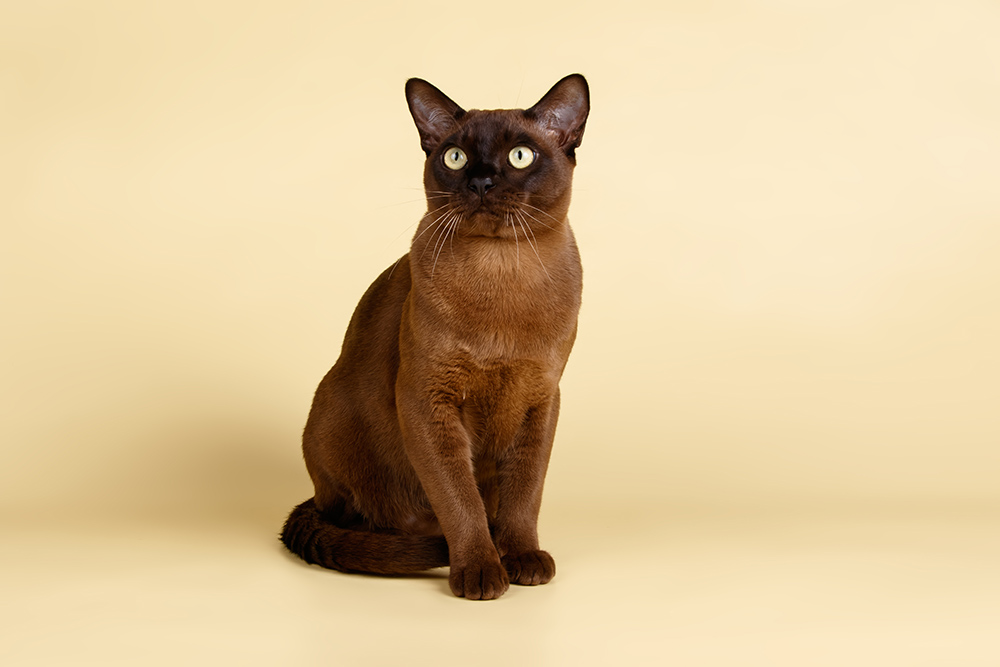
Mandalay cats do not need any special grooming considerations. The Mandalay cat has a short, silky coat that has a satin-like texture. Mandalay cats will groom themselves and keep themselves clean. You do not need to bathe them or really brush them unless something is wrong with your cat’s coat or skin. Your Mandalay cat might shed moderate amounts during autumn and spring as the coat switches from summer to winter and back again.

Health and Conditions 🏥
Overall, Mandalay cats are a fairly healthy breed. Since they are a mixed breed between two healthy breeds, they tend to avoid most genetic pitfalls that are common for other purebred cats. However, some genetic lines and colonies can be affected by congenital and genetic issues that can cause health issues. One major problem is diabetes, which can affect Mandalay cats from birth due to an insulin problem. Another issue that can appear in breeding lines is hypokalemic polymyopathy, which is persistent muscle weakness due to a potassium deficiency. A minor issue to look out for is pica, a condition where cats eat odd things, like wool. Another issue is flat chested kitten syndrome, which is a deformity of the rib cage and is most dangerous when cats are very young, but they quickly outgrow the issue as they gain weight. These issues are typically rare and only crop up in bad breeding lines.
Male vs Female
Male Mandalay cats are slightly larger than females. Male Mandalay cats will stand one to two inches taller and weigh a couple of pounds more than females. Males can also have more stout bodies and robust forms than females, who tend to be slenderer. In terms of personality and overall appearance, both the male and female Mandalay cats are very similar and can often be indistinguishable.
3 Little-Known Facts About the Mandalay Cat
1. Mandalay Cats Are Closely Related to the Burmese Cat
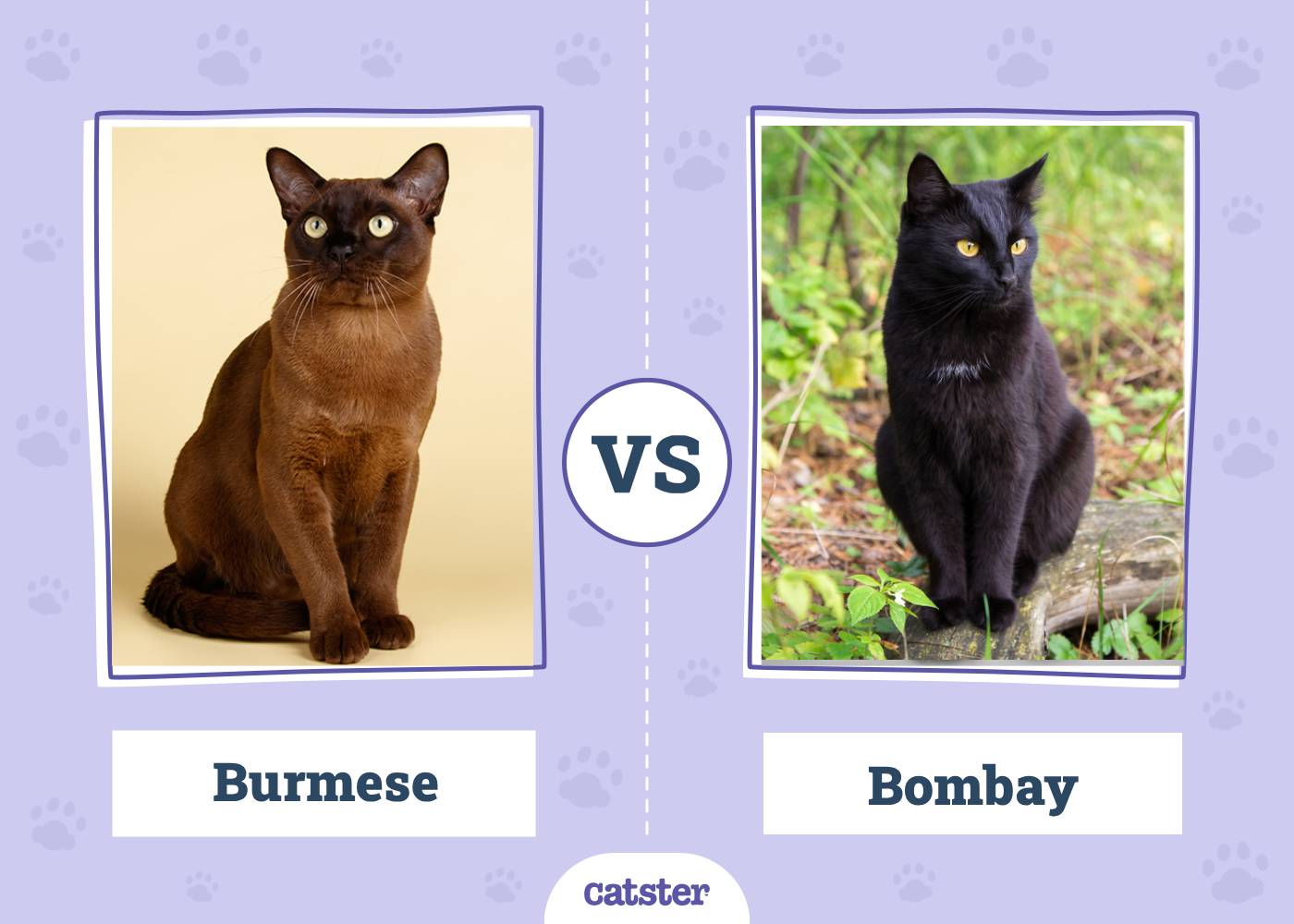
Mandalay cats are offshoots of Burmese cats. Burmese cats are a domestic breed that originated in Burma and was bred and developed in the United States starting in the 1930s. The Mandalay cat was created by breeding Burmese cats into solid-colored domestic shorthaired cats. The result is an entirely new breed of cat that is closely related to the Burmese. In fact, many databases have major overlaps between the Burmese and the Mandalay cat when it comes to size, stature, and personality.

2. Mandalay Cats Originated in New Zealand
The Mandalay cat is a New Zealand breed. It originated in the 1980s and is now recognized by New Zealand Cat Fancy Inc. as its own breed, separate from the Burmese cat. Mandalay cats are unique because they originate from New Zealand (while many cats originate from Europe or North America), and they are relatively new. Due to their Kiwi origins, most Mandalay cats remain in New Zealand, and there are not many outside of that part of the world.
3. Mandalay Cats Are Always Solid in Color
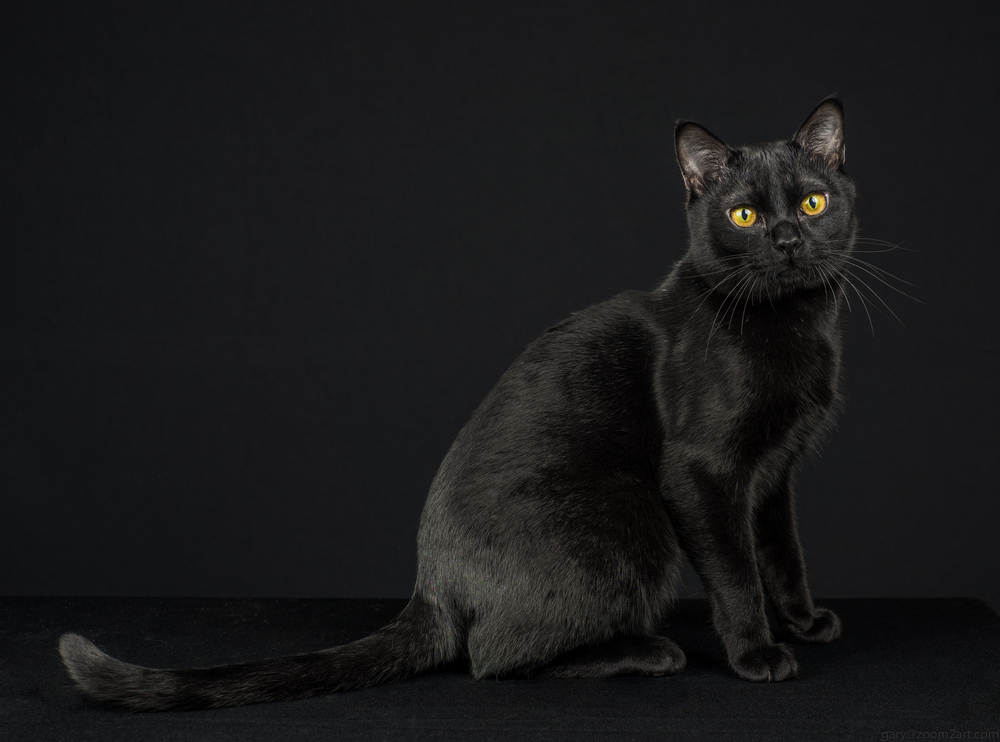
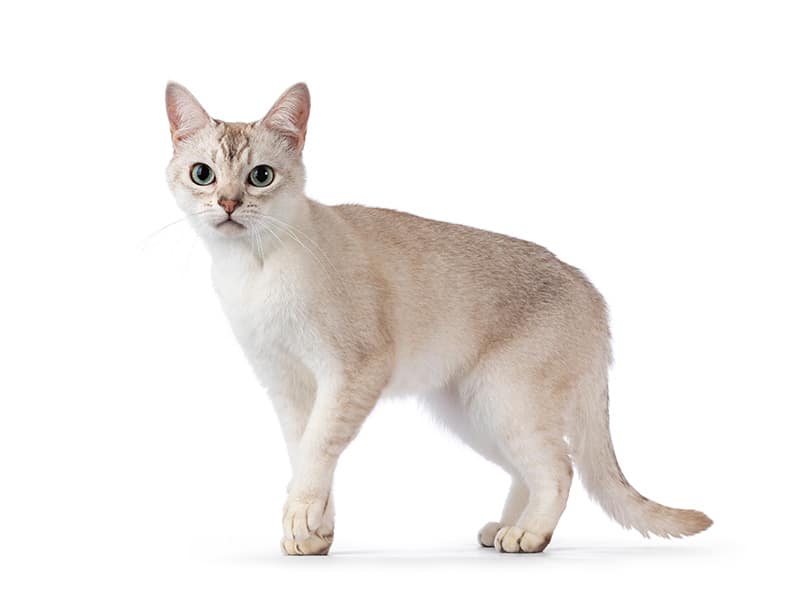
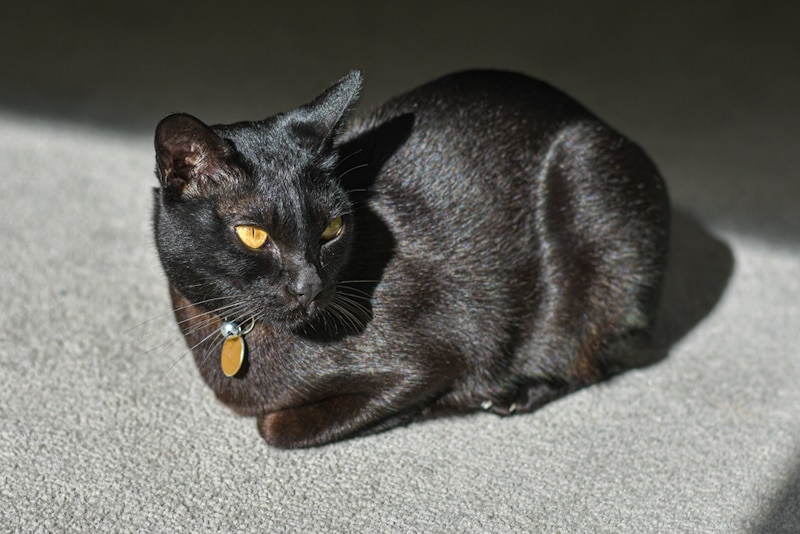
Unlike other cats, which can have a variety of colors and patterns due to their genetic makeup, Mandalay cats can only be one solid color. This makes it easy to distinguish them from other similar breeds, like the Burmese cat. If someone is advertising that they have a Mandalay cat and it has multiple colors or a coat pattern, then it is not a true Mandalay. Mandalays are all just one solid color, and usually, they are black.
Final Thoughts
The Mandalay cat is an exotic and rare breed that hails from New Zealand. It is a great family cat that will be perfect for anyone who wants an affectionate indoor cat that is playful, loving, and bright. Mandalay cats are generally healthy and have solid-colored coats. However, they can be needy and competitive, which can be off-putting for some people. These cats will make great family pets. They might not appeal to people who like independent cats or aloof cats. These cats need a lot of time and personal attention to keep them happy.
Featured Image Credit: Sebastian Schuster, Shutterstock

Expert cat care, straight to your inbox
Vet-reviewed advice, behavior tips, and the best of Catster. Free, and you can unsubscribe anytime.
By signing up, you agree to our Terms & Conditions and Privacy & Cookies Policy.
Grant is a freelance writer with years of experience writing about a diverse range of topics. He currently lives in his home state of Florida with his wife. His days are spent writing, raising a rambunctious son, and caring for eight animals (two horses, two donkeys, two goats, and two dogs). In his free time he enjoys slowly carving out a quaint hobby farm from the Southern scrub.
Join the conversation
Ask a question, share your story, or send private feedback.