FVRCP Vaccine for Cats – What It Is & If Cats Need It (Vet Answer)


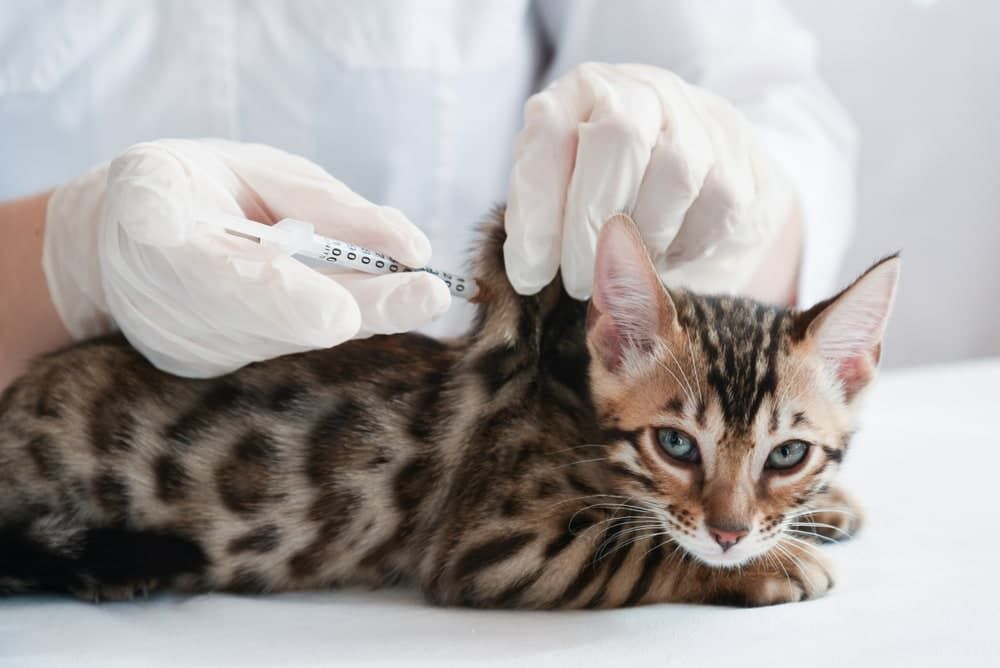
As cat parents, we love our kitties dearly, and, of course, we want them to stay healthy. Vaccinations are a common way to control disease in humans and animals, but information about them can be confusing. Is the FVRCP vaccine necessary for your cat? Can cat vaccines be dangerous? What’s best for your feline friend? Let’s figure out the facts.

What Is the FVRCP Vaccine?
FVRCP stands for Feline Viral Rhinotracheitis, Calicivirus, and Panleukopenia. The name of the vaccine indicates the diseases it is designed to prevent.
When an immune system meets a disease, it makes memory defense cells that can be used if it meets the same disease again, meaning the disease can be fought more quickly and efficiently next time. The FVRCP vaccine triggers this memory, without making your cat feel unwell in the way she would if she caught the disease for real.

What Does the FVRCP Vaccine Protect Against?
Rhinotracheitis, Calicivirus, and Panleukopenia are the three diseases that are covered by the FVRCP vaccine in cats. They are all caused by viruses. Viruses are difficult to treat, with no specific pill to cure them. That’s why vaccines are used – to try and prevent the disease, rather than needing to treat it.
Rhinotracheitis, calicivirus, and panleukopenia are serious diseases and can be life-threatening. Even in less serious cases, signs include a blocked nose, sticky eyes, fever, vomiting, and diarrhea. Cats with blocked noses often stop eating – they can become dangerously weak and need hospital treatment. More serious signs include painful sores in the mouth or life-threatening changes to the blood. Cats with these signs might require longer hospital stays and may not survive.
Rhinotracheitis is caused by a cat herpes virus. Once a cat has caught this virus, it will stay in their body and can flare up frequently, causing regular bouts of ill health. Panleukopenia is a very serious disease – the only reason it isn’t one of the main causes of death in cats is that most cats are now vaccinated with FVRCP.

What Are the Advantages of Vaccinating My Cat?
Vaccines prevent illness. There is no specific treatment for viral diseases, so preventing them with vaccination is the best option.
To complete the initial kitten vaccination schedule, cats need to attend to their first booster at 6 months of age. After that, if you choose, the injectable vaccine boosters are only applied every 3 years. However, the intranasal vaccine needs to be reapplied annually. Even if boosters are less frequent, attending at least a yearly appointment to the vet is highly recommended, as it’s an important way of keeping your cat healthy. Your veterinarian will perform a full physical examination as part of the appointment. This means your vet is checking for early signs of illness that may otherwise go unnoticed.
My Cat Is Old and Has Always Had Vaccines, Does She Still Need Them?
Yes. Viruses are riskier for cats that have weakened immune systems. The very old, the very young, and those with other health problems are in at-risk categories. After the first 6 months booster, the FVRCP injectable vaccine needs boosting every 3 years throughout your cat’s life – if you stop vaccinating when she is old, you may be leaving her vulnerable to disease when she needs protecting most of all.
My Cat Lives Indoors – Do I Need to Get Her Vaccinated With FVRCP?
Some viruses, including the virus that causes life-threatening panleukopenia in cats, can survive a long time in the outside world. Cats don’t have to come into direct contact with an infected cat to become infected themselves. We could pick up virus particles on our shoes, hands, or shopping bags, and then bring the virus into our homes. So yes, indoor cats should be vaccinated with the FVRCP vaccine.

Does Having An FVRCP Vaccine Hurt My Cat?
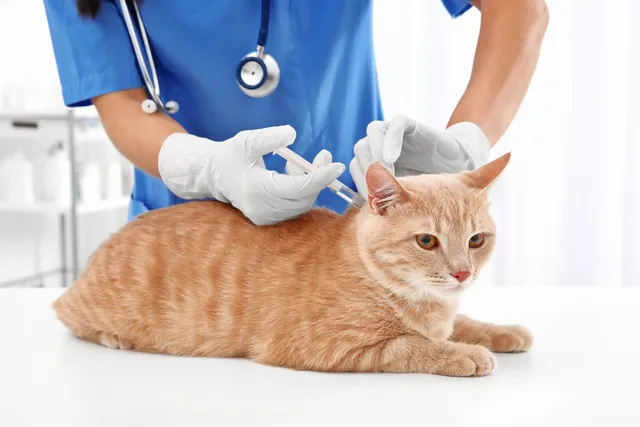
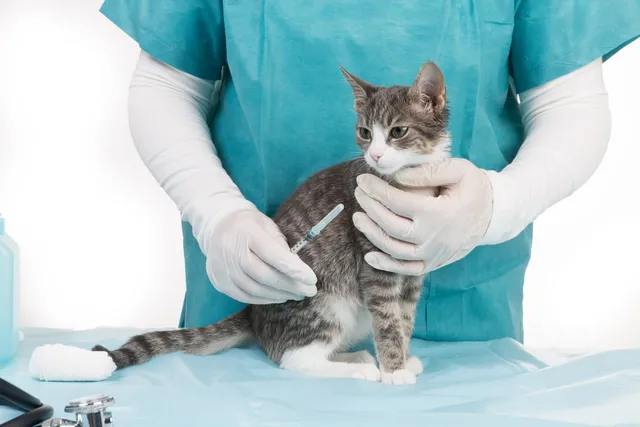
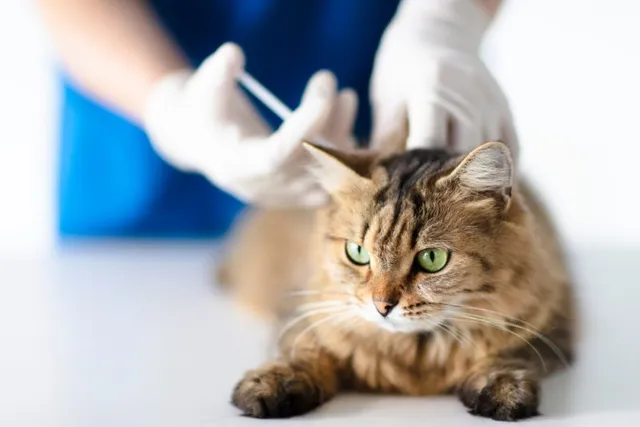
The vaccine is one injection of approximately half a milliliter of fluid. It’s a tiny amount – a teaspoon is close to 5 milliliters. A very fine needle passes through your cat’s skin and the vaccine is injected into the space underneath. Most cats don’t even notice the vaccine being given.
You can also find the vaccine in the intranasal form, which consists of drops that are applied directly to a cat’s nostrils. This vaccine helps to provide rapid immunity in the upper respiratory system, and it’s a favorite vaccine for kittens.
Why Do Some People Say Vaccines Are Dangerous?
The reason vaccines are used so often in people and animals is because they are considered safe. They are much more likely to be safe than getting a disease.
Side effects from the FVRCP vaccine are possible, but not common.
If they occur at all, they are usually mild. They may include:
Cats do not usually need treatment if they experience these side effects. If they occur, they will only last a few days.
In very rare cases, vaccines can trigger an allergic reaction. That said, anything can cause an allergic reaction, they are not unique to vaccines. Fear of an allergic reaction is not a good reason to stop vaccinating your cat – they are extremely rare.
If I Decide to Get My Cat Vaccinated, How Often Does She Need an FVRCP Vaccine?
Kittens, or cats being injected for the first time, need to have three initial vaccines, 3-4 weeks apart, then a booster at 6 months of age. Vaccinated adult cats will then only need an injectable booster vaccination every 3 years to stay protected. However, if the vaccine is intranasal, the booster is required every year.
There are several different forms of these vaccines and the schedule might change, this is why keeping your cat’s vaccination records in order and up to date is crucial. Your vet can indicate exactly when your cat will require a booster.
If cats go overdue for their booster (if it’s much more than a year since their last FVRCP vaccine), they will need to have two to start again.

Summary
The FVRCP vaccine is a core vaccine that every cat should have. It protects cats from three different viral diseases helping them to build immunity against them. The vaccine can be found in injected or intranasal presentations. Depending on the vaccine type, the booster schedule will be different. The most important takeaway message is to ensure you vaccinate your cat, follow your veterinarian's instructions, and complete the recommended schedule and booster frequency.
Featured Image Credit: Dina-da, Shutterstock
Expert cat care, straight to your inbox
News, insights, and useful advice, delivered to you.

No spam — unsubscribe anytime.
By signing up, you agree to our Terms & Conditions and Privacy & Cookies Policy.
How useful was this post?
Click a star to rate. You can leave written feedback afterwards. (We read all feedback.)
Dr. Joanna Woodnutt BVM BVS (Veterinarian)
Joanna is an experienced veterinarian working in the UK. She has written about pets and their health for many blogs, pet magazines and pet websites and loves to help readers understand their pets through her writing.
She has started her own freelance company so she can help more pet parents than just the one standing in front of her in a consultation room.
She enjoys teaching and educating clients, so a career in writing, public education and pet health is the perfect combination for her.