How Do Cats Hunt Birds? Everything You Need to Know!

In this article
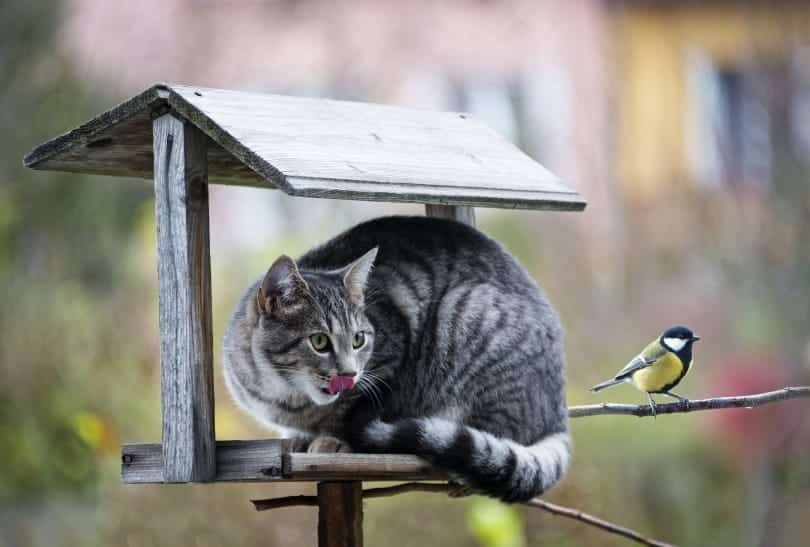
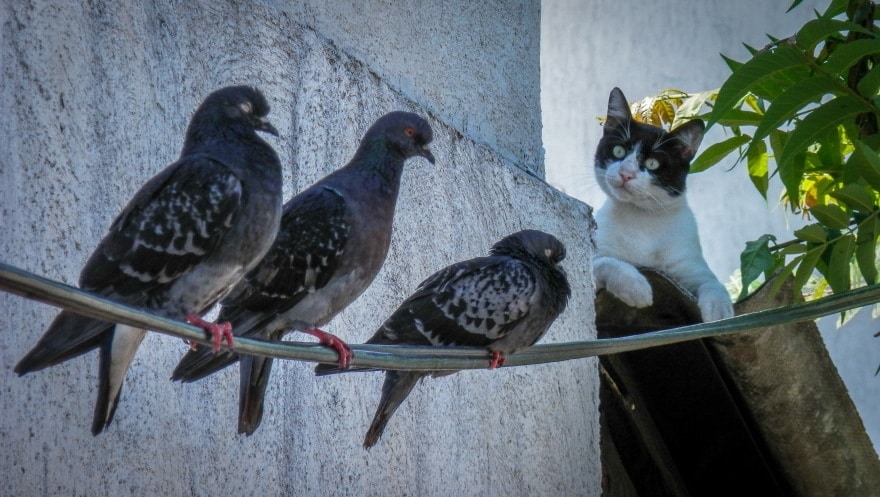
It’s an age-old relationship—the predator/prey dynamic between cats and birds. Birds are incredibly fluttery creatures that have scattered flight patterns to divert predators. But cats are built for low-to-the-ground hunting, ambushing potential prey.
So, cats can severely damage and impact the bird population, but how exactly can they catch them? We’re going to discuss how cats manage to subdue these winged beauties—and how you can protect the birds in your backyard.

A Cat’s Primal Instincts
Your cat is built for the hunt. Cats are crepuscular creatures, meaning they're most active at dawn and dusk. They can swiftly and quietly stalk prey and their muscle tone and bone structure help tremendously in doing so.
Humans don't have these same superpowers. Our sense of sight gets increasingly worse as low light settings start. That is why it's more difficult to drive at night. If you're from any rural part of the country, that may be why folks shout out to be careful and watch for deer on your way home.
As these creatures emerge, our vision is not as good as theirs in those specific light settings. For our cats, on the other hand, their vision is impeccably strong in dimly lit hours.

How Cats Catch Birds
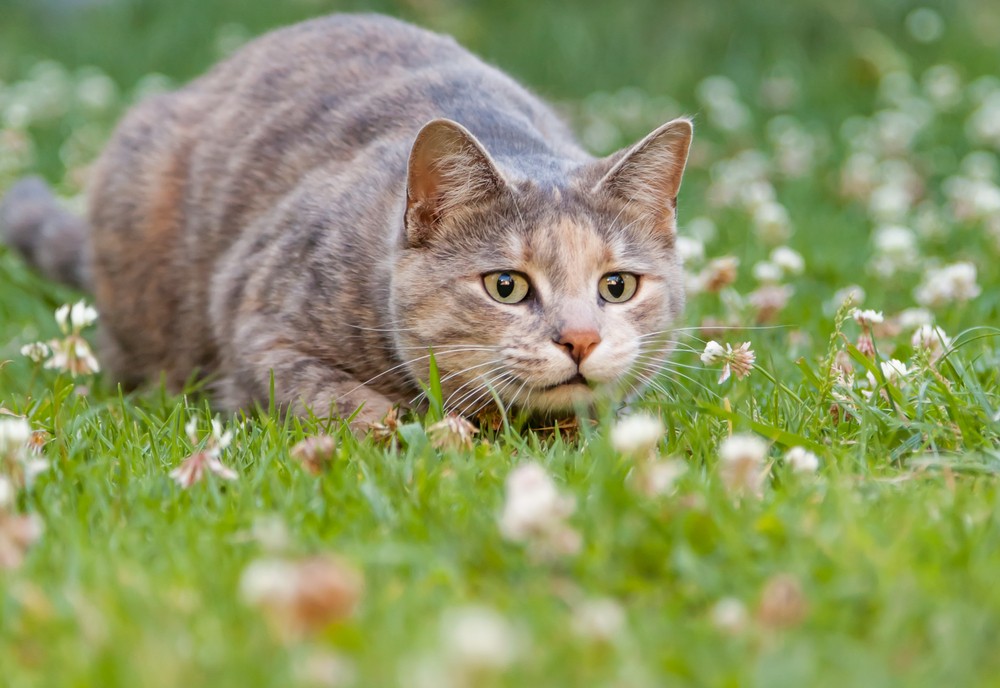
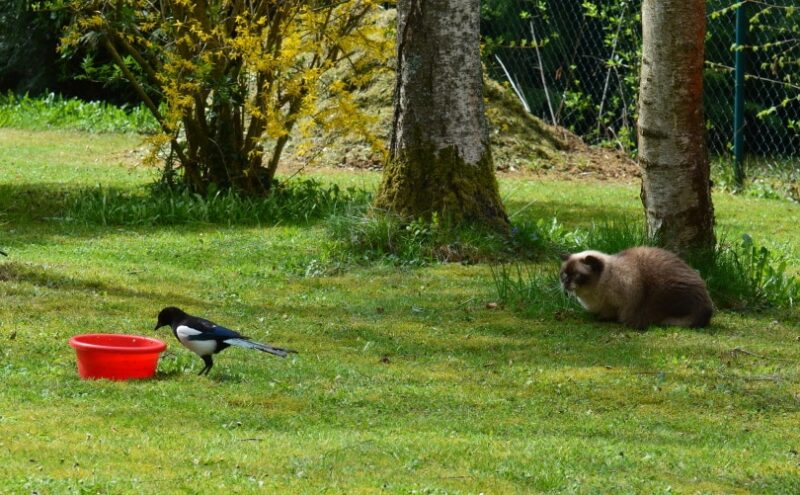
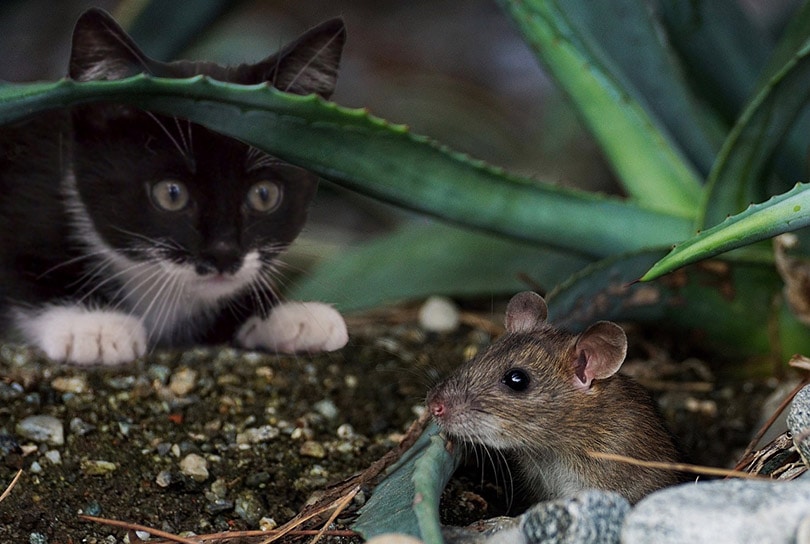
Cats often hunt birds by stalking them on the ground. A cat might crouch under a shrub or near a feeder and wait for a bird to land within reach. If the bird is farther away, the cat may creep closer in short bursts, freezing whenever the bird looks up.
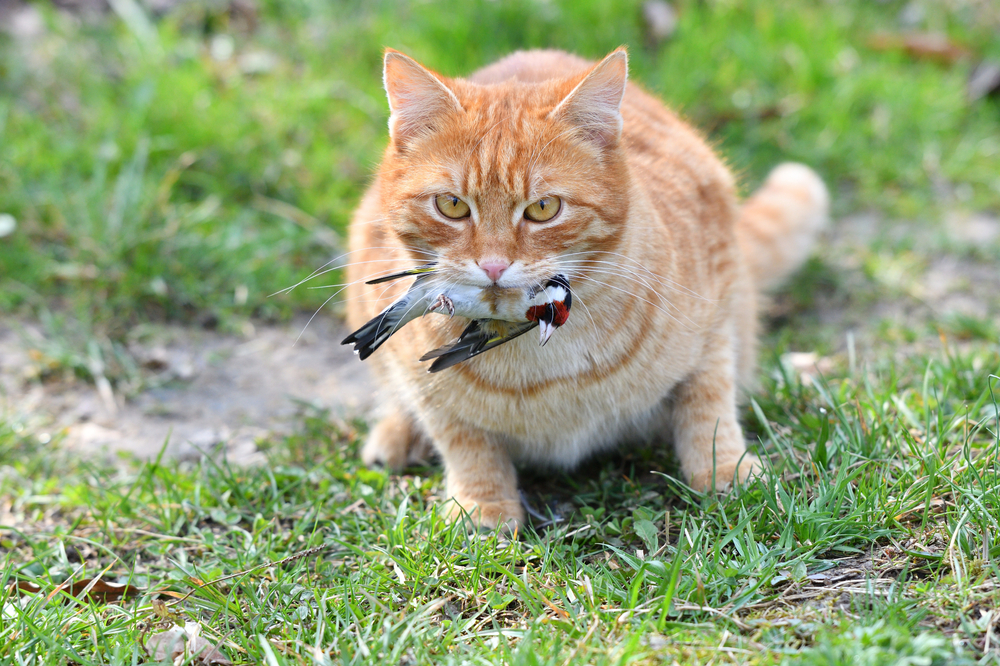
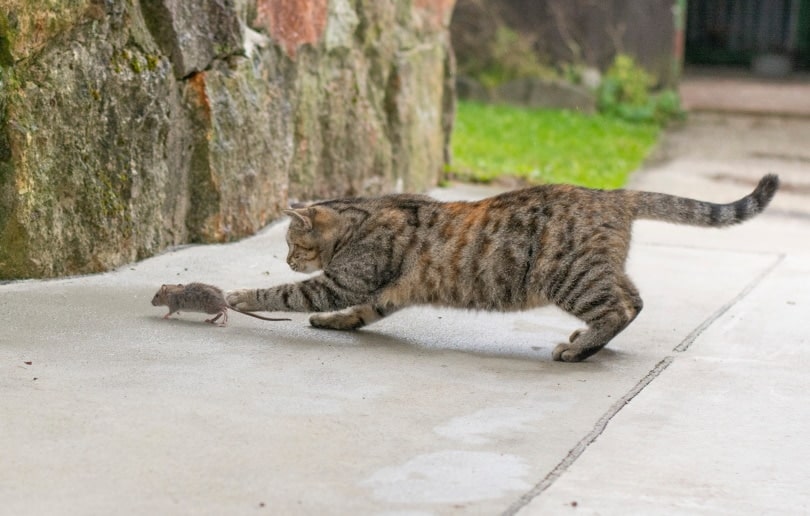
Once it’s close enough, the cat rushes or pounces, grabbing the bird with its front paws before it can take off. A cat may also leap at a bird as it takes flight. Sharp claws help it hold onto its prey, and a bite to the neck can kill the bird.
If you feed backyard birds, place the feeder away from shrubs and other hiding spots so birds have a better chance of spotting an approaching cat. A pole-mounted feeder with a baffle can also make it harder for cats to climb up to it.
Cats Are a Major Cause of Bird Deaths
Cats are the leading human-caused threat to birds in the US—killing an estimated 2.4 billion birds yearly. This is an astronomical number. Roughly 69% of these kills happen from feral or homeless cat populations. However, they can also have a high risk of dying from indoor/outdoor cats.
Also, cats have contributed to an alarming 63 extinctions worldwide, including 40 bird species. Since this is such an epidemic, it's gravely concerning for ecologists, and there seems to be no quick fix.

Can All Cats Hunt Birds?
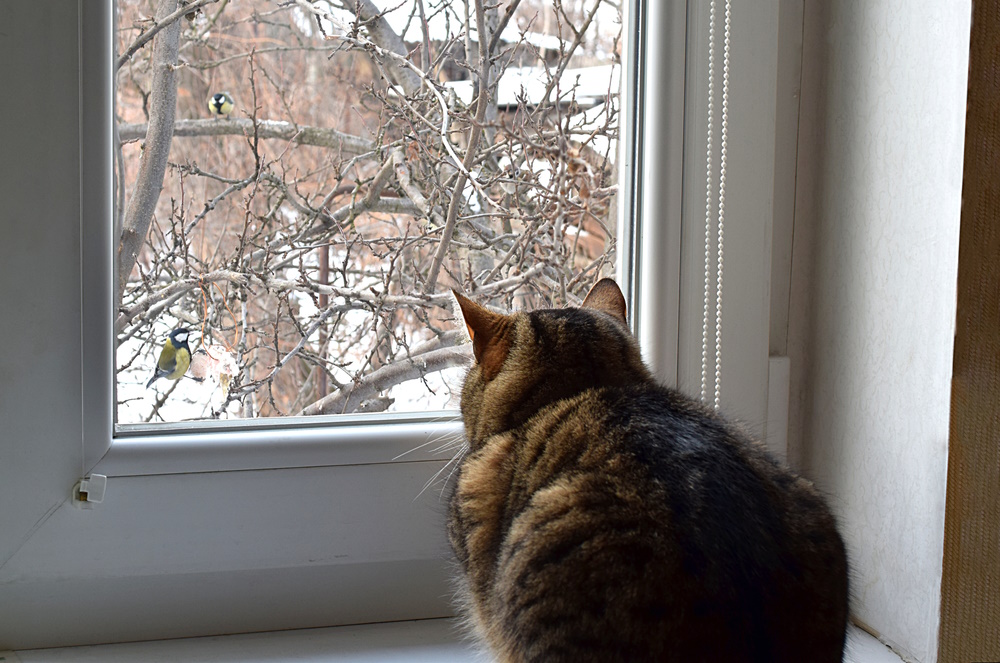
All cats have hunting capabilities, but not all cats want to hunt. Some are quite content with the average play toys and morning zoomies. Others will make absurd noises as they watch birds out the window but never act. It depends on the individual cat.
You shouldn't test the theory. Even though some cats might be disinterested in hunting most of the time, they also might strike when an opportunity presents itself.
Controversy Around Outdoor Cats
There are several concerns regarding the preservation and safety of outdoor birds. Because cats pose such a threat and are considered a non-native invasive species, major controversy surrounds the subject.
There are several things that folks try to do to combat the problem. However, what are the stakes? Euthanasia for feral cats is one of the primary ways to reduce the cat population in suburban and city neighborhoods, but this is not a humane option.
We have to understand that humans alone are responsible for the out-of-control population of our feline friends. It is at no fault of their own. It is also not the fault of the birds. So coming up with a solution can be very tricky, as any action taken at this point can severely impact life itself.
We have to consider what is fair. Is it justifiable to eliminate a feral cat population only because of human neglect, or should programs be implemented to eradicate homelessness and control the population?
Since cats are such fantastic hunters, where cats exist, birds will be in danger. Luckily, people are rising to the occasion, trying to find options that reduce the population of cats and protect wildlife. So what are some ideas being implemented?

TNR Programs
TNR programs, or trap, neuter/spay, and release programs, are designed for the feral cat population. Folks round up homeless or feral cats in their neighborhood, take them to a local shelter or rescue, and the professionals perform the surgery.
These programs were put in place to reduce the number of homeless cats across the United States. They usually give the cat some type of distinguishing factor, such as a clipped ear. This lets other people know that the cat has been spayed or neutered.
Keeping Outdoor/Indoor Cats Strictly Indoors
If you have a cat that is used to going outside but primarily stays inside, it can be very heartbreaking for them to no longer be allowed outdoors. Luckily there are ways to get around this. You can get kennels, play places, and even build an outdoor balcony or catio for your cats to enjoy the outdoors.
Having outdoor cats can be complicated. You run the risk of them getting hit by a car, being killed by a neighborhood dog, the list goes on. Even though your cat might enjoy being outside, being so unprotected can not only put them in danger, but it can put wildlife in the area in danger because of your cat.
Even though it is entirely natural for cats to be outside, it poses more risks than what it's worth. So always ensure you are being a responsible pet owner and doing your part. You can also try putting collars with bells on your cats when they go outside, which will help alert birds of the cat’s presence and hopefully give the birds time to get away.
Conclusion
Cats are incredible hunters who can easily catch birds. Since cats cause such devastation to birds yearly, it's crucial to prevent felines from attacking as much as possible. So, remember to keep your bird feeders up at a safe distance and eliminate or lessen your catch strips outside.
Featured Image Credit: Piqsels

Expert cat care, straight to your inbox
Vet-reviewed advice, behavior tips, and the best of Catster. Free, and you can unsubscribe anytime.
By signing up, you agree to our Terms & Conditions and Privacy & Cookies Policy.
As a freelance dog writer and passionate pet enthusiast, Ashley Bates is pursuing studies in animal therapy. A mother to four human children and 23 animal companions, Ashley is dedicated to volunteering at shelters, advocating for animal rights, and rescuing animals in need. Her goal is to spread awareness, provide education, and offer entertainment about pets to reduce homelessness. Ashley's specialties include dogs and cats.
Join the conversation
Ask a question, share your story, or send private feedback.