Get

In Your Inbox

Catster is reader-supported. When you buy via links on our site, we may earn an affiliate commission at no cost to you. Learn more.

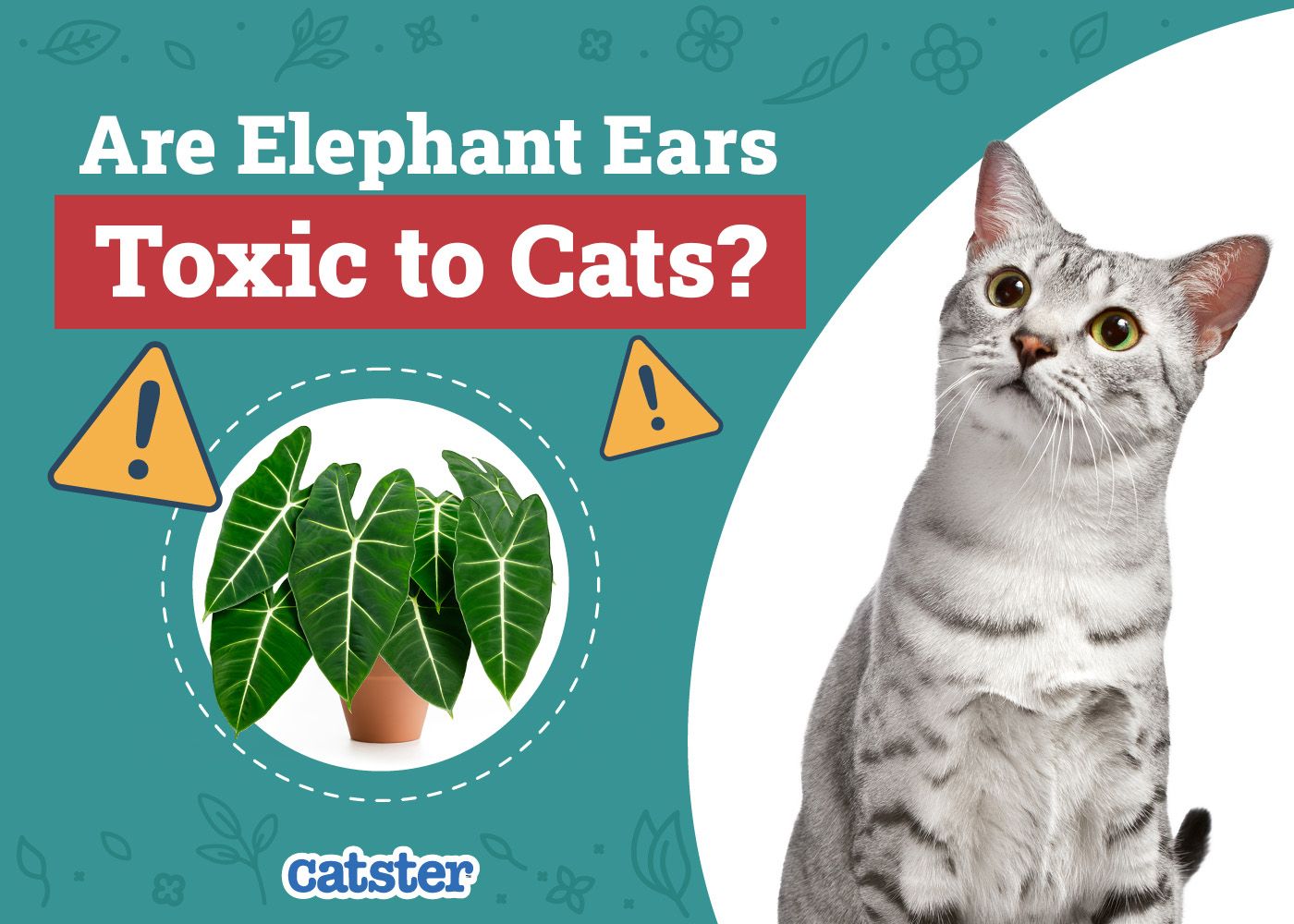
Are Elephant Ears (Alocasia) Toxic to Cats? Vet-Reviewed Houseplants Examined

Share

Catster_Are Elephant Ears Alocasia Toxic to Cats

You don’t need a green thumb for elephant ears (Alocasia) to thrive in your home. The plants only need indirect sunlight, moderate humidity, and weekly watering. An elephant ear’s large, two-toned leaves bring a hint of the tropics to any living space.

Pet owners should be aware that certain houseplants can make cats sick. Unfortunately, the American Society for the Prevention of Cruelty to Animals (ASPCA) identifies elephant ears as toxic to cats. You’ll need to call your veterinarian immediately if your cat eats one of these plants.

divider-catclaw1

What Should I Do If My Cat Eats an Elephant Ear (Alocasia)?

It’s easy to panic when your kitty eats something they shouldn’t. First and foremost, don’t panic. Your cat needs you to stay calm and think clearly. Follow these steps if your cat eats an elephant ear or any other plant that is toxic for cats.

1. Remove Excess Plant Pieces

Brush any plant pieces off of your cat’s body. Remove any leaf or stem pieces if you can safely reach into your kitty’s mouth.


2. Find a Safe Place for Your Cat

Place your cat someplace secure, like their carrier or a smaller room. You don’t want them to run off or hide, as you’ll need to monitor them for symptoms.


3. Contact Your Vet

Call your veterinarian. Have a pen and paper handy, as you may need to write down instructions or other phone numbers.

veterinarian holding cat's neck from behind
Photo Credit: Lenar Nigmatullin, Shutterstock

4. Collect Vomit Remains

If your cat vomits, try to save it and place it in a clean Ziploc bag. Your veterinarian may want to see the vomit.


5. Ask for Vet Advice

Follow your veterinarian’s advice on what to do next.

If you need to speak with a vet but can't get to one, head over to PangoVet. It's an online service where you can talk to a vet online and get the advice you need for your pet — all at an affordable price!

PangoVet_Mention-in-Content for PangoVet2 save money

divider-catclaw1

Can You Have Plants in a House With Cats?

There are several cat-safe houseplants you can use to decorate your home. The bamboo palm is non-toxic to both cats and dogs. While it has smaller leaves than an elephant ear, it does carry the same tropical vibe. If you want to add some color to your home, a copper rose (Echeveria multicaulis) is another non-toxic choice. This plant will brighten up any room with its rich red and orange tones.

While the bamboo palm and copper rose aren’t poisonous to cats, you still shouldn’t allow your cat to eat these plants. Even non-toxic plants can upset a kitty’s stomach, causing them to vomit or have diarrhea.

yarn ball divider

What Deters Cats from Eating House Plants?

You can try several tactics to keep your cat from destroying and eating the plants in your home.

Place Plants Out of Reach

Some cats won’t be able to reach plants that are hanging from the ceiling or on tall shelves. You can also place plants in a room that is off-limits to your pets. However, determined cats can be sneaky—and athletic! These ideas may not work for every kitty.

Distract with Toys

Your cat might play with your houseplants out of sheer boredom. Let’s face it; leaves are fun to swat at! Focus your cat’s attention toward an interactive treat-dispensing toy or laser pointer.

Try a Terrarium

Terrariums are like mini-greenhouses. The enclosed glass or plastic container will protect your plants from your pets. However, terrariums aren’t 100% cat-proof. An aggressive kitty could still knock the container to the floor and nibble on the plant.

Give Your Kitty Their Own Plant

Some cats have the irresistible urge to snack on plants. You can satisfy your hungry kitty with their very own pot of natural cat grass. They may leave your houseplants alone if they have their greenery to munch on.

cat + line divider

Final Thoughts

The houseplant elephant ears are toxic to cats. Call your veterinarian right away if your kitty eats this plant. Many houseplants are poisonous to pets, so do your research before you bring any new plants into your home. Toys and other tactics may deter a curious cat from playing with and nibbling on your plants, but some kitties are relentless and will pursue plants that are out of reach.

Remember that cats are individuals. If you have a multi-cat household, one feline may relentlessly pursue your houseplants while another couldn’t care less. You can satisfy your cat’s need to nibble on greenery by providing a pot of edible cat grass or catnip.


Featured Image Credit by: Caseybrian12, Shutterstock

Want content like this delivered to you?

Sign Up For Our Newsletter

News, insights, expert advice, and everything cat

* By submitting, you agree to our Terms & Conditions and Privacy & Cookies Policy.


How useful was this post?

Click on a star to rate (you can leave written feedback after clicking submit)

Help us improve Catster for pet parents!

Your feedback really matters.

What did you like about this post? Also how can we improve it?

Join the conversation

Leave a Reply

You’re very welcome to leave a comment or question. Please know that all comments must meet our community guidelines, and your email address will NOT be published. Let’s have a positive and constructive conversation.


Talk With A Vet Online

Peace of mind,
anywhere, anytime

Affordable vet advice

The Cat Biting Mistakes Most Owners Make (And What Works Instead)

Cat bites sent more than 400,000 people to emergency rooms in the US each year.1 Not scratches. Bites. And the reason they’re so...

Do Cats Cause Schizophrenia? Scientists Find a Link – Here’s What It Means

Being a fierce advocate (and occasional recipient of) mental health support and awareness, the term ‘crazy’ is not one I like to fling...

One in 100 Cats Gets Diabetes – Here’s How to Catch It Early

One in every 100 cats develops diabetes.1 That’s not a rare, unlucky condition reserved for cats with obvious health problems. It’s common enough...

Dramatic Rescue Turns Into Dramatic Reunion

What started as a routine call for the RSPCA became a heroic, five-hour rescue featuring one trapped and traumatized cat, an emotional family...

More related

Do Cats Poop Out of Spite? Vet-Verified Reasons & Feline Behavior Explained

If you’ve lived with cats for a while, you may have wondered if they do things out of spite when they’re upset. It...

Are Roses Toxic to Cats? Vet-Verified Facts, Risks & Safety Tips

With Valentine’s Day coming up soon, you may be worried about using rose petals or buying the romantic flower for a loved one...

Heybike Ranger S with Front & Rear Baskets Review 2026: Now Your Cats Can Adventure Too

Every owner of an active pet has struggled to give their beloved companion enough exercise during a busy work week. Luckily, Heybike is...

Why Does My Cat Kick the Wall? 8 Vet-Reviewed Reasons

Cats are masters of odd behaviors, and it’s one of the reasons that we love them so much. But what’s so interesting about...

Keep reading

Balinese Cat Health Problems: 16 Vet-Reviewed Health Issues

The Balinese is a beautiful cat breed closely related to the Siamese, but these cats can be prone to certain health problems, some of which are quite serious, and many can be inherited and passed over to new generations of...

Why Does My Cat Keep Sneezing? 7 Vet-Verified Causes

Sneezing in cats has several causes. Cats sometimes sneeze to get rid of tickles in their noses, but the reflex can also be a sign of a severe illness. It’s not a huge deal if a cat sneezes once or...

Cat sneezes making funny expression

Why Do Cats Act Weird When Scratching the Base of Their Tail? 10 Vet-Reviewed Reasons

It’s not uncommon for cats to act weird when you scratch the base of their tail. This area is quite sensitive, and cats respond one way or another. Additionally, a tail that sticks straight upright into the air is referred...

young cat breathing heavily

Can CBD Help a Cat With Anxiety? Exploring Alternatives

There have been no scientific studies that investigate the impact cannabis has on pets, but many pet parents are turning to it for help with their cat’s anxiety. And yes, it does work. When considering CBD for your pet, the...

Man giving CBD oil to a cat

The Importance of Regular Cat Checkups: 4 Vet Reviewed Benefits

Cats are biologically very different from humans, but what they have in common is a need for regular wellness checks. Even healthy cats should be examined at least once a year by a qualified veterinarian to ensure they are fit...

vet checking up the cat

Why Do Cats Lay in the Middle of the Floor? 7 Vet-Verified Reasons

Cat owners everywhere are familiar with the feline antics their furry roommates get up to, but it’s not always obvious why they do the peculiar things they do. For example, why do cats just lie in the middle of the...

cat lying on the floor and looking up

Are Emotional Support Vests Necessary for Cats? Vet-Verified Recommendations & FAQ

Emotional support animals (ESAs) are one type of assistance animals, however, they are different from service animals and, therefore, are subject to their own requirements and considerations. They are any animal species with no specific training that provide comfort and...

a woman and her cat with harness and leash sitting on the bench at the park

Why Does My Cat Bite Me Unprovoked? 5 Vet-Reviewed Reasons for this Behavior

There’s no secret—cats try to get our attention, whether it’s good or bad. Because your little kitties have fangs, it won’t feel too good when they sink them into your flesh. If your cat is biting you for no real...

a red domestic cat bites its owner's hand

Love Cats? So Do We! Join the Catster Community

Stay informed with expert pet care insights delivered straight to your inbox! Discover professional guidance on animal behavior, feeding tips, trusted product picks, and much more.


Sign up for the Catster Email Newsletter

Stay informed with expert pet care insights delivered straight to your inbox! Discover professional guidance on animal behavior, feeding tips, trusted product picks, and much more.