Why Do Cats Eat Grass? 5 Vet-Reviewed Reasons Behind the Behavior


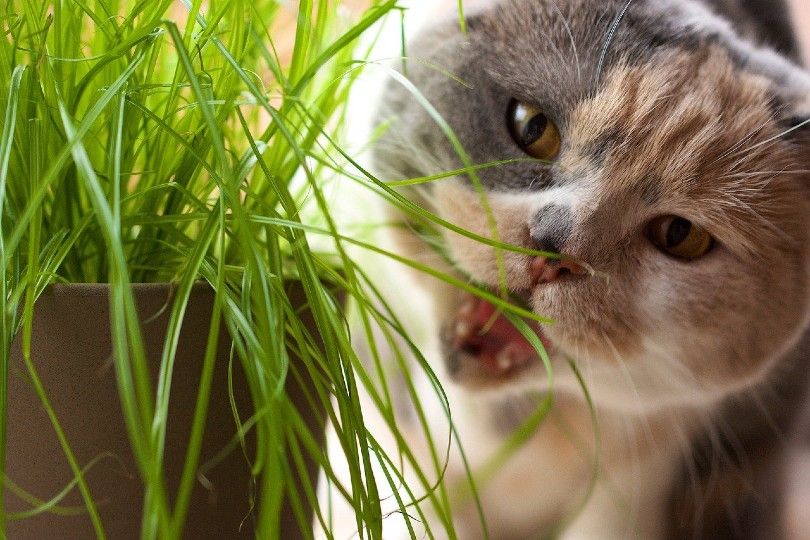
Our beloved cats are quirky creatures with some habits that seem rather baffling to cat owners. One of these behaviors is cats chowing down on grass and then sometimes throwing it back up. Why? Why on earth do these intelligent and sensitive mammals eat grass only to throw it up again? Well, rest assured, we will answer this question and explore the reasons behind this peculiar cat behavior.
However, before we launch into the whys, we would like to start by reassuring you that eating grass is not harmful and is thought to possibly be beneficial for your cat, and many cats enjoy it. However, make sure your grass is not treated with any chemicals, and remove all toxic plants from your home.
Let’s dig deeper into some of the possible causes why cats like eating grass, while also demystifying previously believed reasons for this particular habit.

The 5 Possible Reasons Cats Eat Grass
1. Instinct Sometimes Accompanied By Throwing Up
Cats are classified as obligate carnivores, which means they need to eat meat to survive. In fact, they don't have the right digestive enzymes to metabolize vegetation, so adding vegetables to a cat's diet isn’t doing them any favors.
Because of their inability to digest the grass, some cats may throw up, which will also expel any indigestible material – bones, feathers, hairballs, all of which might make your cat feel ill.
Today, we know that only a quarter of cats actually end up vomiting after eating grass, and the majority of cats do not seem sick in any way before ingesting grass.1 Eating grass is an instinctual behavior that most cats like to partake in.

2. The Purge
Scientists now also believe that this instinct may come with an added evolutionary benefit. Your cat might also seek out grass to intentionally dispel excess fur or even parasites, such as worms, through their other end. Grass might add extra bulk and fiber to their diet, which can act as a natural laxative and could potentially help your cat get rid of unwanted visitors.
Fiber from the grass can be beneficial to your cat’s digestive system and help in managing furballs in some cases.
3. Added Vitamins
Grass contains folic acid (vitamin B9) when it’s broken down (essentially, chewing grass releases the folic acid in the “grass juice”). It’s essential for keeping red blood cells healthy, and if there isn’t enough folic acid in the body, anemia could occur.
Some cats really seem to like the taste of grass, and this may be due to folic acid, but we cannot know for sure. If you suspect that your cat may be lacking in folic acid or other vitamins and minerals, speak to your vet before attempting to treat the condition at home, as too much of any beneficial or essential ingredient can be harmful for their health.
4. It’s a Matter of Taste
In some cases, it could just be that your cat is enjoying the feel and taste of the grass in their mouth. They may like the texture, and some cats will nibble at grass and other plant material from boredom and curiosity.
5. Health Reasons
If your cat regularly eats grass in excess or other non-food items, they might be showing signs of underlying health issues, anxiety, or stress. Some cats exhibit signs of stress by over-grooming or excessive meowing, or they turn to chew on inappropriate and less-edible items as a way of self-soothing. If you have a cat that is indoors-only, be sure your houseplants are not toxic or they are placed in areas that your cat cannot access, as they might try to chew on your plants.
If your cat only eats grass once in a while and they have been doing it for years in moderation, it typically isn’t anything to worry about. However, if it seems to be a frequent occurrence (several times a day or multiple days a week), or it’s accompanied with any signs of stress or ill health, such as reduced appetite, vomiting, diarrhea, weight loss, or other, be sure to take them to your vet to help rule out any health issues. You can also work with your vet to help your cat if you believe they have stress or anxiety problems.

Cause for Concern
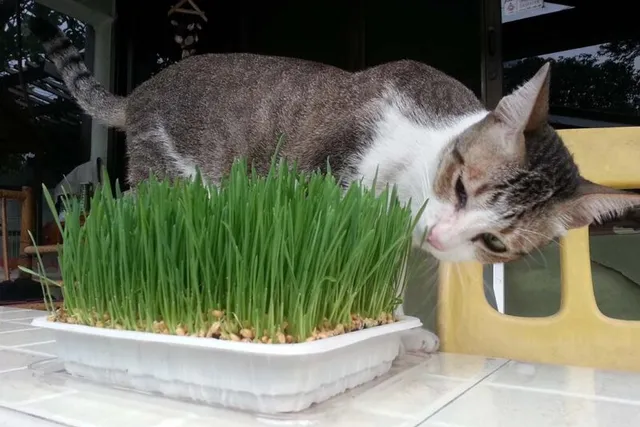
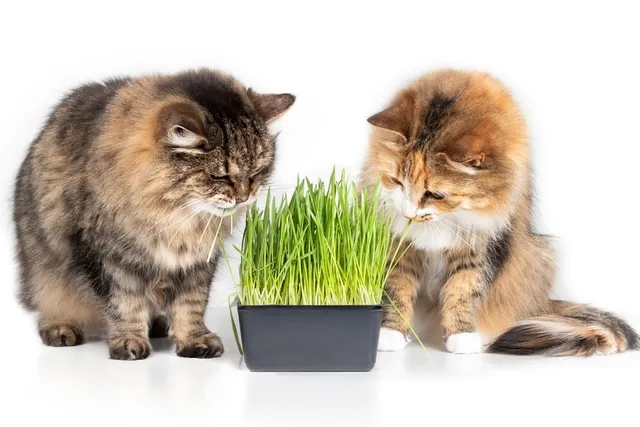
As you can observe from this list of reasons why your cat may be eating grass, it isn’t typically something to be overly concerned about. Having said that, it is recommended that growing your own cat grass is safer as it’s organic and won’t contain any herbicides or pesticides. And of course, there’s always the entertaining catnip.
If your cat eats grass that you know has been chemically treated, or if you aren’t sure, consult with your vet straight away rather than wait for signs of toxicity, oral irritation, or digestive upset to occur.

Conclusion
So, we’ve gone over the most common possibilities of why your cat might be eating grass. They are probably just enjoying the taste and texture, exhibiting their natural instinctive behavior, all while supporting the digestive system or purging themselves of indigestible items. They might be looking to add folic acid to their diet, or if they are eating grass excessively, it may be a sign of underlying health issues or stress.
Since experts can’t actually ask cats why they do these behaviors, we will never truly know or understand why they occur. However, if you are concerned about your cat’s physical or mental health, take them to your vet. Overall, grass-eating in moderation isn’t anything to be worried about, but as long as you keep an eye on your cat, their appetite, and their behavior and consider growing some cat grass, your beloved pet should be just fine.
You might also like:
Featured Image: mowli, Pixabay
Expert cat care, straight to your inbox
News, insights, and useful advice, delivered to you.

No spam — unsubscribe anytime.
By signing up, you agree to our Terms & Conditions and Privacy & Cookies Policy.
How useful was this post?
Click a star to rate. You can leave written feedback afterwards. (We read all feedback.)
Christian started writing for a local newspaper as a teenager, and he's been involved in the publishing industry for most of his adult life. Combining his love of writing with a passion for animals, he is currently the Director of Editorial at Pangolia and the Editor-in-Chief at Catster.
Christian lives in the Philippines with his wife, son, and four rescue cats: Trixie, Chloe, Sparky, and Chopper.