Get

In Your Inbox

Catster is reader-supported. When you buy via links on our site, we may earn an affiliate commission at no cost to you. Learn more.

5 Fascinating Vet-Verified Cat Tail Facts You Need to Know (With Infographics)

Share

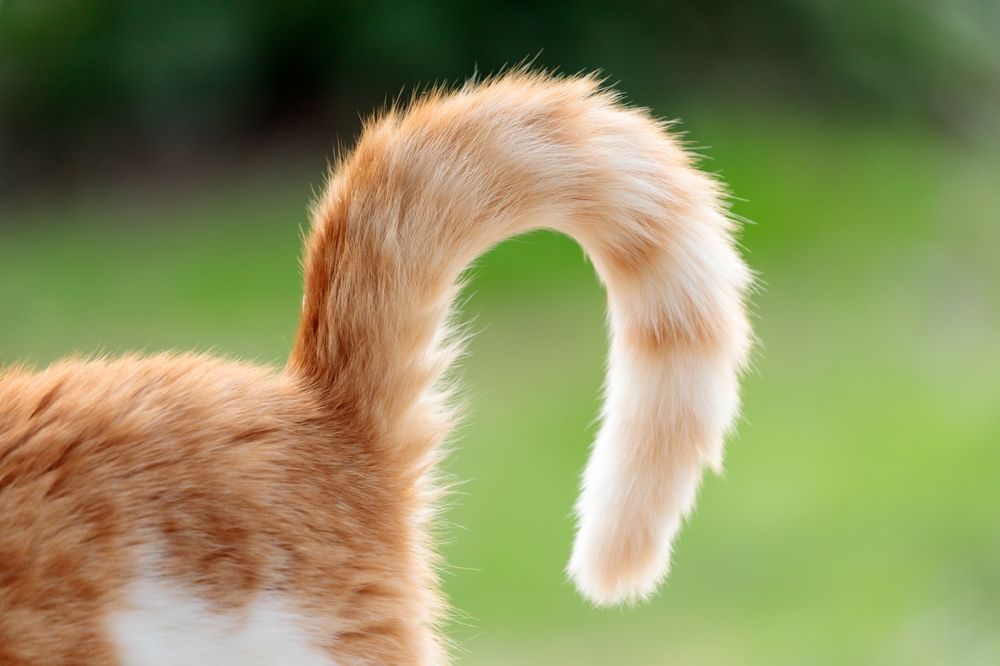
A-curled-cats-tail-close-up

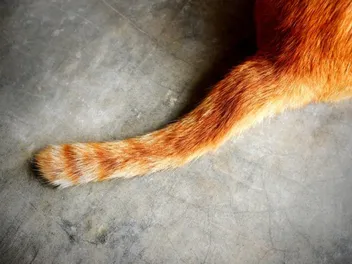
While they’re not always as expressive or attention-grabbing as a dog’s tail, cat tails are no less vital to their social and physical functioning. We may not give them much consideration, but cat’s tails perform essential roles for our kitties as much as they impart critical information to others. Let’s discover all we can learn from our pets with this breakdown of five interesting cat tail facts.

divider cats oct 2024

The 5 Fascinating Cat Tail Facts

1. Cat’s Tails Are Crucial for Balance

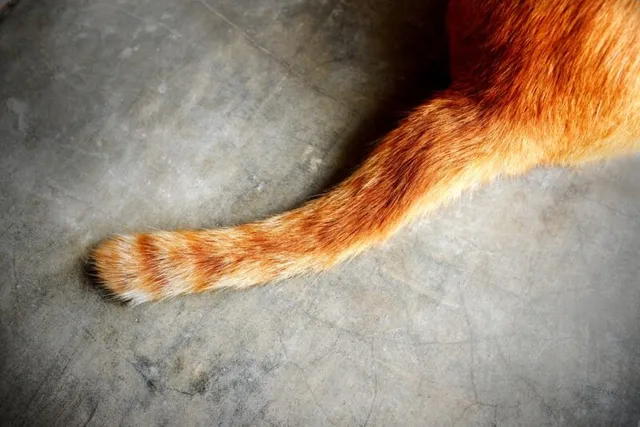
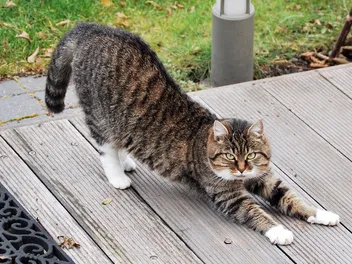
Offering far more than looks, the tail performs several jobs for cats. Chief among them is balance. A cat’s superior agility and climbing ability are due to the tail acting as a counterbalance and control for the cat’s center of mass while changing directions quickly, jumping, climbing, or adjusting to sudden shifts underfoot.

cat tail walking
Image Credit: Buenosia, Pexels

2. Not All Cats Have Tails

A bare rump is the first thing you’ll notice about a Manx cat, a native to the Isle of Man that may appear similar to a British Shorthair body type save for the lack of a tail.1 This characteristic can also occur in other cat breeds due to various genetic mutations. Despite the missing accessory, some of these cats can thrive and still show off the same spryness as tailed cats, including the uncanny righting reflex that allows them to land on their feet, but this will greatly depend on other possible spinal defects they may have.

Sadly, Manx are prone to severe spinal issues. The dominant genetic mutation causing the missing tail can also lead to painful spinal issues and fatal defects in kittens that inherit two copies of the gene from breeding two tailless cats.2

Tailless cats, even with only one copy of the mutated gene, that survive can suffer from Manx syndrome, a collection of painful lifelong problems, including spina bifida, incontinence, urine and fecal scalding, weakness, and partial paralysis. Due to the quality-of-life issues, many have raised ethical concerns about breeding these cats.

Manx calico cat no tail standing outside
Image by: PradaBrown, Shutterstock

3. Tails Are Valuable Communication Tools

Cats use their body language to communicate with other cats and their humans, and the tail is one of the vital non-verbal indicators for nearby cats, other animals, and people. One of the most recognizable signals is the tail-up display, sometimes with a hook at the tip, which is often a friendly gesture cats use when approaching others to show they’re interested in socializing and playtime. If your cat is following you around with their tail up while meowing and chatting, they may be saying they want some food.

Common meanings behind various tail movements may include:
  • A quivering tail held up indicates excitement
  • A twitching tail may display irritation, frustration, or concentration while hunting
  • A heavy thumping and thrashing tail indicates annoyance or anger
  • A slow, swishing motion means intense focus, usually on some type of prey or a toy
  • A puffed-up or low tail tail show fear or defensiveness

Cats will pair tail movements with other cues, like ear positioning, to create more diverse and specific messages. Although cats have adapted their communication with their tails to suit people, owners must look at all their cat’s signals to understand their true feelings.

Catster_Cat Tail Language_Positive Signs_Infographic_v1-4_Mar 6 2024
You are free to use this image but we do require you to link back to Catster.com for credit
Catster_Cat Tail Language_Negative Signs_Infographic_v1-4 FINAL_Mar 6 2024
You are free to use this image but we do require you to link back to Catster.com for credit

4. Cats Can Break Their Tails

Despite their flexibility, the incredible control cats show over their tails can leave many wondering: Do cat tails have bones? There are 20–23 caudal vertebrae lining up from the tail base, dwindling in size as they near the tip. Cats control the position and movement of their tail, assisted by six muscles running along either side of the tail.

Since their tails contain bones, cats can break them just as they would a leg. Limpness, swelling, wounds, and visible deformities like kinks can all be signs of a fracture. Breaks around the tail’s tip are generally easier to manage, while fractures near the base may come with more severe nerve damage.

Cat Skeletal System
You are free to use this image but we do require you to link back to Catster.com for credit

5. Cat Tail Injuries Can Be Debilitating

Although the vertebrae extend into the tail, the spinal cord ends in the far back of the lumbar area, although the nerves extending from it in the tail are really just a continuation of the spinal cord. Many issues, like bites, cuts, and infections, can heal quickly with appropriate veterinary care without causing anyneurological problems. Still, nerves extending into the tail can stretch or rupture from aggressive pulling on the tail or fractures near its base.

Signs of a nerve injury in the tail could include a drooping tail, lack of tail movement and sensation,urinary and fecal incontinence, lack of anal tone, and hind leg mobility issues. Cats may need a partial amputation following severe trauma, though many can lead normal lives afterward if the nerve damage isn’t permanent.

divider cat paw scratch oct 2024

Final Thoughts

Although we’ve evolved past them, tails play vital roles in the modern domestic cat’s physical, social, and emotional health. See what you can glean from your cat the next time they walk into the room. From head to tail, our pets constantly communicate, revealing plenty of subtle insights into their health and mood for anyone willing to pay attention.


Featured Image Credit: olivier.laurent.photos, Shutterstock

Want content like this delivered to you?

Sign Up For Our Newsletter

News, insights, expert advice, and everything cat

* By submitting, you agree to our Terms & Conditions and Privacy & Cookies Policy.


How useful was this post?

Click on a star to rate (you can leave written feedback after clicking submit)

Help us improve Catster for pet parents!

Your feedback really matters.

What did you like about this post? Also how can we improve it?

Join the conversation

Leave a Reply

You’re very welcome to leave a comment or question. Please know that all comments must meet our community guidelines, and your email address will NOT be published. Let’s have a positive and constructive conversation.


Catster's Digital Magazine is Back!

Vet-approved health & behavior advice

Real cat stories & community features

Chatting About the Rainbow Bridge, Euthanasia, and Laughter During Grief | Chatty Cattys, Episode 24

If you’ve ever felt the loss of a beloved cat, or are dreading the day when your pet crosses the rainbow bridge, you’ll...

The Simple Reasons Cats Refuse to Let Anyone Use the Bathroom Alone

Cats have an extraordinary talent for making themselves present in the most inconvenient places, and the bathroom ranks near the top of the...

A Paw-sitive Milestone: Canada Officially Becomes a Declaw-Free Nation

Canada has officially become a declaw-free nation. On May 25, 2026, a new regulation was filed in Ontario under the Provincial Animal Welfare...

The Surprisingly Simple Ways to Help a Cat With Hairballs

Cats spend an astonishing amount of time grooming. It is part hygiene routine, part comfort ritual, and part instinct that traces back generations....

More related

Can Cats Eat Mint Ice Cream? Vet-Reviewed Health Facts

It’s funny that cats are often portrayed lapping at saucers of cream or a dish of milk, because the fact is, cats shouldn’t...

Ear Cancer in Cats: Causes, Signs & Care (Vet Answer)

Ear cancer is a relatively common occurrence in cats. Two main types of tumors affect a cat’s ears. These are ear canal tumors...

My Cat Suddenly Doesn’t Want to Be Touched – 5 Vet-Approved Reasons

If your usually loveable cat suddenly doesn’t want to be touched, you probably have reason to be concerned. It isn’t normal for cats...

Inbred Cats: Vet-Verified Signs, Ethics, Problems & FAQ

Inbreeding has been, historically, a common practice in domesticated animals. Breeders have made a point of breeding closely related animals in order to...

Keep reading

Why Is My Cat Panting After Giving Birth? Vet Approved Facts & FAQ

Breeding your cat is a beautiful experience both for you and your cat. And while being pregnant is exciting, giving birth can be challenging for your furry friend, especially if she gives birth to multiple kittens. After giving birth, many...

fluffy cat pregnant give birth and new born baby kittens_iarecottonstudio_shutterstock

Can Cats Eat Paprika? Vet-Reviewed Facts & FAQ

Paprika is a commonly used spice that is made from dried peppers. The peppers used in paprika can be sweet or spicy peppers (generally from Capsicum annuum varietals), so there may be some variability in the flavor of your paprika....

Catster_Can Cats Eat Paprika_v1_Dec 4 2024

Why Does My Cat Eat So Fast? Vet-Approved Feline Facts & FAQ

Do you ever watch your cat scarf down their food and wonder why they eat so fast? There might be a reason for their speedy eating habits—cats are hardwired to eat quickly to protect their food from predators. In the...

maine coon cat eating

Can Cats Eat Grapes? Vet-Reviewed Nutrition Facts & FAQ

Cats are carnivores, but they still like to experiment sometimes. Some cats love to taste unusual foods, including fruits and vegetables. Most of the time, that’s totally okay—too much fruit isn’t good for your cat, but a little bit won’t...

Can Cats Eat Grapes

How Often Should I Feed My Cat? Vet-Reviewed Considerations & Tips

Next to feeding your cat just the right amount, you should also concern yourself with how often to feed your feline. There isn’t actually a one-size-fits-all answer for this. In many cases, it will depend on your schedule and your...

tabby cat eating cat food out of bowl inside

6 Best Top-Entry Litter Boxes in 2026 – Reviews & Top Picks

Top-entry litter boxes are aesthetically pleasing and fit in with modern décor more than standard litter trays. They’re tall and hygienic and help keep your house clean from lumps of kitty litter stuck to your feline’s paws. These litter boxes...

ginger cat inside red grey enclosed litter box

When Do Kittens’ Eyes Change Color? Vet-Verified Facts & FAQ

You may have recently brought home an adorable new kitten with baby-blue eyes, but did you know that those icy-blue eyes might change to green, brown, or even hazel? Most kitten’s eyes will change color when they are 7 weeks...

snowshoe kitten on a blanket

Should You Let Your Cat Outside? Pros & Cons of Indoor & Outdoor Cats

To let or not to let your cat outside—that is the question. For some cat parents, this is never a quandary, as their feline companions already spend most of their time outside, and getting them used to living cloistered in...

short-haired domestic cat sitting outside in fenced

Love Cats? So Do We! Join the Catster Community

Stay informed with expert pet care insights delivered straight to your inbox! Discover professional guidance on animal behavior, feeding tips, trusted product picks, and much more.


Sign up for the Catster Email Newsletter

Stay informed with expert pet care insights delivered straight to your inbox! Discover professional guidance on animal behavior, feeding tips, trusted product picks, and much more.