Cat Brain Anatomy: Vet-Verified Facts & Common Disorders


In this article
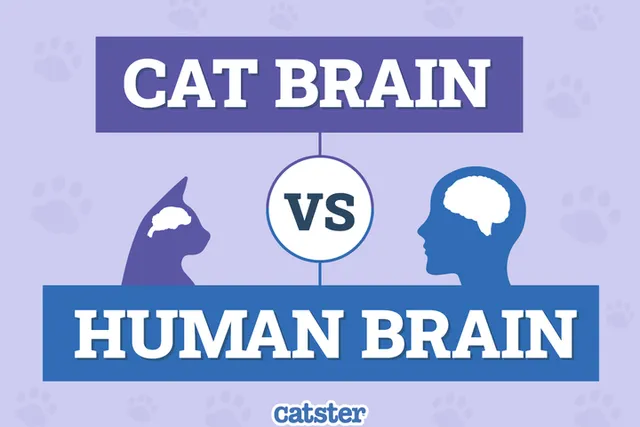
Anyone who knows a cat is familiar with just how different they act from humans. Sometimes, they do things that leave us feeling puzzled or confused. However, humans share more similarities with cats than they think. In fact, when it comes to brain structure, a cat’s brain is 90% similar to a human’s brain.1
The feline brain is fascinating, and learning about it gives greater insight into cat behavior and how cats perceive the world. We’ll dive deeper into the anatomy of a cat’s brain and also discuss common neurological disorders found in cats.

What Does a Cat’s Brain Look Like?

Like human brains, cat brains are gyrencephalic, which means that they have surface folds. They also share the three main structures in the brain as humans: the cerebrum, cerebellum, and brainstem.
Cerebrum
The cerebrum is the largest part of a cat’s brain. It sits in between the olfactory bulb and the cerebellum. In general, the cerebrum houses parts of the brain that are responsible for consciousness and decision-making.
Cerebellum
The cerebellum is located at the back of the brain and behind the cerebrum. It’s responsible for controlling balance, coordination, and fine motor skills. Your cat’s ability to balance and land on their feet gracefully is due to functions in their cerebellum.

Brainstem
The brainstem is located at the bottom base of a cat’s brain and is connected to both the cerebellum and the spinal cord. Many cranial nerves arise from the brain stem. The brainstem helps control many vital functions in the body, including breathing, blood pressure, heart rate, and sleep.
How Big Is a Cat’s Brain?

One of the obvious differences between a cat’s brain and a human’s brain is size. The average human adult’s brain has proportions that are about 5.5 x 6.5 x 3.6 inches and weighs about 3 pounds. In contrast, an adult cat’s brain is about 2 inches and weighs about 1 ounce.
Despite having a smaller brain, cats are highly intelligent animals, and some of their senses and physiological capabilities are more advanced than humans. For example, cats have a more sensitive sense of smell. Cats' sense of smell is about 14 times greater than that of humans.2 So, don’t let the size of your cat’s brain fool you. They’re smart and built for survival and forming strong bonds with humans.
Secondary Structures in a Cat’s Brain
The feline brain is complex and made up of many different parts and regions. We’ll discuss in further detail the main secondary structures in a cat’s brain and their basic functions.
Cerebral Hemispheres and Corpus Callosum
Like the human brain, the feline brain has two hemispheres, which are also known as the left cerebral hemisphere and the right cerebral hemisphere. Cats have a corpus callosum that helps transfer information between the two hemispheres. The corpus callosum also plays a role in movement control.

Cranial Nerves
Similar to humans, cats have 12 pairs of cranial nerves. Cranial nerves control a cat’s ability to see, smell, and hear. They also control facial motor skills. The trigeminal nerve is among the largest of the cranial nerves and is responsible for delivering sensory information around the face and mouth to the brain.
Olfactory Bulb
The olfactory bulb is located at the front of the brain, but it’s considered to be a separate structure from the frontal lobe. It rests beneath the frontal lobe and is responsible for transmitting scents from the nose through the olfactory tracts to the brain for processing.
Pons
The pons is a part of the brainstem that rests between the midbrain and the medulla oblongata. It connects the brain to the spinal cord and helps control unconscious movements, like sleeping and breathing.

Medulla Oblongata
The medulla oblongata is another part of the brain stem and is the meeting point of the cardiovascular and respiratory systems and your brain. It helps manage heart rate, circulation, and breathing.
Caudate Nucleus
The caudate nucleus is located near the thalamus. It plays an essential role in approach-attachment behavior and a cat’s social behavior. It’s also responsible for learning, memory, and registering rewards.
A Cat’s Cerebral Cortex
Cats and humans also have basic similarities in the structure of their cerebral cortex. The cerebral cortex is the outer layer of the brain, and both feline and human cerebral cortexes are divided into four general parts:
- Frontal lobe
- Temporal lobe
- Parietal lobe
- Occipital lobe
Frontal Lobe
The frontal lobe is made up of several different regions, including the prefrontal cortex and motor cortices. Cats and humans have significant differences in their frontal lobes. Cats don’t have a Broca’s area or Wernicke’s area, which are unique to humans. The frontal lobe in the human brain is capable of expressive language and higher executive skills.
The primary functions of a cat’s frontal lobe include learning, limb movement, and analyzing odors. A cat’s frontal lobe also plays a role in a cat’s temperament and social skills.

Temporal Lobe
The temporal lobe takes up a significant part of a cat’s limbic system, which is the system in the brain that’s responsible for memory, emotional regulation, behavior, and motivation. Both the amygdala and hippocampus are located in the temporal lobe.
The amygdala is mainly responsible for regulating autonomic and endocrine functions. It plays a role in instinctive and motivational behaviors, the fight-or-flight response, and decision-making. It’s also associated with visceral reactions like licking, salivation, swallowing, and urination.
The hippocampus plays a significant role in a cat’s memory and learning. It helps cats hold onto short-term memories and store long-term memories.
Occipital Lobe
The occipital lobe is the main area of a cat’s visual system. The occipital lobe receives information that travels via the optic nerves connected to the eyes.

Parietal Lobe
The main function of the parietal lobe is to receive and process sensory information. This includes touch, distinguishing textures, and feeling hot and cold.
Common Neurological Disorders in Cats
A cat’s brain is complex, and many different issues can arise when different parts aren’t working properly. As with any medical issue, it’s important to see your veterinarian if your cat starts to display changes in behavior. Some neurological disorders are also associated with aging, which is why it’s important to stay on top of your cat’s routine exams, especially as they get older. Here are some neurological disorders that are commonly found in cats.
Cerebellar Hypoplasia
Cerebellar hypoplasia, also known as CH or wobbly cat syndrome, affects a cat’s balance and movement. It mostly occurs when a pregnant cat infected with the feline panleukopenia virus passes the virus to her unborn kittens during the perinatal period. The virus attacks the cerebellum and can cause jerky movements, incoordination, and imbalance.
The prognosis for cerebellar hypoplasia varies. Cats with this neurological disorder do require extra care and attention, but many learn to adapt and can live with normal life expectancies.

Cognitive Impairment
Cats become more susceptible to cognitive impairment and dysfunction as they age. As with any organ, the brain starts to wear down with age, and cats can start to experience several different cognitive issues depending on which areas of their brain are affected. They can experience spatial disorientation, changes in sleep cycles, and senile dementia.
Hydrocephalus
Hydrocephalus occurs when there is excessive cerebrospinal fluid within the brain. It most commonly occurs due to a congenital birth defect that causes abnormal growth in the skull bones. However, it can also be caused by traumatic brain injury, cancer, or certain infections.
The prognosis for hydrocephalus is generally poor. Medication can alleviate some pain, but cats can also experience severe neurological issues with hydrocephalus. In some cases, cats can undergo surgery to reroute cerebrospinal fluid to another part of the body, and they can live fairly functional lives if the procedure is successful.

Brain Tumors
Brain tumors are masses that grow in the brain, and they can be either cancerous or non-cancerous. Brain tumors will affect your cat depending on where they’re located in the brain. They can cause behavioral abnormalities, decreased awareness, and impairments in spatial awareness. Brain tumors may also trigger seizures, drunken gait, and loss of appetite.
Neuromuscular Disorders
Neuromuscular disorders refer to a wide range of diseases and illnesses that affect a cat’s peripheral nervous system. Signs of neuromuscular disorders include muscle weakness, muscle wastage, and difficulty swallowing, among others. Neuromuscular disorders can be caused by a variety of diseases, including infectious diseases, immune diseases, inherited diseases, and degenerative diseases.

Vestibular Syndrome
Vestibular syndrome refers to when cats suddenly develop incoordination. This can involve head tilt, falling or circling to one side, or nystagmus, which is when the eyes dart back and forth involuntarily.
Vestibular syndrome can affect cats of all ages and occurs when there’s a disruption between the vestibular apparatus and the nerve cells and receptors that connect it to the brain. Different factors can cause it, and treatment for vestibular syndrome will depend on the cause. In many cases, vestibular syndrome will go away and won’t reappear.
Epilepsy
Epilepsy is a neurological condition in cats that’s characterized by recurring seizures. Seizures can be caused by a variety of factors, including brain injury, toxins, and brain tumors.
Diagnosing epilepsy can take time, but it’s important to find the right diagnosis to provide the appropriate treatment for cats with epilepsy. Treating epilepsy can lead to fewer seizures and help cats improve a cat’s quality of life, even if they may have occasional seizures.
Conclusion
Cats have a complex brain and nervous system, and there’s still much to discover and learn about them. What we do know is that their brains enable them to be skilled, agile hunters who are also capable of forming strong bonds with humans.
Cats may be susceptible to certain neurological disorders as they age, and these disorders and diseases often affect their behavior and movement. So, if you ever notice any sudden changes in your cat’s behavior or physical capabilities, it’s important to schedule an appointment with your veterinarian to determine if these changes are due to a neurological issue.
Sources
https://vcahospitals.com/know-your-pet/cerebellar-hypoplasia-in-cats
https://www.fitzpatrickreferrals.co.uk/neurology/feline-orofacial-pain-syndrome-fops
https://bluepearlvet.com/medical-library-for-dvms/nobodys-purr-fect
https://www.vetneurocenter.com/uploaded-assets/pdfs/hydrocephalus.pdf
https://www.vetspecialists.co.uk/fact-sheets-post/neuromuscular-disorders-fact-sheet/
https://vcahospitals.com/know-your-pet/feline-vestibular-disease
Featured Image Credit: jantsarik, Shutterstock
Expert cat care, straight to your inbox
News, insights, and useful advice, delivered to you.

No spam — unsubscribe anytime.
By signing up, you agree to our Terms & Conditions and Privacy & Cookies Policy.
How useful was this post?
Click a star to rate. You can leave written feedback afterwards. (We read all feedback.)
Jessica is a freelance writer who spends most of her day researching and writing while her fluffy Cavapoo, Nora, naps beside her. She loves and appreciates pets and animals because there’s so much to learn from them, and they do so much for people. As a dog owner, she understands the special connection that pet owners form with their pets. She loves sharing helpful information that people can use to better understand their pets. When she’s not writing, you can find her walking dogs, tending to her plant babies, or drinking her nth cup of coffee.