Can Cats Get Dizzy? Vet-Reviewed Science & Facts


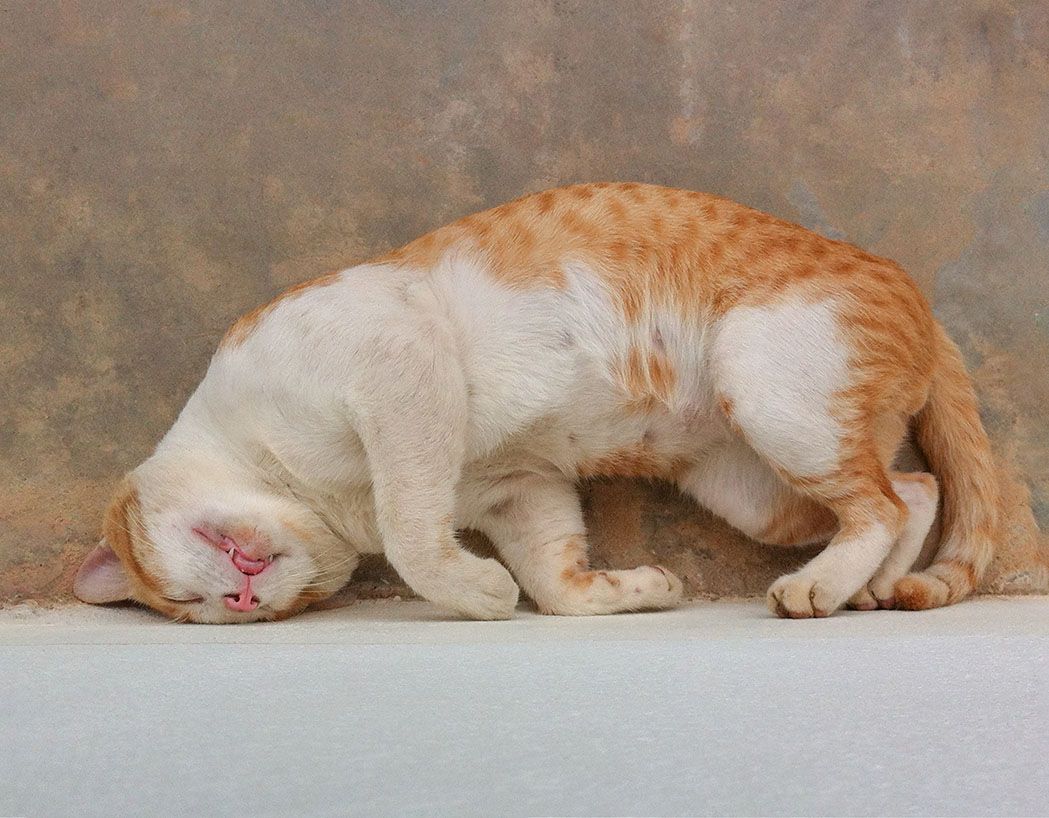
While dogs are often jokers, cats are the elegant masters of the home. We rarely see cats, especially adult felines, tripping around the house or running into walls. However, sometimes, you might notice your cat begin to stumble or wobble back and forth. Unfortunately, cats can get dizzy. This article discusses how cats can get dizzy, what that might mean, and possible causes for a sudden case of vertigo.

Can Cats Get Dizzy?
Cats can get dizzy, but it is not common. In cats, balance involves three systems: vestibular system (within their ears), vision, and somatosensory system (parts of their body that help them perceive their surroundings). Dizziness occurs when there's a mismatch between these systems. They work together to ensure that a cat doesn't become dizzy. Therefore, dizziness isn't considered normal for cats.
Cats can temporarily become dizzy (for example, while recovering from anesthesia) or due to several health problems. The health issues can sometimes be severe and even be fatal or decrease their quality of life exponentially faster than usual as they age.
If your cat begins to stumble or walk with stiff legs without any prior reason or displays other abnormal signs, such as strangely moving in a circle over and over, it is best to take them to the vet for an MRI or CT scan.
Why Do Cats Get Dizzy and Fall Over?
Cats don't get dizzy for similar reasons as a human, like spinning around too fast. They have more balance and refinement than many other animals. If your cat starts to stumble, look for signs of the following health conditions.
General Disorientation
General disorientation happens when a cat isn’t necessarily ill but simply suffering from general dizziness. This is usually seen when a cat is on medication that sedates them or is recovering from anesthesia. It can also occur in senior cats and is one of the first observable signs of cognitive decline.
Vestibular Disease
Vestibular disease can occur at any time in a cat’s life and generally develops quickly. It is commonly accompanied by dizziness (referred to as vertigo) and isn’t an overly common disease for cats to have. It is typically easy to notice if your cat is developing vestibular disease. You will see them tripping over themselves frequently and tilting their head oddly as if they were trying to regain their balance.
You might also see their eyes moving rapidly from side to side or quickly moving their tail to regain balance, even when they're not performing a task requiring great athleticism (such as walking normally).
It isn’t entirely clear why cats contract vestibular disease. Most researchers assume that the leading cause is a previous ear infection. If your cat seems dizzy frequently and recently had a particularly intense infection, you might need to get them checked for vertigo.
Luckily, a cat that struggles with vertigo can quickly recover in some cases. However, only a vet can determine the prognosis for your cat.
Ataxia
Ataxia refers to an abnormal gait and is a sign of many underlying disorders that can affect a cat’s ability to move around. It can manifest as a loss of control in their muscles or severe instability. It could indicate a harmless and temporary change in their health (side effects of some sedatives) or a life-threatening disease.
It often points to neurological conditions, so it is best to take your cat to the vet immediately if you observe this in your cat when they're not on any medication. It may also indicate that your cat has eaten something life-threatening.
A Stroke
A cat suffering from a stroke looks similar to those that struggle with vestibular disease, which is why taking them to the vet right away is so important. Signs of a stroke in cats depend on the type of stroke, but it might include a loss of vision, walking in stumbling circles, loss of balance, a tilted head, and a loss of control over their facial muscles.
If these signs are combined with a cat’s inability to close their eyes, you should get to the vet immediately.
Ear Infection
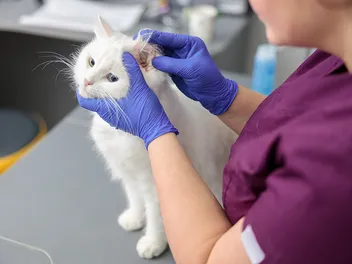
Inner ear infections can cause your cat to feel dizzy and might even make them experience vertigo. If your cat only seems particularly loopy when standing up, they could have an inner ear infection. Take notice if they are scratching at their ears or seem to be in pain since ear infections for cats are often quite painful.


In Summary
Cats can get dizzy for various reasons, but practically every cause of dizziness requires an examination from a veterinarian. Cats have a remarkable sense of balance and don't easily get dizzy. Ear infections and other conditions that cause dizziness can progress if they are not treated promptly. Therefore, if you notice your cat getting dizzy or stumbling around, you should take them to the vet.
Featured Image Credit: Kijpong Puttal, Shutterstock
Expert cat care, straight to your inbox
News, insights, and useful advice, delivered to you.

No spam — unsubscribe anytime.
By signing up, you agree to our Terms & Conditions and Privacy & Cookies Policy.
How useful was this post?
Click a star to rate. You can leave written feedback afterwards. (We read all feedback.)
Christian started writing for a local newspaper as a teenager, and he's been involved in the publishing industry for most of his adult life. Combining his love of writing with a passion for animals, he is currently the Director of Editorial at Pangolia and the Editor-in-Chief at Catster.
Christian lives in the Philippines with his wife, son, and four rescue cats: Trixie, Chloe, Sparky, and Chopper.