Ear Infections in Cats: Vet-Reviewed Causes, Signs & Care Tips


In this article
It’s always terrible when our cats come down with something. Whether it’s a cold or an injury, we want to get them feeling better again as soon as possible. One of the more uncommon things a cat can come down with is an ear infection; because these are so uncommon in felines, people often have plenty of questions about what exactly they entail and how they can be treated.
We’re here to answer those questions, so keep reading! We’ve gathered the most vital information you need, so you can recognize the signs of an ear infection and know what to do if you see them in your cat. With this knowledge, you won’t have any trouble helping your cat get well again if an ear infection happens to befall it.

What Is an Ear Infection in Cats?
Ear infections, or otitis externa, occur when the outer ear canal becomes inflamed as a result of infection with bacteria or parasites. This inflammation can be the result of something acute or chronic. However, cats aren’t very prone to ear infections, so they occur less often in them than in dogs.
What and where is the outer ear canal? A cat’s ear is split into three sections—the inner ear, middle ear, and outer ear. The canal in the outer ear is separated from the other two sections by the eardrum; this means that a cat experiencing long-term or chronic ear infections in the outer ear canal could wind up also getting infections in the inner or middle ear.
Cats with allergic skin diseases are more prone to ear infections. As are those with other underlying problems such as polyp growths in the ear.

What Are the Signs of Ear Infections in Cats?
If your favorite feline is dealing with an ear infection, there are several signs you’ll notice. Because ear infections can cause discomfort and pain, the most visible sign you’ll see will be your cat shaking or tilting its head or pawing at its ears as it tries to dislodge fluid and debris. Other signs of ear infections in cats will include:
Is your cat presenting any of these signs? We suggest you speak with a vet online.
What Are the Causes of Ear Infections in Cats?
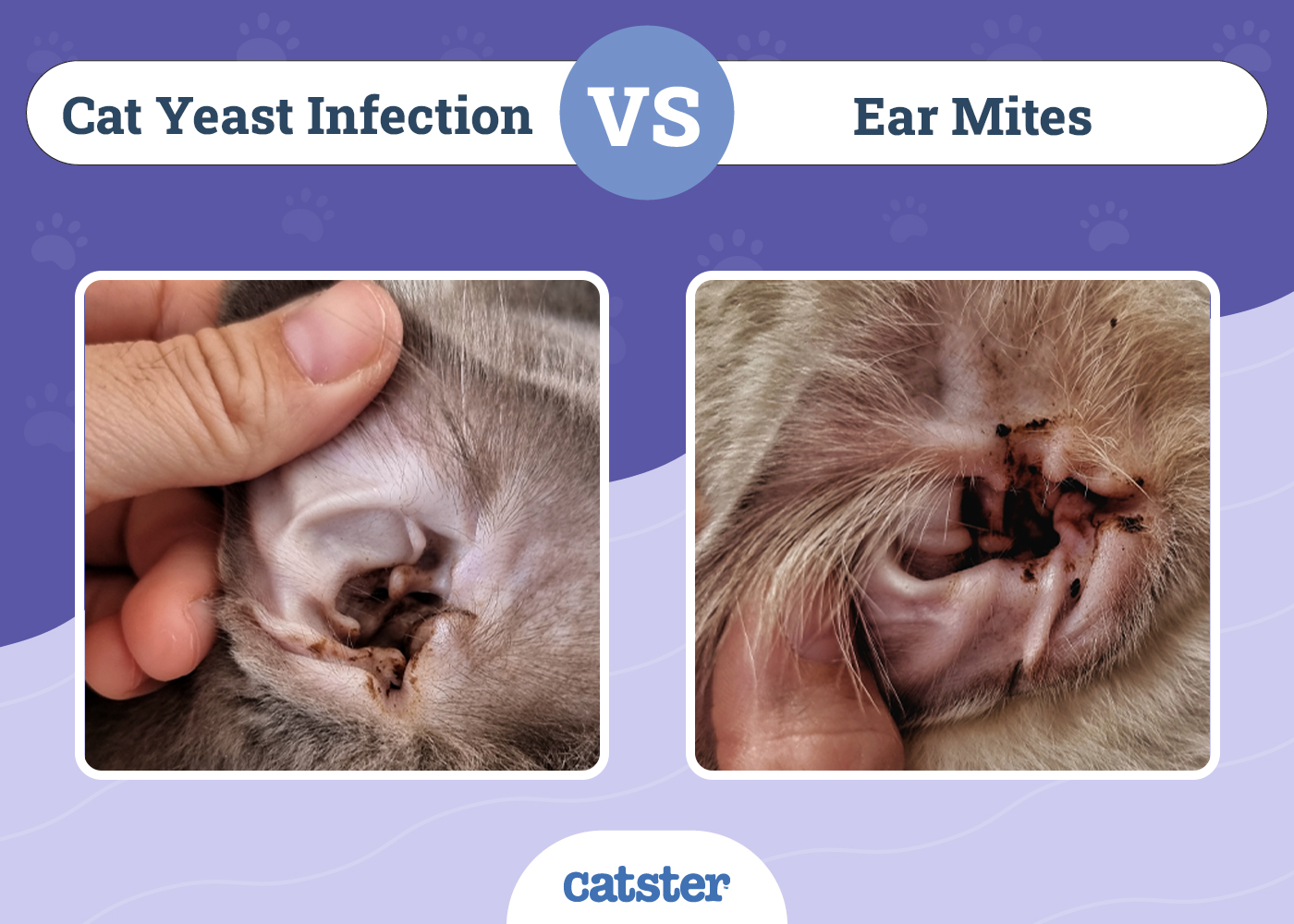
There are many causes of feline ear infections, but the most common is ear mites. If your cat’s ear infection isn’t a result of ear mites, though, it’s most likely caused by an underlying condition. For example, felines that deal with allergies or have weaker immune systems or have a disease such as diabetes may be more susceptible to getting ear infections than perfectly healthy cats. Allergic reactions, in particular, can cause inflammation and infection in the ear canal.
That inflammation of the ear can result in an excess of ear wax, making an excellent environment for yeast and bacteria to thrive. Healthy ears are able to control this yeast and bacteria, but ears that are already inflamed or weakened aren’t able to, resulting in what is known as a secondary infection.
Then there are the predisposed factors a cat may have that will make it more prone to getting ear infections. These factors could be anything from an ear shape that’s abnormal (such as with the breed), smaller than normal ear canals, or even just lots of hair in the ear.
The above are some of the most common causes of ear infections in felines. Others include:
How Do I Care for a Cat With an Ear Infection?
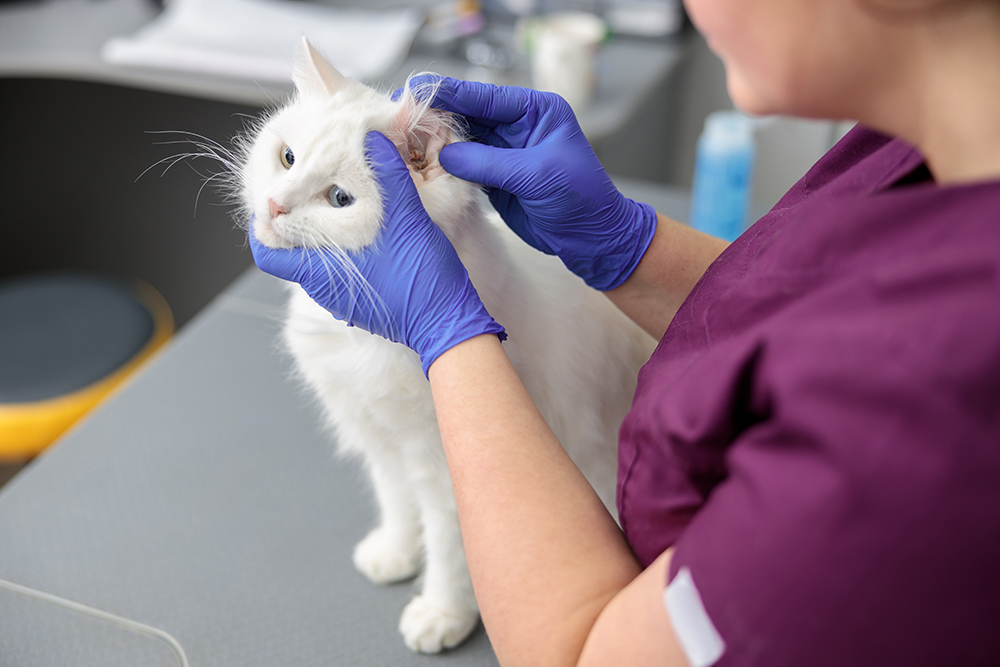
The first step in taking care of a cat with an ear infection is to visit your vet. Your veterinarian will need to properly diagnose whatever is going on as an ear infection and figure out what’s causing the ear infection, as the cause will determine the type of treatment needed. Ear infections can usually be diagnosed solely by a physical exam, but in some cases, testing may be required to figure out the cause of the infection. Some possible tests your vet might do include:
Once an ear infection has been diagnosed and the underlying cause found, treatment can be decided upon.
If the cause is a foreign object in the ear, your vet can remove it. If ear mites are the cause, then your feline can be treated with either a topical antiparasitic (such as Revolution) or an antiparasitic in the form of ear drops. If allergies are causing the ear infection, your vet will need to determine what your cat is allergic to, then decide how to treat it. And in the case of ear infections caused by yeast or bacteria, you’re most likely looking at some sort of medication consisting of an anti-inflammatory, antibiotic, and antifungal that can be applied to the ear canal.
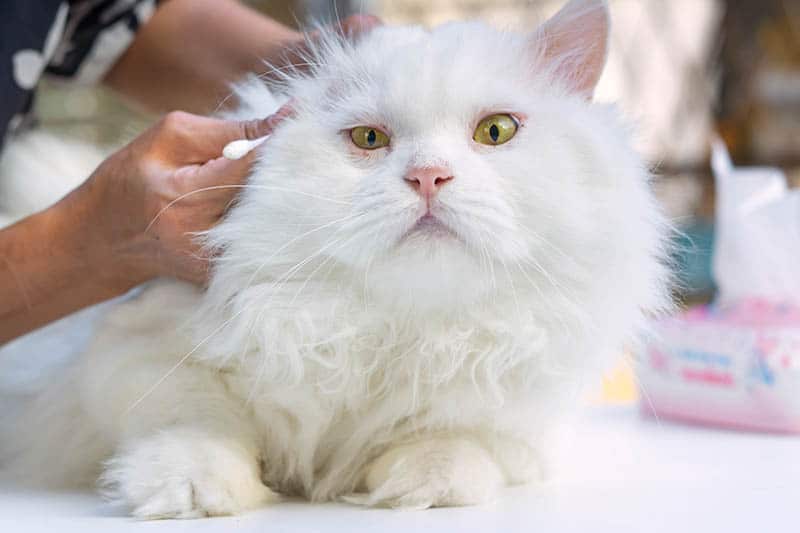
On your end, you’ll need to monitor your cat’s ears as they are healing to ensure all is going well. You should follow instructions for applying medications and complete the course. Ensure you keep your follow-up appointments to ensure the infection is cleared. You may also want to discuss with your vet how to clean your pet’s ears out properly to reduce the risk of ear infections in the future.
Frequently Asked Questions (FAQs)
People often have many questions when it comes to their cats having ear infections. Here are a few of the most frequently asked!
My cat’s ear appears to be closed up. What should I do?
Sometimes ear infections are bad enough (and chronic enough) that the inflammation within the ear canal causes it to swell up enough that the ear canal gets stopped up. Most of the time, your vet can prescribe medications that will help reduce this swelling, thus fixing the issue. However, in rare cases, surgery is needed to resolve the issue.

Can’t I just use a home remedy to treat my cat?
The ear is quite sensitive, and using over-the-counter medications, ear drops, or other home remedies may end up damaging the ear further. Some products can even be toxic and result in hearing loss, pain, and neurological problems. It’s always advisable to have your vet diagnose ear issues with your cat and recommend treatment.
How long will it take my cat to feel better after treatment is started?
Most felines will begin feeling better within a few days. But this doesn’t mean you shouldn’t finish the prescribed treatment! Not finishing up all your pet’s medication or skipping out on a follow-up appointment could lead to the ear infection returning.
Conclusion
Ear infections are definitely no fun for our furry feline friends! The good news is that ear infections aren’t common in cats and, for the most part, are easily treatable. Ear mites are the most common cause of ear infections in felines, but there are other possible causes, such as allergies, tumors, or bacterial infections. This is why it’s important that you take your pet to the vet to get a proper diagnosis and treatment regimen. Once treatment begins, it should only be a few days until your cat feels like itself again!
Featured Image Credit: bombermoon, Shutterstock

Expert cat care, straight to your inbox
Vet-reviewed advice, behavior tips, and the best of Catster. Free, and you can unsubscribe anytime.
By signing up, you agree to our Terms & Conditions and Privacy & Cookies Policy.
Misty Layne lives out in the woods in small-town Alabama with her two Siamese cats —Serafina and Jasper. She also has an array of stray cats, raccoons, and opossums who like to call her front porch home. When she’s not writing about animals, you’ll find her writing poetry, stories, and film reviews (cats, by far, her favorite writing topic, though!). In her free time, Misty enjoys chilling with her cats, playing piano, watching indie and foreign films, photographing abandoned places, and catching up on her never-ending TBR list.
Join the conversation
Ask a question, share your story, or send private feedback.