How to Make an Indoor Cat an Outdoor Cat Safely (10 Vet-Reviewed Tips)


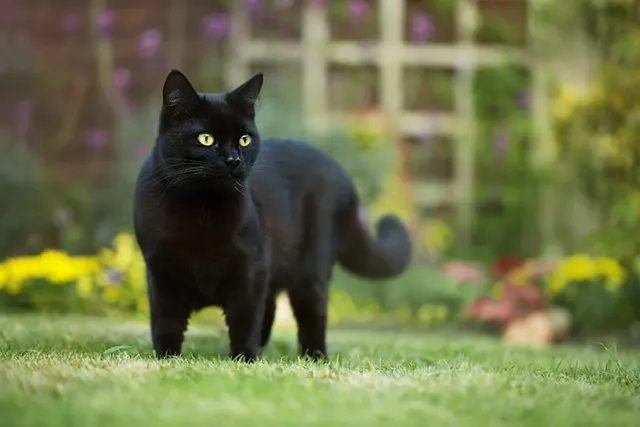
One of the most common questions cat parents have is whether cats should be kept indoors or allowed to roam freely outdoors. Many veterinarians and organizations are in agreement that cats should not be allowed to roam freely due to the increased risk of danger to their health and well-being. However, with safety precautions, cats can be allowed to experience the outdoors safely.
Outdoor cats are at much higher risk of contracting parasites, diseases, or infections, as well as being involved in accidents, and eating or drinking something toxic, like antifreeze or insecticides. An alternative to free roaming is to create a secure outdoor environment for your cats. If this isn’t possible, there are other alternatives you can take to decrease your cat’s chance of getting into danger outdoors.
In this post, we’ll share some tips on introducing your indoor cat to the outside world and making sure they stay safe outdoors.

The 10 Tips to Make an Indoor Cat an Outdoor Cat
1. Get Your Cat Used to Indoor Life First
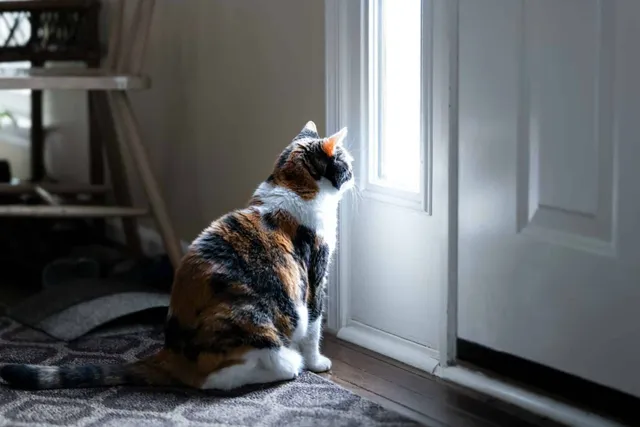
If you have recently brought home a kitten or adopted an adult cat, your home should always be their “base”. Avoid allowing them outside straight away, and instead, give them time to get used to the inside of your home. A happy indoor life means your cat is more likely to want to come home, and it lets them feel that they always have somewhere safe to go if they’ve had enough of the outdoors.

2. Leash Training
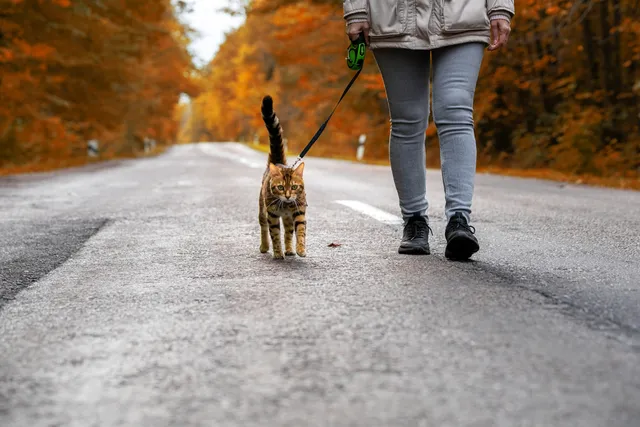
For a cat that is used to spending all their time indoors, the experience of being outside can be overwhelming at first. It’s not uncommon for such cats to go outside, get frightened, and resort to running away and hiding out of sight. This is obviously dangerous for them and just as worrying for owners who suddenly realize that their beloved pet is missing.
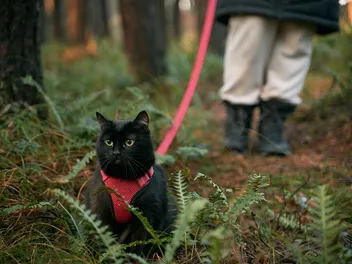
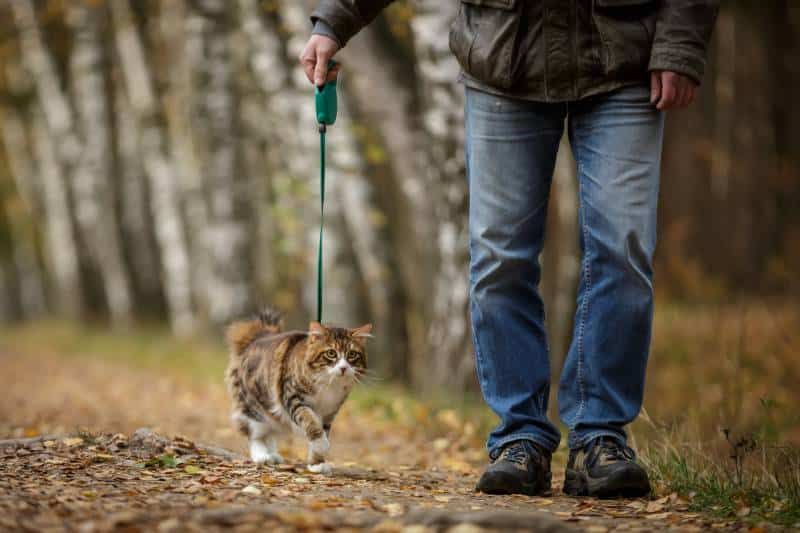
A very reasonable solution is to leash train your cat so that they can safely roam outdoors with you. This also allows you more opportunities to bond with your cat, as the activity can be something you both look forward to every day. As a bonus, a cat on a leash is safer and won't be at risk of ingesting something they shouldn’t, getting injured, or ending up lost (as they will be under your supervision).
Another reason why you should consider leash training your cat is because of the environmental impact of cats that are allowed to roam freely. Cats are popular all over the world; however, they aren’t native to many parts of the world.
Domesticated cats all come from wildcats called Felis silvestris lybica that originated in the fertile crescent in the Near East Neolithic period and in ancient Egypt in the Classical period. Therefore, cats present on other continents are considered to be introduced by humans and are, in a technical sense, an invasive species.
Cats that are allowed to roam unsupervised have devastating effects on local fauna, with some studies concluding that they kill billions of animals each year in the US alone 1 and exponentially more animals on a global scale. This is not without its risks to your pet as well, as prey can harbor diseases and pathogens that can be transmitted to your pet.
Finally, it is worth noting that in some parts of the world, allowing your cat to roam unsupervised may be against the law. Therefore, the best way to allow your cat outdoors is on a leash and under your supervision.
3. Have a Routine
It’s a great idea to get your cat into an indoor-outdoor routine. Take them for a walk at around the same time every day. Cats tend to appreciate this kind of consistency. This would train your cat to know that they will be allowed outdoors at some point and will minimize their attempts at wanting to escape on their own.

4. Avoid Letting Your Cat Out at Certain Times
It’s best to avoid walking your cat out during the afternoon, as excessive exposure to the sun’s UV can be a contributing factor to some cancers in cats, such as squamous cell carcinoma. Likewise, if you notice adverse weather (such as a thunderstorm or hail), it’s best to keep your cat indoors.
Cats can easily be spooked from loud sounds associated with celebratory fireworks, and it’s best to avoid walking your cat during such events.
5. Consider Securing Your Yard
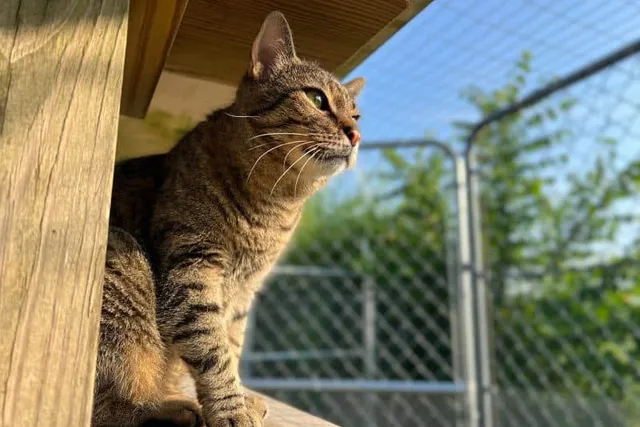
If possible, you might want to consider creating an outdoor enclosure or simply securing your yard to make sure your cat only spends their outdoor time there. If you’re the crafty type, you can find some great ideas for DIY outdoor cat enclosures and houses online.
Another idea is to cat-proof your yard with fencing. For example, we came across slanted net barriers that are attached to the main fence to prevent cats from climbing over them. Securing your yard offers you peace of mind that your cat won’t wander off and risk getting hurt.

6. Microchip Your Cat
Microchipping is important for all cats, but especially for cats that are going to roam outdoors. A microchip increases the chances of your cat being returned to you if they ever get lost. You can also put a collar and ID tag on your cat, but make sure the collar has a safety release clasp in case they get stuck on something. These kinds of collars are also known as “breakaway” collars.
7. Buy a Pet Tracker
Pet trackers are devices that you attach to your pet’s collar and that let you see where your pet is in real time using GPS technology. These can help increase your chances of locating your cat if you’re ever faced with the unfortunate situation of a pet that’s escaped your supervision and is lost or missing.

8. Make Sure Your Cat Is Vaccinated
Before taking your cat outdoors, it’s best to ensure that they’re completely vaccinated, as this prevents them from many preventable diseases that they may otherwise be very vulnerable to.
9. Use Flea Preventatives
Fleas are another very real possibility if your cat spends time outdoors. In addition to causing your cat discomfort and putting them at risk of other parasites like tapeworms, fleas can end up infesting your home, so flea preventatives are of paramount importance. Talk to your vet about a flea preventive protocol for your pet.
10. Neuter Your Cat
A cat in heat can attract male cats to her location, and you might find your male cat being very difficult to control on a leash if this is the case. Likewise, a female cat in heat often attempts to escape and will attract male cats to her vicinity, which can lead to squabbles and fights.
It is best to have your cat spayed (for females) or castrated (for males), also known as neutered. It is also worth noting that doing so helps your cats by preventing or minimizing the risks of certain types of cancers 2.
Outdoor Cats: Life Expectancy
Life expectancy is something all cat parents with outdoor felines worry about. Research has found that the average outdoor cat’s life expectancy is a mere 2–5 years, whereas indoor cats have an expected lifespan of around 15–17 years. However, keep in mind that these figures are based on statistics, and the high number of young cats that are killed on roads brings the average age down significantly. It is quite common for an outdoor cat to live right through to old age, but it does give us an idea of how an outdoor lifestyle does cut short many feline lives.
That said, indoor cats are also at risk of health conditions like obesity and cats that are obese may be at higher risk for other diseases, like diabetes. For this reason, it is important to make sure your indoor cat gets enough exercise every day, as even though they are safer indoors, they still do require enrichment in the form of exercise.
Conclusion
Indoor versus outdoor can be a pretty difficult decision for cat parents. There are so many things to weigh up—your cat’s safety and quality of life being the main considerations. If you want your cat to enjoy the outdoors, it’s best to leash train them or offer them a secure, escape-proof outdoor space. Allowing cats to roam freely poses too many risks and is not recommended by most veterinarians.
If you are introducing your indoor cat to the outside world for the first time, remember to go slowly and at their pace. Be patient—it may take weeks or even months for your cat to feel fully comfortable with their leash or catio.
If your cat expresses no interest in being allowed to roam under your supervision, rest assured that they can have a fulfilling, safe, and enriched life as a fully indoor pet.
Featured Image Credit: Natalia Fedosova, Shutterstock
Expert cat care, straight to your inbox
News, insights, and useful advice, delivered to you.

No spam — unsubscribe anytime.
By signing up, you agree to our Terms & Conditions and Privacy & Cookies Policy.
How useful was this post?
Click a star to rate. You can leave written feedback afterwards. (We read all feedback.)
Kit Copson is a freelance writer and lifelong animal lover with a strong interest in animal welfare. She has parented various furry beings over the years and is currently a proud cat mom of two—one very chilled (unless hungry) Siamese and a skittish but adorable Domestic Shorthair—and dog mom of one—an adopted Bichon Poodle cross. When not writing about or spending time with animals, Kit can be found doodling in her sketchpad, reading, or more often than not, drinking tea.