Vestibular Disease in Cats: Causes, Signs, & Treatments (Vet Answer)

In this article
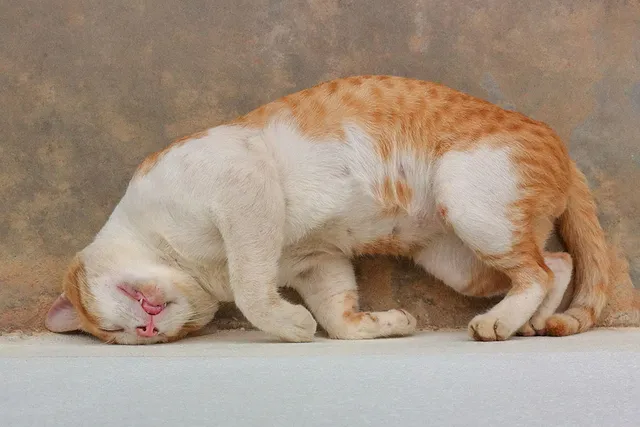
It can be quite alarming to suddenly see your beloved cat exhibit a tilted head, eyes darting back and forth wildly (nystagmus), and falling without being able to get back up. If these sudden and severe signs come into play, it’s very likely that the cat’s vestibular system, which helps regulate balance and coordination, is affected.
Read on to find out more about vestibular disease in cats and the causes, signs, and treatments for this medical condition.

What Is Vestibular Disease?
A healthy vestibular system normally allows for coordination of the body’s balance, position, and movement in time and space. The epicenter of the vestibular system is located in the middle and inner ear and sends signals to the 8th cranial nerve (called the vestibulocochlear nerve) that then meet in the medulla, where the brain and spinal cord connect.
When there are problems with the vestibular system, the nervous system is affected, and it typically comes about very suddenly. There are two main types of vestibular disease—central and/or peripheral. It is more common to have peripheral vestibular problems than central. The central vestibular system issues are often associated with lesions that are in the brainstem or cerebellum (area of the brain at the back of the skull) while peripheral vestibular system problems are associated with lesions that are in the inner ear and 8th cranial nerve (vestibulocochlear nerve).
Although vestibular disease in cats is not unheard of, it’s also not extremely common. In cats, a type of peripheral vestibular disease called feline idiopathic vestibular disease is one of the most common vestibular diseases diagnosed in cats. Because it is idiopathic, by definition, it means the cause is unknown at this time.

What Are the Signs of Vestibular Disease?
Signs that can occur in both or either peripheral and central vestibular disease, include:
- Head tilt
- Circling, falling, rolling
- Nystagmus
- Ataxia (uncoordinated walking)
- Vomiting, nausea, and excess salivation due to “motion sickness”
There are many signs that can occur in just central vestibular disease cases and some that occur just in peripheral vestibular disease cases. For example, for central cases, you may see weakness and depression or changes in posture, while peripheral cases may have facial drooping from Horner’s syndrome or a lack of signs seen with central disease.
If your pet shows these signs, we suggest you speak to a vet.
What Are the Causes of Vestibular Disease?
Central vestibular disease can be caused by some or any of the following:
- Infectious and inflammatory causes include feline infectious peritonitis (FIP), bacterial, fungal, protozoal, etc.
- Trauma
- Tumor/cancer
- Thiamine deficiency
- Metronidazole (an antibacterial and antiprotozoal medication) toxicity
- Vascular event
- Brainstem abscess
Peripheral vestibular disease can be caused by some or any of the following:
- Middle or inner ear infections
- Feline idiopathic vestibular disease (unknown cause)
- Nasopharyngeal polyps
- Toxicity such as from aminoglycoside (a type of antibiotic) or lead
- Tumor/cancer
- Trauma such as a fracture of the tympanic bulla (a hollow bone structure that houses the middle and inner ear) or due to ear flushing

How Do I Care for a Cat with Vestibular Disease?
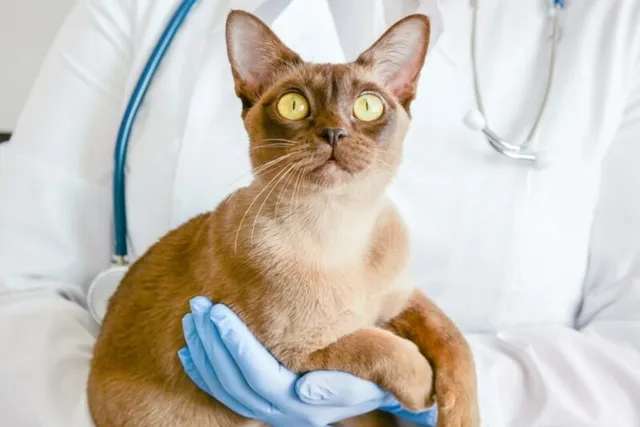
If you are seeing vestibular signs, such as those mentioned above, you’ll likely want to make an appointment with your cat’s veterinarian. At the veterinary hospital, a cat would benefit from receiving a full physical exam as well as detailed neurologic and otoscopic (ear) exams. The information from these things combined often can help veterinarians have a starting place if the vestibular disease is central or peripheral. From there, they will try to pinpoint or rule out the cause and sometimes further testing may be indicated, which can range from bloodwork and ear testing to an MRI or spinal fluid tap analysis for more difficult, severe, or long-term illnesses.
Because there is not a singular cause for vestibular disease, there is not one treatment that fits all. For vestibular disease, either central or peripheral, the treatment will be determined by the specific disease causing the issue. In fact, in idiopathic cases where there is no known cause, the treatment is often patience and time, as these cases may resolve on their own spontaneously. If there is a medication toxicity the medication will need to be stopped. For middle or inner ear infections, there are often antibiotics, steroids, and other treatments to help resolve the issues.
Many times, supportive nursing care will need to be implemented to help these cats who feel topsy-turvy! A cat’s veterinarian may prescribe a specific medication for nausea and vomiting while a cat is healing. Sometimes, more severely ill cats may also need food and/or liquid help which could include subcutaneous or intravenous fluids as well as appetite stimulant medications or even feeding tubes if needed.

Frequently Asked Questions (FAQs)
What’s the overall prognosis for my cat?
The overall prognosis for an affected cat will depend on the specific cause of the vestibular disease. For example, feline idiopathic vestibular syndrome has a great prognosis and should resolve on its own within a few days to weeks. However, vestibular disease due to a tumor may have a more guarded prognosis. Generally speaking, peripheral vestibular diseases tend to have an overall better prognosis than central ones.
What can I do to help my cat feel more comfortable at home until they improve?
At home, having a quiet, calm environment without bright lights may also be beneficial. It may be best to temporarily keep a cat in a room that has all of their needs in a small amount of space so they don’t have to travel far to get to what they need. Keeping them away from stairs or the ability to jump up in high places can also help. In addition, a cat may even need assistance being put into the litter box from time to time or placed by their food and water while they are healing. Because cats naturally love to hide, perhaps a box with thick padding or a cat bed may be comforting to them as they recover.

Conclusion
Vestibular disease in cats can be an alarming thing for both your cat to endure as well as for you to witness. The specific cause of the signs will determine the next step, but with some time and some medical intervention, many of these cases can recover. If you notice any signs of vestibular disease in your feline friend, your cat’s veterinarian is only a phone call away.
Sources
Featured Image Credit: David Herraez Calzada, Shutterstock
Expert cat care, straight to your inbox
News, insights, and useful advice, delivered to you.

No spam — unsubscribe anytime.
By signing up, you agree to our Terms & Conditions and Privacy & Cookies Policy.
How useful was this post?
Click a star to rate. You can leave written feedback afterwards. (We read all feedback.)
Dr. Rachel Ellison DVM (Veterinarian)
Dr. Rachel Ellison lives on a mountain in Utah with her husband, daughter, and son, as well as their animal menagerie— a Bernese Mountain Dog, a Bengal/Siamese mix, and an orange tabby cat, as well as numerous chickens. During her free time, she enjoys being with those she loves, cooking and baking, reading, hiking, sharing her knowledge about cats, and exploring nature and the world around her.