Get

In Your Inbox

Catster is reader-supported. When you buy via links on our site, we may earn an affiliate commission at no cost to you. Learn more.

At What Age Can You Touch Newborn Kittens? Vet-Reviewed Handling Guide

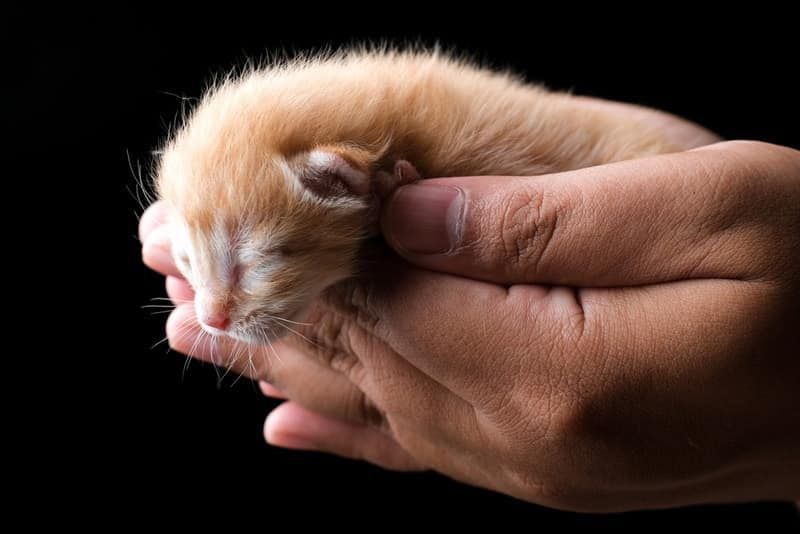
newborn kitten in man's hand

The worry you feel when your cat is pregnant can be overwhelming. As a pet parent, you’re constantly watching the little momma and trying to make sure she’s ready when the time comes. Then you see the kittens. It’s no different than seeing a newborn baby. You want to hold, cuddle, and love them the instant you see them!

Unfortunately, that’s not always a good idea, and you’ll need to fight that urge. So, at what age can you touch newborn kittens? While it’s going to be difficult, unless there’s a medical issue or they are orphan kittens, you should minimize handling of the kittens until they are at least 2 weeks old. Between 2 and 7 weeks of age is the sensitive period for socialization toward humans, so this is the time when kittens should get used to human contact.

Let’s learn more about newborn kittens, why you shouldn’t hold them, and how you can help make things easier for the kittens and their mother.

divider cat faces oct 2024

Why You Shouldn’t Touch a Newborn Kitten

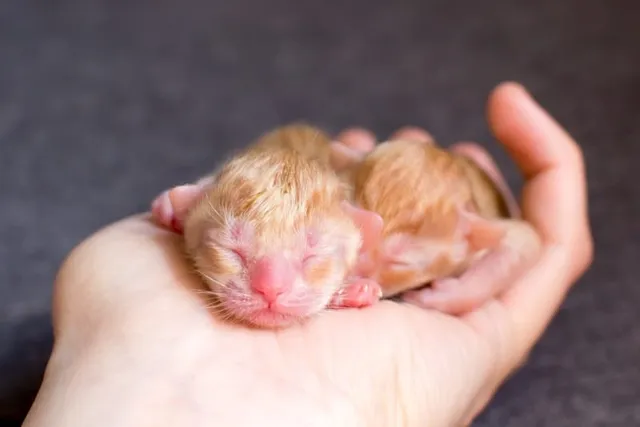
The first 2 weeks of a newborn kitten’s life are quite important. As most cat lovers know, kittens are born with their eyes and ear canals closed. A kitten’s developing systems are also delicate at this time. This means they are dependent on their mothers for everything.

Mothers will feed kittens every 2 to 3 hours, provide them with warmth, help them with passing urine and feces, and keep them clean. Understandably, mother cats are hyper-focused on their kittens. If an animal or person they don’t trust comes around, they will be on high alert. It’s even possible if the cat isn’t comfortable with the person or animal nearby, that they may unleash their motherly instincts and react to protect their kittens.

With all the important growth and bonding taking place during the first 2 weeks after a kitten is born, it’s clear to see why you should minimize contact. You may also find that not only will a mother react violently when someone tries to interact with one of her kittens, but it can stress her, and the last thing you want to do is cause any trouble to a busy mom.

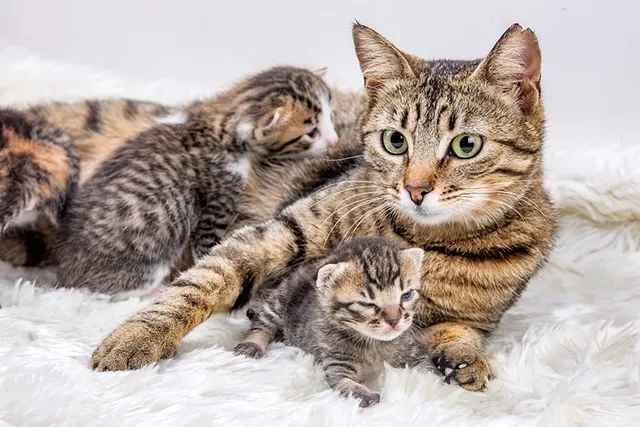
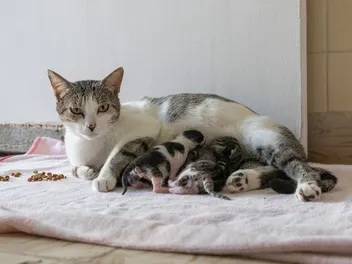
mother cat with kittens
Image By: Karen Hogan, Shutterstock

When Is It Safe to Interact with Newborn Kittens?

Veterinarians generally recommend that around the 2-week mark, when the eyes begin to open, is the best time to start interacting with newborn kittens. At this point, the socialization period toward humans starts. The mother is also ready to give the kittens some space. She knows they are now able to see a bit and wiggle around. If you and the mother cat have a strong bond, she may feel safe allowing you to watch over her kittens while she stretches her legs and takes a well-deserved breather.

You’ll also find that there are times when even the experts feel it’s okay to step in and handle newborn kittens before the 2 weeks is reached. Here are a few of them that you should be aware of and keep in mind.

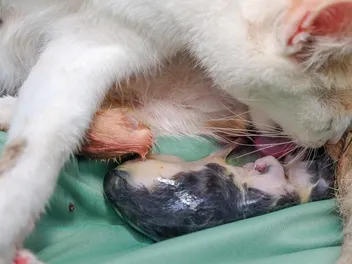
  • Aiding the mother if there is an issue during birth
  • Helping a non-breathing kitten after birth
  • Intervening when a kitten will not suckle
  • Checking the weight of kittens to ensure they are growing properly
  • Stepping in to help if you feel one of the kittens is suffering from a medical issue or isn’t gaining weight properly
  • Helping the mother if she is having a medical emergency
  • Removing the kittens if the mother endangers them in some way
  • Moving the litter if you feel they are in a dangerous location

Tips for Touching Kittens When Necessary

sleeping cat with kittens
Image Credit: Sofia Kostova, Pixabay

When you feel it’s time to check the kittens there are certain protocols you should follow. No matter the relationship between you and the mother cat, the most important thing is to ensure she can always see her kitten. By keeping the kitten as close as possible you will reduce the stress the new mother will experience.

Here are other guidelines to help make touching kittens safer.

  • Kittens are susceptible to bacteria and infection so make sure your hands have been washed
  • Position yourself near the mother so she can see the kitten
  • Keep the kitten in an upright position with its belly down and supported by your hand
  • Try to keep the kitten warm while you interact (use a water bottle if necessary)
  • Handle kittens gently but make the interaction as short as you can

Orphaned Kittens

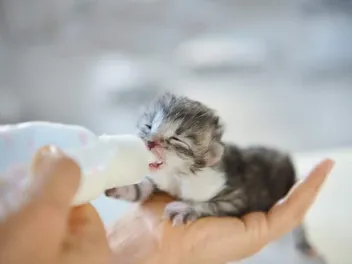
Unfortunately, there are situations when mother cats don’t make it through delivery or you find abandoned kittens in your area. While a veterinarian will help you decide what should be done with the kittens and whether you can care for them, moving them is the first step. As we’ve already mentioned, kittens can get cold easily. Make sure you have a safe transport device where you can keep the kittens warm while taking them to the veterinarian.

If you need to speak with a vet but can't get to one, head over to PangoVet. It's an online service where you can talk to a vet online and get the advice you need for your pet — all at an affordable price!

PangoVet_Mention-in-Content for PangoVet2 save money

Once you reach the veterinarian, they will coach you on what to feed the orphaned kittens, how to help them potty, and other steps you’ll need to follow to rear them without a mother.

divider cat faces oct 2024

Final Thoughts

As you can see, newborn kittens are very vulnerable and should be left to the care of their mothers. While you may want to touch them all the time and interact with them non-stop, it’s best to minimize contact until the kittens are at least 2 weeks old and opening their eyes.

Of course, there are circumstances when you have no choice but to handle the kittens more often. When this is the case, always keep your hands clean, keep the kittens warm, and stay near the mother to avoid stress to her or the kittens. Before long, the new kittens will be up and about giving you a lot of fun, love, and adventure.


Featured Image Credit: Rembolle, Shutterstock

Want content like this delivered to you?

Sign Up For Our Newsletter

News, insights, expert advice, and everything cat

* By submitting, you agree to our Terms & Conditions and Privacy & Cookies Policy.

How useful was this post?

Click on a star to rate (you can leave written feedback after clicking submit)

Help us improve Catster for pet parents!

Your feedback really matters.

What did you like about this post? Also how can we improve it?

Join the conversation

Leave a Reply

You’re very welcome to leave a comment or question. Please know that all comments must meet our community guidelines, and your email address will NOT be published. Let’s have a positive and constructive conversation.

Talk With A Vet Online

Peace of mind,
anywhere, anytime

Affordable vet advice

Cat Twitching: Vet-Verified Signs, Causes & When to See a Vet

Cats have many strange behaviors, like the peculiar chattering sound they make when seeing a bird or a laser pen. But when we...

Are All White Cats With Blue Eyes Deaf? Vet-Reviewed Facts & FAQ

At some point, you’ve likely heard someone say that all white cats are deaf—particularly those with blue eyes. But is this factual? Not...

Are Lightning Bugs Poisonous to Cats? Vet-Reviewed Facts & FAQ

Lightning bugs, or fireflies (family Lampyridae), can be fun to watch and relatively easy to find on a summer evening. Your cat also...

Liver Disease in Cats: Causes, Signs & Treatment Options (Vet Answer)

Liver disease is a common problem seen in cats, and many different things can cause or contribute to the development of the disease....

More related

Is It True That All Russian Blue Cats Have Green Eyes? Facts & FAQ

There is a lot of debate over whether all Russian Blue cats have green eyes. Some people say that this is simply a...

10 Best Cat Toys for Older Cats in 2026 – Reviews & Top Picks

Despite their age, even senior cats need playtime and exercise to be healthy and happy. However, it is important to consider your senior...

Can Cats Eat Bully Sticks? Vet Approved Nutrition Advice

Multi-pet households come with their fair share of challenges, one of which is keeping separate treats for your cats and dogs. Both animals...

Why Does My Cat Bite My Ear? 10 Vet-Verified Reasons

Cats have long intrigued us with strange behaviors. One of the more unusual and often perplexing behaviors that some cats exhibit is the...

Keep reading

What Do Feral Cats Eat in The Wild? Vet Reviewed Facts & FAQ

Feral cats aren’t domesticated, prefer living outdoors, and often avoid human contact. They are normally considered mesopredators in their ecosystems and are most active after dusk. In addition, since they reproduce rapidly and are skilled hunters, conservationists find them devastating...

cat hunting a rat

Mobile Vet Clinics & Care: Our Vet Discusses Pros, Cons & FAQ

Your cat is wonderful at home but turns into some sort of Tasmanian devil the moment she gets to your veterinarian’s office. Is there an easier way to get her preventative care done so that you know she’s healthy? Let...

vet holding a cat

7-12-Month Old Kitten: What to Expect (Vet-Verified Guide)

Most kittens get adopted before they are six months old, meaning that you get to experience the part of a kitten’s life in which they are 7 to 12 months of age. This is the stage where kittens are self-sufficient...

Australian Mist Kitten

How to Tell if Your Cat Was Poisoned: 8 Vet-Reviewed Signs

If your cat is acting strange and exhibiting unusual behavior, it may be due to poisoning. Knowing the signs of poisoning will help you identify the problem in time and react accordingly. Of course, if you suspect your cat has...

vet checking up the cat

Ragdoll Cat Grooming: 10 Vet-Approved Tips & Tricks

Ragdoll cats were developed in the early 1960s in California and are among the most affectionate and friendly cat breeds around today. Their semi-longhaired coats are thick and don’t often tangle, but these cats can still benefit from regular grooming...

flame point ragdoll cat

How To Flea Bomb With Indoor Cats: 5 Vet-Approved Tips & Precautions

When fleas hitch a ride on your pet, your home can soon become an unwelcome place. An infestation can make you and your animal quite uncomfortable from the unrelenting pests, and the problem will only worsen without treatment. Using flea...

Exterminator fumigating a room

Why Do Cats Like Straws? 6 Likely Reasons

Most cat owners can attest that cats do strange things. Whether your cat sleeps in the sink or finds a way to get stuck in the window blinds, there’s rarely a dull moment with them around. Another common cat quirk...

cat playing with straws in glass

Should I Get My Cat Spayed Or Neutered? Facts To Consider (Vet-Reviewed)

To spay or not to spay—that is the question. Or is it? All of these years, pet owners have been advised to fix their pets to eliminate the possibility of unwanted pregnancy. Granted, there is an overabundance of homeless cats...

little cat with Elizabethan collar after spay surgery