Why Does My Cat Eat My Hair? 9 Reasons for This Behavior & Vet-Approved Tips


In this article
If you find yourself asking "Why does my cat eat my hair?", you're not alone. Out of all the odd cat behaviors, your feline chewing on your hair is probably one of the strangest. Your hair is not a very good food source for your canine, so why are they chewing it?
In this article, we'll answer this strange question and help you stop your cat from doing it if you so choose. While there isn't anything wrong with your cat chewing on your hair, it can be annoying and troublesome for some owners.

The 10 Possible Reasons Why Cats Eat Your Hair
1. Failed Cat Allogrooming Attempt
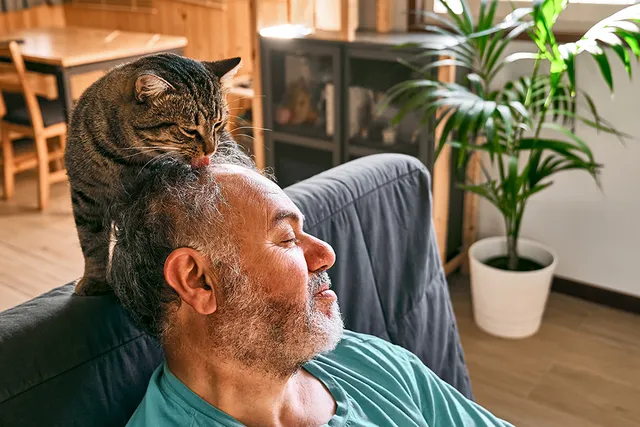
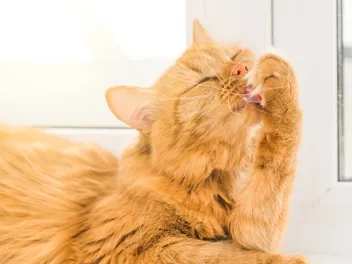
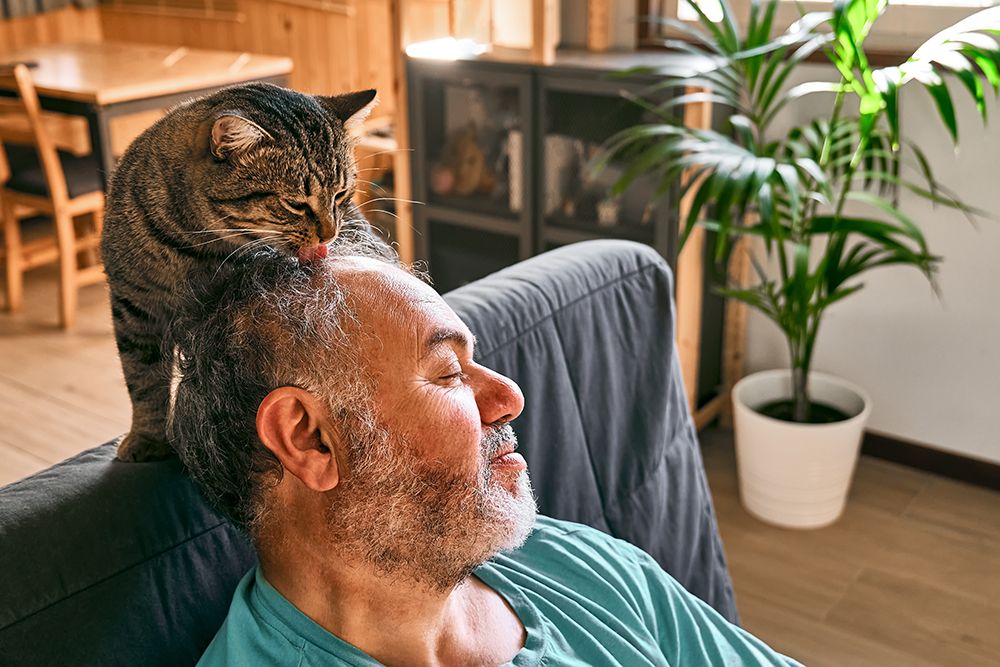
Cats are mostly a solitary species. However, they do participate in something called allogrooming when they do hang out with others. This involves mutual grooming, where one cat will groom the other. Usually, this involves licking, but it may also include biting if the other cat has mats or stuff in their fur, as well as face rubbing.
If your cat is looking to groom you, your hair is a prominent place to start. It's a demonstration of love and affection, as well as trust.
However, our hair is not made to be groomed by a cat's tongue. It usually doesn't work out as our cats initially expect. They may get some stuck in their mouth since it is likely significantly longer than their hair, which can lead to them chewing on it.
2. Cat Stress
Just like people, cats may do all sorts of things to calm down. A cat chewing on your hair can be a coping mechanism for anxiety or stress. This likely comes from them trying to groom your hair, which is very relaxing for cats. This attempted grooming may increase when your cat is stressed.
If your cat has suddenly increased "grooming" your hair, you may want to help them reduce their stress in other ways. They make synthetic pheromone collars that are very calming to cats. If you can figure out why your cat is stressed, you may be able to reduce the source of their stress. This isn't always possible, though, as there are often everyday things that may stress out your cat.
For instance, your cat may be stressed by a change in routine. Or, perhaps you've recently moved, and the new home is stressing out your feline. You really can't do anything in these situations but wait for your feline to get used to the new routine or home.
If you are concerned about the health and well-being of your pet, seek veterinary advice for the best course of action.
3. Cat Soothing
Many cats may knead or even suck on things to soothe, similar to a human baby. However, there are other behaviors your cat can develop to help soothe as well, such as chewing on your hair. Typically, this comes about because your cat is doing it for some other reason, and then it turns into a soothing behavior.
This reason is mostly one of habit. Your cat chews on your hair to go to sleep, so they continue to chew on your hair to go to sleep. Early weaning is more likely to cause this sort of strange behavior in cats and other similar oral-type behaviors.
4. Cat Compulsion
Cats chewing on your hair can fall into the category of compulsive behaviors, though only if your cat begins by chewing on your hair for another reason. Cats naturally won't develop a compulsion with something they've never done before.
Chewing everything and anything can be a sign of a compulsion. If the chewing behavior becomes more intense than it once was or increases in frequency for no apparent reason, it can sign a compulsion. Compulsions can develop because of stress as a coping mechanism, but they can begin for all sorts of other reasons as well.

5. Overactive Thyroid Gland
It may seem strange that a health condition can cause your cat to chew on your hair. However, hyperthyroidism could lead to chewing on your hair and other fidgeting behaviors. Other behavior changes are often involved as well, such as your feline becoming more withdrawn than they were previously. Weight loss is another common sign of hyperthyroidism.
This condition needs to be treated by your vet. There are many ways to counteract your cat's thyroid gland's overactive nature, including things like surgery to remove part of it.
6. Cat Enjoyment
Some cats may like chewing on your hair for one reason or another. It may seem strange to us, but cats find lots of behaviors fun that we wouldn't enjoy.
Your feline may also like the smell or taste of your shampoo or other hair products, which will encourage them to chew on your hair. If your cat only chews on your hair, this is a probable cause. Your cat licking your hair right after the shower is another clear sign that it might not be your hair but what you put in it.

7. Cat Playing
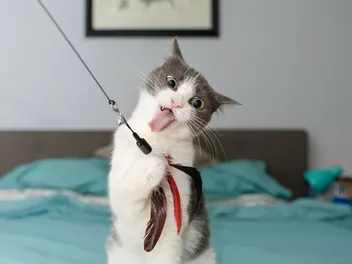
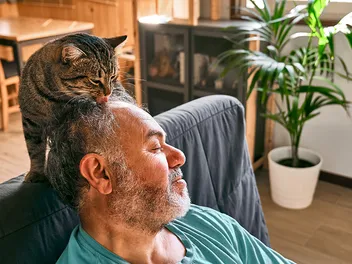
Cats like strings and ribbons, so they sometimes take an active interest in hair as well. Your cat may be playing with your hair, which leads to chewing. Plus, if your cat likes to climb, your hair may look like a fun thing on their level, especially if they spend time on the back of the couch.
Of course, your cat is likely to exhibit other playful activities during this time, like swinging its butt around in the air. If this is the reason, it is usually pretty easy to figure it out. However, just like it is not recommended for a cat to play with ribbons and strings due to the risk of ingestion leading to intestinal problems consuming your hair is not something you should allow your cat to do.
8. Attention Seeking
If you usually pick up your cat and pet them after they chew on your hair, they may just be doing it to get your attention. They know you'll pay attention to them if they chew on your hair, so that's exactly what they do!
This is a bit harder to stop, as it usually becomes a habit when your feline wants attention. The easiest thing to do is to redirect your feline’s attention when you think they're about to chew on your hair, which will skip reinforcing the chewing behavior altogether.
9. Cat Waking You Up
If your cat chews on your hair while you're in bed, it could be that they're trying to wake you up. This might be to get your attention as we discussed in the last point. Cats may also chew on your hair in bed for other reasons, like grooming, soothing, or oral fixations.
10. Pica
Pica is a medical problem where cats develop the behavior of ingesting non-food items. Certain breeds are more propensity to develop this condition. You can learn more about it by reading this post: Pica in Cats: Vet-Verified Signs, Causes & Tips for Managing This Eating Disorder
How to Stop a Cat Chewing on Your Hair
Some cats are a bit more aggressive with their licking than others. Some owners are perfectly fine letting their cats chew on their hair, while others find it very annoying. Either way, due to the potential risk of intestinal issues that ingesting long trends of hair represents to your cat, the recommendation is not to allow them to do it. There are a few things you can do to discourage your cat from chewing on it anymore.
1. Answer the Why?
The first step to making your cat stop is to figure out why they are doing it in the first place. We've listed ten of the most common reasons above. Some are pretty easy to verify or cross of the list. For instance, you'll probably know if your cat's playing with your hair. Other times, you may need to take your feline to the vet to cross a reason off the list.
Some reasons have a pretty obvious solution. For instance, if your feline is chewing out of stress, consider doing things to relieve their stress, like using synthetic pheromone collars or giving your feline more hiding places. Playing with your hair can be prevented by redirecting your feline to an appropriate toy – or wear them out before they decide to play with your hair.
2. Don't Use Punishments
So many of the reasons your cat may be licking your hair are due to stress. If you attempt to use punishments to prevent your cat from chewing, it's likely to cause even more stress, which will not help the problem.
Cats can often become stressed about things that we may find minor. Having visitors over, for instance, can be somewhat stressful to cats. Seeing things out the window can also cause stress, as can hearing loud things outside. You can't always fix these stressful events directly, but you can avoid adding more stress to them.

3. Pay Your Vet a Visit
Even if you think you may know why your cat is chewing on your hair, it is in their best interest to take them to the vet. There are two main things your vet needs to check for: compulsive behaviors and hyperthyroidism.
If your cat is unable to be distracted while licking your hair, or they seem unable to engage in any other activity at the time, it could be a compulsive behavior. This problem may need to be treated with prescription medication from your vet.
Hyperthyroidism is most common in older cats. Over 30% of cats that are over 10 will get hyperthyroidism. Treatment is possible and will likely lessen the behavior.
4. Move Away
If your vet has cleared your feline, they are likely chewing on your hair for attention, stress, or a similar reason. These can be stopped by merely showing your cat that the behavior is inappropriate and won't win them any attention.
The easiest way to do this is to get up and move whenever they begin. They may follow you around a few times, but they'll eventually get the idea. If you're lying in bed, you can cover up your head with the blanket or put your head under the pillow.
The critical part of this method is to be consistent. You need to remove yourself from the situation all the time and do it quickly. Acting inconsistently will only confuse your cat and will prevent this method from working altogether.
Plan on doing this for weeks or even months. Eventually, your cat will understand that chewing on your hair is not acceptable and only leads to you going away.

5. Distractions
This is especially helpful if your feline is playing with your hair, though it can be useful in other situations as well. When your cat begins chewing on your hair, merely giving them something they can chew. Toys, long-lasting treats, and cat grass can all be suitable options.
Exercise can also help prevent these unwanted behaviors, as a tired cat isn't one that is likely to get in much trouble. A laser pointer or feather wand is a perfect option, significantly since they don't cost anything after a one-time purchase.
6. Provide Relief From Stress
Chewing is often caused by stress. Therefore, you can often reduce your cat's chewing by also reducing their stress. Provide your feline with a safe space they can escape from anything they find stressful. Cat trees are best for this purpose, but your feline may prefer somewhere they can hide as well.
Cat pheromone collars and diffusers can be beneficial as well. They mimic the pheromones that give a sense of familiarity to cats as well as the pheromones a mother cat gives off when nursing, which calms many cats down. Humans can't smell these pheromones and are not affected by them.
Whenever possible, eliminate the stressors you can from your feline's environment.
7. Switch Hair Products
Sometimes, cats chew on our hair because they like the way it tastes or smells. Merely switching to something to a different hair product can be an easy way to prevent this. Choose unscented products if possible, as these have less of a chance of attracting your feline.
Furthermore, cats usually don't like citrus smells. Switch to a hair product that smells like citrus to repeal your feline potentially.

Additional Information
Conclusion
Most cat owners eventually realize that cats have some odd behaviors, one of which is chewing on hair. Since there are certain risks in cats ingesting long hair strands, it is not recommended to allow this behavior. While there are a few reasons that might trigger it, you need to be most worried about stress. Any time your cat acts in a way that is abnormal, be sure to schedule a trip to the vet to get them checked out.
Featured Image Credit: Caterina Trimarchi, Shutterstock
Expert cat care, straight to your inbox
News, insights, and useful advice, delivered to you.

No spam — unsubscribe anytime.
By signing up, you agree to our Terms & Conditions and Privacy & Cookies Policy.
How useful was this post?
Click a star to rate. You can leave written feedback afterwards. (We read all feedback.)
Christian started writing for a local newspaper as a teenager, and he's been involved in the publishing industry for most of his adult life. Combining his love of writing with a passion for animals, he is currently the Director of Editorial at Pangolia and the Editor-in-Chief at Catster.
Christian lives in the Philippines with his wife, son, and four rescue cats: Trixie, Chloe, Sparky, and Chopper.