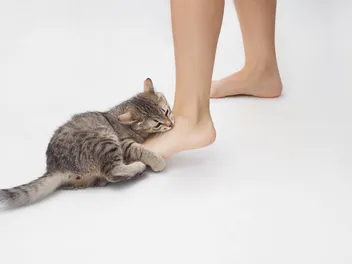
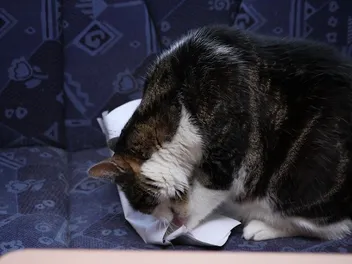
Why Does My Cat Chew on My Hair? 6 Vet-Reviewed Reasons for This Behavior


In this article
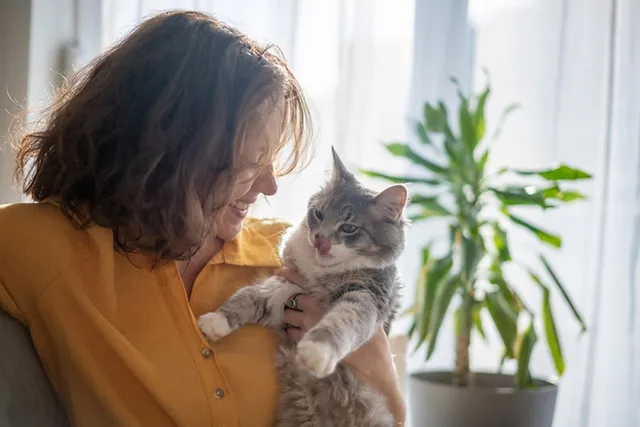
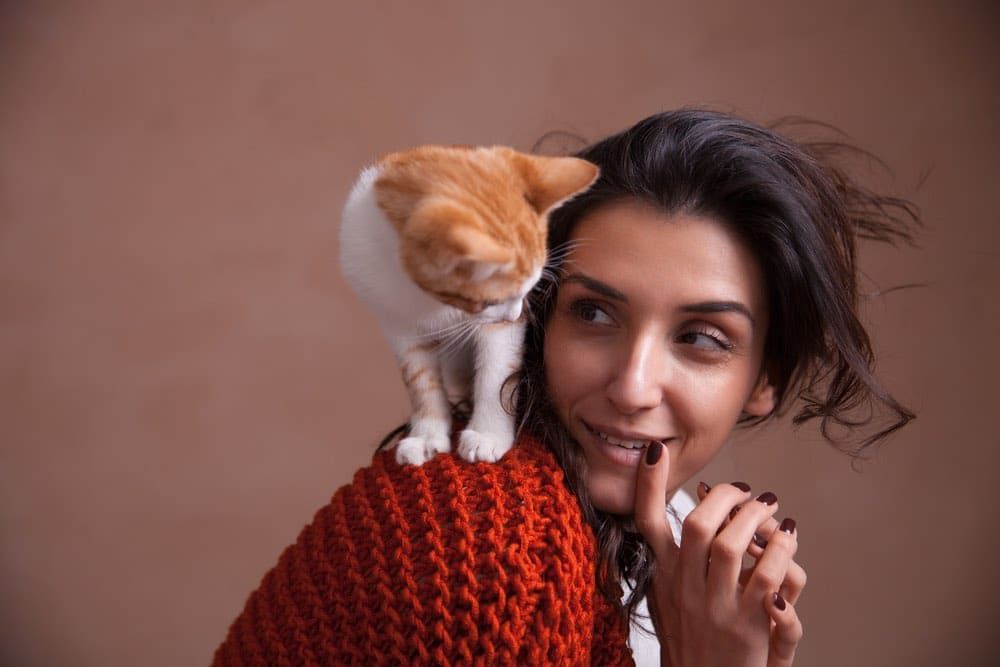
Have you ever been cuddling or cradling your cat when they start chomping on your hair? While this behavior may not be that bothersome, it could raise some questions. Is it normal for felines to chew on hair? What are the reasons behind this odd behavior?
Kitties are complex creatures and display many mind-boggling behaviors. To help you better understand your cat’s craving for hair, we’ve compiled an extensive list of reasons for this behavior, including some ways to discourage it.

The 6 Reasons Why Does Your Cat Chew on Your Hair
1. Playing and Affection
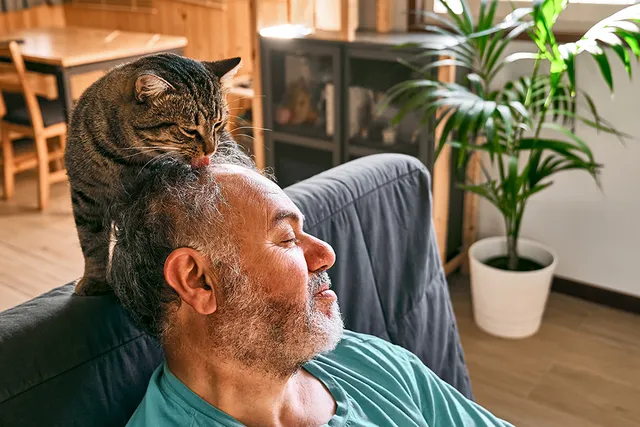
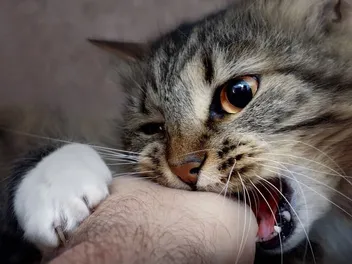
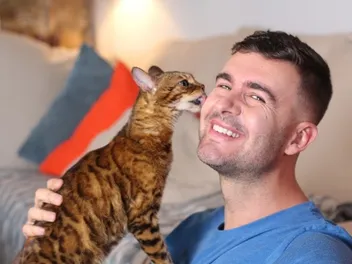
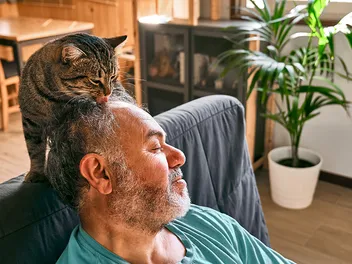
Some cats will chew your hair, as well as try to nibble your face and hands, simply because they are young and playful. Long hair especially is very attractive to kittens and they may see it as an inviting toy when it’s hanging loose and moving unpredictably. Other cats will try to show their affection for their owners by chewing their hair and giving them gentle love bites, or kneading on the top of their head. Some cats will just like the taste or texture of your hair or the smell of the shampoo you used recently, while the way your hair moves may initiate their hunting instinct.
2. Seeking Attention
If your cat prefers to chew your hair early in the morning, the explanation may be simple. They’re hungry. Some cats will meow, follow you around persistently, rub against your legs, or jump up on you while you’re sleeping, trying to nibble you and chew your hair if they think it’s time for breakfast.
3. Self Soothing
Anxious cats may chew or bite your hair to alleviate their stress or anxiety, especially if they are very closely bonded with you. Indulging in this habit enables your pet to deepen the strong bond you two share, as well as acting as a soothing mechanism. If you notice your feline friend munching on your hair, they may be trying to self-soothe. Other signs of stress in your kitty may include increased vocalization, hiding, changes in appetite, toileting issues, overgrooming, and more. Consult your vet if your cat is showing any of these signs.
Moreover, cats that were weaned too early may exhibit various suckling behaviors. Suckling on your strands of wool may be the feline equivalent of a human toddler sucking on their thumb.

4. Grooming
In the wild, cats that are part of a community will spend large amounts of time grooming each other. Grooming behaviors include snuggling, biting, and licking. If you’re spending some quality time on the couch with your feline friends, they may start chewing your hair in an effort to “groom” you. It is their instinctual way of saying they love you.
5. Possible Health Issues
Although this is not as common, sometimes cats that are suffering from various health issues may start eating or chewing your hair. Gastrointestinal problems, dental disease and oral pain, health conditions that increase appetite such as hyperthyroidism and many others, may cause changes in your cat’s behavior and appetite, as well as signs of pain. Schedule an appointment with your vet right away.
6. Pica
Pica is a medical syndrome where pets consume items that aren’t edible. If you notice your cat snacking on your hair, the carpet, or dirt, they may have pica. Speak to your vet to get to the bottom of this issue.

Tips for Stopping the Hair-Chewing Behavior
Hair chewing can be annoying for you and dangerous for your pet. Here are some steps you can take to discourage this behavior:
- Determine the Cause: Is your kitty showing you affection, or is their hair chewing a sign of an underlying medical condition? Schedule a vet appointment to find the root of her behavior.
- Reduce Stress: Stressful cats are more prone to chew on hair. Reduce your cat’s anxiety by stocking up on cat-calming pheromones, sticking to the same daily routine, enriching their environment, and spending quality time with your pet.
- Move Away: If the behavior isn’t medically related, discourage your cat from chewing your hair by immediately distancing yourself from them once they start to chew. For this strategy to be successful, you must act swiftly and consistently. After a few weeks, your cat will get the picture.
- Switch Hair Products: Try using a certain-scented shampoo or hairspray to dissuade your cat from chewing your hair. Felines turn up their noses at citrus-scented products, so opt for hair products that smell like lemon.
- Distract Them: To get your pet to leave your hair alone, give them something else to chew on. Offer them treats, toys, or cat grass. However, avoid constantly giving your cat treats as it may lead to weight gain.
Finding a toy that your cat enjoys, is genuinely drawn to, and is excited to play with can be a challenge. That's why having a few options is always a good idea until you get an idea of what gets them moving. We love the Hepper Catnip Stick and Whale Kicker for different reasons. For cats who need a little encouragement in playing, the stick is packed full of organic catnip enticing enough to lure in the laziest of felines. The Whale is a great option for cats who love to hunt, pounce, and kick! Both are extremely durable, and can be cleaned and reintroduced for play days yet to come. Find out which is best suited to you below.
| Image | Product | Details | |
|---|---|---|---|

|
Hepper Catnip Stick |
|
Check Price |

|
Hepper Whale Plush |
|
Check Price |
At Catster, we’ve admired Hepper for many years and decided to take a controlling ownership interest so that we could benefit from the outstanding designs of this cool cat company!

The Bottom Line
If your cat is constantly chewing on your hair, they might be exhibiting a sign of an underlying health condition. Take them to the vet to rule out any potential health issues. If your feline is simply displaying signs of affection, you can discourage the behavior by distracting them or distancing yourself.
Figuring out the cause of your kitty’s weird behavior can help you detect potential health concerns and put an end to the hair chewing once and for all.
Check out some of our other interesting cat behavior posts:
Featured Image Credit: lenina11only, Shutterstock
Expert cat care, straight to your inbox
News, insights, and useful advice, delivered to you.

No spam — unsubscribe anytime.
By signing up, you agree to our Terms & Conditions and Privacy & Cookies Policy.
How useful was this post?
Click a star to rate. You can leave written feedback afterwards. (We read all feedback.)
Christian started writing for a local newspaper as a teenager, and he's been involved in the publishing industry for most of his adult life. Combining his love of writing with a passion for animals, he is currently the Director of Editorial at Pangolia and the Editor-in-Chief at Catster.
Christian lives in the Philippines with his wife, son, and four rescue cats: Trixie, Chloe, Sparky, and Chopper.